

Clinical Subject Page
Rheumatoid arthritis–associated interstitial lung disease (RA-ILD)
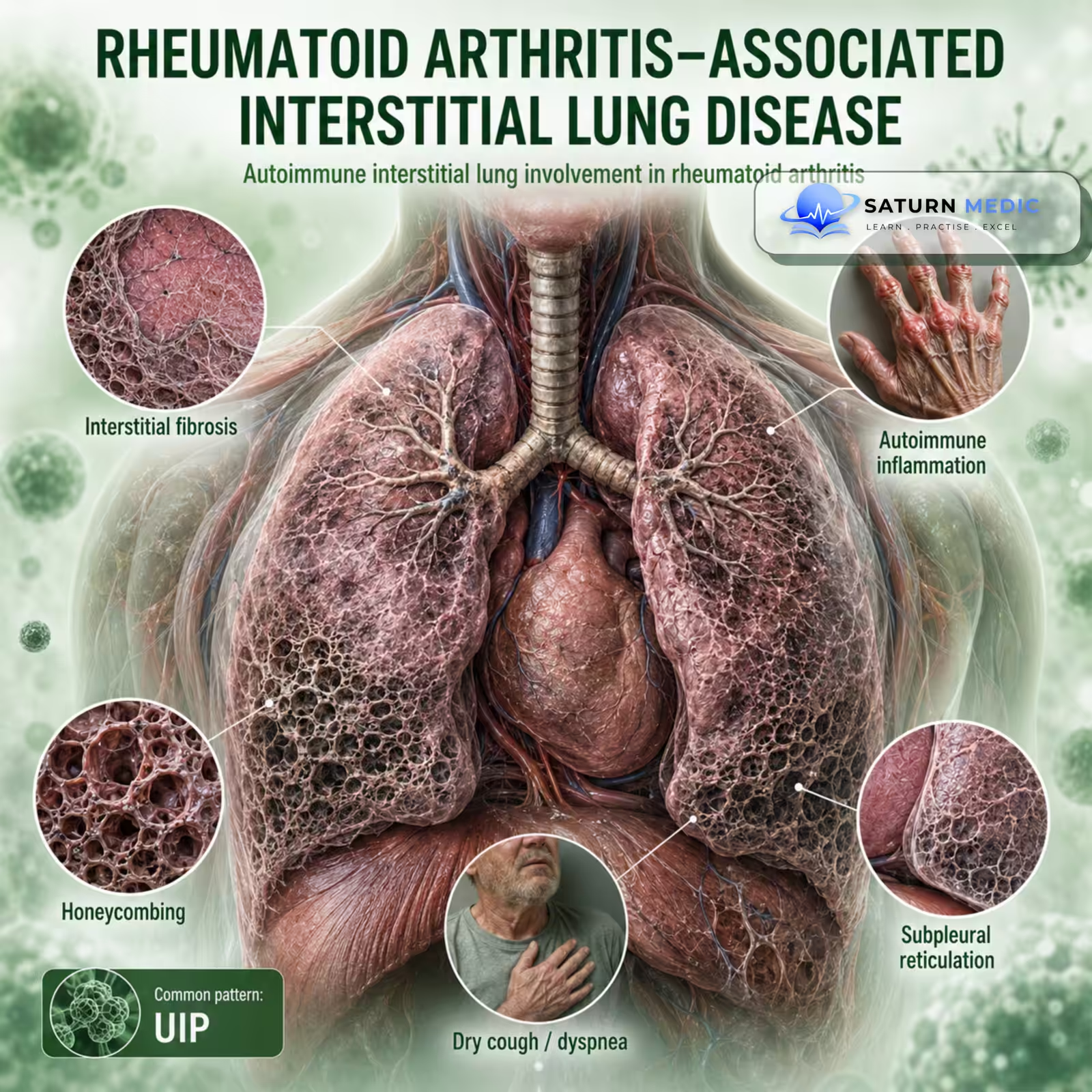
Rheumatoid arthritis (RA) is not only a joint disease—it can also affect the lungs. Lung involvement is one of the important extra-articular (outside the joints) complications of RA. One of the most common lung problems is interstitial lung disease (ILD), where inflammation and scarring develop in the lung tissue.
Also called
ICD-10
Specialty
Onset
Reviewed
-
OverviewOverview
-
Etiology & Risk FactorsEtiology & Risk Factors
-
PathophysiologyPathophysiology
-
Clinical PresentationClinical Presentation
-
History TakingHistory Taking
-
Physical ExaminationPhysical Examination
-
InvestigationsInvestigations
-
DiagnosisDiagnosis
-
ManagementManagement
-
ComplicationsComplications
-
PrognosisPrognosis
-
Key Points / Clinical PearlsKey Points / Clinical Pearls
Overview
- What happens? Inflammation can lead to scarring (fibrosis) of the lungs, making it harder for oxygen to move into the blood.
- Why is it important? Lung disease can significantly affect quality of life and may become a serious complication if it progresses.
Etiology & Risk Factors
-Etiology :
- Rheumatoid arthritis-associated lung disease occurs because rheumatoid arthritis is a chronic autoimmune inflammatory disease that can involve the lungs, leading to inflammation and, in some patients, interstitial lung disease (ILD) with lung scarring (fibrosis).
-Risk factors :
- Smoking
- Genetic predisposition (HLA-DR4 and HLA-DR1)
- Family history of rheumatoid arthritis
- Female sex
- Obesity
- Periodontitis (infection of the gums)
Pathophysiology
Rheumatoid arthritis (autoimmune inflammation) → Lung parenchymal injury → Repeated tissue injury with abnormal wound healing → Collagen deposition and pulmonary interstitial fibrosis → Stiff lungs with impaired gas exchange → Progressive dyspnea and dry cough
Clinical Presentation
- Progressive shortness of breath (especially on exertion)
- Persistent dry (nonproductive) cough
- Fatigue
- Fine bibasal “Velcro-like” crackles on lung auscultation
Advanced disease
- Digital clubbing
- Cyanosis
History Taking
- Do you have shortness of breath?
- Is the breathlessness getting worse over time?
- Do you have a persistent dry cough?
- When did these symptoms start?
- Do you have fatigue?
- Have you had a fever?
- Have you been diagnosed with rheumatoid arthritis?
- Do you smoke or have you smoked in the past?
Physical Examination
- Observe for shortness of breath and rapid, shallow breathing
- Check oxygen saturation (SpO₂)
- Auscultation: Fine bibasal “Velcro-like” inspiratory crackles
- Inspect fingers for digital clubbing (advanced disease)
- Look for cyanosis (advanced disease)
- Examine joints for features of rheumatoid arthritis (joint swelling or deformity)
Investigations
- Pulse oximetry (SpO₂)
- Chest X-ray (initial assessment)
- High-resolution CT (HRCT) chest – best imaging test
- Pulmonary function tests (PFTs) with DLCO
- Blood tests: Rheumatoid factor (RF), anti-CCP, ANA, ESR, CRP
- Bronchoscopy or lung biopsy if the diagnosis remains unclear
Most important investigation: HRCT chest
Diagnosis
Diagnosis is based on:
- History: Rheumatoid arthritis with progressive shortness of breath and persistent dry cough
- Physical examination: Bibasal “Velcro-like” inspiratory crackles
- High-resolution CT (HRCT) chest: Confirms interstitial lung disease
- Pulmonary function tests (PFTs): Restrictive pattern with reduced DLCO
- Blood tests: Rheumatoid factor (RF), anti-CCP, ANA, ESR, CRP
- Lung biopsy: Only if the diagnosis remains uncertain
Related Topics
Management of Rheumatoid arthritis–associated interstitial lung disease (RA-ILD)
- Treat the underlying rheumatoid arthritis with appropriate systemic immunomodulatory therapy (specialist-guided).
- Consider corticosteroids in selected patients (specialist advice).
- Smoking cessation
- Oxygen therapy if hypoxemic
- Pulmonary rehabilitation
- Vaccinations (influenza, COVID-19, pneumococcal)
- Refer to a pulmonologist
- Lung transplantation for advanced or progressive disease
Most important point:
Treat the underlying RA and provide supportive lung care.
Complications of Rheumatoid arthritis–associated interstitial lung disease (RA-ILD)
- Progressive pulmonary fibrosis → worsening lung function
- Pulmonary hypertension
- Cor pulmonale (right-sided heart failure)
- Respiratory failure (advanced disease)
- Chronic hypoxemia, which may lead to digital clubbing and cyanosis
The major cause of morbidity and mortality is progressive respiratory failure due to pulmonary fibrosis.
Prognosis of Rheumatoid arthritis–associated interstitial lung disease (RA-ILD)
- Most healthy patients recover completely.
- Symptoms usually improve over several days.
- Fatigue and cough may persist longer.
- Prognosis is worse in:
- Older adults
- Young children
- Pregnant patients
- Immunocompromised patients
- Patients with chronic diseases
- Severe disease may cause pneumonia, respiratory failure, and death.
Key Points / Clinical Pearls of Rheumatoid arthritis–associated interstitial lung disease (RA-ILD)
- RA can affect the lungs, not just the joints.
- Most common lung manifestation: Interstitial lung disease (Rheumatoid arthritis–associated interstitial lung disease RA-ILD) (ILD)/pulmonary fibrosis.
- Classic symptoms: Progressive exertional shortness of breath + persistent dry cough.
- Classic sign: Bibasal “Velcro-like” inspiratory crackles.
- Best investigation: High-resolution CT (HRCT) chest.
- Pulmonary function tests: Restrictive pattern with reduced DLCO.
- Management: Treat the underlying RA with systemic immunomodulatory therapy, provide supportive care, encourage smoking cessation, and use oxygen if needed.
- National Center for Biotechnology Information (NIH). Rheumatoid Arthritis, StatPearls.
- Kelly CA, Saravanan V, Nisar M, et al. Rheumatoid Arthritis-Related Interstitial Lung Disease: Associations, Prognostic Factors and Physiological and Radiological Characteristics. Rheumatology. PMC2818853.
- Kim D, Cho SK, Kim JW, et al. Navigating Interstitial Lung Disease Associated with Rheumatoid Arthritis (RA-ILD): From Genetics to Clinical Landscape. PMC11891064.
- Raghu G, Remy-Jardin M, Richeldi L, et al. Idiopathic Pulmonary Fibrosis (an Update) and Progressive Pulmonary Fibrosis in Adults: An Official ATS/ERS/JRS/ALAT Clinical Practice Guideline. Am J Respir Crit Care Med. 2022. PMID: 35486072.
- MedlinePlus, National Library of Medicine (NIH). Rheumatoid Arthritis: Medical Encyclopedia.