

Clinical Subject Page
Esophageal Cancer
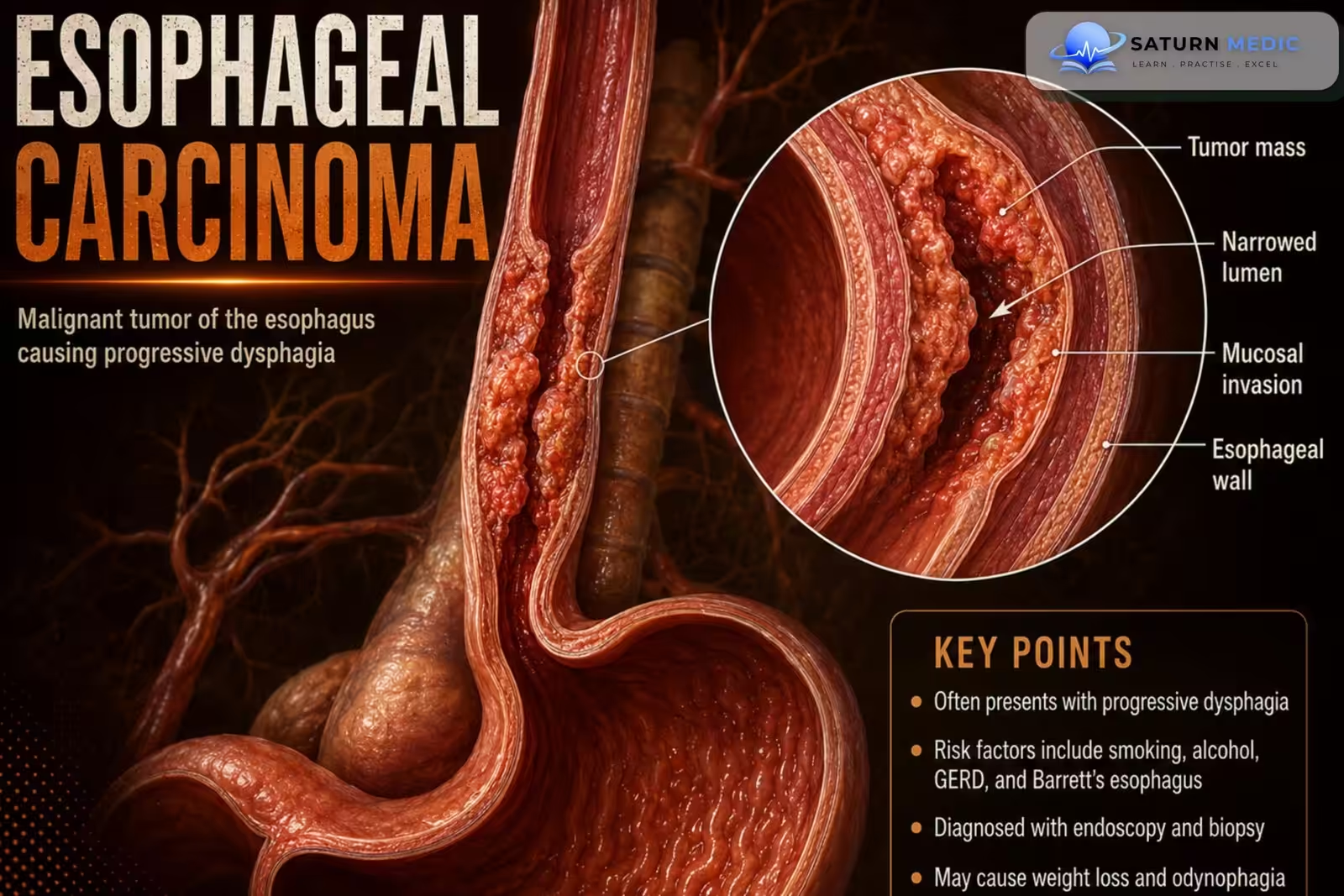
Esophageal carcinoma is a malignant tumor of the esophagus. The two major histological types are
esophageal adenocarcinoma and esophageal squamous cell carcinoma (SCC).
Also called
ICD-10
Specialty
Onset
Reviewed
-
OverviewOverview
-
Etiology & Risk FactorsEtiology & Risk Factors
-
PathophysiologyPathophysiology
-
Clinical PresentationClinical Presentation
-
History TakingHistory Taking
-
Physical ExaminationPhysical Examination
-
InvestigationsInvestigations
-
DiagnosisDiagnosis
-
ManagementManagement
-
ComplicationsComplications
-
PrognosisPrognosis
-
Key Points / Clinical PearlsKey Points / Clinical Pearls
Overview
Esophageal cancer is the eighth most common cancer worldwide and is more common in men than
women (3:1). Adenocarcinoma typically occurs in the lower third of the esophagus and is
associated with GERD and Barrett esophagus, while squamous cell carcinoma is linked mainly to
alcohol and tobacco use. Early disease is often asymptomatic, resulting in late diagnosis and a poor
prognosis.
Etiology & Risk Factors
–Esophageal Adenocarcinoma:
• Chronic GERD
• Barrett esophagus
• Obesity
• Smoking
–Esophageal Squamous Cell Carcinoma:
• Tobacco use
• Alcohol use
• Diet high in nitrosamines
• Diet low in fruits and vegetables
Pathophysiology
1. Chronic exposure to carcinogenic or inflammatory stimuli causes dysplastic changes.
2. Dysplasia progresses to invasive carcinoma.
3. Tumor enlarges, narrowing the esophageal lumen.
4. Local invasion and lymphatic spread occur.
5. Advanced disease commonly presents because early Esophageal Cancer is often asymptomatic.
Clinical Presentation
Early disease:
• Usually asymptomaticLater disease:
• Progressive dysphagia
• Weight loss
• Dyspepsia
• Cervical lymphadenopathy
• Hoarseness
• Persistent cough
• Hematemesis
• Melena
• Anemia
History Taking
Ask about:
• Progressive dysphagia
• Weight loss
• Dyspepsia
• Heartburn or history of GERD
• Barrett esophagus
• Hematemesis or melena
• Smoking history
• Alcohol consumption
• Dietary habits
• Persistent cough
• Hoarseness
Physical Examination
Assess for:
• Weight loss
• Cervical lymphadenopathy
• Signs of anemia
• Evidence of upper gastrointestinal bleeding
Investigations
-
Initial Tests for Esophageal Cancer
-
Complete blood count (CBC)
-
Electrolytes and renal function tests
-
Liver function tests (LFTs)
-
Nutritional assessment (albumin, weight)
Diagnostic Investigations for Esophageal Cancer
-
Upper gastrointestinal endoscopy (EGD) with biopsy (gold standard)
-
Histopathological examination of biopsy specimen
Staging Investigations for Esophageal Cancer
-
Contrast-enhanced CT scan of the chest and abdomen
-
Endoscopic ultrasound (EUS) for assessment of tumor depth (T stage) and regional lymph nodes (N stage)
-
PET-CT to detect distant metastases (selected patients)
-
Bronchoscopy for proximal or mid-esophageal tumors if airway invasion is suspected
Additional Investigations for Esophageal Cancer
-
Barium swallow (if endoscopy is not immediately available or to assess anatomy)
-
Pulmonary function tests (PFTs) and echocardiography before surgery (when indicated)
-
Diagnosis
Diagnosis is confirmed by:
• EGD demonstrating the lesion
• Histopathological examination of biopsy tissue
Tumor staging is performed using:
• CT chest and abdomen
• PET scan
• Endoscopic ultrasound (EUS)
Related Topics
Management
-
Management of Esophageal Cancer depends on the tumor stage, histological type, location, and the patient’s overall fitness.
1. Early-Stage Disease (Tis/T1a)
-
Endoscopic mucosal resection (EMR) or endoscopic submucosal dissection (ESD) for superficial lesions.
-
Endoscopic eradication therapy for selected early adenocarcinomas arising in Barrett’s esophagus.
-
Regular endoscopic surveillance after treatment.
2. Localized Resectable Disease
-
Esophagectomy is the primary curative treatment.
-
Neoadjuvant chemoradiotherapy followed by surgery is recommended for most patients with locally advanced resectable disease.
-
Some patients may receive perioperative chemotherapy, particularly for adenocarcinoma.
3. Unresectable or Locally Advanced Disease
-
Definitive concurrent chemoradiotherapy for patients who are not surgical candidates or have unresectable tumors.
-
Reassess for surgery if the tumor becomes resectable.
4. Metastatic or Advanced Disease
Treatment is palliative and aims to improve survival and quality of life.Options include:
-
Systemic chemotherapy
-
Immunotherapy (selected patients)
-
Targeted therapy (e.g., HER2-targeted therapy for HER2-positive adenocarcinoma)
-
Palliative radiotherapy
-
Endoscopic stenting for dysphagia
-
Nutritional support
-
Pain and symptom management
5. Supportive Care
-
Nutritional assessment and enteral feeding when needed
-
Dysphagia management
-
Pain control
-
Smoking cessation
-
Psychological support
-
Palliative care for advanced disease
-
Complications
• Progressive esophageal obstruction
• Upper gastrointestinal bleeding
• Local invasion
• Metastatic disease
• Malnutrition due to dysphagia
Prognosis
- Overall prognosis of Esophageal Cancer is poor because the disease is aggressive and is frequently diagnosed at an
advanced stage. - Many patients have unresectable disease at presentation.
Key Points / Clinical Pearls
• Two major types: adenocarcinoma and squamous cell carcinoma.
• Adenocarcinoma is associated with GERD, Barrett esophagus, obesity, and smoking.
• Squamous cell carcinoma is associated with alcohol, tobacco, and nitrosamine-rich diets.
• Early disease is usually asymptomatic.
• Progressive dysphagia and weight loss are the hallmark presenting symptoms.
• EGD with biopsy is the diagnostic test of choice.
• CT, PET, and EUS are used for staging.
• Surgery offers potential cure in resectable disease.
• Chemoradiotherapy and palliative stenting are options for unresectable disease.
• Prognosis is generally poor due to late presentation
- Goosenberg E, Vadakekut ES. National Center for Biotechnology Information (NIH). Gastroesophageal Reflux Disease, StatPearls.
- Katz PO, Dunbar KB, Schnoll-Sussman FH, Greer KB, Yadlapati R, Spechler SJ. ACG Clinical Guideline for the Diagnosis and Management of Gastroesophageal Reflux Disease. Am J Gastroenterol. 2022;117:27-56. PMID: 34807007.
- MedlinePlus, National Library of Medicine (NIH). GERD: Health Topic.
- National Center for Biotechnology Information (NIH). Barrett Esophagus, StatPearls.
- National Center for Biotechnology Information (NIH). Hiatal Hernia, StatPearls.