

Clinical Subject Page
Hemorrhoids
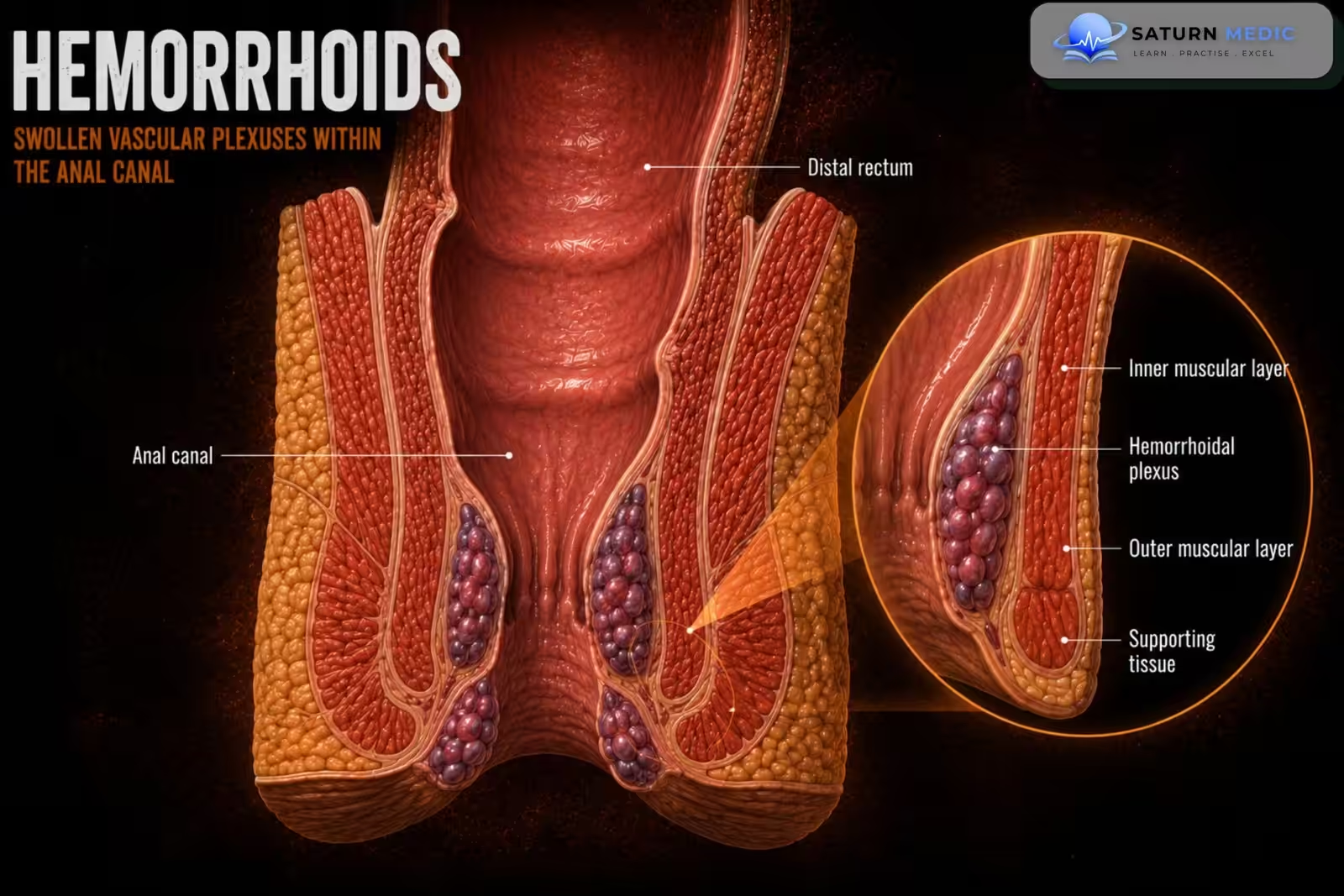
Hemorrhoids are enlarged and symptomatic vascular cushions of the anal canal that
cause rectal bleeding, prolapse, pain, pruritus, or discomfort
Also called
ICD-10
Specialty
Onset
Reviewed
-
OverviewOverview
-
Etiology & Risk FactorsEtiology & Risk Factors
-
PathophysiologyPathophysiology
-
Clinical PresentationClinical Presentation
-
History TakingHistory Taking
-
Physical ExaminationPhysical Examination
-
InvestigationsInvestigations
-
DiagnosisDiagnosis
-
ManagementManagement
-
ComplicationsComplications
-
PrognosisPrognosis
-
Key Points / Clinical PearlsKey Points / Clinical Pearls
Overview
Hemorrhoids are classified as internal (above the dentate line) or external (below the
dentate line). Internal hemorrhoids are further graded according to the degree of prolapse (Grade I–IV). Most patients present with painless bright red rectal bleeding, while thrombosed external hemorrhoids cause acute severe pain
Etiology & Risk Factors
Etiology
Hemorrhoids develop due to enlargement and downward displacement of the normal
anal vascular cushions, resulting from increased venous pressure and weakening of the
supporting connective tissue.
Risk Factors
– Chronic constipation
– Straining during defecation
– Low-fiber diet
– Pregnancy
– Obesity
– Prolonged sitting on the toilet
– Chronic diarrhea
– Increasing age
– Heavy lifting
– Portal hypertension (rare cause of anorectal varices, not true hemorrhoids)
Pathophysiology
Repeated straining, constipation, prolonged sitting, pregnancy, or increased intra-abdominal pressure causes downward displacement and stretching of the anal cushions → weakening of the supporting connective tissue and smooth muscle → dilatation and congestion of the hemorrhoidal vascular plexus → enlargement and prolapse of the hemorrhoidal cushions → friction and trauma during defecation cause bleeding, irritation, and mucus discharge → thrombosis may develop in external hemorrhoids, producing sudden severe pain and swelling.
Clinical Presentation
Internal Hemorrhoids
– Painless bright red rectal bleeding
– Prolapse during defecation
– Mucous discharge
– Pruritus ani
– Sensation of incomplete evacuation
External Hemorrhoids
– Painful perianal swelling (especially if thrombosed)
– Tender bluish lump
– Perianal discomfort
– Itching
– Difficulty sitting
History Taking
Ask about: Rectal bleeding, color of blood, pain during defecation, prolapse or swelling, constipation, straining, duration of symptoms, itching or mucus discharge, previous hemorrhoids, weight loss/change in bowel habits, family history of colorectal cancer
Physical Examination
General and abdominal examination, inspection of the perianal region, digital rectal examination (if tolerated), and anoscopy. Look for external hemorrhoids, thrombosis, prolapsed internal hemorrhoids, bleeding, anal fissure, perianal abscess or fistula, and rectal masses
Investigations
Clinical Evaluation
Most hemorrhoids are diagnosed clinically.
Office-Based Examination
Anoscopy (First-line investigation)
– Best test for evaluating internal hemorrhoids
– Determines location, size, and grade
– Identifies active bleeding
Digital Rectal Examination
– Excludes rectal masses
– Assesses sphincter tone
– Detects other anorectal pathology
Endoscopic Evaluation
Flexible sigmoidoscopy or colonoscopy
when age-appropriate screening, iron-deficiency anemia, unexplained bleeding, bowel habit changes, weight loss, family
history of colorectal cancer, or atypical symptoms are present.
Laboratory Tests
CBC if significant/chronic bleeding; iron studies if anemia suspected.
Important Note
Anoscopy is the investigation of choice for internal hemorrhoids. Colonoscopy is
indicated when alarm features or risk factors for colorectal disease are present and
should not be replaced by anoscopy.
Diagnosis
Based on characteristic history, physical examination, digital rectal examination, and
anoscopy (gold standard office examination).
Internal hemorrhoids are graded:
Grade I: No prolapse
Grade II: Prolapse with straining, reduces spontaneously
Grade III: Requires manual reduction
Grade IV: Irreducible prolapse
Related Topics
Management
1. Conservative Treatment (First-line)
High-fiber diet, fiber supplements, adequate fluid intake, avoid straining, avoid
prolonged sitting on the toilet, sitz baths, stool softeners when needed.
2. Medical Therapy
Topical anesthetics, topical corticosteroids (short-term), oral analgesics, flavonoids
(selected patients).
3. Office Procedures
Persistent Grade I–III: Rubber band ligation (preferred), infrared coagulation,
sclerotherapy.
4. Surgical Treatment
Indications: Grade III–IV, large prolapsing hemorrhoids, recurrent symptoms, failed
conservative/office treatment, selected thrombosed external hemorrhoids.
Procedures: Hemorrhoidectomy, stapled hemorrhoidopexy, Doppler-guided
hemorrhoidal artery ligation.
Important Note
Lifestyle modification and increased dietary fiber are first-line treatments. Rubber band ligation is the preferred office-based treatment for symptomatic Grade I–III internal hemorrhoids, while hemorrhoidectomy is reserved for advanced or refractory disease.
Complications
– Thrombosis
– Chronic bleeding
– Iron-deficiency anemia
– Ulceration
– Strangulated prolapsed hemorrhoid
– Infection (rare)
– Recurrence after treatment
Prognosis
– Excellent with appropriate treatment
– Most patients improve with conservative management
– Office procedures have high success rates
– Surgery provides the lowest recurrence rate but has greater postoperative pain
– Recurrence is reduced by maintaining a high-fiber diet and avoiding constipation
Key Points / Clinical Pearls
– Hemorrhoids are enlarged vascular cushions of the anal canal.
– Internal hemorrhoids usually cause painless bright red rectal bleeding.
– External thrombosed hemorrhoids present with acute severe pain.
– Anoscopy is the first-line investigation for internal hemorrhoids.
– Colonoscopy is indicated when alarm features or colorectal cancer risk factors are
present.
– High-fiber diet and lifestyle modification are first-line treatment.
– Rubber band ligation is the preferred office procedure for Grade I–III internal
hemorrhoids.
– Hemorrhoidectomy is reserved for Grade III–IV or refractory hemorrhoids.
– Always exclude colorectal malignancy in patients with atypical rectal bleeding
- National Center for Biotechnology Information (NIH). Internal Hemorrhoid, StatPearls.
- Hawkins AT, Davis BR, Bhama AR, et al; Clinical Practice Guidelines Committee of the American Society of Colon and Rectal Surgeons. The American Society of Colon and Rectal Surgeons Clinical Practice Guidelines for the Management of Hemorrhoids. Dis Colon Rectum. 2024. Guideline Summary.
- Sun Z, Migaly J. Hemorrhoidal Disease: A Review. JAMA. 2025. Cited via StatPearls.
- MedlinePlus, National Library of Medicine (NIH). Hemorrhoids: Health Topic.
- National Center for Biotechnology Information (NIH). Hemorrhoidectomy, StatPearls.