

Clinical Subject Page
Pilonidal Sinus (PNS)
Pilonidal Sinus Disease (PNS) is a chronic inflammatory condition affecting the skin and subcutaneous tissue of the natal cleft. Pilonidal Sinus Disease (PNS) develops when loose hairs penetrate the skin, causing inflammation, infection, sinus tract formation, and sometimes abscess formation
Also called
ICD-10
Specialty
Onset
Reviewed
-
OverviewOverview
-
Etiology & Risk FactorsEtiology & Risk Factors
-
PathophysiologyPathophysiology
-
Clinical PresentationClinical Presentation
-
History TakingHistory Taking
-
Physical ExaminationPhysical Examination
-
InvestigationsInvestigations
-
DiagnosisDiagnosis
-
ManagementManagement
-
ComplicationsComplications
-
PrognosisPrognosis
-
Key Points / Clinical PearlsKey Points / Clinical Pearls
Overview
Pilonidal Sinus Disease (PNS) occurs when loose hairs penetrate the skin of the natal cleft and trigger a foreign-body inflammatory reaction. Repeated inflammation causes the development of sinus tracts, chronic discharge, and sometimes an acute abscess.
Pilonidal Sinus Disease (PNS) commonly affects young adults, particularly hirsute males. Obesity, prolonged sitting, a deep natal cleft, sweating, and repeated local friction increase the risk.
Etiology & Risk Factors
Etiology
Pilonidal Sinus Disease (PNS) develops when loose hair enters the skin of the natal cleft. The embedded hair acts as a foreign body, producing inflammation, infection, and sinus tract formation.
Risk Factors
-
Male sex
-
Age between 15 and 35 years
-
Excessive body hair
-
Coarse or stiff hair
-
Deep natal cleft
-
Obesity
-
Prolonged sitting
-
Repeated friction or trauma
-
Excessive sweating
-
Poor local hygiene
-
Family history of Pilonidal Sinus Disease (PNS)
-
Previous Pilonidal Sinus Disease (PNS)
Pathophysiology
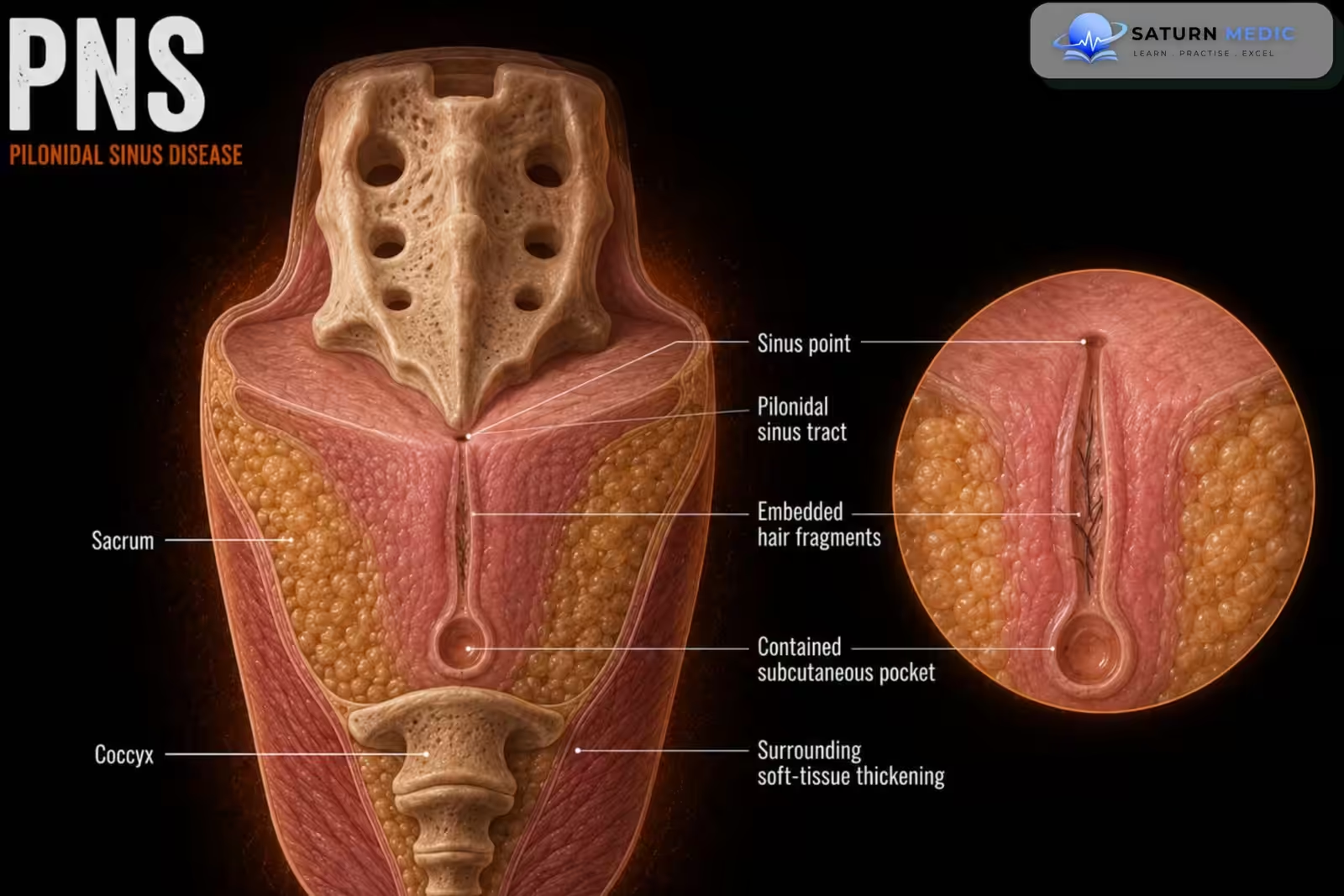
Loose hairs collect within the natal cleft → friction and movement drive the hairs into the skin → the embedded hair acts as a foreign body → local inflammation and granulation tissue develop → a Pilonidal Sinus (PNS) tract forms → secondary bacterial infection may occur → pus accumulates and forms an acute Pilonidal Sinus (PNS) abscess → repeated infection and drainage produce chronic Pilonidal Sinus Disease (PNS), fibrosis, and multiple sinus openings
Clinical Presentation
Symptoms
-
Pain over the sacrococcygeal region
-
Painful swelling in the natal cleft
-
Purulent or bloody discharge
-
Foul-smelling drainage
-
Difficulty sitting
-
Recurrent episodes of pain and discharge
-
Fever or malaise when a Pilonidal Sinus (PNS) abscess is present
Signs
-
One or more midline pits in the natal cleft
-
Visible Pilonidal Sinus (PNS) openings
-
Hair protruding from the openings
-
Tender swelling
-
Erythema
-
Fluctuant abscess
-
Purulent discharge
-
Surrounding cellulitis
-
Scar tissue from previous Pilonidal Sinus Disease (PNS)
History Taking
Ask about:
- Onset and duration of symptoms
- Pain in the natal cleft
- Swelling
- Purulent or bloody discharge
- Foul smell
- Fever or chills
- Previous Pilonidal Sinus Disease (PNS)
- Previous Pilonidal Sinus (PNS) abscesses
- Previous incision and drainage
- Previous surgery
- Recurrent symptoms
- Prolonged sitting
- Excessive body hair
- Local hygiene
- Family history of Pilonidal Sinus Disease (PNS)
Physical Examination
General Examination
Assess for:
-
Fever
-
Tachycardia
-
Signs of systemic infection
-
Signs of sepsis in severe cases
Local Examination
Inspect and palpate the natal cleft for:
-
Midline pits
-
Pilonidal Sinus (PNS) openings
-
Embedded hair
-
Purulent discharge
-
Erythema
-
Tenderness
-
Swelling
-
Fluctuation
-
Cellulitis
-
Multiple sinus tracts
-
Previous surgical scars
Investigations
Clinical Assessment
The diagnosis of Pilonidal Sinus Disease (PNS) is usually clinical and is based on the typical location, symptoms, and examination findings.
Laboratory Tests
Laboratory investigations are usually unnecessary in uncomplicated Pilonidal Sinus Disease (PNS).
Consider:
-
Complete blood count
-
C-reactive protein
-
Blood cultures if systemic infection or sepsis is suspected
Imaging
Imaging is not routinely required for uncomplicated Pilonidal Sinus Disease (PNS).
Ultrasound, CT, or MRI may be considered when there is:
-
Recurrent Pilonidal Sinus Disease (PNS)
-
Complex or branching sinus tracts
-
Suspected deep extension
-
An uncertain diagnosis
-
Concern about another underlying condition
Important Investigation Note
Routine imaging is not required when Pilonidal Sinus Disease (PNS) has a typical clinical presentation.
Diagnosis
The diagnosis of Pilonidal Sinus Disease (PNS) is based on:
- Typical symptoms
- Midline pits in the natal cleft
- Visible Pilonidal Sinus (PNS) openings
- Hair within the sinus openings
- Purulent discharge
- Tender swelling or abscess
- Recurrent inflammation in the natal cleft
Related Topics
Management
symptomatic Pilonidal Sinus Disease (PNS)
Management may include:
- Good local hygiene
- Keeping the natal cleft clean and dry
- Regular hair removal
- Laser hair reduction in selected patients
- Weight reduction when appropriate
- Avoiding prolonged sitting
- Monitoring for infection
Acute Pilonidal Sinus (PNS) Abscess
First-line management is:
- Incision and drainage
- Removal of visible loose hairs
- Analgesia
- Regular wound care
- Follow-up after drainage
Antibiotics are not routinely required after drainage unless there is:
- Surrounding cellulitis
- Systemic infection
- Immunosuppression
- Significant comorbidity
- Sepsis
Chronic or Recurrent Pilonidal Sinus Disease (PNS)
Treatment options include:
- Excision with healing by secondary intention
- Excision with primary closure
- Off-midline closure
- Karydakis flap
- Bascom cleft-lift procedure
- Limberg flap
- Minimally invasive treatment in selected cases
- Endoscopic treatment of Pilonidal Sinus Disease (PNS)
Postoperative Care
- Regular wound care
- Good personal hygiene
- Keep the natal cleft clean and dry
- Regular hair removal
- Avoid prolonged pressure on the wound
- Attend follow-up appointments
- Monitor for recurrent Pilonidal Sinus Disease (PNS)
Complications
- Recurrent Pilonidal Sinus Disease
- Acute Pilonidal Sinus (PNS) abscess
- Chronic purulent discharge
- Multiple sinus tracts
- Cellulitis
- Wound infection
- Delayed wound healing
- Wound breakdown
- Postoperative recurrence
- Rare development of squamous cell carcinoma in long-standing Pilonidal Sinus Disease
Prognosis
- The prognosis of Pilonidal Sinus Disease (PNS) is generally good with appropriate treatment. Acute Pilonidal Sinus (PNS) abscesses usually improve after incision and drainage. However, recurrence may occur if the underlying sinus tracts remain or preventive measures are not followed.
- Definitive off-midline surgical procedures generally provide good long-term outcomes in patients with chronic or recurrent Pilonidal Sinus Disease
Key Points / Clinical Pearls
- Pilonidal Sinus Disease (PNS) commonly affects the natal cleft.
- Pilonidal Sinus Disease (PNS) is usually caused by loose hair penetrating the skin.
- Young, hirsute males are commonly affected.
- Pilonidal Sinus Disease (PNS) may be asymptomatic, chronically draining, or acutely infected.
- Diagnosis of Pilonidal Sinus Disease (PNS) is mainly clinical.
- Acute Pilonidal Sinus (PNS) abscess requires incision and drainage.
- Antibiotics are reserved for cellulitis, systemic infection, or high-risk patients.
- Chronic or recurrent Pilonidal Sinus Disease (PNS) may require definitive surgery.
- Good hygiene and regular hair removal reduce recurrence.
- Long-standing Pilonidal Sinus Disease (PNS) rarely progresses to squamous cell carcinoma
- National Center for Biotechnology Information (NIH). Pilonidal Cyst and Sinus, StatPearls.
- Johnson EK, Vogel JD, Cowan ML, Feingold DL, Steele SR; Clinical Practice Guidelines Committee of the American Society of Colon and Rectal Surgeons. The American Society of Colon and Rectal Surgeons' Clinical Practice Guidelines for the Management of Pilonidal Disease. Dis Colon Rectum. 2019;62:146-157.
- Doll D, Matevossian E, Wietelmann K, et al. The Management of Pilonidal Sinus. Dtsch Arztebl Int. 2020;117:12-21. PMC6384517.
- MedlinePlus, National Library of Medicine (NIH). Pilonidal Cyst: Medical Encyclopedia.
- Karydakis GE. New Approach to the Problem of Pilonidal Sinus. Lancet. 1973;2:1414-1415.