

Clinical Subject Page
Acute Viral Hepatitis
Acute viral hepatitis is an acute inflammatory disease of the liver caused by hepatotropic viruses
(HAV, HBV, HCV, HDV, and HEV). Most cases are self-limited, but some patients may develop
severe liver injury or progress to chronic infection depending on the virus
ICD-10
Specialty
Onset
Reviewed
-
OverviewOverview
-
Etiology & Risk FactorsEtiology & Risk Factors
-
PathophysiologyPathophysiology
-
Clinical PresentationClinical Presentation
-
History TakingHistory Taking
-
Physical ExaminationPhysical Examination
-
InvestigationsInvestigations
-
DiagnosisDiagnosis
-
ManagementManagement
-
ComplicationsComplications
-
PrognosisPrognosis
-
Key Points / Clinical PearlsKey Points / Clinical Pearls
Overview
-Acute liver inflammation caused by viral infection.
• HAV & HEV: Mainly fecal–oral.
• HBV: Sexual, parenteral, perinatal.
• HCV: Mainly parenteral.
• HDV requires HBV infection.
• Most patients recover spontaneously.
• HBV, HCV and HDV may become chronic.
• HEV carries an increased risk of acute liver failure during pregnancy.
Etiology & Risk Factors
Causative viruses
• HAV • HBV • HCV • HDV • HEV
Risk factors
• Contaminated food or water (HAV, HEV)
• Sexual exposure (HBV)
• Intravenous drug use
• Blood exposure
• Perinatal transmission
• Close household contact
• Travel to endemic areas
Pathophysiology
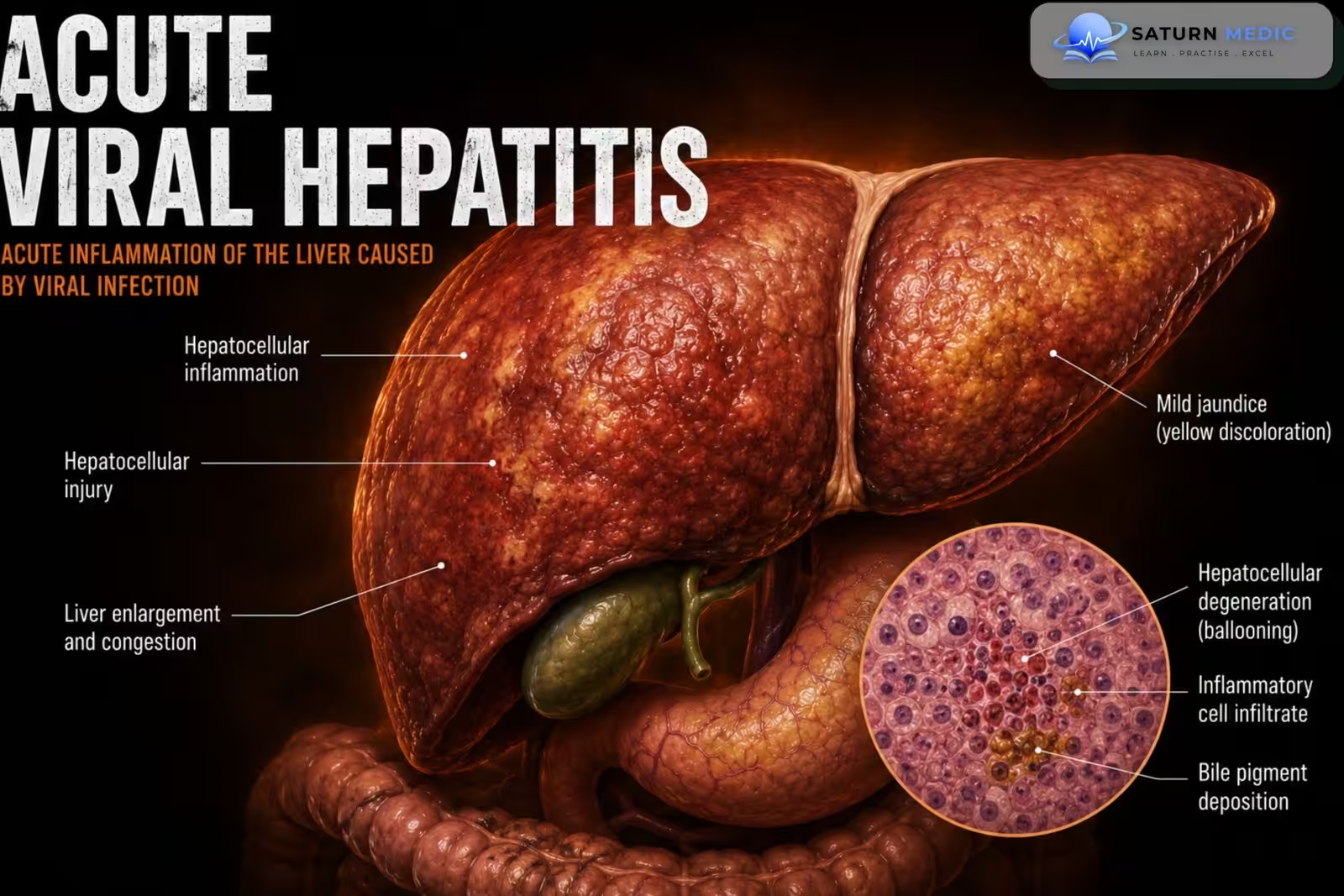
• Viral infection of hepatocytes.
• Immune-mediated hepatocyte injury causes liver inflammation.
• Hepatocyte damage results in elevated liver enzymes and jaundice.
• HBV, HCV and HDV may persist and cause chronic liver disease.
Clinical Presentation
May be asymptomatic or present with:
• Malaise
• Fatigue
• Fever
• Anorexia
• Nausea
• Vomiting
• Right upper quadrant discomfort
• Dark urine
• Pale stools
• Jaundice
• Pruritus
History Taking
Ask about onset of symptoms, jaundice, dark urine, pale stools, fever, nausea/vomiting, recent
travel, contaminated food or water exposure, sexual history, IV drug use, blood transfusions,
occupational exposure, vaccination history, pregnancy, and previous liver disease.
Physical Examination
• General appearance • Fever
• Jaundice
• Scleral icterus
• Hepatomegaly
• Right upper quadrant
tenderness
• Signs of dehydration
• Mental status (encephalopathy if severe)
Investigations
Initial laboratory studies
• LFTs: AST, ALT, Bilirubin, ALP
• Liver function: INR/PT, Albumin
Viral testing
• HAV serology
• HBV serology
• HCV antibody
• HEV testing when indicated • HDV testing in HBV
infection
Viral load
• HBV DNA • HCV RNA
• Evaluate severity of liver dysfunction and assess for acute liver failure if suspected.
Diagnosis
Diagnosis is based on compatible :
- clinical presentation,
- elevated liver enzymes,
- virus-specific serologic testing,
- and viral load testing where indicated.
Related Topics
Management
General supportive care
• Rest
• Hydration
• Nutritional suppor
• Symptomatic treatment
• Avoid alcohol
• Avoid hepatotoxic medications
HAV: Supportive care only.
Acute HBV: Usually supportive care; antivirals generally not indicated for uncomplicated disease.
Acute HCV: Early direct-acting antivirals (DAAs).
Acute HEV: Usually supportive care.
HDV: Manage in the context of HBV infection.
Complications
• Acute liver failure
• Chronic HBV infection
• Chronic HCV infection
• Chronic HDV infection
•Cirrhosis
• Hepatocellular carcinoma
• Fulminant hepatic failure (especially HEV during pregnancy)
Prognosis
• HAV: Excellent; usually complete recovery.
• HEV: Usually self-limited but severe in pregnancy.
• HBV: Variable; may progress to chronic infection.
• HCV: Frequently progresses to chronic infection if untreated.
• HDV: More severe disease with increased risk of cirrhosis.
Key Points / Clinical Pearls
- • HAV, HBV, HCV, HDV and HEV are the major causes.
• LFTs and virus-specific serology are the cornerstone of investigation.
• Viral load testing helps guide management.
• Supportive care is the main treatment for most acute infections.
• Acute HCV can be treated with DAAs.
• Most acute HBV infections do not require antiviral therapy.
• Monitor closely for acute liver failure.
• HAV and HBV are vaccine-preventable.
- Grant LM, Purres M. National Center for Biotechnology Information (NIH). Viral Hepatitis, StatPearls.
- Girish V, Grant LM, John S. National Center for Biotechnology Information (NIH). Hepatitis A, StatPearls.
- World Health Organization. Hepatitis A: Fact Sheet.
- Bhattacharya D, Aronsohn A, Price J, Lo Re V; AASLD-IDSA HCV Guidance Panel. Hepatitis C Guidance 2023 Update: AASLD-IDSA Recommendations for Testing, Managing, and Treating Hepatitis C Virus Infection. Clin Infect Dis. 2023. PMID: 37229695.
- MedlinePlus, National Library of Medicine (NIH). Hepatitis: Health Topic.