

Clinical Subject Page
Chronic Hepatitis B & C
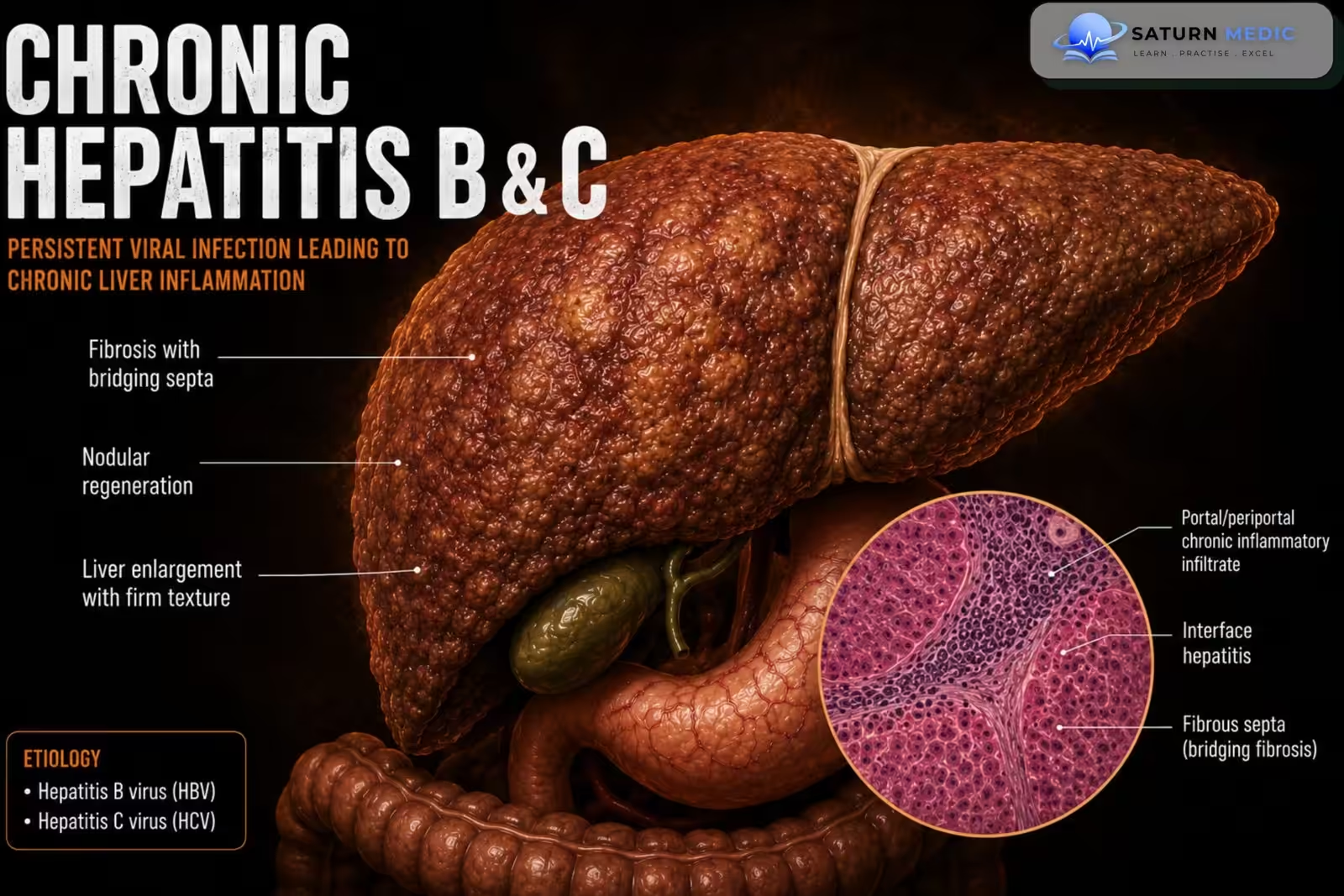
Chronic hepatitis B (HBV) and chronic hepatitis C (HCV) are persistent viral infections of the liver
that can lead to progressive liver fibrosis, cirrhosis, liver failure, and hepatocellular carcinoma
(HCC)
ICD-10
Specialty
Onset
Reviewed
-
OverviewOverview
-
Etiology & Risk FactorsEtiology & Risk Factors
-
PathophysiologyPathophysiology
-
Clinical PresentationClinical Presentation
-
History TakingHistory Taking
-
Physical ExaminationPhysical Examination
-
InvestigationsInvestigations
-
DiagnosisDiagnosis
-
ManagementManagement
-
ComplicationsComplications
-
PrognosisPrognosis
-
Key Points / Clinical PearlsKey Points / Clinical Pearls
Overview
• Chronic HBV is defined by persistence of HBsAg for ≥6 months.
• Chronic HCV is persistent HCV infection confirmed by detectable HCV RNA.
• Many patients are asymptomatic for years.
• Major long-term complications include cirrhosis and hepatocellular carcinoma.
Etiology & Risk Factors
Hepatitis B
• Chronic HBV infection
• Perinatal transmission
• Sexual transmission
• Blood exposure
• Intravenous drug use
Hepatitis C
• Intravenous drug use
• Blood exposure
• Transfusion before screening programs
• Occupational exposure
Pathophysiology
• Persistent viral infection causes chronic hepatic inflammation.
• Progressive hepatocyte injury results in fibrosis.
• Fibrosis may progress to cirrhosis.
• Long-standing disease increases the risk of hepatocellular carcinoma
Clinical Presentation
-Many patients are asymptomatic.
Possible symptoms include:
• Fatigue
• Malaise
• Nausea
• Poor appetite
• Mild abdominal discomfort
• Hepatomegaly
• Features of cirrhosis in advanced disease
• Decompensated liver disease in severe cases
History Taking
-Ask about:
• Previous hepatitis infection
• Vaccination history
• Blood transfusions
• IV drug use
• Sexual history
• Occupational exposure
• Family history of liver disease or HCC
• Alcohol intake
• Metabolic syndrome
• Symptoms of cirrhosis
• Previous antiviral treatment
Physical Examination
• General examination
• Jaundice (if advanced)
• Hepatomegaly
• Splenomegaly
• Signs of chronic liver disease
• Signs of portal hypertension
• Ascites
• Peripheral edema
• Hepatic encephalopathy
Investigations
1. Liver chemistry
• ALT • AST • Bilirubin • ALP • GGT
2. Assessment of liver function
• Albumin • INR/PT • Platelet count
3. HBV-specific investigations
HBsAg, Anti-HBc, Anti-HBs, HBeAg, Anti-HBe, HBV DNA.
Chronic HBV is confirmed if HBsAg remains positive for ≥6 months.
4. HCV investigations
• Anti-HCV antibody
• HCV RNA
5. Assess liver fibrosis
• Liver elastography (FibroScan) • APRI • FIB-4
6. Screen for coinfections
• HCV (for HBV patients) • HDV • HIV • Hepatitis A immunity
7. Imaging
• Abdominal ultrasound for liver assessment and HCC surveillance
8. Liver biopsy
Consider for diagnostic uncertainty or treatment decisions.
Diagnosis
-Diagnosis is based on :
- clinical evaluation,
- liver function tests,
- HBV serology or HCV antibody/RNA
testing, HBV DNA or HCV RNA, - fibrosis assessment, and imaging when indicated.
Related Topics
Management
General measures
• Avoid alcohol.
• Avoid hepatotoxic medications.
• Vaccinate against hepatitis A if nonimmune.
• Monitor liver function regularly.
• Manage metabolic risk factors.
• Screen for HCC when indicated.
Chronic HBV
Goals: Suppress viral replication, prevent cirrhosis and HCC.
Treatment: Tenofovir or Entecavir in eligible patients based on HBV DNA, ALT and fibrosis.
Chronic HCV
Goal: Cure infection.
Treatment: Direct-acting antivirals (DAAs).
Follow-up
Monitor viral load, liver enzymes, fibrosis progression and continue HCC surveillance in at-risk
patients.
Complications
• Liver fibrosis
• Cirrhosis
• Portal hypertension
• Hepatic decompensation
• Hepatocellular carcinoma
• Liver failure
Prognosis
• Excellent if diagnosed early and treated appropriately.
• Chronic HBV can often be effectively suppressed with antiviral therapy.
• Chronic HCV is usually curable with DAAs.
• Prognosis worsens once cirrhosis or hepatocellular carcinoma develops.
Key Points / Clinical Pearls
• Chronic HBV = HBsAg positive for ≥6 months.
• Evaluate every patient for liver fibrosis.
• HBV investigations: HBsAg, anti-HBc, anti-HBs, HBeAg, anti-HBe, HBV DNA.
• HCV diagnosis: anti-HCV then HCV RNA.
• FibroScan, APRI and FIB-4 stage fibrosis.
• Ultrasound is important for fibrosis assessment and HCC surveillance.
• Treat eligible HBV with tenofovir or entecavir.
• Treat HCV with DAAs.
• Regular monitoring helps prevent cirrhosis and liver cancer
- National Center for Biotechnology Information (NIH). Hepatitis C, StatPearls.
- American Association for the Study of Liver Diseases (AASLD) / Infectious Diseases Society of America (IDSA). 2025 AASLD-IDSA Practice Guideline on Treatment of Chronic Hepatitis B.
- Bhattacharya D, Aronsohn A, Price J, Lo Re V; AASLD-IDSA HCV Guidance Panel. Hepatitis C Guidance 2023 Update: AASLD-IDSA Recommendations for Testing, Managing, and Treating Hepatitis C Virus Infection. Clin Infect Dis. 2023. PMID: 37229695.
- World Health Organization. Hepatitis C: Fact Sheet.
- MedlinePlus, National Library of Medicine (NIH). Hepatitis: Health Topic.