

Clinical Subject Page
Pancoast Tumor
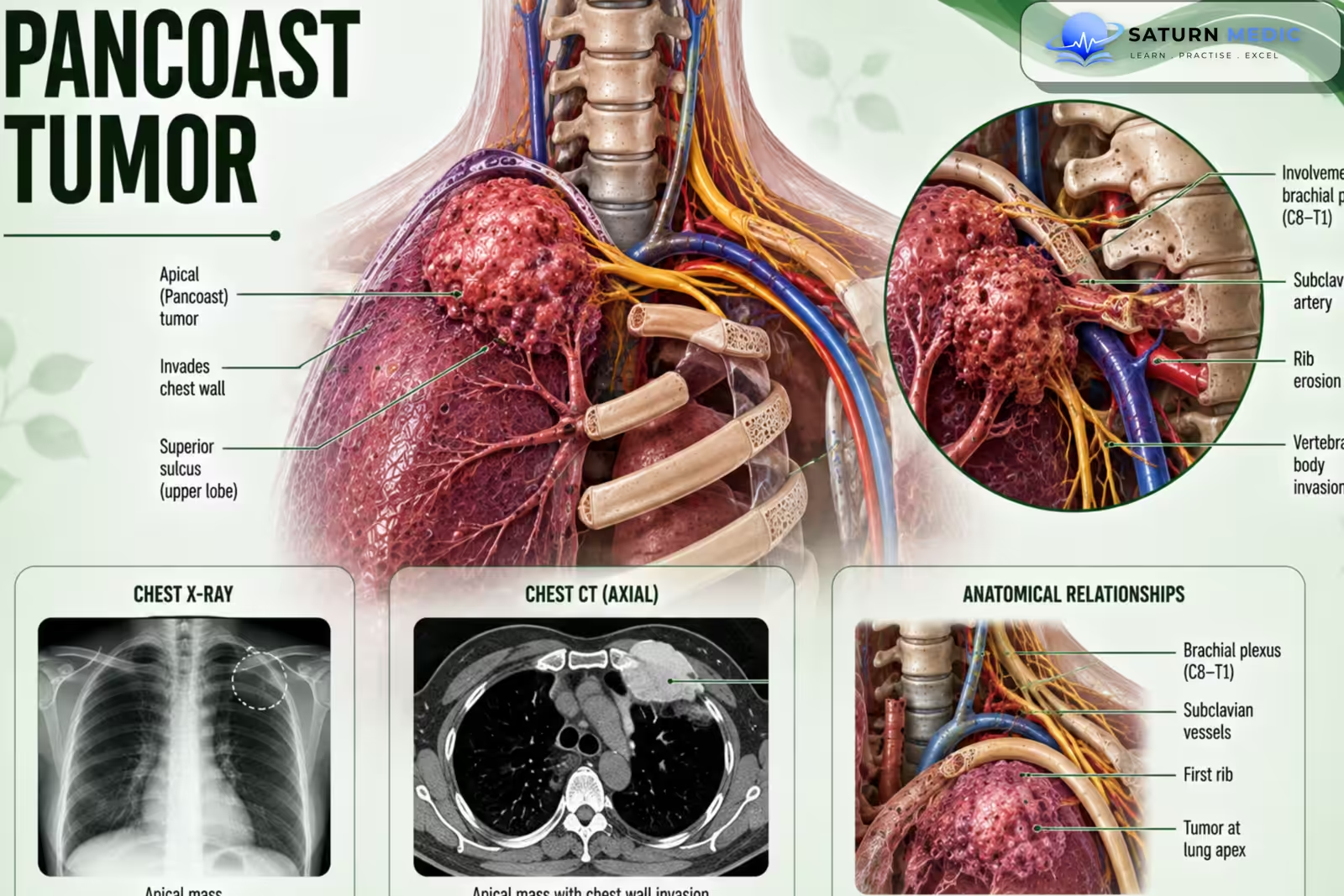
A Pancoast tumor is an apical lung carcinoma located in the superior sulcus of the lung.
It is most commonly a non-small cell lung cancer (NSCLC) and causes symptoms
primarily through invasion of nearby neurovascular structures
Also called
ICD-10
Specialty
Onset
Reviewed
-
OverviewOverview
-
Etiology & Risk FactorsEtiology & Risk Factors
-
PathophysiologyPathophysiology
-
Clinical PresentationClinical Presentation
-
History TakingHistory Taking
-
Physical ExaminationPhysical Examination
-
InvestigationsInvestigations
-
DiagnosisDiagnosis
-
ManagementManagement
-
ComplicationsComplications
-
PrognosisPrognosis
-
Key Points / Clinical PearlsKey Points / Clinical Pearls
Overview
SCC is a centrally located epithelial lung cancer characterized by
keratin production, intercellular bridges, cavitary lesions, and frequent association with
paraneoplastic hypercalcemia due to Parathyroid Hormone Related Protein (PTHrP).
Etiology & Risk Factors
-Main Cause :
- Cigarette smoking — the most important cause
- Other Causes / Carcinogenic Exposures
- Secondhand smoke
- Radon exposure
- Asbestos exposure
- Arsenic exposure
- Chromium exposure
- Nickel exposure
- Air pollution
- Previous chest radiation
- Risk Factors
- Cigarette smoking — most important risk factor
- Long smoking duration
- Secondhand smoke exposure
Increasing age
-Occupational exposure to:
- Asbestos
- Radon
- Arsenic
- Chromium
- Nickel
- Air pollution
- Previous chest radiation
Pathophysiology
An apical lung tumor invades adjacent structures, causing mass effect on :
• Cervical sympathetic ganglion (stellate ganglion)
• Brachial plexus
• Recurrent laryngeal nerve
• Brachiocephalic vein
• Phrenic nerve
Clinical Presentation
-Cervical sympathetic ganglion involvement :
• Horner syndrome:
• Ipsilateral ptosis
• Miosis
• Anhidrosis
-Brachial plexus involvement :
• Shoulder pain
• Axillary pain (plexus neuralgia)
• Upper limb weakness
• Hand muscle weakness and atrophy
• Upper limb sensory deficits
Recurrent laryngeal nerve involvement
• Hoarseness
-Brachiocephalic vein involvement :
• Unilateral arm edema
• Facial swelling
Phrenic nerve involvement
• Paralysis of the hemidiaphragm
History Taking
-Assess for:
• Shoulder pain
• Axillary pain
• Upper limb weakness
• Upper limb sensory symptoms
• Hoarseness
• Facial swelling
• Arm swelling
• Symptoms of Horner syndrome
• Smoking history
• Constitutional symptoms
Physical Examination
-Assess for :
• Horner syndrome
• Upper limb motor deficits
• Hand muscle atrophy
• Sensory deficits
• Hoarseness
• Facial edema
• Unilateral arm edema
• Signs of diaphragmatic paralysis
Investigations of Pancoast Tumor
-Laboratory studies :
• CBC
• Comprehensive metabolic panel
• LDH
-Imaging :
• Chest X-ray
• CT chest
Staging investigations
• CT thorax and abdomen
• Brain MRI (preferred) or CT
• PET-CT
-Tissue diagnosis :
• Histopathological confirmation by biopsy
Biopsy methods
• Bronchoscopy with transbronchial biopsy (if accessible)
• CT-guided biopsy
• Other biopsy techniques as indicated
Diagnosis of Pancoast Tumor
-Diagnosis is based on:
• Clinical features of Pancoast syndrome
• Chest imaging
• Histopathological confirmation by biopsy
• Complete staging evaluation
Related Topics
Management of Pancoast Tumor
-Management depends on disease stage and should involve a multidisciplinary tumor board whenever available.
Early-stage NSCLC
• Preferred: Surgical resection with or without chemotherapy
• If inoperable: Radiotherapy (e.g., stereotactic radiotherapy)
Locally advanced NSCLC
• Surgical resection plus chemotherapy when appropriate
• Chemotherapy plus radiotherapy for nonsurgical candidates
• Consider adjuvant immunotherapy
Metastatic disease
• Palliative treatment
• Targeted therapy if actionable mutations are present
• Chemotherapy and/or immunotherapy when appropriate
General principle
• Early palliative care improves quality of life and may prolong survival.
Complications of Pancoast Tumor
-Prognosis depends on:
• Histologic subtype
• Tumor stage
• Presence of metastases
• Response to treatment
Prognosis of Pancoast Tumor
- Prognosis depends on the stage at diagnosis.
- As with other lung cancers, many patients present with advanced disease, resulting in an overall poor prognosis.
Key Points / Clinical Pearls of Pancoast Tumor
• Pancoast tumor = apical (superior sulcus) lung carcinoma.
• Usually an NSCLC.
• Commonly squamous cell carcinoma, though adenocarcinoma may also occur.
• Horner syndrome is a classic feature.
• Shoulder pain and upper limb neurological deficits are common.
• Hoarseness may occur from recurrent laryngeal nerve involvement.
• Diagnosis requires imaging and biopsy
- Gundepalli SG, Tadi P. National Center for Biotechnology Information (NIH). Lung Pancoast Tumor, StatPearls.
- Villgran VD, Chakraborty RK, Cherian SV. National Center for Biotechnology Information (NIH). Pancoast Syndrome, StatPearls.
- Marulli G, Battistella L, Mammana M, et al. Superior Sulcus Tumors (Pancoast Tumors). Ann Transl Med. 2016. PMC4930518.
- Munir M, Jamil SB, Rehmani S, Borz-Baba C. Pancoast-Tobias Syndrome: A Unique Presentation of Lung Cancer. Cureus. 2021. PMID: 33728131.
- Pancoast HK. Superior Pulmonary Sulcus Tumor: Tumor Characterized by Pain, Horner's Syndrome, Destruction of Bone and Atrophy of Hand Muscles. JAMA. 1932;99:1391-1396.