

Clinical Subject Page
Asthma
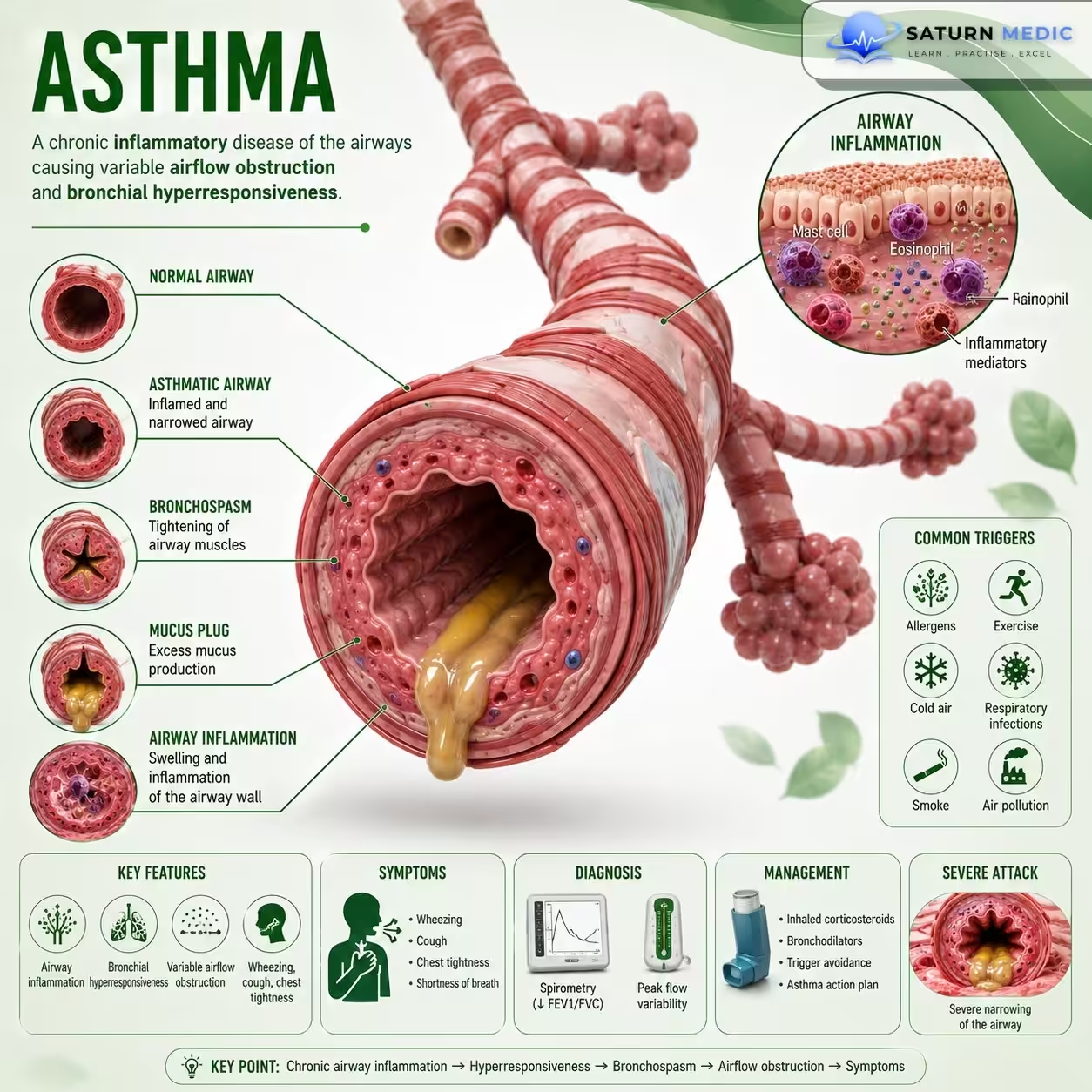
Asthma is a chronic inflammatory disorder of the airways characterized by variable respiratory symptoms, variable expiratory airflow limitation, and airway hyperresponsiveness.
Also called
ICD-10
Specialty
Onset
Reviewed
-
OverviewOverview
-
Etiology & Risk FactorsEtiology & Risk Factors
-
PathophysiologyPathophysiology
-
Clinical PresentationClinical Presentation
-
History TakingHistory Taking
-
Important Terms in AsthmaImportant Terms in Asthma
-
InvestigationsInvestigations
-
DiagnosisDiagnosis
-
ManagementManagement
-
ComplicationsComplications
-
PrognosisPrognosis
-
Key Points / Clinical PearlsKey Points / Clinical Pearls
Overview
Asthma causes recurrent episodes of:
- Wheezing
- Shortness of breath
- Chest tightness
- Cough
Symptoms and airflow obstruction typically vary over time and in intensity. Airflow limitation is often reversible spontaneously or with treatment.
Etiology & Risk Factors
Etiology
it develops through a complex interaction between:
- Genetic susceptibility
- Environmental exposures
- Airway inflammation
- Immune system dysregulation
Risk Factors
- Personal history of atopy
- Allergic rhinitis
- Atopic dermatitis
- Family history of asthma
- Exposure to tobacco smoke
- Air pollution
- Occupational exposures
- Obesity
Asthma · Trigger Factors — Mnemonic: SPICED
Pathophysiology
Trigger exposure
⬇
Activation of inflammatory cells
⬇
Release of inflammatory mediators
⬇
Airway inflammation
⬇
Bronchial smooth muscle contraction
⬇
Mucosal edema + Increased mucus production
⬇
Airway narrowing
⬇
↑ Airway resistance
⬇
Variable expiratory airflow limitation
⬇
Wheezing + Dyspnea + Cough + Chest tightness
Chronic Disease
Persistent airway inflammation
⬇
Repeated airway injury
⬇
Airway remodeling
⬇
Structural changes and less reversible airflow limitation
Clinical Presentation
Symptoms
Wheezing
Shortness of breath
Cough
Chest tightness
Symptoms are often:
Episodic
Worse at night or early morning
Triggered by exercise
Triggered by allergens or irritants
Worse during viral respiratory infections
Signs
Expiratory wheezing
Prolonged expiration
Tachypnea
Tachycardia
Accessory muscle use during severe attacks
Reduced air entry in severe obstruction
Severe or Life-Threatening Features
Difficulty speaking
Severe respiratory distress
Altered mental status
Exhaustion
Cyanosis
Silent chest
Markedly reduced peak expiratory flow
History Taking
Ask about:
- Wheezing?
- Shortness of breath?
- Cough?
- Chest tightness?
- When did symptoms start?
- Are symptoms episodic?
- Worse at night or early morning?
- Exercise-related symptoms?
- Known triggers?
- Allergies or allergic rhinitis?
- Atopic dermatitis?
- Family history?
- Smoking or vaping?
- Occupational exposures?
- Previous hospital admissions?
- Previous ICU admission or intubation?
- Current inhalers?
- Frequency of reliever use?
- Adherence to treatment?
Important Terms
1. SABA Overreliance
Frequent or excessive use of a short-acting beta₂-agonist (SABA), suggesting poor asthma control and increased risk of severe exacerbations and asthma-related death.
2. Controller Medication
Medication used to control airway inflammation and prevent future exacerbations. Inhaled corticosteroids (ICS) are the main controller treatment.
3. Reliever Medication
Medication used for rapid relief of asthma symptoms when needed. Examples include ICS–formoterol and, in appropriate regimens, SABA.
4. Asthma Control
Describes how well asthma is currently controlled based on daytime symptoms, night waking, reliever use, and activity limitation.
5. Asthma Exacerbation
An acute or subacute worsening of asthma symptoms and lung function that requires additional treatment.
6. Difficult-to-Treat Asthma
Asthma that remains uncontrolled because of potentially correctable factors such as poor adherence, incorrect inhaler technique, triggers, or comorbidities.
7. Severe Asthma
Asthma that remains uncontrolled despite optimized high-dose ICS–LABA therapy, or requires this treatment to remain controlled.
8. MART / SMART Therapy
Using a single ICS–formoterol inhaler for both maintenance treatment and symptom relief, helping reduce severe exacerbations.
Investigations
-Spirometry
Look for:
Obstructive airflow pattern
Reduced FEV₁/FVC ratio
Improvement after bronchodilator administration
Bronchodilator Response
Improvement in airflow after an inhaled bronchodilator supports the diagnosis of asthma.
-Peak Expiratory Flow (PEF)
Useful for:
Demonstrating variable airflow limitation
Monitoring asthma
Detecting exacerbations
-Bronchoprovocation Testing
Consider when:
Symptoms suggest asthma
Spirometry is normal
Diagnosis remains uncertain
-Additional Tests
Fractional exhaled nitric oxide (FeNO)
Blood eosinophil count
Allergy testing
Total or specific IgE when indicated
-Chest X-ray
Not routinely required.
Consider when:
Alternative diagnosis is suspected
Symptoms are atypical
Complications are suspected
Diagnosis
Asthma · Stepwise Diagnostic Approach — GINA 2023
Related Topics
Management
Asthma · Stepwise Treatment — GINA 2023
Intermittent
Mild persistent
Moderate persistent
Severe persistent
Very severe
Refractory / add-on
Complications
-Asthma Excerbation :
- Acute or subacute worsening of asthma symptoms and lung function.
- Common symptoms: increasing dyspnea, wheezing, cough, and chest tightness.
- Common triggers include viral respiratory infections, allergens, smoke, pollution, and poor treatment adherence.
- Assess severity using:
- Ability to speak
- Respiratory rate
- Heart rate
- Oxygen saturation
- Accessory muscle use
- PEF or FEV₁ when possible
- Initial treatment:
- Repeated inhaled SABA
- Oxygen if hypoxemic
- Systemic corticosteroids
- Ipratropium for severe exacerbations
- Consider IV magnesium sulfate in severe cases with poor response to initial treatment.
- Silent chest, exhaustion, altered consciousness, or worsening hypoxemia are life-threatening signs.
- Severe deterioration may require ICU admission and ventilatory support.
- Before discharge, review inhaler technique, adherence, controller treatment, triggers, and the asthma action plan.
-Other Complications :
- Respiratory failure
- Pneumothorax
- Pneumomediastinum
- Airway remodeling
- Persistent airflow limitation
- Reduced quality of life
- Medication-related adverse effects
- Death
Prognosis
- Most patients can achieve good symptom control with appropriate treatment.
- Prognosis depends on:
- Disease severity
- Frequency of exacerbations
- Treatment adherence
- Inhaler technique
- Trigger exposure
- Comorbidities
- Severe asthma is associated with greater morbidity and risk of hospitalization.
- Previous severe exacerbation, ICU admission, or intubation indicates increased future risk.
Key Points / Clinical Pearls
- Asthma causes variable respiratory symptoms and variable expiratory airflow limitation.
- Wheezing, dyspnea, cough, and chest tightness are the classic symptoms.
- A normal examination does not exclude asthma.
- Spirometry is the main objective test used in diagnosis.
- Inhaled corticosteroid-containing therapy is central to long-term treatment.
- Frequent reliever use suggests poor asthma control.
- Always assess inhaler technique and treatment adherence before escalating therapy.
- Goldin J, Cataletto ME. National Center for Biotechnology Information (NIH). Asthma, StatPearls.
- Global Initiative for Asthma (GINA). 2024 GINA Report: Global Strategy for Asthma Management and Prevention.
- Sinyor B, Concepcion Perez L. National Center for Biotechnology Information (NIH). Pathophysiology of Asthma, StatPearls.
- Vellaichamy Manian D, Patel P, Sharma S. National Center for Biotechnology Information (NIH). Asthma Medications, StatPearls.
- Chen RJ, McMahon K, Launico MV. National Center for Biotechnology Information (NIH). Status Asthmaticus, StatPearls.