

Clinical Subject Page
Hodgkin Lymphoma (HL)
Hodgkin Lymphoma (HL) is a malignant lymphoma characterized by the presence of Reed-Sternberg cells within an inflammatory background. It typically presents with painless lymphadenopathy and is one of the most curable cancers with modern therapy
Also called
ICD-10
Specialty
Onset
Reviewed
-
OverviewOverview
-
Etiology & Risk FactorsEtiology & Risk Factors
-
PathophysiologyPathophysiology
-
Clinical PresentationClinical Presentation
-
History TakingHistory Taking
-
Physical ExaminationPhysical Examination
-
InvestigationsInvestigations
-
DiagnosisDiagnosis
-
ManagementManagement
-
ComplicationsComplications
-
PrognosisPrognosis
-
Key Points / Clinical PearlsKey Points / Clinical Pearls
Overview
Hodgkin Lymphoma (HL) is a B-cell lymphoid malignancy characterized by Reed-Sternberg cells. It commonly affects young adults and older individuals, presenting with painless cervical lymphadenopathy and constitutional (“B”) symptoms. Diagnosis is confirmed by excisional lymph node biopsy, and staging is performed using PET-CT. Most patients are successfully treated with chemotherapy, with or without radiotherapy.
Etiology & Risk Factors
-Etiology
The exact cause of Hodgkin Lymphoma (HL) is unknown. Hodgkin lymphoma develops from malignant B lymphocytes and is associated with genetic and environmental factors.
-Risk Factors
-
Epstein-Barr virus (EBV) infection
-
Family history
-
Immunosuppression (e.g., HIV infection, organ transplantation)
-
Male sex (slightly increased risk)
-
Bimodal age distribution (15–35 years and >55 years)
Pathophysiology
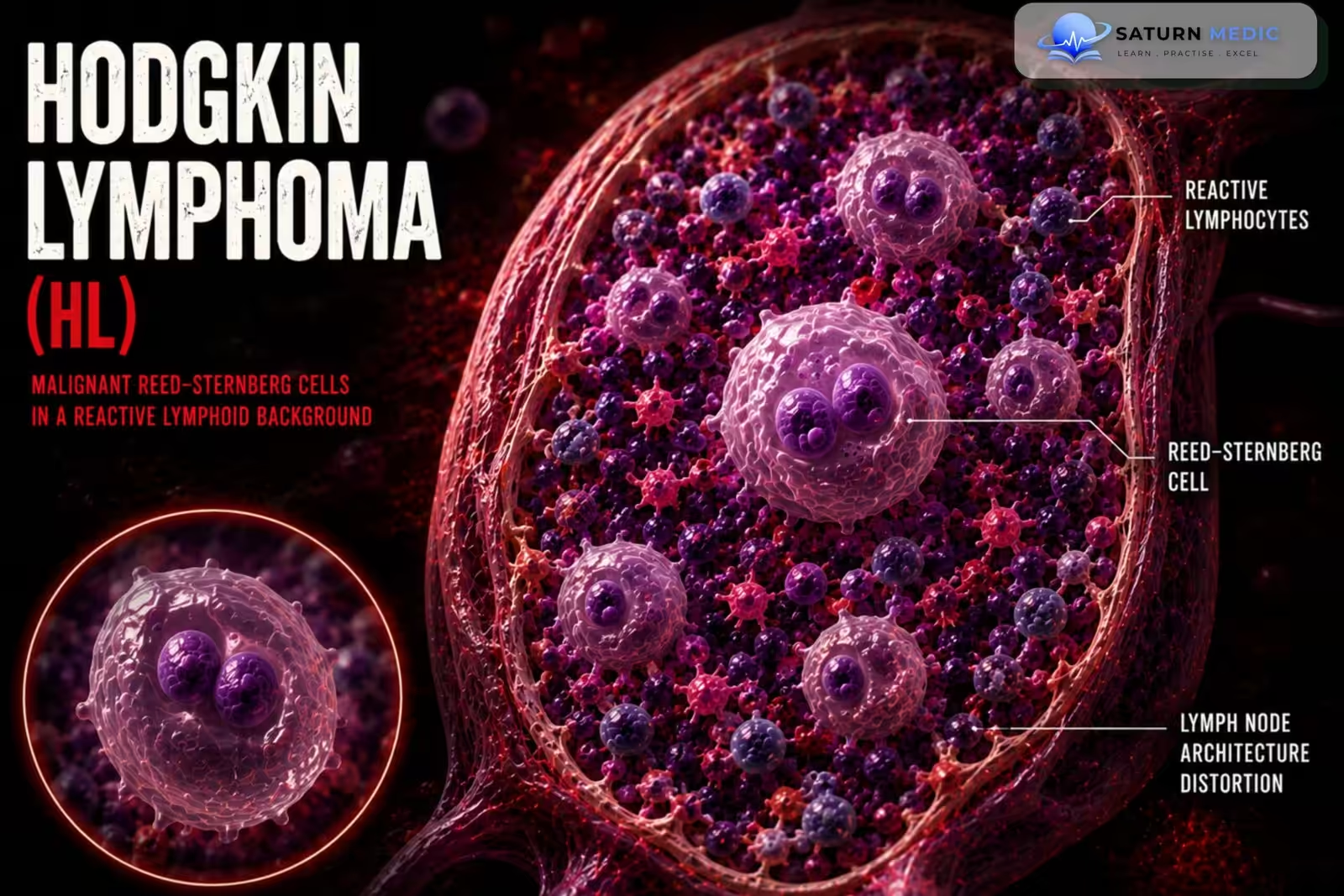
Malignant transformation of B lymphocytes → formation of Reed-Sternberg cells → release of cytokines that attract inflammatory cells → enlargement of lymph nodes with relatively few malignant cells surrounded by reactive inflammatory cells → contiguous spread to adjacent lymph node groups → advanced disease may involve the spleen, liver, bone marrow, and other organs.
Clinical Presentation
Symptoms
-
Painless enlarged lymph nodes (usually cervical)
-
Fever
-
Night sweats
-
Unintentional weight loss
-
Fatigue
-
Pruritus
-
Persistent cough
-
Chest discomfort
-
Dyspnea
-
Alcohol-induced lymph node pain (rare but characteristic)
Signs
-
Painless cervical lymphadenopathy
-
Supraclavicular lymphadenopathy
-
Axillary lymphadenopathy
-
Mediastinal mass
-
Splenomegaly
-
Hepatomegaly (advanced disease)
B Symptoms
-
Fever (>38°C)
-
Drenching night sweats
-
Unintentional weight loss (>10% over 6 months)
History Taking
-Ask about:
- Duration of lymph node enlargement
- Fever
- Night sweats
- Weight loss
- Fatigue
- Pruritus
- Alcohol-induced lymph node pain
- Persistent cough
- Dyspnea
- Chest pain
- Previous EBV infection
- HIV risk factors
- Family history
Physical Examination
-General Examination
Look for:
-
Fever
-
Weight loss
-
Pallor
-Lymph Node Examination
Assess for:
-
Cervical lymphadenopathy
-
Supraclavicular lymphadenopathy
-
Axillary lymphadenopathy
-
Inguinal lymphadenopathy
-Abdominal Examination
Assess for:
-
Splenomegaly
-
Hepatomegaly
-Respiratory Examination
Look for:
-
Signs of mediastinal compression
-
Pleural effusion (advanced disease)
Investigations
-Complete Blood Count (CBC)
May show:
-
Normocytic anemia
-
Leukocytosis or leukopenia
-
Eosinophilia
-
Lymphopenia (advanced disease)
-Blood Tests
-
ESR (often elevated)
-
LDH
-
Liver function tests
-
Renal function tests
-
HIV testing
-
Hepatitis B and C screening before chemotherapy
-Excisional Lymph Node Biopsy (Gold Standard)
Characteristic findings:
-
Reed-Sternberg cells
-
Histological subtype classification
-
Immunohistochemistry (CD15+, CD30+ in classical HL)
-Imaging
-
PET-CT scan (preferred for staging)
-
CT neck, chest, abdomen, and pelvis if PET-CT is unavailable
-Bone Marrow Biopsy
-
Only if advanced disease or unexplained cytopenias are present
Diagnosis
Diagnosis is based on:
- Excisional lymph node biopsy demonstrating Reed-Sternberg cells
- Immunohistochemistry
- PET-CT staging
- Ann Arbor staging system
Management
Early-Stage Disease
-
Combination chemotherapy (commonly ABVD)
-
Involved-site radiotherapy (selected patients)
Advanced Disease
-
Combination chemotherapy
-
ABVD
-
Escalated BEACOPP (selected high-risk patients)
-
-
PET-guided treatment modification
Relapsed or Refractory Disease
-
Salvage chemotherapy
-
Autologous hematopoietic stem cell transplantation
-
Targeted therapy (e.g., brentuximab vedotin)
-
Immune checkpoint inhibitors (nivolumab, pembrolizumab)
Supportive Care
-
Infection prevention
-
Blood transfusions if required
-
Fertility counseling before treatment
-
Vaccination when appropriate
Complications
- Infection
- Bone marrow suppression
- Superior vena cava syndrome
- Infertility (treatment-related)
- Secondary malignancies
- Cardiovascular disease
- Pulmonary toxicity (bleomycin)
- Relapse
Prognosis
Hodgkin Lymphoma (HL) has an excellent prognosis, with cure rates exceeding 80–90% in many patients, particularly those diagnosed at an early stage. Prognosis depends on disease stage, presence of B symptoms, response to treatment, and prognostic risk factors.
Key Points / Clinical Pearls
- Hodgkin Lymphoma (HL) is characterized by Reed-Sternberg cells.
- It commonly presents with painless cervical lymphadenopathy.
- B symptoms include fever, night sweats, and weight loss.
- Excisional lymph node biopsy is the gold standard for diagnosis.
- PET-CT is the preferred investigation for staging.
- ABVD chemotherapy is the standard first-line treatment.
- Radiotherapy is used in selected early-stage cases.
- Relapsed disease may require stem cell transplantation or targeted therapy.
- Hodgkin lymphoma is one of the most curable malignancies.
- Early diagnosis and appropriate treatment result in excellent long-term survival.
- Kaseb H, Babiker HM. National Center for Biotechnology Information (NIH). Hodgkin Lymphoma, StatPearls.
- National Comprehensive Cancer Network (NCCN). Hodgkin Lymphoma, Version 1.2026, NCCN Clinical Practice Guidelines in Oncology. J Natl Compr Canc Netw. 2026;24. PMID: 41671432.
- Aggarwal P, Limaiem F. National Center for Biotechnology Information (NIH). Reed-Sternberg Cells, StatPearls.
- National Cancer Institute (NIH). Adult Hodgkin Lymphoma Treatment (PDQ), Health Professional Version.
- MedlinePlus, National Library of Medicine (NIH). Hodgkin Lymphoma: Health Topic.