

Clinical Subject Page
Non-Hodgkin Lymphoma (NHL)
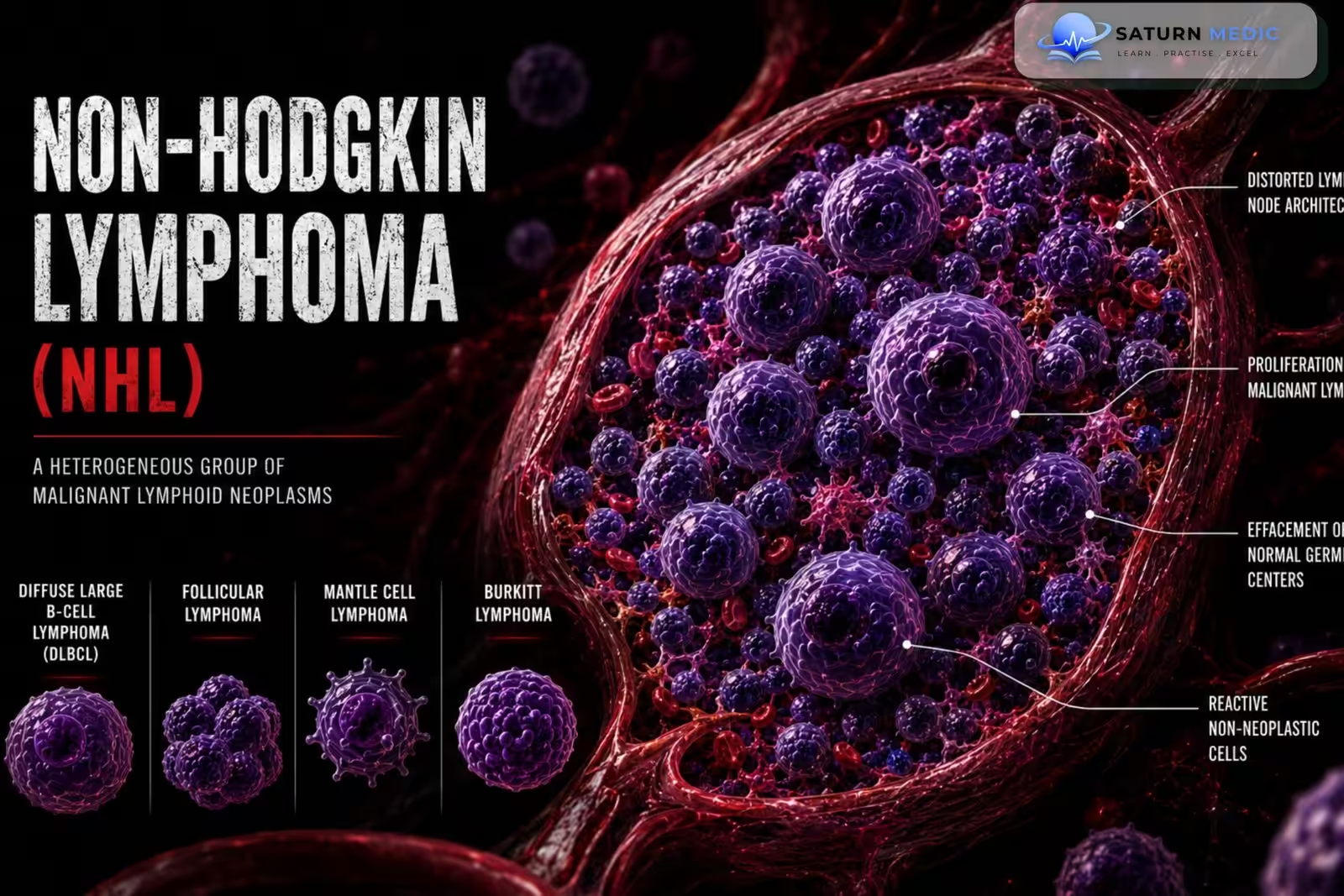
Non-Hodgkin Lymphoma (NHL) is a heterogeneous group of lymphoid malignancies arising from B lymphocytes, T lymphocytes, or natural killer (NK) cells. Unlike Hodgkin lymphoma, NHL lacks Reed-Sternberg cells and often spreads in a non-contiguous pattern
Also called
ICD-10
Specialty
Onset
Reviewed
-
OverviewOverview
-
Etiology & Risk FactorsEtiology & Risk Factors
-
PathophysiologyPathophysiology
-
Clinical PresentationClinical Presentation
-
History TakingHistory Taking
-
Physical ExaminationPhysical Examination
-
InvestigationsInvestigations
-
DiagnosisDiagnosis
-
ManagementManagement
-
ComplicationsComplications
-
PrognosisPrognosis
-
Key Points / Clinical PearlsKey Points / Clinical Pearls
Overview
Non-Hodgkin Lymphoma (NHL) is a diverse group of lymphoid cancers that vary from indolent (slow-growing) to highly aggressive forms. Most cases arise from B cells, with Diffuse Large B-cell Lymphoma (DLBCL) being the most common aggressive subtype and Follicular Lymphoma the most common indolent subtype. Diagnosis is established by excisional lymph node biopsy, and treatment depends on the histological subtype and stage.
Etiology & Risk Factors
-Etiology
The exact cause is unknown. Non-Hodgkin Lymphoma (NHL) develops through acquired genetic mutations causing malignant transformation of lymphocytes.
Risk Factors
Increasing age
Immunodeficiency (HIV/AIDS)
Organ transplantation
Autoimmune diseases
Epstein-Barr virus (EBV)
Helicobacter pylori (gastric MALT lymphoma)
Hepatitis C virus
Human T-cell leukemia virus-1 (HTLV-1)
Previous chemotherapy or radiotherapy
Family history
Exposure to pesticides or certain chemicals
Pathophysiology
Genetic mutations in B, T, or NK lymphocytes → uncontrolled clonal proliferation → accumulation of malignant lymphocytes in lymph nodes, bone marrow, spleen, and extranodal organs → replacement of normal tissue → impaired immune function and bone marrow failure in advanced disease. Unlike Hodgkin lymphoma, NHL often spreads non-contiguously and frequently involves extranodal organs such as the gastrointestinal tract, skin, bone marrow, or central nervous system
Clinical Presentation
Symptoms
Painless lymph node enlargement
Fatigue
Fever
Night sweats
Weight loss
Abdominal pain
Early satiety
Persistent cough
Dyspnea
Recurrent infections
Signs
Generalized lymphadenopathy
Splenomegaly
Hepatomegaly
Pallor
Petechiae
Extranodal masses
B Symptoms
Fever (>38°C)
Drenching night sweats
Unintentional weight loss (>10% over 6 months)
History Taking
-Ask about:
- Duration of lymph node enlargement
- Fever
- Night sweats
- Weight loss
- Fatigue
- Recurrent infections
- Abdominal pain
- Gastrointestinal symptoms
- Skin lesions
- HIV status
- Autoimmune disease
- Previous chemotherapy or radiation
- Family history
Physical Examination
-General Examination
Look for:
Fever
Pallor
Weight loss
-Lymph Node Examination
Assess for:
Cervical lymphadenopathy
Axillary lymphadenopathy
Inguinal lymphadenopathy
-Abdominal Examination
Assess for:
Splenomegaly
Hepatomegaly
Abdominal masses
-Additional Examination
Look for:
Skin lesions
Neurological deficits (if CNS involvement)
Signs of extranodal disease
Investigations
-Complete Blood Count (CBC)
May show:
Anemia
Leukopenia or leukocytosis
Thrombocytopenia (bone marrow involvement)
Blood Tests
LDH (prognostic marker)
Uric acid
Liver function tests
Renal function tests
HIV test
Hepatitis B and C screening
Beta-2 microglobulin
-Excisional Lymph Node Biopsy (Gold Standard)
Required for:
Histological diagnosis
Immunophenotyping
Subtype classification
Immunophenotyping
Common B-cell markers:
CD19
CD20
CD22
CD79a
Additional markers according to subtype.
-Bone Marrow Aspiration and Biopsy
Performed for staging and assessment of marrow involvement.
-Imaging
PET-CT scan (preferred for staging in FDG-avid lymphomas)
CT neck, chest, abdomen, and pelvis
-Cytogenetic & Molecular Studies
Performed according to subtype:
MYC rearrangement
BCL2 rearrangement
BCL6 rearrangement
FISH and molecular testing when indicated
Diagnosis
Diagnosis is based on:
- Excisional lymph node biopsy
- Immunophenotyping
- Histological classification
- Bone marrow examination (when indicated)
- PET-CT staging
- Ann Arbor staging system
Management
–Indolent Non-Hodgkin Lymphoma (NHL)
Active surveillance (selected asymptomatic patients)
Rituximab-based therapy
Radiotherapy for localized disease
-Aggressive NHL
R-CHOP chemotherapy
Rituximab
Cyclophosphamide
Doxorubicin
Vincristine
Prednisolone
-Relapsed or Refractory Disease
Salvage chemotherapy
Autologous hematopoietic stem cell transplantation
CAR T-cell therapy (selected patients)
Targeted therapies according to subtype
-Supportive Care
Infection prevention
Tumor lysis syndrome prophylaxis
Blood transfusions if required
Vaccination when appropriate
Complications
- Bone marrow failure
- Severe infections
- Tumor lysis syndrome
- Superior vena cava syndrome
- CNS involvement
- Relapse
- Secondary malignancies
- Treatment-related toxicity
Prognosis
The prognosis depends on the lymphoma subtype, stage, patient age, performance status, and response to therapy. Indolent lymphomas usually have prolonged survival but frequent relapses, whereas aggressive lymphomas may be curable with appropriate treatment. The International Prognostic Index (IPI) is commonly used to estimate prognosis in aggressive Non-Hodgkin Lymphoma (NHL).
Key Points / Clinical Pearls
- Non-Hodgkin Lymphoma (NHL) is a heterogeneous group of lymphoid malignancies.
- Most cases arise from B lymphocytes.
- Diffuse Large B-cell Lymphoma (DLBCL) is the most common aggressive subtype.
- Follicular lymphoma is the most common indolent subtype.
- NHL does not contain Reed-Sternberg cells.
- Extranodal involvement is common.
- Excisional lymph node biopsy is the gold standard for diagnosis.
- PET-CT is preferred for staging aggressive NHL.
- R-CHOP is the standard first-line treatment for most DLBCL patients.
- Prognosis varies according to the lymphoma subtype, stage, and response to treatment
- National Center for Biotechnology Information (NIH). Non-Hodgkin Lymphoma, StatPearls.
- National Center for Biotechnology Information (NIH). Diffuse Large B-Cell Lymphoma, StatPearls.
- National Comprehensive Cancer Network (NCCN). NCCN Clinical Practice Guidelines in Oncology: B-Cell Lymphomas, Version 4.2026.
- National Cancer Institute (NIH). Adult Non-Hodgkin Lymphoma Treatment (PDQ), Health Professional Version.
- MedlinePlus, National Library of Medicine (NIH). Non-Hodgkin Lymphoma: Medical Encyclopedia.