

Clinical Subject Page
Anemia of Chronic Disease
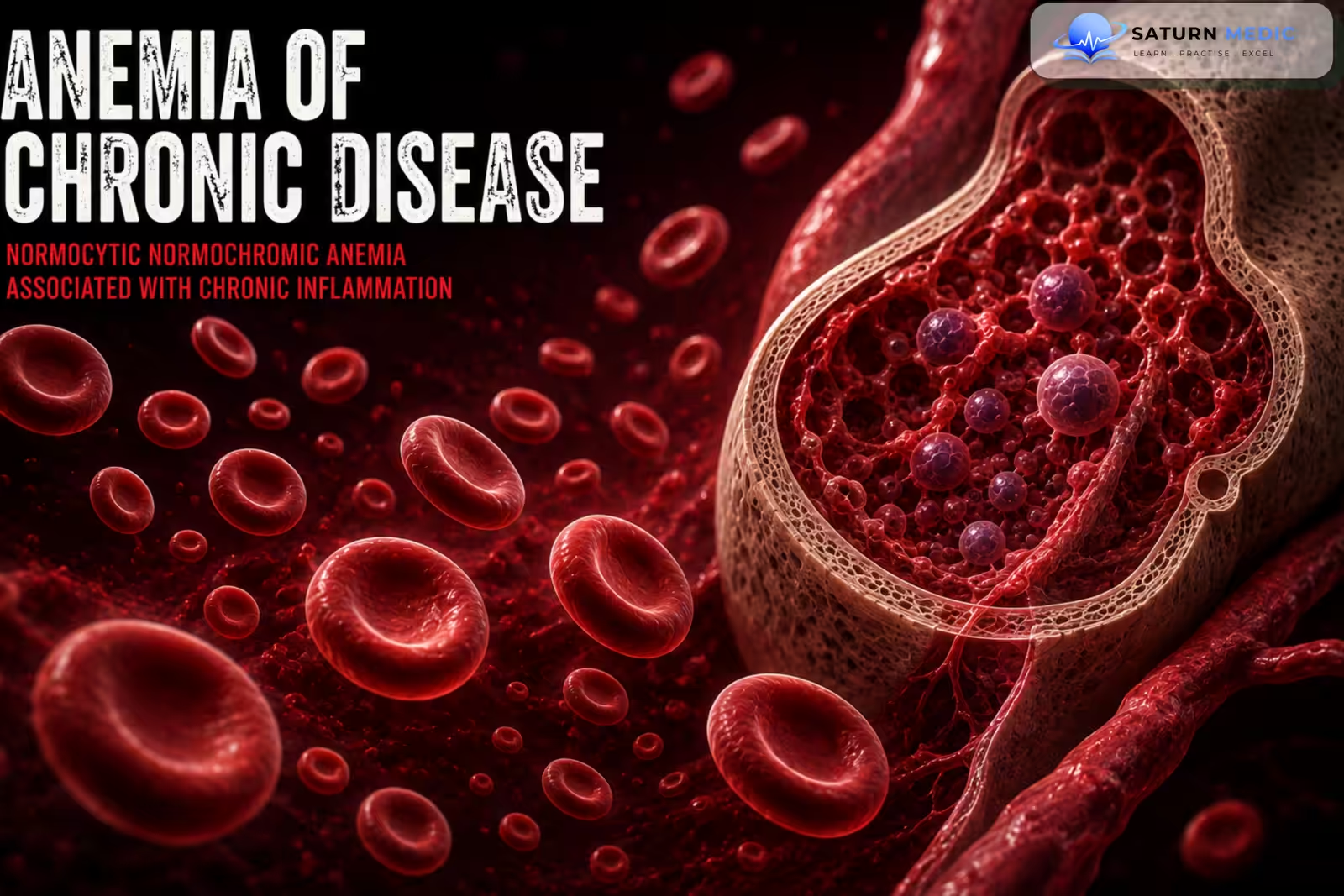
Anemia of Chronic Disease (ACD) is a common type of anemia that develops in patients with chronic inflammation, infection, autoimmune disease, cancer, or chronic kidney disease. It occurs mainly because inflammation causes iron sequestration, reduced erythropoietin production, and impaired red blood cell production.
Also called
ICD-10
Specialty
Hematology
Onset
Reviewed
-
OverviewOverview
-
Etiology & Risk FactorsEtiology & Risk Factors
-
PathophysiologyPathophysiology
-
Clinical PresentationClinical Presentation
-
History TakingHistory Taking
-
Physical ExaminationPhysical Examination
-
InvestigationsInvestigations
-
DiagnosisDiagnosis
-
ManagementManagement
-
ComplicationsComplications
-
PrognosisPrognosis
-
Key Points / Clinical PearlsKey Points / Clinical Pearls
Overview
Anemia of Chronic Disease (ACD) is usually a mild-to-moderate anemia associated with chronic inflammatory conditions. Inflammation increases hepcidin, which traps iron inside macrophages and decreases intestinal iron absorption. As a result, iron becomes unavailable for red blood cell production despite adequate or increased total body iron stores.
Anemia of Chronic Disease (ACD) is typically normocytic and normochromic, but it may become mildly microcytic in prolonged disease.
Etiology & Risk Factors
-Chronic Inflammatory Conditions
Rheumatoid arthritis
Systemic lupus erythematosus
Inflammatory bowel disease
Chronic infections
Tuberculosis
Osteomyelitis
-Chronic Infections
HIV
Chronic bacterial infections
Chronic fungal infections
Endocarditis
-Malignancy
Solid tumors
Hematological malignancies
Lymphoma
Leukemia
-Chronic Organ Disease
Chronic kidney disease
Chronic liver disease
Heart failure
-Other Risk Factors
Advanced age
Long-standing inflammatory conditions
Autoimmune diseases
Chronic tissue injury
Pathophysiology
Chronic disease or inflammation → increased inflammatory cytokines, particularly IL-6 → increased hepatic hepcidin production → decreased intestinal iron absorption + iron trapped within macrophages → reduced iron availability for erythropoiesis → impaired hemoglobin synthesis → decreased red blood cell production → reduced erythropoietin response → shortened RBC survival → development of Anemia of Chronic Disease (ACD).
Clinical Presentation
-Symptoms
Fatigue
Weakness
Reduced exercise tolerance
Shortness of breath on exertion
Dizziness
Headache
Palpitations
-Signs
Pallor
Tachycardia
Signs of the underlying chronic disease
History Taking
Ask about:
- Fatigue
- Weakness
- Exercise tolerance
- Shortness of breath
- Dizziness
- Palpitations
- Duration of symptoms
- History of chronic inflammatory disease
- Chronic infection
- Cancer
- Chronic kidney disease
- Autoimmune disease
- Inflammatory bowel disease
- Recent infections
- Medication history
- Evidence of blood loss
- Dietary history
Physical Examination
-General Examination
Look for:
Pallor
Tachycardia
Signs of chronic illness
Weight loss
Fever
-Systemic Examination
Look for signs of the underlying cause:
Joint swelling in rheumatoid arthritis
Lymphadenopathy in malignancy or infection
Organomegaly
Signs of chronic kidney disease
Signs of chronic liver disease
Signs of infection
Investigations
Complete Blood Count (CBC)
Typical findings:
Low hemoglobin
Usually normocytic
Usually normochromic
Mild microcytosis may occur
Low or normal reticulocyte count
Iron Studies
Typical pattern:
Serum iron: Low
Serum transferrin/TIBC: Low or normal
Serum ferritin: Normal or high
Transferrin saturation: Low
Inflammatory Markers
CRP ↑
ESR ↑
Renal Function
Urea
Creatinine
eGFR
Important for detecting chronic kidney disease as a contributing cause.
Peripheral Blood Film
Usually shows:
Normocytic, normochromic red cells
Mild microcytosis in some patients
Additional Investigations
Depending on clinical suspicion:
Vitamin B12
Folate
Thyroid function tests
Stool occult blood testing
Hemolysis screen
Bone marrow examination in unexplained cases
Diagnosis
IDA vs ACD · Aetiology & Mechanism
| Parameter | Iron Deficiency Anaemia (IDA) | Anaemia of Chronic Disease (ACD) |
|---|---|---|
| Aetiology & Mechanism | ||
| Causes | Blood loss (GI, menorrhagia, haematuria) Malabsorption (coeliac, gastrectomy) Increased demand (pregnancy, infancy) Poor dietary intake |
Chronic inflammation, infection, malignancy Rheumatoid arthritis, SLE, IBD CKD, HIV, TB, heart failure Major surgery / critical illness |
| Mechanism | Absolute iron deficiency → inadequate haemoglobin synthesis → microcytic hypochromic RBCs | Hepcidin ↑ (acute phase reactant) → blocks iron release from stores + reduces GI absorption → functional iron deficiency despite adequate stores |
IDA vs ACD · CBC & Blood Film
| Parameter | Iron Deficiency Anaemia (IDA) | Anaemia of Chronic Disease (ACD) |
|---|---|---|
| CBC & Blood Film | ||
| MCV | ↓ Microcytic (<80 fL) | Normal or ↓ mildly microcytic Usually normocytic (80–100 fL) |
| MCH / MCHC | ↓↓ Hypochromic | Normal or mildly ↓ |
| RDW | ↑ Elevated (>14.5%) — anisocytosis | Normal |
| Blood film | Microcytes, hypochromia, pencil cells (elliptocytes), target cells, anisocytosis, poikilocytosis | Normochromic normocytic (or mild hypochromia) May show underlying disease features (e.g. rouleaux in myeloma) |
| Reticulocytes | ↓ Low (bone marrow iron-starved) | ↓ Low (suppressed by inflammation) |
IDA vs ACD · Other Laboratory Findings
| Parameter | Iron Deficiency Anaemia (IDA) | Anaemia of Chronic Disease (ACD) |
|---|---|---|
| Other Laboratory Findings | ||
| ESR / CRP | Normal | ↑ Elevated (underlying inflammation) |
| Platelets | ↑ Reactive thrombocytosis common | Variable — depends on underlying disease |
| WBC | Normal | Variable |
| Serum B12 / Folate | Normal (unless mixed deficiency) | Normal |
IDA vs ACD · Iron Studies — Key Discriminator
| Parameter | Iron Deficiency Anaemia (IDA) | Anaemia of Chronic Disease (ACD) |
|---|---|---|
| Iron Studies — Key Discriminator | ||
| Serum Iron | ↓↓ Low | ↓ Low |
| Serum Ferritin | ↓↓ Low (<12 µg/L) — most specific for IDA | ↑ Normal or High (acute phase reactant — falsely elevated even when iron-deficient) |
| TIBC / Transferrin | ↑↑ High (liver upregulates transferrin to capture more iron) | ↓ Low or normal (negative acute phase protein) |
| Transferrin Saturation | ↓↓ <16% | ↓ Low (<20%) but less severe |
| Serum Transferrin Receptor (sTfR) | ↑ Elevated (cells upregulate TfR when starved of iron) | Normal — key discriminator when ferritin is raised |
| Iron stores (bone marrow) | Absent (depleted) | Present but trapped (hepcidin blocks release) |
| Hepcidin | ↓ Low (body tries to increase iron absorption) | ↑↑ High (key driver — IL-6 stimulates liver to produce hepcidin) |
IDA vs ACD · Clinical Features
| Parameter | Iron Deficiency Anaemia (IDA) | Anaemia of Chronic Disease (ACD) |
|---|---|---|
| Clinical Features | ||
| Symptoms of anaemia | Shared: fatigue, pallor, exertional dyspnea, palpitations, dizziness, headache | |
| Specific to IDA | Koilonychia (spoon nails) Angular cheilitis Atrophic glossitis (smooth red tongue) Pica (craving ice, clay, dirt) Plummer-Vinson syndrome (dysphagia + IDA + web) |
Features of underlying disease — joint swelling (RA), weight loss (malignancy), oedema (CKD/HF), night sweats (infection) |
| Severity of anaemia | Can be severe if chronic blood loss | Usually mild-moderate (Hb rarely <8 g/dL unless CKD) |
Management
1. Treat the Underlying Disease
The primary treatment is to control the underlying condition:
Treat chronic infection
Control inflammatory disease
Treat malignancy
Manage autoimmune disease
Optimize chronic kidney disease
2. Iron Therapy
Iron replacement is not routinely required unless true iron deficiency is also present.
Consider iron therapy when:
Iron deficiency coexists
Functional iron deficiency is significant
Chronic kidney disease is present and iron therapy is indicated
3. Erythropoiesis-Stimulating Agents (ESAs)
May be used in selected patients with:
Chronic kidney disease
Certain chemotherapy-associated anemias
Use requires careful assessment because of potential thromboembolic and cardiovascular risks.
4. Blood Transfusion
Reserved for:
Severe symptomatic anemia
Hemodynamic instability
Acute clinical deterioration
Complications
- Persistent fatigue
- Reduced exercise tolerance
- Reduced quality of life
- Worsening symptoms of the underlying disease
- Cardiovascular strain in severe anemia
- Increased morbidity in patients with significant chronic disease
Prognosis
The prognosis of Anemia of Chronic Disease (ACD) depends mainly on the underlying condition. The anemia often improves when the underlying inflammation or disease is successfully controlled. Persistent anemia may occur when the chronic disease remains active or when chronic kidney disease significantly reduces erythropoietin production.
Key Points / Clinical Pearls
- Anemia of Chronic Disease (ACD) is caused by chronic inflammation or systemic disease.
- Common causes include autoimmune disease, chronic infection, cancer, and chronic kidney disease.
- Hepcidin is the key mediator.
Hepcidin traps iron in macrophages and decreases intestinal iron absorption. - Iron is present in the body but is not adequately available for erythropoiesis.
- Usually causes a normocytic, normochromic anemia.
- Serum iron is low.
Ferritin is usually normal or high.
TIBC is usually low or normal. - Treat the underlying disease rather than routinely giving iron.
- Always consider and exclude coexisting Iron Deficiency Anemia (IDA).
- National Center for Biotechnology Information (NIH). Anemia, StatPearls.
- National Center for Biotechnology Information (NIH). Physiology, Hepcidin, StatPearls.
- Nemeth E, Ganz T. Hepcidin and Anemia: A Tight Relationship. PMC6794341.
- Yacoub MF, Ferwiz HF, Said F. Effect of Interleukin and Hepcidin in Anemia of Chronic Diseases. Anemia. 2020;2020:3041738. PMC7033950.
- MedlinePlus, National Library of Medicine (NIH). Anemia of Chronic Disease: Medical Encyclopedia.