

Clinical Subject Page
von Willebrand Disease (vWD)
Chronic Lymphocytic Leukemia (CLL) is a chronic lymphoproliferative malignancy characterized by the accumulation of mature but functionally incompetent B lymphocytes in the blood, bone marrow, lymph nodes, and spleen. It is the most common leukemia in adults in Western countries.
Also called
ICD-10
Specialty
Onset
Reviewed
-
OverviewOverview
-
Etiology & Risk FactorsEtiology & Risk Factors
-
PathophysiologyPathophysiology
-
Clinical PresentationClinical Presentation
-
History TakingHistory Taking
-
Physical ExaminationPhysical Examination
-
InvestigationsInvestigations
-
DiagnosisDiagnosis
-
ManagementManagement
-
ComplicationsComplications
-
PrognosisPrognosis
-
Key Points / Clinical PearlsKey Points / Clinical Pearls
Overview
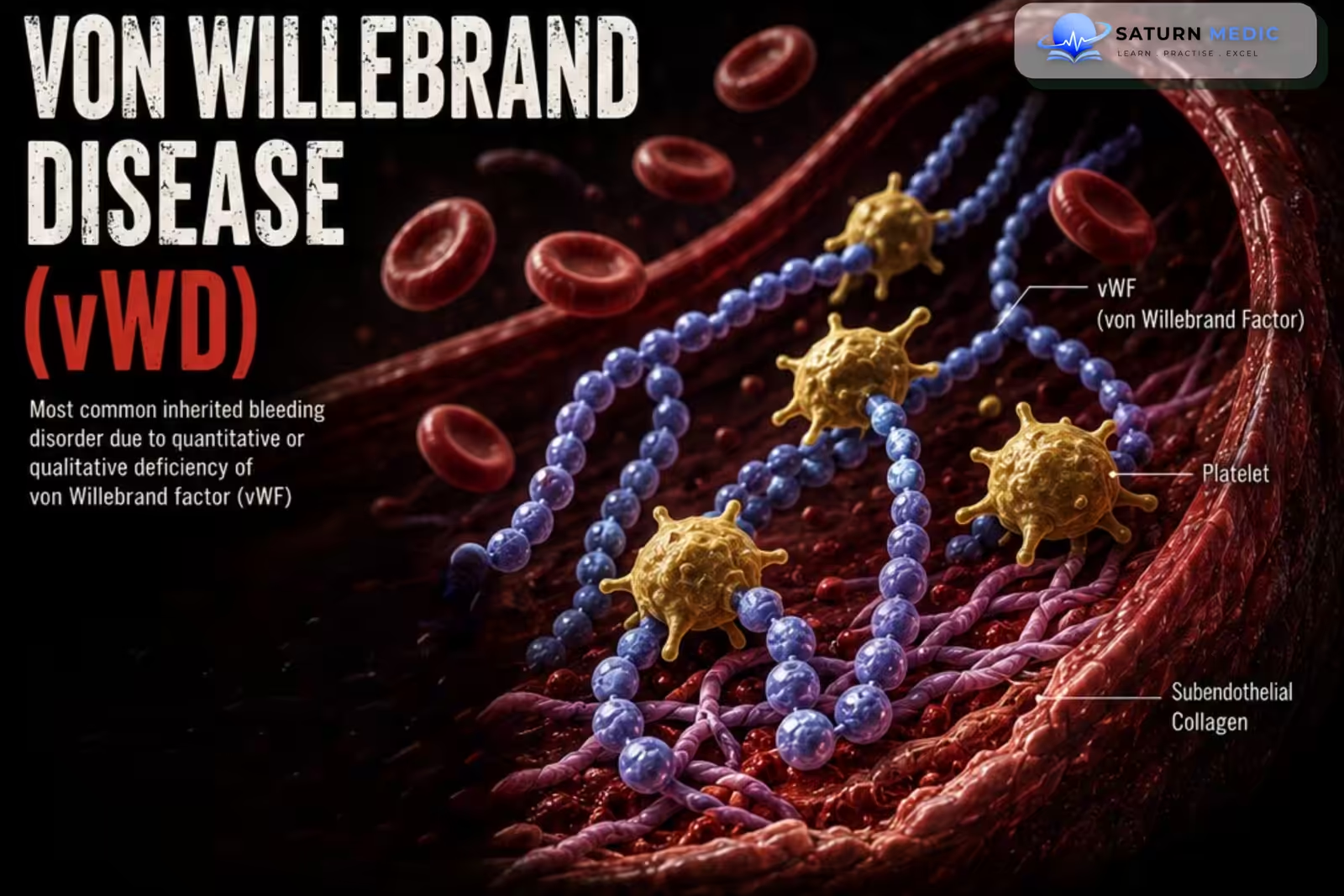
von Willebrand Disease (vWD) results from reduced amount or impaired function of von Willebrand factor. von Willebrand factor is important for platelet adhesion and carries and stabilizes factor VIII in the circulation. Patients typically develop recurrent mucosal bleeding, easy bruising, and prolonged menstrual bleeding.
Etiology & Risk Factors
-Etiology
von Willebrand Disease (vWD) is usually inherited and results from:
Reduced von Willebrand factor production
Abnormal von Willebrand factor function
Complete or near-complete absence of von Willebrand factor in severe disease
-Types
Type 1
Partial quantitative deficiency
Most common
Usually mild
-Type 2
Qualitative defect in von Willebrand factor.
Subtypes:
Type 2A
Type 2B
Type 2M
Type 2N
-Type 3
Severe quantitative deficiency
Very low or absent von Willebrand factor
Severe bleeding
-Acquired von Willebrand Syndrome
Can occur secondary to:
Cardiovascular disorders
Lymphoproliferative disorders
Myeloproliferative disorders
Autoimmune disease
Some malignancies
Pathophysiology
Defective or deficient von Willebrand factor → impaired platelet adhesion to damaged vascular endothelium → impaired primary hemostasis → mucocutaneous bleeding → reduced stabilization of factor VIII → reduced factor VIII activity in some patients → prolonged bleeding tendency
Clinical Presentation
Symptoms
Easy bruising
Recurrent epistaxis
Gum bleeding
Heavy menstrual bleeding
Prolonged bleeding after dental procedures
Prolonged bleeding after surgery
Prolonged bleeding from minor wounds
Postpartum bleeding
Severe Disease
May cause:
Gastrointestinal bleeding
Hemarthrosis
Deep tissue bleeding
These are more typical of severe disease, particularly Type 3.
Signs
Petechiae may occur
Easy bruising
Mucosal bleeding
Pallor if chronic blood loss has caused anemia
History Taking
-General Examination
Look for:
Pallor
Signs of anemia
Bruising
-Skin Examination
Assess for:
Ecchymoses
Petechiae
-Oral Examination
Look for:
Gum bleeding
Mucosal bleeding
-Nasal Examination
Look for:
Evidence of recurrent epistaxis
Physical Examination
-General Examination
Look for:
Pallor
Fever
Weight loss
Petechiae
Ecchymoses
-Lymphatic Examination
Assess for:
Cervical lymphadenopathy
Axillary lymphadenopathy
Inguinal lymphadenopathy
-Abdominal Examination
Assess for:
Splenomegaly
Hepatomegaly
Investigations
-Complete Blood Count
Usually:
Platelet count: normal
Hemoglobin may be reduced if chronic bleeding has caused iron deficiency anemia
-PT
Usually:
Normal
-aPTT
Usually normal
May be prolonged when factor VIII is significantly reduced
-von Willebrand Factor Antigen
Measures the amount of von Willebrand factor in plasma.
May be:
Reduced in quantitative deficiency
Normal in some qualitative disorders
-von Willebrand Factor Activity
Assesses the ability of von Willebrand factor to function properly.
May demonstrate:
Reduced platelet-dependent activity
Disproportionate reduction in activity compared with antigen in some Type 2 disorders
-Factor VIII Activity
May be:
Normal
Reduced, particularly in severe disease or Type 2N disease
-Platelet Function Testing
May be used when the diagnosis or subtype remains unclear.
Multimer Analysis
Can help distinguish different qualitative types of von Willebrand Disease (vWD), particularly Type 2 subtypes.
-Blood Group
Blood group can influence baseline von Willebrand factor levels, with lower levels commonly seen in individuals with blood group O.
Diagnosis
Diagnosis is based on:
- Compatible personal bleeding history
- Family history
- von Willebrand factor antigen
- von Willebrand factor activity
- Factor VIII activity
- Additional specialized testing when required
Management
1. Desmopressin (DDAVP)
Used in appropriate patients, particularly many patients with Type 1 von Willebrand Disease (vWD).
It increases the release of stored:
von Willebrand factor
Factor VIII
A DDAVP trial is often used to determine responsiveness before relying on it for procedures.
2. von Willebrand Factor Replacement
Used when:
Desmopressin is ineffective
Desmopressin is contraindicated
Severe disease is present
Major surgery or significant bleeding occurs
Preparations containing von Willebrand factor ± factor VIII may be used.
3. Antifibrinolytic Therapy
Useful for mucosal bleeding and dental procedures.
Example:
Tranexamic acid
4. Heavy Menstrual Bleeding
Management may include:
Tranexamic acid
Hormonal therapy
Levonorgestrel-releasing intrauterine system
Desmopressin in selected patients
5. Iron Replacement
Treat iron deficiency caused by chronic blood loss.
Complications
- Iron deficiency anemia
- Severe bleeding
- Postoperative hemorrhage
- Postpartum hemorrhage
- Gastrointestinal bleeding
- Rare hemarthrosis in severe disease
- Reduced quality of life from recurrent bleeding
Prognosis
- Most patients with von Willebrand Disease (vWD) have a mild to moderate bleeding tendency and can lead normal lives with appropriate management. Severe disease requires careful planning before surgery, dental procedures, pregnancy, and childbirth.
Key Points / Clinical Pearls
- von Willebrand Disease (vWD) is the most common inherited bleeding disorder.
- It is caused by deficiency or dysfunction of von Willebrand factor.
- von Willebrand factor is important for platelet adhesion and factor VIII stabilization.
- Typical bleeding is mucocutaneous.
- Common symptoms include epistaxis, easy bruising, and heavy menstrual bleeding.
- Platelet count is usually normal.
- PT is usually normal.
- aPTT may be normal or prolonged.
- Diagnosis requires von Willebrand factor antigen + activity + factor VIII assessment.
- Desmopressin is useful in many patients with Type 1 disease.
- von Willebrand factor replacement is used for severe bleeding and major procedures when needed.
- Tranexamic acid is useful for mucosal bleeding.
- James PD, Connell NT, Ameer B, et al. ASH ISTH NHF WFH 2021 guidelines on the diagnosis of von Willebrand disease. Blood Adv. 2021;5(1):280-300. Blood Advances .
- Connell NT, Flood VH, Brignardello-Petersen R, et al. ASH ISTH NHF WFH 2021 guidelines on the management of von Willebrand disease. Blood Adv. 2021;5(1):301-325. Blood Advances .
- National Heart, Lung, and Blood Institute (NIH). Von Willebrand Disease .
- National Library of Medicine (NIH). Von Willebrand Disease .
- World Federation of Hemophilia. Guidelines for the Diagnosis and Management of von Willebrand Disease .