

Clinical Subject Page
Leukemoid Reaction
Leukemoid Reaction is a marked reactive leukocytosis, usually with a white blood cell count above 50 × 10⁹/L, caused by severe infection, inflammation, malignancy, or other stressors. It is a reactive process, not leukemia, and usually resolves when the underlying cause is treated
Also called
ICD-10
Specialty
Onset
Reviewed
-
OverviewOverview
-
Etiology & Risk FactorsEtiology & Risk Factors
-
PathophysiologyPathophysiology
-
Clinical PresentationClinical Presentation
-
History TakingHistory Taking
-
Physical ExaminationPhysical Examination
-
InvestigationsInvestigations
-
DiagnosisDiagnosis
-
ManagementManagement
-
ComplicationsComplications
-
PrognosisPrognosis
-
Key Points / Clinical PearlsKey Points / Clinical Pearls
Overview
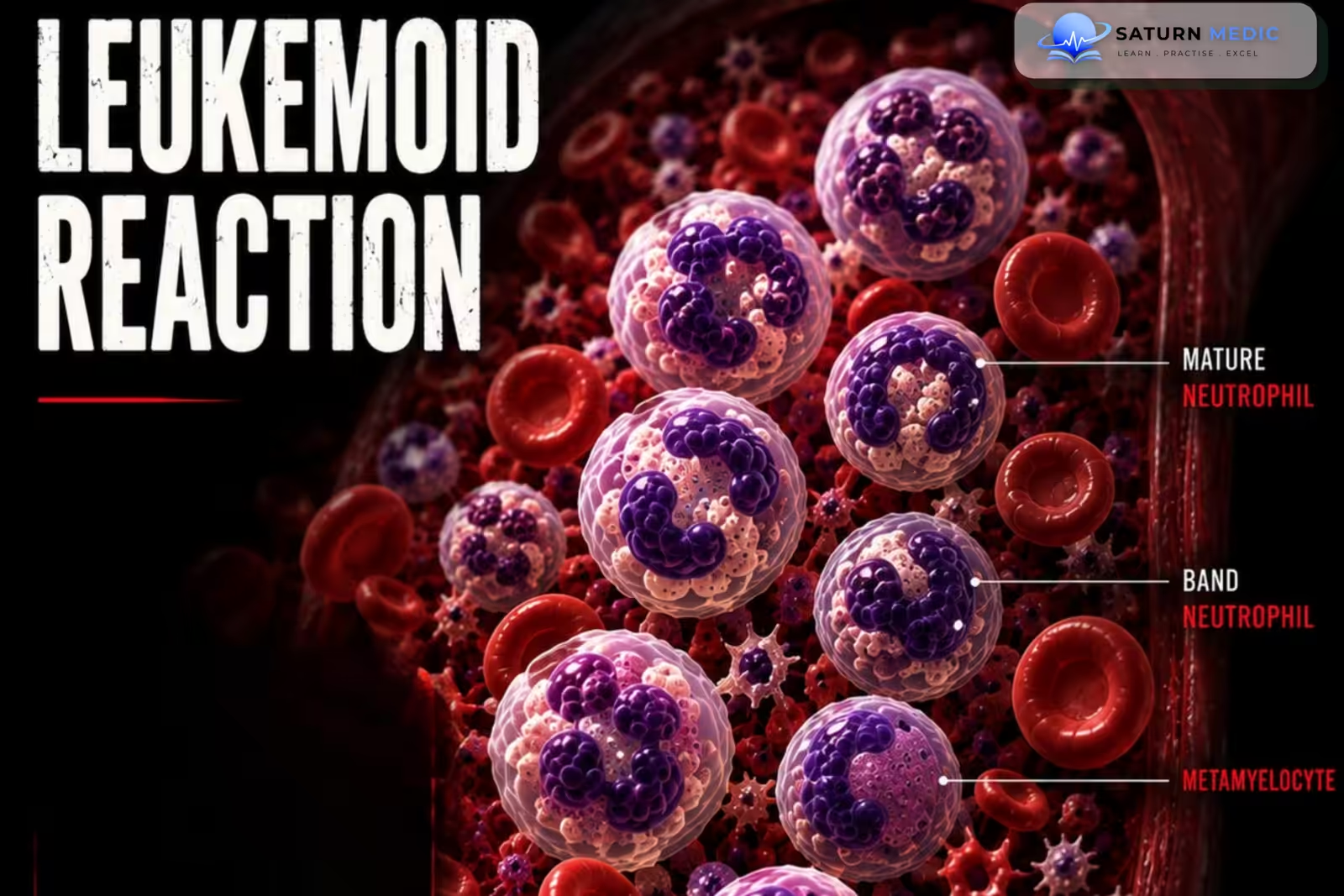
Leukemoid Reaction is an exaggerated increase in white blood cells, mainly mature neutrophils, in response to conditions such as severe infection, inflammation, tissue injury, or malignancy. It can resemble Chronic Myeloid Leukemia (CML), but it is reactive and usually resolves after treatment of the underlying condition.
Etiology & Risk Factors
Leukemoid Reaction occurs because severe infection, inflammation, tissue injury, or malignancy stimulates increased production and release of neutrophils from the bone marrow.
-Common Causes
Severe Infections
- Sepsis
- Pneumonia
- Clostridioides difficile infection
- Tuberculosis
Inflammatory Conditions
- Severe pancreatitis
- Vasculitis
- Severe inflammatory disorders
Tissue Injury
- Major trauma
- Burns
- Surgery
- Myocardial infarction
Malignancy
- Solid tumors
- Cytokine-producing tumors
Other Causes
- Severe hemorrhage
- Hemolysis
- Corticosteroid therapy
- G-CSF therapy
Pathophysiology
Severe infection, inflammation, malignancy, or physiological stress → increased cytokine production, particularly G-CSF and GM-CSF → increased granulopoiesis and accelerated release of neutrophils from the bone marrow → marked neutrophilic leukocytosis with a left shift → resolution after treatment of the underlying cause.
Clinical Presentation
Symptoms
Symptoms usually result from the underlying condition:
Fever
Chills
Fatigue
Cough
Dyspnea
Abdominal pain
Dysuria
Weight loss
Signs
Fever
Tachycardia
Signs of infection
Localized inflammation
Features of the underlying disease
Splenomegaly is usually absent or mild.
History Taking
-Ask about:
- Fever
- Recent infection
- Trauma
- Surgery
- Medication use
- Corticosteroid use
- G-CSF therapy
- Weight loss
- Night sweats
- Smoking
- Known malignancy
- Constitutional symptoms
Physical Examination
-General Examination
Look for:
Fever
Tachycardia
Signs of sepsis
Dehydration
-Systemic Examination
Assess for:
Source of infection
Inflammatory focus
Splenomegaly
Signs of malignancy
Tissue injury
Investigations
-Complete Blood Count
Typical findings:
WBC often >50 × 10⁹/L
Predominant neutrophilia
Left shift
Variable anemia and thrombocytopenia
-Peripheral Blood Film
May show:
Mature neutrophils
Band forms
Metamyelocytes
Myelocytes
Toxic granulation
Döhle bodies
Cytoplasmic vacuoles
Leukocyte Alkaline Phosphatase Score
High in Leukemoid Reaction
Low in Chronic Myeloid Leukemia
Molecular Testing
BCR-ABL1 testing:
Negative in Leukemoid Reaction
Positive in Chronic Myeloid Leukemia
-Additional Investigations
To identify the underlying cause:
CRP
ESR
Blood cultures
Urine culture
Chest X-ray
CT scan when indicated
Liver and renal function tests
Diagnosis
Diagnosis is based on:
- Marked reactive leukocytosis
- Predominant neutrophilia
- Left shift
- Evidence of an underlying cause
- Peripheral blood film findings
- Exclusion of leukemia when necessary
Management
-Main Treatment
Treat the underlying cause.
Examples:
Appropriate antibiotics for infection
Treatment of inflammatory disease
Management of malignancy
Correction of hemorrhage
Treatment of tissue injury
-Supportive Care
IV fluids when required
Monitoring of CBC
Treatment of sepsis
Correction of electrolyte abnormalities
Complications
- Sepsis
- Multi-organ failure
- Severe inflammation
- Tissue injury
- Misdiagnosis as leukemia
Prognosis
The prognosis depends mainly on the underlying cause. Leukemoid Reaction itself is generally reversible and resolves when the precipitating condition is successfully treated.
Key Points / Clinical Pearls
- Leukemoid Reaction is a reactive leukocytosis, not leukemia.
- WBC count is often >50 × 10⁹/L.
- Neutrophilia with a left shift is typical.
- Peripheral blood may show toxic granulation and Döhle bodies.
- Leukocyte alkaline phosphatase is usually high.
- BCR-ABL1 is negative.
- Severe infection is an important cause.
- Treatment focuses on the underlying condition.
- It usually resolves after successful treatment.
- The major differential diagnosis is Chronic Myeloid Leukemia.
- National Center for Biotechnology Information (NIH). Leukocytosis, StatPearls.
- Sakka V, Tsiodras S, Giamarellos-Bourboulis EJ, Giamarellou H. An Update on the Etiology and Diagnostic Evaluation of a Leukemoid Reaction. Eur J Intern Med. 2006;17:394-398. PMID: 16962944.
- National Center for Biotechnology Information (NIH). Chronic Myelogenous Leukemia, StatPearls.
- Mishra AK, Mehra K, Manikandan R, Dorairajan LN. Leukemoid Reaction: A Rare Paraneoplastic Event in a Case of Advanced Penile Cancer and Its Management. BMJ Case Rep. 2019;12:e230826. PMC6700585.
- MedlinePlus, National Library of Medicine (NIH). Leukemoid Reaction: Medical Encyclopedia.