

Clinical Subject Page
Benign Prostatic Hyperplasia (BPH)
Benign Prostatic Hyperplasia (BPH) is a non-cancerous enlargement of the prostate gland that commonly occurs with increasing age. Enlargement of the prostate can obstruct urinary flow and cause lower urinary tract symptoms (LUTS)
Also called
ICD-10
Specialty
Onset
Reviewed
-
OverviewOverview
-
Etiology & Risk FactorsEtiology & Risk Factors
-
PathophysiologyPathophysiology
-
Clinical PresentationClinical Presentation
-
History TakingHistory Taking
-
Physical ExaminationPhysical Examination
-
InvestigationsInvestigations
-
DiagnosisDiagnosis
-
ManagementManagement
-
ComplicationsComplications
-
PrognosisPrognosis
-
Key Points / Clinical PearlsKey Points / Clinical Pearls
Overview
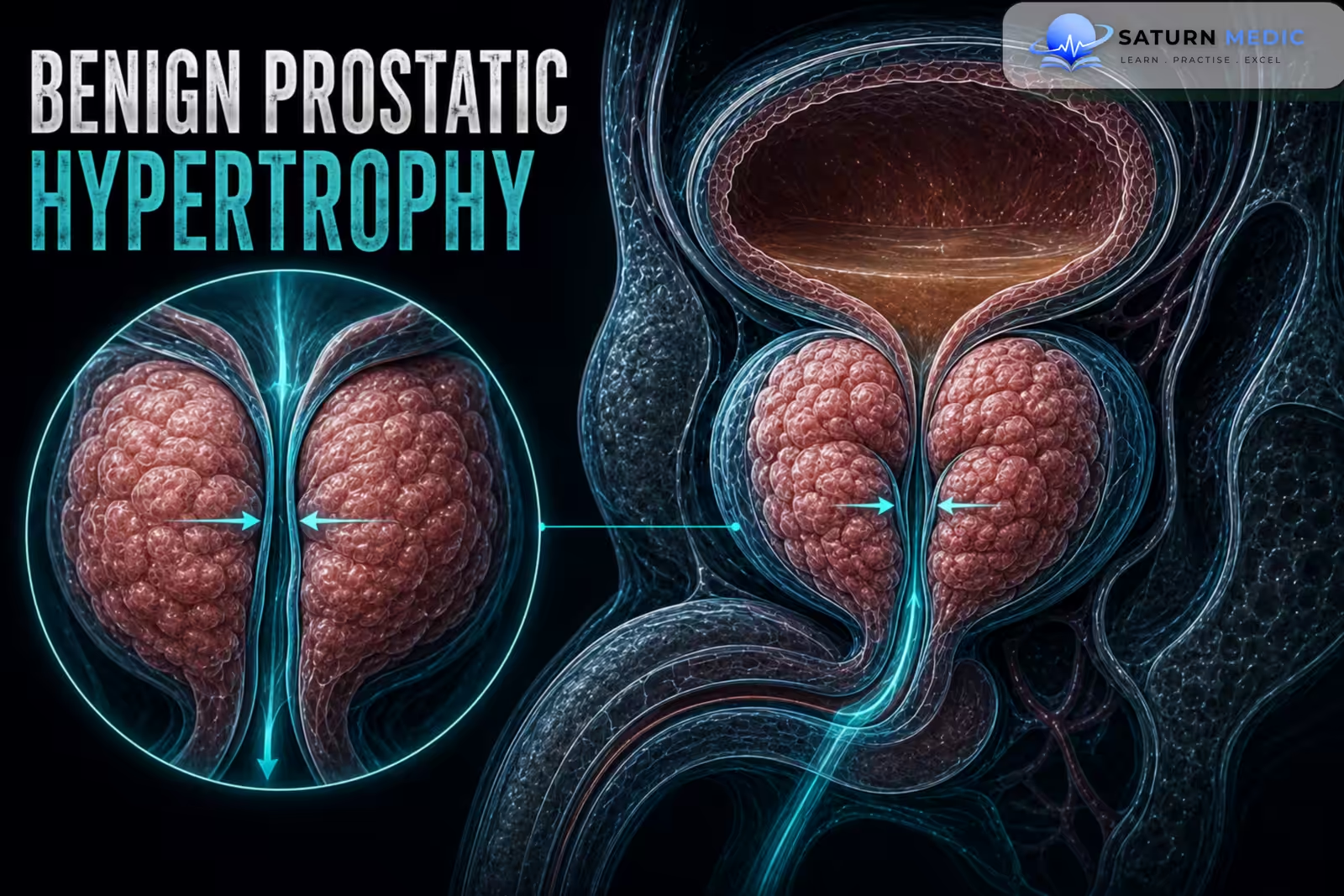
–Benign Prostatic Hyperplasia (BPH) results from progressive enlargement of the prostate, particularly in the transition zone surrounding the urethra.
-It can cause:
- Weak urinary stream
- Hesitancy
- Intermittency
- Straining
- Incomplete bladder emptying
- Urinary frequency
- Nocturia
- Urgency
–Symptoms may result from both static obstruction caused by prostate enlargement and dynamic obstruction caused by increased smooth-muscle tone.
Etiology & Risk Factors
-Etiology
–The exact cause is multifactorial and is strongly associated with aging and androgen-dependent prostate growth.
–Dihydrotestosterone (DHT) promotes prostate growth and contributes to progressive enlargement.
-Risk Factors
- Increasing age
- Family history of BPH
- Obesity and metabolic syndrome
- Diabetes mellitus
- Sedentary lifestyle
Pathophysiology
Aging + androgen-dependent prostate growth → transition-zone enlargement + increased prostatic smooth-muscle tone → urethral compression → bladder outlet obstruction → increased detrusor workload → lower urinary tract symptoms ± urinary retention
Clinical Presentation
-Voiding Symptoms
- Hesitancy
- Weak urinary stream
- Intermittency
- Straining
- Terminal dribbling
- Sensation of incomplete emptying
–StorageSymptoms
- Urinary frequency
- Nocturia
- Urgency
- Urge urinary incontinence
-Signs:
- Enlarged prostate on digital rectal examination
- Smooth, firm, symmetrical prostate enlargement
- Palpable bladder in chronic urinary retention
History Taking
-Ask about:
- Weak stream
- Hesitancy
- Intermittency
- Straining
- Incomplete bladder emptying
- Frequency and urgency
- Nocturia
- Urinary incontinence
- Hematuria
- Dysuria or fever
- Previous urinary retention
- Recurrent urinary tract infections
- Neurological disease
- Medication history
Physical Examination
-General Examination
- Blood pressure
- Hydration status
- Abdominal examination for a distended bladder
-System-Specific Examination:
- Digital Rectal Examination to assess prostate size and consistency
- Palpation/percussion for bladder distension
- Focused neurological examination when neurogenic bladder is suspected
Investigations
-Biochemistry / Specific Tests
-
Urinalysis
-
Serum creatinine and eGFR when renal impairment is suspected
-
Prostate-specific antigen (PSA) after appropriate discussion when results would influence management or prostate cancer evaluation
-
Post-void residual urine measurement
-
Symptom assessment using a validated tool such as the International Prostate Symptom Score (IPSS)
-Imaging
Ultrasound may assess:
-
Post-void residual volume
-
Prostate size
-
Hydronephrosis when upper urinary tract involvement is suspected
-Special / Confirmatory Tests
-
Uroflowmetry to assess urinary flow rate
-
Cystoscopy when hematuria, suspected urethral stricture, bladder pathology, or preoperative assessment is present
Diagnosis
-Diagnosis of Benign Prostatic Hyperplasia (BPH) is based on:
Typical lower urinary tract symptoms + focused examination + exclusion of other causes.
-Important assessment includes:
- Urinalysis
- Digital rectal examination
- Symptom severity assessment
- Post-void residual measurement when indicated
-PSA testing and further investigations are used selectively.
Management
1. First-Line / Emergency Management
There is no routine emergency treatment.
For acute urinary retention:
-
Immediate bladder catheterization
-
Assess and treat precipitating factors
-
Start an alpha-blocker when appropriate
-
Plan a trial without catheter when suitable
2. Definitive Treatment
Treatment depends on symptom severity, complications, prostate size, and patient preference.
-Options include:
-
Watchful waiting
-
Medical therapy
-
Minimally invasive procedures
-
Surgical treatment
3. Medical Treatment
-
Alpha-blockers such as tamsulosin — improve symptoms by relaxing prostatic smooth muscle
-
5-alpha-reductase inhibitors such as finasteride or dutasteride — reduce prostate volume and progression risk in selected patients with enlarged prostates
-
Combination therapy — for selected patients
-
Antimuscarinic agents or beta-3 agonists — selected patients with predominant storage symptoms
-
Phosphodiesterase-5 inhibitors — selected patients, particularly when erectile dysfunction coexists
4. Surgical / Procedural Treatment
Indications include significant complications or persistent symptoms despite appropriate medical treatment.
Options include:
-
Transurethral resection of the prostate (TURP)
-
Holmium laser enucleation of the prostate (HoLEP)
-
Other laser or minimally invasive procedures
-
Simple prostatectomy for selected very large prostates
5. Supportive Management
-
Reduce evening fluid intake if nocturia is troublesome
-
Review medications that worsen urinary symptoms
-
Limit excessive caffeine and alcohol intake
Complications
- Acute urinary retention
- Chronic urinary retention
- Recurrent urinary tract infection
- Bladder stones
- Bladder diverticula
- Gross hematuria
- Hydronephrosis
- Renal impairment
Prognosis
-Benign Prostatic Hyperplasia (BPH) is a progressive but non-cancerous condition.
-Many patients remain stable with observation or respond well to medication.
–Severe bladder outlet obstruction can cause urinary retention, upper urinary tract dilation, and renal impairment if left untreated. Appropriate treatment generally provides good symptom control and prevents major complications.
Key Points / Clinical Pearls
- Benign Prostatic Hyperplasia (BPH) is a non-cancerous enlargement of the prostate.
- It becomes increasingly common with age.
- Enlargement mainly affects the transition zone.
- BPH causes static and dynamic bladder outlet obstruction.
- Common voiding symptoms include weak stream, hesitancy, and intermittency.
- Common storage symptoms include frequency, urgency, and nocturia.
- Digital rectal examination may show a smooth, enlarged prostate.
- A hard or nodular prostate requires evaluation for prostate cancer.
- Urinalysis helps exclude infection and hematuria.
- PSA does not diagnose BPH by itself.
- Alpha-blockers provide relatively rapid symptom relief.
- 5-alpha-reductase inhibitors can reduce prostate size in selected patients.
- American Urological Association (AUA). Management of Lower Urinary Tract Symptoms Attributed to Benign Prostatic Hyperplasia: AUA Guideline .
- European Association of Urology (EAU). EAU Guidelines on the Management of Non-neurogenic Male Lower Urinary Tract Symptoms, Including Benign Prostatic Obstruction .
- McVary KT, Roehrborn CG, Avins AL, et al. Update on AUA Guideline on the Management of Benign Prostatic Hyperplasia. J Urol. 2011;185(5):1793-1803. Journal of Urology .
- Roehrborn CG. Benign Prostatic Hyperplasia: An Overview. Rev Urol. 2005;7(Suppl 9):S3-S14. National Library of Medicine .
- National Institute of Diabetes and Digestive and Kidney Diseases (NIDDK). Enlarged Prostate (Benign Prostatic Hyperplasia) . National Institutes of Health.
- National Library of Medicine (NIH). Benign Prostatic Hyperplasia . StatPearls.