
Clinical Subject Page

Testicular Torsion
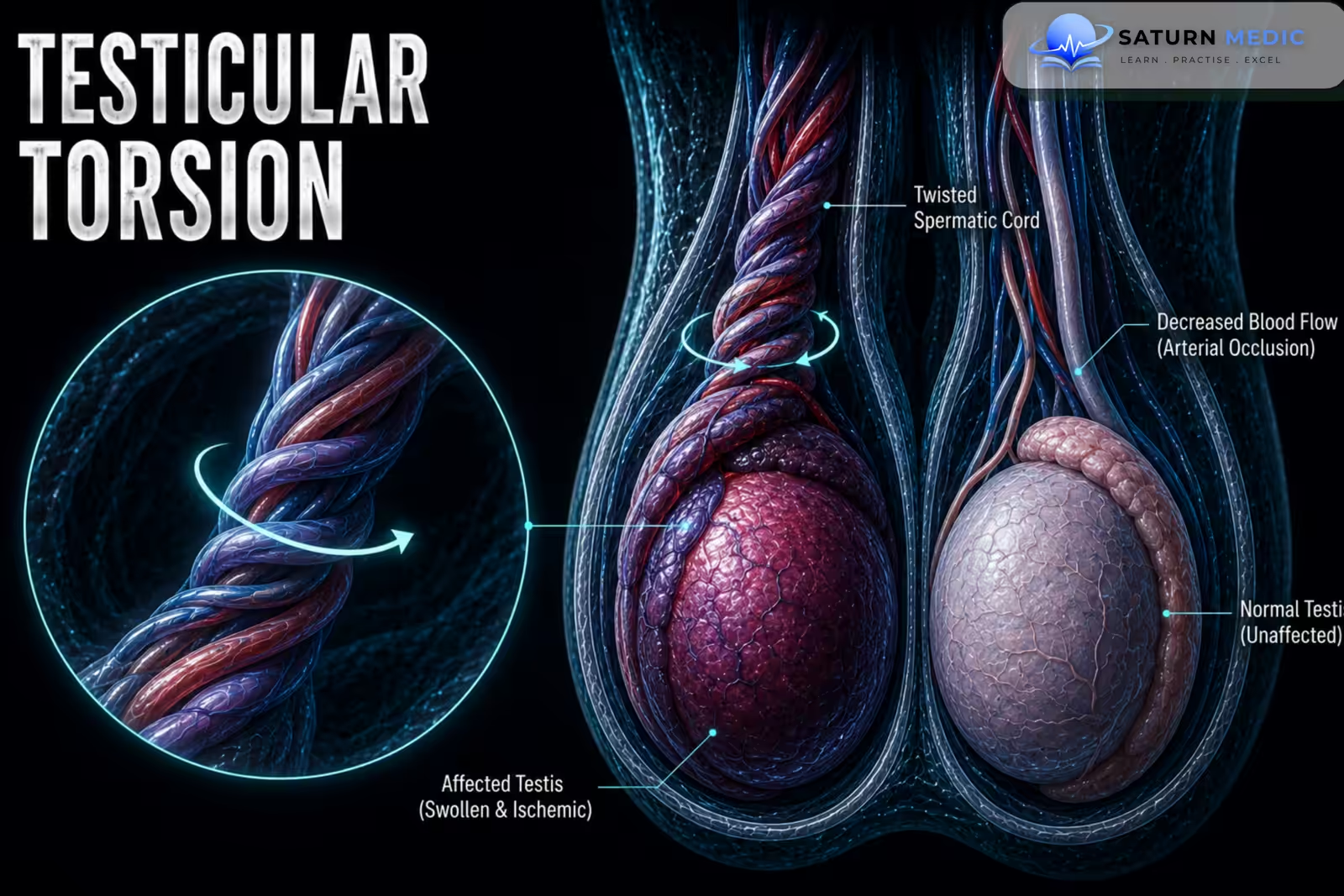
Testicular Torsion is a surgical emergency caused by twisting of the spermatic cord, leading to reduced or completely interrupted blood supply to the testis. Rapid diagnosis and urgent surgical treatment are essential to prevent testicular infarction and loss
Also called
ICD-10
Specialty
Onset
Reviewed
-
OverviewOverview
-
Etiology & Risk FactorsEtiology & Risk Factors
-
PathophysiologyPathophysiology
-
Clinical PresentationClinical Presentation
-
History TakingHistory Taking
-
Physical ExaminationPhysical Examination
-
InvestigationsInvestigations
-
DiagnosisDiagnosis
-
ManagementManagement
-
ComplicationsComplications
-
PrognosisPrognosis
-
Key Points / Clinical PearlsKey Points / Clinical Pearls
Overview
–Testicular Torsion occurs when the spermatic cord twists, obstructing venous drainage and subsequently arterial blood flow.
-It is most common in:
- Neonates
- Adolescents, especially during puberty
-The common anatomical predisposition in adolescents is the bell-clapper deformity, which allows excessive testicular mobility.
Etiology & Risk Factors
-Etiology:
Testicular Torsion usually occurs because of excessive mobility of the testis within the scrotum.
Important causes and associations include:
- Bell-clapper deformity
- Rapid testicular growth during puberty
- Trauma or physical activity
- Previous intermittent testicular pain caused by intermittent torsion
-Risk Factors
- Adolescence
- Previous intermittent testicular pain
- Bell-clapper deformity
- Previous torsion of the opposite testis
- Family history of testicular torsion
Pathophysiology
Testicular hypermobility → twisting of the spermatic cord → venous obstruction → venous congestion and edema → arterial blood flow reduction → testicular ischemia → infarction and necrosis if untreated
Clinical Presentation
–Symptoms
- Sudden severe unilateral scrotal or testicular pain
- Scrotal swelling
- Nausea and vomiting
- Lower abdominal or groin pain
- Previous episodes of intermittent testicular pain in some patients
-Signs:
- High-riding testis
- Horizontal or transverse testicular lie
- Swollen and tender hemiscrotum
- Absent cremasteric reflex
- Severe testicular tenderness
History Taking
-Ask about:
- Exact time of pain onset
- Sudden or gradual onset
- Duration of symptoms
- Previous similar episodes
- Nausea and vomiting
- Recent trauma or exercise
- Dysuria or urinary frequency
- Fever
- Urethral discharge
- Sexual history when clinically relevant
Physical Examination
-General Examination
- Degree of pain and distress
- Temperature
- Heart rate
- Signs of systemic infection
-System-Specific Examination:
- Testicular position and lie
- Testicular tenderness
- Scrotal swelling and erythema
- Cremasteric reflex
- Compare both testes
- Examine for an inguinal hernia when relevant
Investigations
-Biochemistry / Specific Tests
-
Urinalysis when infection is a possible alternative diagnosis
-Imaging
Color Doppler ultrasound can demonstrate reduced or absent intratesticular blood flow and may support the diagnosis.
However, imaging must not delay urgent surgical exploration when Testicular Torsion is strongly suspected.
-Special / Confirmatory Tests
Urgent surgical exploration is the definitive diagnostic and therapeutic procedure when clinical suspicion is high.
Diagnosis
-Diagnosis of Testicular Torsion is primarily based on:
- Sudden severe unilateral testicular pain
- High-riding or horizontally lying testis
- Absent or abnormal cremasteric reflex
- Nausea and vomiting
- Absence of features strongly suggesting another diagnosis
Color Doppler ultrasound may support the diagnosis when the presentation is uncertain, but a highly suspicious presentation requires immediate urological surgery without delaying for imaging
Management
1. First-Line / Emergency Management
Testicular Torsion requires immediate urological assessment and urgent surgical exploration.
-
Keep the patient fasting for surgery
-
Provide analgesia and antiemetics
-
Obtain urgent urological consultation
-
Do not delay definitive management for unnecessary investigations
Manual detorsion may be attempted by an experienced clinician when immediate surgery is not available, but it does not replace surgical exploration and fixation.
2. Definitive Treatment
Urgent surgery includes:
-
Detorsion of the spermatic cord
-
Assessment of testicular viability
-
Orchiopexy of the affected testis if viable
-
Contralateral orchiopexy to prevent torsion of the opposite testis
3. Medical Treatment
-
Analgesics
-
Antiemetics
-
Perioperative medications as required
There is no medical treatment that can replace urgent surgical correction.
4. Surgical / Procedural Treatment
-
Emergency scrotal exploration
-
Surgical detorsion
-
Bilateral orchiopexy
-
Orchiectomy if the testis is non-viable
5. Supportive Management
-
Pain control
-
Postoperative wound care
-
Scrotal support
Complications
- Testicular infarction
- Testicular necrosis
- Testicular atrophy
- Orchiectomy
- Subfertility
- Infertility
- Reduced testicular endocrine function
Prognosis
-The prognosis of testicular torsion depends mainly on the duration and degree of spermatic cord torsion before treatment.
–Early surgical intervention offers the best chance of preserving the testis.
–Delayed presentation significantly increases the risk of irreversible ischemic injury, testicular atrophy, and orchiectomy. Contralateral orchiopexy helps prevent future torsion of the opposite testis
Key Points / Clinical Pearls
- Testicular Torsion is a surgical emergency.
- It results from twisting of the spermatic cord and interruption of testicular blood supply.
- It is most common in neonates and adolescents.
- The bell-clapper deformity is an important anatomical risk factor.
- Sudden severe unilateral testicular pain is the classic presentation.
- Nausea and vomiting are common associated symptoms.
- A high-riding, horizontally lying testis is a classic finding.
- The cremasteric reflex is often absent.
- Previous brief episodes of pain may indicate intermittent torsion.
- Color Doppler ultrasound can support the diagnosis in uncertain cases.
- European Association of Urology (EAU). EAU Guidelines on Paediatric Urology .
- American Urological Association (AUA). Acute Scrotum: Testicular Torsion and Other Causes of Acute Scrotal Pain .
- Sharp VJ, Kieran K, Arlen AM. Testicular Torsion: Diagnosis, Evaluation, and Management. Am Fam Physician. 2013;88(12):835-840. American Family Physician .
- Ringdahl E, Teague L. Testicular Torsion. Am Fam Physician. 2006;74(10):1739-1743. American Family Physician .
- Mellick LB, Sinex JE, Gibson RW, Mears K. A Systematic Review of Testicle Survival Time After a Torsion Event. Pediatr Emerg Care. 2019;35(12):821-825.
- National Library of Medicine (NIH). Testicular Torsion . StatPearls.