
Clinical Subject Page

Urethral Trauma
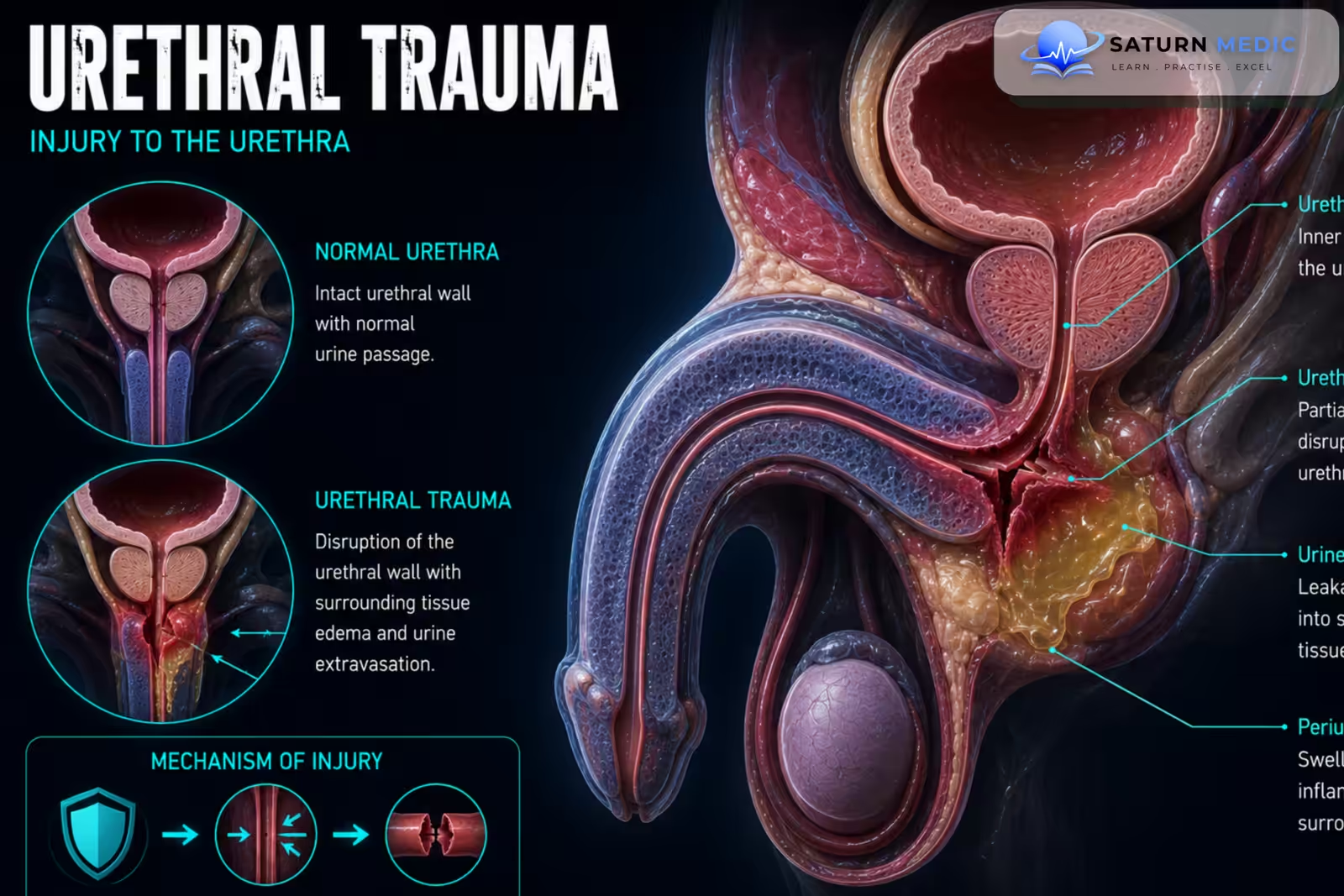
Urethral Trauma is an injury to the urethra caused by blunt trauma, penetrating injury, pelvic fractures, straddle injuries, or medical instrumentation. It can cause urethral disruption, bleeding, urinary retention, and long-term complications such as urethral stricture and urinary incontinence
Also called
ICD-10
Specialty
Onset
Reviewed
-
OverviewOverview
-
Etiology & Risk FactorsEtiology & Risk Factors
-
PathophysiologyPathophysiology
-
Clinical PresentationClinical Presentation
-
History TakingHistory Taking
-
Physical ExaminationPhysical Examination
-
InvestigationsInvestigations
-
DiagnosisDiagnosis
-
ManagementManagement
-
ComplicationsComplications
-
PrognosisPrognosis
-
Key Points / Clinical PearlsKey Points / Clinical Pearls
Overview
-Urethral Trauma is commonly classified according to the site of injury:
- Posterior urethral injury: usually associated with pelvic fractures and may involve partial or complete urethral disruption.
- Anterior urethral injury: commonly caused by straddle trauma, direct penile trauma, or penetrating injury.
- Iatrogenic urethral injury: caused by catheterization, endoscopic procedures, or other instrumentation.
-The pattern of injury is important because diagnosis and management differ according to the location and severity of urethral damage
Etiology & Risk Factors
-Posterior Urethral Trauma
Usually caused by:
- Pelvic fractures
- High-energy road traffic accidents
- Major crush injuries
-Anterior Urethral Trauma
Usually caused by:
- Straddle injuries
- Direct perineal trauma
- Penile trauma
- Penetrating injuries
-Iatrogenic Trauma
May result from:
- Difficult urethral catheterization
- Endoscopic procedures
- Urological instrumentation
-Risk Factors
- Pelvic fracture
- High-energy trauma
- Straddle injury
- Penetrating perineal trauma
Pathophysiology
Traumatic force or instrumentation → urethral contusion, partial tear, or complete disruption → bleeding and urine leakage → periurethral inflammation and hematoma → healing with fibrosis → urethral stricture ± urinary dysfunction
Clinical Presentation
–Symptoms
- Inability to pass urine
- Difficulty voiding
- Dysuria
- Hematuria
- Perineal or penile pain
- Suprapubic discomfort from urinary retention
-Signs:
- Blood at the urethral meatus
- Perineal bruising or swelling
- Scrotal swelling
- Penile hematoma
- Palpable distended bladder
- Pelvic tenderness or instability
- High-riding or non-palpable prostate on rectal examination may occur in posterior injury but is not a reliable diagnostic sign
History Taking
-Ask about:
- Mechanism of injury
- Pelvic fracture or major pelvic trauma
- Straddle injury
- Penetrating injury
- Ability to pass urine after trauma
- Blood at the urethral opening
- Hematuria
- Perineal, penile, or suprapubic pain
- Previous urethral stricture or surgery
Physical Examination
-General Examination
- Airway, Breathing, and Circulation
- Blood pressure and heart rate
- Signs of shock
- Assessment for associated trauma
-System-Specific Examination:
- Inspect the urethral meatus for blood
- Examine the penis, scrotum, and perineum for bruising or swelling
- Palpate for a distended bladder
- Assess for pelvic instability
- Examine for associated genital or rectal injuries when indicated
Investigations
-Complete Blood Count
Relevant in significant trauma to assess blood loss and monitor major bleeding.
-Biochemistry / Specific Tests
-
Serum creatinine and electrolytes when urinaryobstruction or significant associated injury is present
-
Urinalysis for hematuria
-Imaging
Retrograde Urethrography (RUG)
Retrograde urethrography is the key diagnostic investigation for suspected Urethral Trauma.
It can demonstrate:
-
Site of urethral injury
-
Partial disruption
-
Complete disruption
-
Contrast extravasation
CT
Useful for assessing associated pelvic and abdominal injuries but does not replace retrograde urethrography for direct assessment of the urethra.
Diagnosis
-Diagnosis Urethral Trauma is based on:
Compatible mechanism of injury + clinical signs such as blood at the urethral meatus or inability to void + retrograde urethrography demonstrating urethral injury.
-The injury should be classified according to:
- Anterior or posterior location
- Partial or complete disruption
Management
1. First-Line / Emergency Management
Initial management follows standard trauma principles:
-
Stabilize airway, breathing, and circulation
-
Treat life-threatening associated injuries
-
Provide analgesia
-
Avoid repeated blind urethral catheterization
-
Perform retrograde urethrography when urethral injury is suspected
-
Establish urinary drainage safely
-If urethral catheterization is not appropriate or cannot be performed safely, suprapubic urinary diversion may be required.
2. Definitive Treatment
Definitive treatment depends on:
-
Location of injury
-
Partial or complete disruption
-
Associated pelvic injuries
-
Hemodynamic stability
-
Time since injury
–Some partial injuries can heal with catheter drainage, while complete disruptions often require delayed or selected early reconstructive management.
3. Medical Treatment
-
Analgesia
-
Antibiotics when indicated
-
Treatment of associated urinary tract infection
-
Management of associated injuries
4. Surgical / Procedural Treatment
Partial Urethral Injury
May be managed with:
-
Careful urethral catheter drainage in selected cases
-
Follow-up imaging
-Complete Urethral Injury
May require:
-
Suprapubic catheter drainage
-
Endoscopic realignment in selected patients
-
Delayed urethroplasty
-Iatrogenic Injury
Management may include:
-
Catheter drainage
-
Endoscopic treatment
-
Specialist urological repair
5. Supportive Management
-
Monitor urine output
-
Monitor for infection
-
Follow-up imaging
-
Assessment for urethral stricture
Complications
- Urethral stricture
- Urinary retention
- Urinary extravasation
- Periurethral abscess
- Urinary tract infection
- Urinary incontinence
- Erectile dysfunction
- Infertility in selected severe associated injuries
- Fistula formation
Prognosis
The prognosis depends on the site and severity of the injury, associated trauma, and development of long-term complications. Minor urethral injuries may heal well with appropriate drainage. Complete posterior urethral injuries have a significant risk of urethral stricture and may require reconstructive surgery. Long-term follow-up is important because complications may develop months after the initial trauma.
Key Points / Clinical Pearls
- Urethral Trauma can result from pelvic fractures, straddle injuries, penetrating trauma, or medical instrumentation.
- Posterior urethral injuries are commonly associated with pelvic fractures.
- Anterior urethral injuries commonly occur after straddle trauma.
- Blood at the urethral meatus is an important warning sign.
- Inability to void may indicate significant urethral injury.
- Blind urethral catheterization should be avoided when significant injury is suspected.
- Retrograde urethrography is the key diagnostic investigation.
- The injury may be partial or complete.
- Safe urinary drainage is an immediate management priority.
- Suprapubic catheterization may be required when urethral drainage is unsafe.
- Some partial injuries can heal with catheter drainage.
- European Association of Urology (EAU). EAU Guidelines on Urological Trauma .
- American Urological Association (AUA). Urotrauma Guideline .
- Morey AF, Brandes S, Dugi DD III, et al. Urotrauma: AUA Guideline. J Urol. 2014;192(2):327-335. Journal of Urology .
- Koraitim MM. Pelvic Fracture Urethral Injuries: The Unresolved Controversy. J Urol. 1999;161(5):1433-1441. PubMed .
- Mundy AR, Andrich DE. Urethral Trauma. Part I: Introduction, History, Anatomy, Pathology, Assessment and Emergency Management. BJU Int. 2011;108(3):310-327. BJU International .
- National Library of Medicine (NIH). Urethral Injury . StatPearls.