

Clinical Subject Page
Neurogenic Bladder
Neurogenic Bladder is urinary bladder dysfunction caused by damage or disease affecting the nervous system that controls bladder storage and emptying. It can cause urinary retention, incontinence, recurrent Urinary Tract Infection (UTI), and upper urinary tract damage
Also called
ICD-10
Specialty
Onset
Reviewed
-
OverviewOverview
-
Etiology & Risk FactorsEtiology & Risk Factors
-
PathophysiologyPathophysiology
-
Clinical PresentationClinical Presentation
-
History TakingHistory Taking
-
Physical ExaminationPhysical Examination
-
InvestigationsInvestigations
-
DiagnosisDiagnosis
-
ManagementManagement
-
ComplicationsComplications
-
PrognosisPrognosis
-
Key Points / Clinical PearlsKey Points / Clinical Pearls
Overview
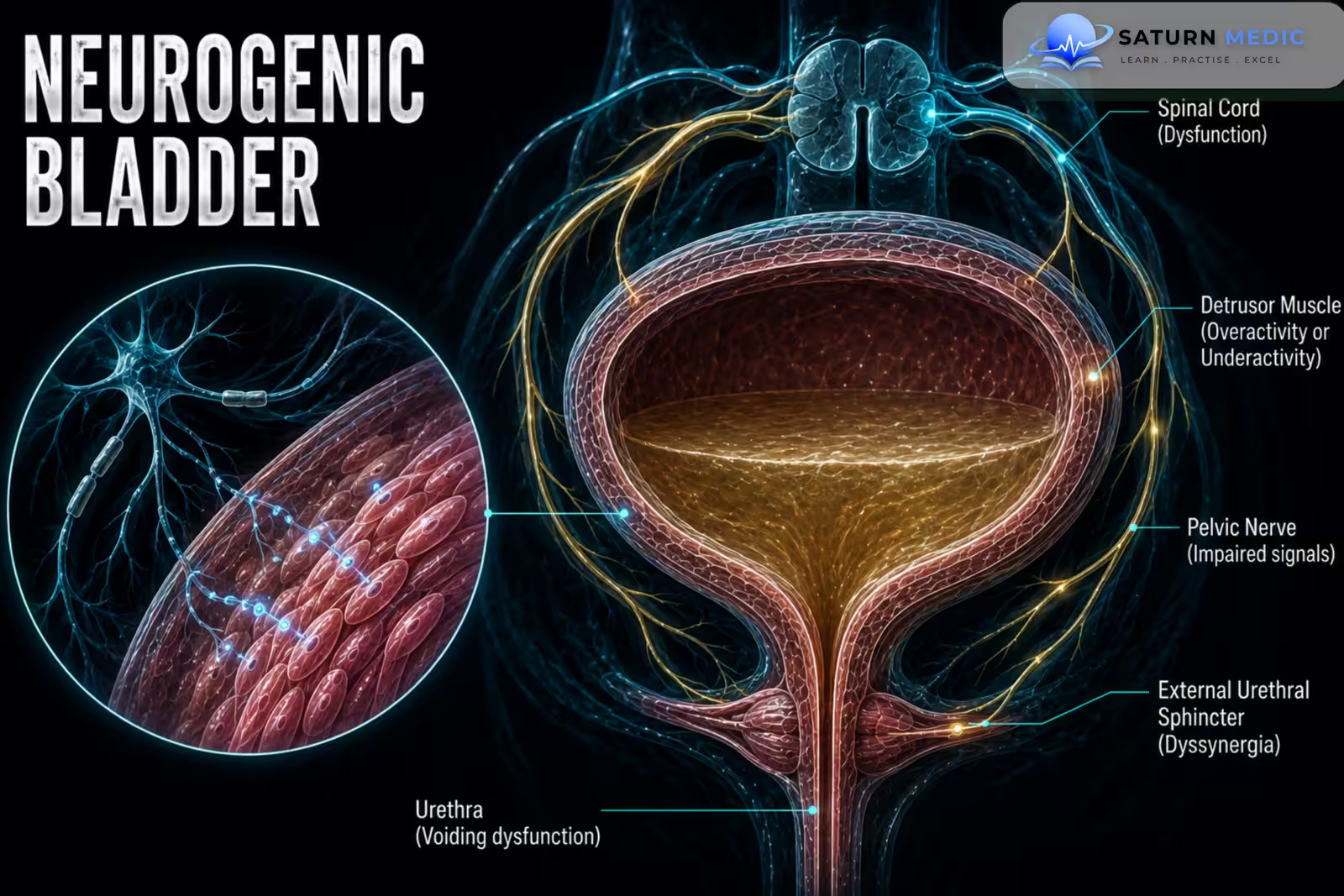
–Neurogenic Bladder may result from disorders affecting the brain, spinal cord, or peripheral nerves.
-Major patterns include:
- Overactive/spastic bladder: involuntary detrusor contractions causing urgency and incontinence.
- Underactive/flaccid bladder: impaired detrusor contraction causing urinary retention and incomplete emptying.
- Detrusor–sphincter dyssynergia: involuntary contraction of the urethral sphincter during detrusor contraction, commonly associated with spinal cord lesions.
Etiology & Risk Factors
-Etiology
–Common neurological causes include:
- Spinal cord injury
- Multiple sclerosis
- Parkinson disease
- Stroke
- Spina bifida
- Diabetic neuropathy
- Multiple system atrophy
- Pelvic nerve injury
-Risk Factors
- Spinal cord disease or injury
- Multiple sclerosis
- Diabetes mellitus
- Previous pelvic surgery
- Neurological disorders
- Congenital spinal abnormalities
Pathophysiology
Neurological lesion → impaired bladder sensation or detrusor/sphincter control → abnormal urine storage or emptying → urinary retention/incontinence → increased bladder pressure or residual urine → recurrent infection and upper urinary tract damage → renal impairment
Clinical Presentation
–Symptoms
- Urinary urgency
- Urinary frequency
- Urge incontinence
- Difficulty initiating urination
- Weak urinary stream
- Incomplete bladder emptying
- Urinary retention
- Recurrent Urinary Tract Infection (UTI)
- Nocturia
-Signs:
- Palpable or distended bladder
- Urinary incontinence
- High post-void residual volume
- Neurological abnormalities associated with the underlying disorder
History Taking
-Ask about:
- Urinary frequency and urgency
- Urinary incontinence
- Difficulty initiating urination
- Weak urinary stream
- Incomplete emptying
- Urinary retention
- Recurrent Urinary Tract Infection (UTI)
- Hematuria
- Nocturia
- Neurological symptoms
- Previous spinal cord injury
- Multiple sclerosis or other neurological disease
- Diabetes mellitus
- Previous pelvic or spinal surgery
- Catheter use
Physical Examination
-General Examination
- Blood pressure
- Abdominal examination for bladder distension
- Signs of urinary infection
-System-Specific Examination:
- Focused neurological examination
- Lower limb power and sensation
- Perineal sensation when appropriate
- Anal sphincter tone when clinically indicated
- Assessment of sacral reflexes when relevant
Investigations
-Biochemistry / Specific Tests
Urinalysis
Urine culture when infection is suspected
Serum creatinine and eGFR
Serum electrolytes when kidney dysfunction is suspected
Post-void residual urine volume
-Imaging
Renal and bladder ultrasound is useful for assessing:
Hydronephrosis
Bladder abnormalities
Post-void residual volume
Upper urinary tract changes
Bladder stones
-Special / Confirmatory Tests
Urodynamic testing is the key specialized investigation for defining bladder storage and emptying dysfunction.
It can identify:
Detrusor overactivity
Poor bladder compliance
Detrusor underactivity
Detrusor-sphincter dyssynergia
Cystoscopy may be performed when hematuria, recurrent infection, bladder stones, or another structural abnormality is suspected.
Diagnosis
-Diagnosis of neurogenic bladder is based on:
Neurological disease + characteristic urinary symptoms + evidence of abnormal bladder storage or emptying.
-Initial evaluation includes:
- Urinalysis
- Kidney function assessment
- Post-void residual measurement
- Renal and bladder ultrasound when indicated
–Urodynamic testing is the most important specialized test when the type of dysfunction or bladder pressure needs to be defined.
Management
1. Definitive Treatment
Management aims to:
Achieve safe bladder storage
Achieve effective bladder emptying
Maintain low bladder pressure
Prevent recurrent infection
Protect kidney function
2. Medical Treatment
Depending on bladder dysfunction:
Antimuscarinic agents — reduce detrusor overactivity
Beta-3 agonists — improve storage symptoms
Alpha-blockers — may reduce bladder outlet resistance in selected patients
Botulinum toxin A — for refractory neurogenic detrusor overactivity
Antibiotics are used for documented symptomatic urinary infection rather than routine prevention.
3. Surgical / Procedural Treatment
Options for selected patients include:
Clean intermittent catheterization (CIC) — preferred method for many patients with incomplete bladder emptying
Indwelling catheterization when intermittent catheterization is not feasible
Botulinum toxin injection into the detrusor
Sacral neuromodulation in selected patients
Bladder augmentation for severe refractory high-pressure bladder dysfunction
Urinary diversion in selected advanced cases
4. Supportive Management
Regular bladder emptying schedule
Adequate fluid management
Monitor post-void residual volume
Regular renal function assessment
Monitor for hydronephrosis
Complications
- Urinary retention
- Urinary incontinence
- Recurrent Urinary Tract Infection (UTI)
- Bladder stones
- Vesicoureteral reflux
- Hydronephrosis
- Renal scarring
- Renal impairment
- Autonomic dysreflexia
Prognosis
-The prognosis of Neurogenic Bladder depends on the underlying neurological disorder and the degree of bladder dysfunction.
–Appropriate management can control symptoms and prevent upper urinary tract damage.
–High-pressure bladder dysfunction, persistent urinary retention, recurrent infection, and poor long-term bladder management can lead to progressive renal impairment and Chronic Kidney Disease (CKD)
Key Points / Clinical Pearls
- Neurogenic Bladder is bladder dysfunction caused by neurological disease or injury.
- It can affect bladder storage, emptying, or both.
- Common causes include spinal cord injury, multiple sclerosis, diabetes, and spina bifida.
- Overactive bladder can cause urgency and urge incontinence.
- Underactive bladder can cause urinary retention and incomplete emptying.
- Detrusor-sphincter dyssynergia can cause high bladder pressures and obstruction.
- Post-void residual measurement is an important initial assessment.
- Urinalysis and urine culture help evaluate suspected Urinary Tract Infection (UTI).
- Renal and bladder ultrasound helps assess upper urinary tract damage.
- Urodynamic testing defines the underlying bladder dysfunction.
- Treatment aims to maintain low bladder pressure and effective emptying.
- Clean intermittent catheterization is important for many patients with urinary retention.
- European Association of Urology (EAU). EAU Guidelines on Neuro-Urology .
- Ginsberg D, Gousse A, Keppenne V, et al. Phase 3 Efficacy and Safety Study of OnabotulinumtoxinA for Urinary Incontinence in Patients With Multiple Sclerosis or Spinal Cord Injury. J Urol. 2012;187(6):2131-2139. Journal of Urology .
- Panicker JN, de Sèze M, Fowler CJ. Rehabilitation in Practice: Neurogenic Lower Urinary Tract Dysfunction and Its Management. Clin Rehabil. 2010;24(7):579-589. PubMed .
- Cameron AP. Medical and Surgical Treatment of Neurogenic Bladder. Curr Bladder Dysfunct Rep. 2016;11:101-109.
- National Institute of Diabetes and Digestive and Kidney Diseases (NIDDK). Neurogenic Bladder . National Institutes of Health.
- National Library of Medicine (NIH). Neurogenic Bladder . StatPearls.