

Clinical Subject Page
Penile Cancer
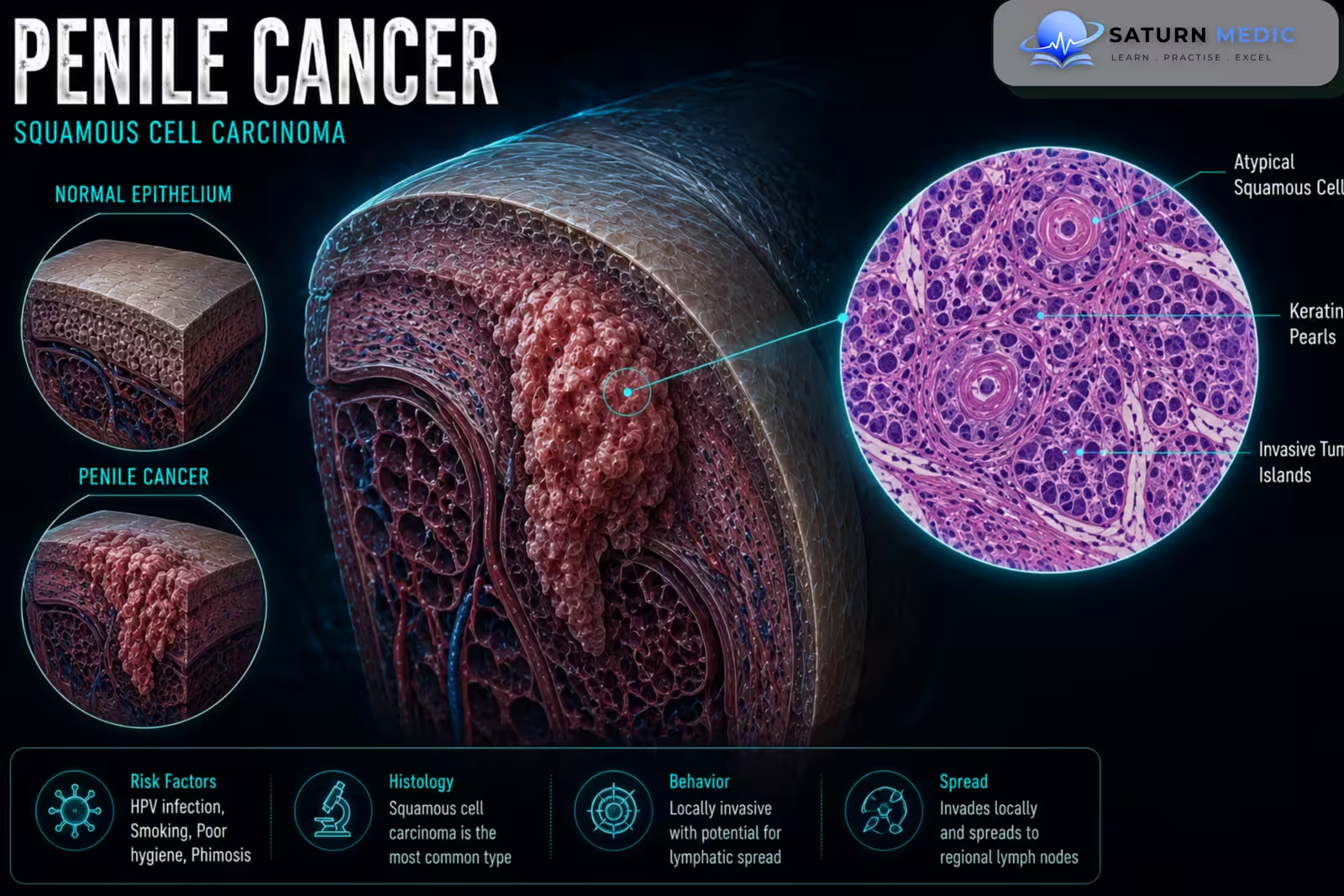
Penile Cancer is a malignant tumor of the penis, most commonly squamous cell carcinoma (SCC) arising from the penile epithelium. It usually develops on the glans, foreskin, or coronal sulcus
It is uncommon but can be highly morbid if diagnosed late
Also called
ICD-10
Specialty
Onset
Reviewed
-
OverviewOverview
-
Etiology & Risk FactorsEtiology & Risk Factors
-
PathophysiologyPathophysiology
-
Clinical PresentationClinical Presentation
-
History TakingHistory Taking
-
Physical ExaminationPhysical Examination
-
InvestigationsInvestigations
-
DiagnosisDiagnosis
-
ManagementManagement
-
ComplicationsComplications
-
PrognosisPrognosis
-
Key Points / Clinical PearlsKey Points / Clinical Pearls
Overview
–Most Penile Cancer is squamous cell carcinoma. The tumor may arise from the skin or mucosal epithelium of the glans, foreskin, or penile shaft.
Important disease features include:
- Local tumor invasion
- Histological grade
- Human papillomavirus (HPV) association in some tumors
- Inguinal lymph node involvement
- Distant metastasis in advanced disease
Early diagnosis can allow organ-preserving treatment, whereas advanced disease may require more extensive surgery and systemic treatment.
Etiology & Risk Factors
-Etiology
–Penile Cancer develops through malignant transformation of penile epithelial cells. Some tumors are associated with persistent high-risk Human Papillomavirus (HPV) infection, while others are associated with chronic inflammation and inflammatory penile disorders.
-Risk Factors
- Persistent high-risk Human Papillomavirus (HPV) infection
- Phimosis
- Lichen sclerosus
- Cigarette smoking
- Poor genital hygiene
Pathophysiology
Chronic inflammation and/or high-risk HPV infection → genetic damage to penile epithelial cells → dysplasia and malignant transformation → squamous cell carcinoma → local tissue invasion → spread to inguinal lymph nodes → pelvic and distant metastasis
Clinical Presentation
-Symptoms:
-
Penile Cancer may present with:
- Persistent penile ulcer
- Penile lump or mass
- Abnormal growth on the penis
- Persistent skin thickening or discoloration
- Bleeding from the lesion
- Foul-smelling discharge
- Penile pain, particularly in advanced disease
-Signs:
- Ulcerative lesion
- Exophytic or wart-like mass
- Indurated lesion
- Abnormal lesion on the glans or foreskin
- Palpable inguinal lymph nodes
History Taking
-Ask about:
- Duration of the penile lesion
- Changes in size or appearance
- Pain or bleeding
- Penile discharge
- Difficulty retracting the foreskin
- Urinary symptoms
- Previous HPV-related disease
- Smoking history
- History of phimosis
- Previous penile lesions or treatment
Physical Examination
-General Examination
- Assess general condition
- Look for weight loss
- Assess for signs of metastatic disease
-System-Specific Examination:
- Inspect the entire penis and foreskin
- Assess lesion size, location, and depth
- Examine for urethral involvement
- Palpate both inguinal regions for lymphadenopathy
Investigations
-Biochemistry / Specific Tests
There is no specific blood test or tumor marker that confirms Penile Cancer.
Renal function may be assessed before contrast imaging or systemic treatment.
-Imaging
Magnetic Resonance Imaging (MRI)
May be used to assess local tumor extent and invasion of deeper penile structures.
Computed Tomography (CT)
Used to assess regional lymph nodes and distant metastatic disease when indicated.
-Special / Confirmatory Tests
Penile Biopsy
Histological examination of the lesion confirms Penile Cancer and identifies the tumor type and grade.
Lymph Node Assessment
Clinically suspicious or high-risk disease may require further evaluation of regional lymph nodes.
-Important Investigation Note
Biopsy is required to confirm Penile Cancer; imaging alone cannot establish the diagnosis.
Diagnosis
-Penile Cancer is diagnosed by:
Persistent suspicious penile lesion → focused penile and inguinal examination → biopsy for histological confirmation → local and nodal staging → assessment for metastatic disease when indicated.
Management
1. Definitive Treatment
The main aim is complete cancer control while preserving penile tissue and function whenever oncologically safe.
Early localized Penile Cancer may be treated with organ-preserving approaches.
More advanced disease may require partial or total penectomy.
2. Medical Treatment
Medical or nonsurgical treatment may include:
-
Topical treatment for selected superficial precursor lesions
-
Radiotherapy in selected cases
-
Systemic chemotherapy for selected advanced or metastatic disease
-
Immunotherapy or other systemic treatment in selected advanced cases
3. Surgical / Procedural Treatment
Depending on stage and location:
-
Local excision
-
Organ-preserving surgery
-
Glansectomy
-
Partial penectomy
-
Total penectomy
-
Inguinal lymph node surgery when indicated
4. Supportive Management
-
Smoking cessation
-
Genital hygiene
-
Sexual and psychological counselling
-
Urinary rehabilitation when required
Complications
- Local tissue destruction
- Urethral obstruction
- Inguinal lymph node metastases
- Pelvic lymph node metastases
- Distant metastases
- Sexual dysfunction
- Urinary dysfunction
- Psychological distress
Prognosis
The prognosis of Penile Cancer depends mainly on tumor stage, depth of invasion, histological grade, lymphovascular invasion, and especially regional lymph node involvement. Early localized disease generally has a favorable prognosis, while nodal and distant metastatic disease is associated with worse outcomes.
Key Points / Clinical Pearls
- Penile Cancer is most commonly squamous cell carcinoma.
- The glans and foreskin are common sites.
- A persistent penile ulcer or mass requires investigation.
- High-risk HPV infection is an important risk factor for some tumors.
- Phimosis and lichen sclerosus increase risk.
- Smoking is an important modifiable risk factor.
- Biopsy confirms the diagnosis.
- There is no diagnostic blood tumor marker.
- Inguinal lymph node involvement is a major prognostic factor.
- MRI may help assess local tumor invasion.
- CT may be used for nodal and distant staging.
- Early disease can often be treated with organ-preserving techniques.
- European Association of Urology (EAU). EAU Guidelines on Penile Cancer.
- National Comprehensive Cancer Network (NCCN). NCCN Guidelines for Penile Cancer.
- Hakenberg OW, Compérat EM, Minhas S, et al. EAU Guidelines on Penile Cancer. PubMed.
- Chipollini J, Azizi M, Hakenberg OW, et al. Management of Penile Cancer. PubMed.
- National Cancer Institute (NCI). Penile Cancer.