
Clinical Subject Page

Urinary Incontinence
Urinary Incontinence is the involuntary leakage of urine. It is a symptom rather than a single disease and can result from problems with bladder storage, urethral closure, bladder emptying, neurological control, or functional ability. Identifying the type and underlying cause is essential for appropriate treatment
Also called
ICD-10
Specialty
Onset
Reviewed
-
OverviewOverview
-
Etiology & Risk FactorsEtiology & Risk Factors
-
PathophysiologyPathophysiology
-
Clinical PresentationClinical Presentation
-
History TakingHistory Taking
-
Physical ExaminationPhysical Examination
-
InvestigationsInvestigations
-
DiagnosisDiagnosis
-
ManagementManagement
-
ComplicationsComplications
-
PrognosisPrognosis
-
Key Points / Clinical PearlsKey Points / Clinical Pearls
Overview
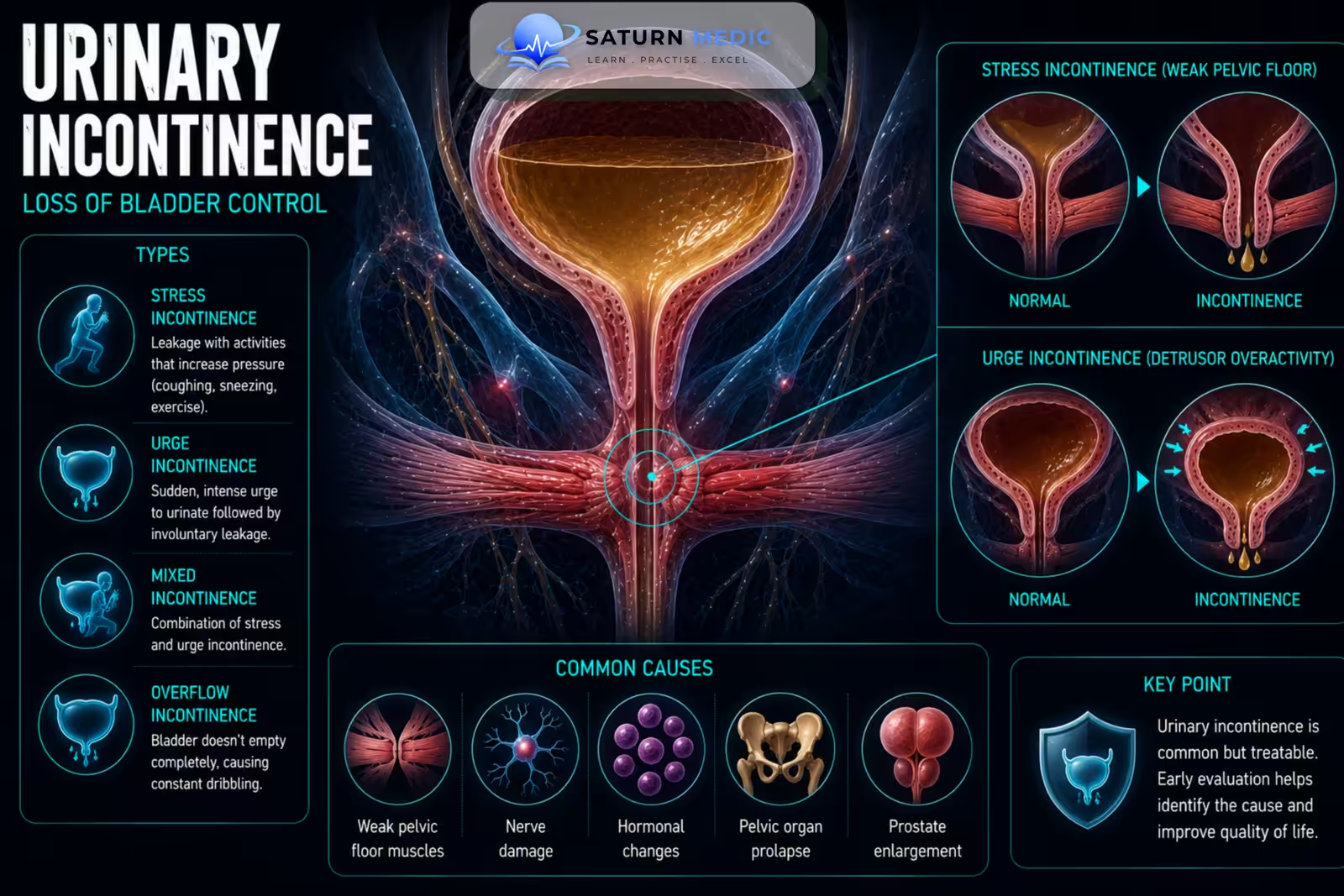
The main types of Urinary Incontinence are:
- Stress incontinence: leakage during coughing, sneezing, laughing, or exercise.
- Urge incontinence: leakage associated with a sudden, difficult-to-control urge to urinate.
- Mixed incontinence: features of both stress and urge incontinence.
- Overflow incontinence: leakage caused by chronic urinary retention and bladder overdistension.
- Functional incontinence: inability to reach or use the toilet despite relatively normal lower urinary tract function.
Etiology & Risk Factors
-Etiology
–The cause depends on the type:
- Stress: pelvic floor weakness or urethral sphincter incompetence
- Urge: detrusor overactivity or bladder hypersensitivity
- Overflow: bladder outlet obstruction or impaired detrusor contraction
- Functional: mobility, cognitive, or environmental problems
-Risk Factors
- Increasing age
- Pregnancy and vaginal childbirth
- Obesity
- Neurological disease
- Prostate enlargement or previous pelvic surgery
Pathophysiology
Disruption of normal bladder storage or emptying → impaired urethral closure, abnormal detrusor contraction, or incomplete bladder emptying → loss of normal continence → involuntary urine leakage
Clinical Presentation
–Symptoms:
Stress Incontinence
- Leakage during coughing or sneezing
- Leakage during laughing
- Leakage during exercise
Urge Incontinence
- Sudden intense urge to urinate
- Leakage before reaching the toilet
- Frequency
- Nocturia
Overflow Incontinence
- Weak urinary stream
- Hesitancy
- Feeling of incomplete emptying
- Frequent small-volume leakage
- Post-void dribbling
-Signs:
- Reduced pelvic floor tone
- Pelvic organ prolapse in some women
- Palpable distended bladder in overflow incontinence
- Neurological abnormalities when a neurological cause is present
History Taking
-Ask about:
- When leakage occurs
- Relationship to coughing or exercise
- Urgency before leakage
- Frequency and nocturia
- Weak stream or hesitancy
- Feeling of incomplete emptying
- Dysuria or recurrent UTI
- Hematuria
- Fluid and caffeine intake
- Current medications, especially diuretics
Physical Examination
-General Examination
- Body weight when relevant
- Mobility and functional status
- Signs of neurological disease
-System-Specific Examination:
- Abdominal examination for bladder distension
- Pelvic examination when indicated
- Assessment for pelvic organ prolapse
- Pelvic floor muscle assessment
- Focused neurological examination when indicated
- Prostate examination when clinically relevant
Investigations
Biochemistry / Specific Tests
-
Urinalysis
-
Urine culture when infection is suspected
-
Bladder diary
-
Post-void residual measurement when retention or overflow is suspected
Serum creatinine may be assessed when significant obstruction or kidney damage is suspected.
-Imaging
Not routinely required in uncomplicated Urinary Incontinence.
Renal and bladder ultrasound may be useful when retention, Hydronephrosis, or structural abnormalities are suspected.
-Special / Confirmatory Tests
Urodynamic Studies
May be useful when:
-
The diagnosis is uncertain
-
Symptoms are complex
-
Neurological bladder dysfunction is suspected
-
Invasive treatment is being considered
Diagnosis
Urinary Incontinence is diagnosed primarily by identifying the pattern of leakage:
History and bladder diary → classify the type → urinalysis to exclude infection → assess post-void residual when indicated → investigate underlying causes.
Management
1. Definitive Treatment
Treatment depends on the type.
-
Stress: pelvic floor muscle training and selected surgical treatment.
-
Urge: bladder training and treatment of contributing factors.
-
Overflow: relieve retention and treat the underlying obstruction.
-
Functional: improve toilet access and address mobility or cognitive problems.
2. Medical Treatment
Depending on the cause:
-
Antimuscarinic medication for selected urge incontinence
-
Beta-3 adrenergic agonists for selected urge incontinence
-
Medication for Benign Prostatic Hyperplasia (BPH) when obstruction contributes
-
Topical vaginal estrogen in selected postmenopausal patients
3. Surgical / Procedural Treatment
Selected options include:
-
Mid-urethral sling procedures for stress incontinence
-
Intradetrusor botulinum toxin for refractory urge incontinence
-
Neuromodulation
-
Procedures to relieve bladder outlet obstruction
4. Supportive Management
-
Pelvic floor exercises
-
Bladder training
-
Weight management
-
Reduce excessive caffeine
-
Scheduled toileting
-
Continence products when needed
Complications
- Skin irritation and breakdown
- Recurrent UTI
- Sleep disturbance
- Falls in older adults
- Social isolation
- Anxiety
- Depressive symptoms
- Reduced quality of life
Prognosis
The prognosis depends on the type and underlying cause. Many patients improve significantly with conservative measures and targeted treatment. Long-term management may be necessary in neurological or irreversible causes.
Key Points / Clinical Pearls
- Urinary Incontinence is the involuntary leakage of urine.
- It is a symptom rather than a single disease.
- Stress incontinence occurs with exertion.
- Urge incontinence follows sudden urgency.
- Mixed incontinence combines stress and urge symptoms.
- Overflow incontinence results from incomplete bladder emptying.
- A careful history and bladder diary are essential.
- Urinalysis helps exclude infection.
- Post-void residual is important when retention is suspected.
- Pelvic floor muscle training is first-line for many patients.
- Bladder training is useful for urge symptoms.
- Treatment depends on the type and underlying cause.
- European Association of Urology (EAU). EAU Guidelines on Non-Neurogenic Female Lower Urinary Tract Symptoms .
- European Association of Urology (EAU). EAU Guidelines on the Management of Non-Neurogenic Male Lower Urinary Tract Symptoms .
- American Urological Association (AUA) and Society of Urodynamics, Female Pelvic Medicine & Urogenital Reconstruction (SUFU). Stress Urinary Incontinence Guideline .
- Abrams P, Cardozo L, Wagg A, Wein A, eds. Incontinence. 6th International Consultation on Incontinence. International Continence Society. International Continence Society .
- Minassian VA, Drutz HP, Al-Badr A. Urinary Incontinence as a Worldwide Problem. Int J Gynaecol Obstet. 2003;82(3):327-338. PubMed .
- National Institute of Diabetes and Digestive and Kidney Diseases (NIDDK). Urinary Incontinence . National Institutes of Health.
- National Library of Medicine (NIH). Urinary Incontinence . StatPearls.