
Clinical Subject Page

Erectile Dysfunction (ED)
Erectile Dysfunction (ED) is the persistent inability to achieve or maintain an erection sufficient for satisfactory sexual activity. It is a common condition and may result from vascular, neurological, hormonal, psychological, or medication-related causes
Also called
ICD-10
Specialty
Onset
Reviewed
-
OverviewOverview
-
Etiology & Risk FactorsEtiology & Risk Factors
-
PathophysiologyPathophysiology
-
Clinical PresentationClinical Presentation
-
History TakingHistory Taking
-
Physical ExaminationPhysical Examination
-
InvestigationsInvestigations
-
DiagnosisDiagnosis
-
ManagementManagement
-
ComplicationsComplications
-
PrognosisPrognosis
-
Key Points / Clinical PearlsKey Points / Clinical Pearls
Overview
-Normal erection requires coordinated:
- Arterial blood flow
- Relaxation of penile smooth muscle
- Intact neurological pathways
- Adequate hormonal function
- Appropriate psychological stimulation
-Erectile Dysfunction (ED) may be:
- Organic: vascular, neurological, hormonal, anatomical, or medication-related
- Psychogenic: primarily associated with psychological factors
- Mixed: involving both organic and psychological factors
Etiology & Risk Factors
-Etiology
Common causes include:
- Vascular disease
- Diabetes mellitus
- Neurological disorders
- Hypogonadism
- Psychological factors
- Medication adverse effects
- Pelvic surgery or trauma
-Risk Factors
- Increasing age
- Diabetes mellitus
- Hypertension
- Smoking
- Dyslipidemia
- Obesity
- Cardiovascular disease
Pathophysiology
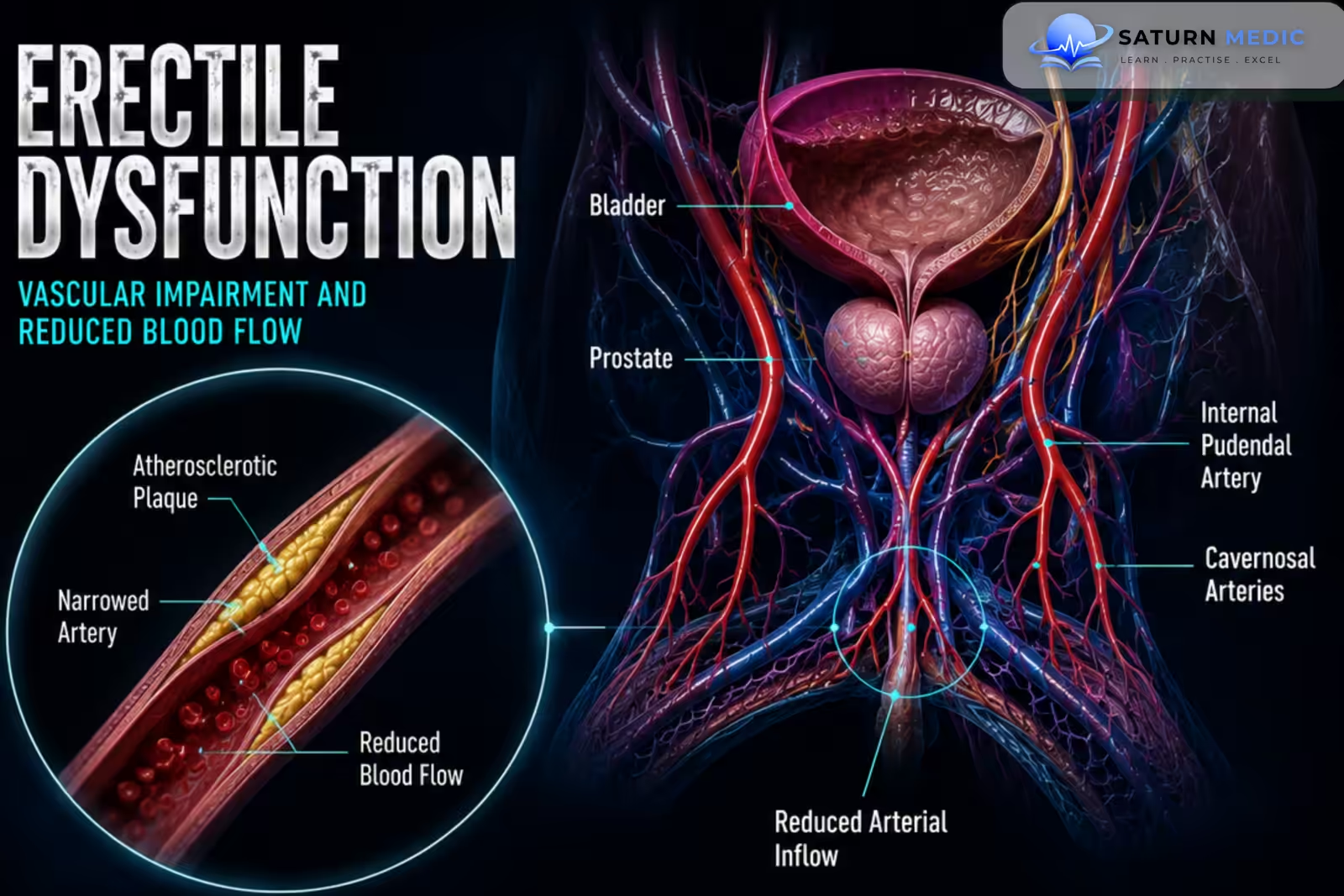
Sexual stimulation → neural nitric oxide release → increased cyclic guanosine monophosphate (cGMP) → relaxation of cavernosal smooth muscle → increased arterial blood flow → venous compression → erection
Vascular, neurological, hormonal, psychological, or medication-related dysfunction → impaired erectile response → Erectile Dysfunction (ED)
Clinical Presentation
–Symptoms
- Difficulty achieving an erection
- Difficulty maintaining an erection
- Reduced rigidity of erections
- Reduced spontaneous or morning erections
- Reduced sexual confidence
- Associated reduced libido in hormonal or psychological disorders
-Signs:
Physical examination may be normal.
Relevant findings may include:
- Reduced peripheral pulses
- Features of vascular disease
- Penile deformity
- Testicular abnormalities
- Features suggesting testosterone deficiency
- Neurological abnormalities
History Taking
-Ask about:
- Onset and duration
- Sudden or gradual onset
- Ability to achieve versus maintain erections
- Presence of morning or spontaneous erections
- Libido
- Ejaculatory function
- Relationship or psychological stress
- Symptoms of depression or anxiety
- Diabetes mellitus
- Hypertension and cardiovascular disease
- Neurological disease
Physical Examination
-General Examination
- Blood pressure
- Body habitus
- Signs of cardiovascular disease
- Features suggesting hormonal abnormalities
-System-Specific Examination:
- Peripheral vascular examination
- Focused neurological examination when indicated
- Examination of the penis for deformity
- Testicular examination when clinically indicated
Investigations
-Biochemistry / Specific Tests
Evaluate according to suspected cause:
Fasting glucose or glycated hemoglobin (HbA1c)
Lipid profile
Morning total testosterone
Additional hormonal testing when testosterone deficiency is suspected
Serum prolactin when clinically indicated
-Imaging
Not routinely required.
Penile Doppler ultrasound may be considered when a vascular cause is suspected or before selected procedural treatment.
-Special / Confirmatory Tests
There is no single confirmatory laboratory test for Erectile Dysfunction (ED).
Validated questionnaires, such as the International Index of Erectile Function (IIEF), can assess severity and response to treatment.
Diagnosis
-Diagnosis is primarily clinical and based on a persistent difficulty achieving or maintaining an erection sufficient for satisfactory sexual activity.
Assessment should determine:
- Severity and duration
- Organic versus psychogenic features
- Medication-related causes
- Cardiovascular risk
- Hormonal abnormalities when suspected
Management
1. Definitive Treatment
Treat the underlying cause whenever possible:
Improve cardiovascular risk factors
Optimize diabetes and hypertension management
Treat testosterone deficiency when confirmed and appropriate
Address psychological or relationship factors
Review medications contributing to ED
2. Medical Treatment
Phosphodiesterase type 5 (PDE5) inhibitors are first-line pharmacological treatment for many patients.
Examples include:
Sildenafil
Tadalafil
Vardenafil
Avanafil
Important alternatives for selected patients include:
Intracavernosal injections
- Intraurethral therapy
-PDE5 inhibitors must not be combined with nitrates because of the risk of severe hypotension.
3. Surgical / Procedural Treatment
For refractory cases:
Vacuum erection devices
Penile prosthesis implantation
Vascular surgery is rarely used and is limited to selected cases.
4. Supportive Management
Smoking cessation
Regular physical activity
Weight management
Control of diabetes, hypertension, and dyslipidemia
Complications
- Psychological distress
- Anxiety
- Depression
- Relationship difficulties
- Reduced quality of life
- Reduced sexual confidence
- Adverse effects of treatment
Prognosis
The prognosis depends on the underlying cause. Many cases improve with lifestyle modification, treatment of underlying disease, psychological support, and appropriate medical therapy. Erectile Dysfunction (ED) caused by reversible factors may improve substantially, while severe vascular or neurological disease may require long-term treatment
Key Points / Clinical Pearls
- Erectile Dysfunction (ED) is the persistent inability to achieve or maintain an erection sufficient for satisfactory sexual activity.
- It may be organic, psychogenic, or mixed.
- Vascular disease and diabetes mellitus are major organic causes.
- ED can be an early marker of cardiovascular disease.
- Reduced morning erections may suggest an organic cause.
- Situational ED with preserved spontaneous erections may suggest a psychogenic component.
- History is the most important part of assessment.
- Physical examination should focus on vascular, neurological, hormonal, and genital abnormalities.
- Investigations should identify reversible causes and cardiovascular risk factors.
- Morning testosterone testing is appropriate when testosterone deficiency is suspected.
- PDE5 inhibitors are first-line drug treatment for many patients.
- PDE5 inhibitors must not be used with nitrates.
- European Association of Urology (EAU). EAU Guidelines on Sexual and Reproductive Health .
- Burnett AL, Nehra A, Breau RH, et al. Erectile Dysfunction: AUA Guideline. J Urol. 2018;200(3):633-641. Journal of Urology .
- American Urological Association (AUA). Erectile Dysfunction Guideline .
- Yafi FA, Jenkins L, Albersen M, et al. Erectile Dysfunction. Nat Rev Dis Primers. 2016;2:16003. Nature Reviews Disease Primers .
- Shamloul R, Ghanem H. Erectile Dysfunction. Lancet. 2013;381(9861):153-165. The Lancet .
- National Institute of Diabetes and Digestive and Kidney Diseases (NIDDK). Erectile Dysfunction . National Institutes of Health.
- National Library of Medicine (NIH). Erectile Dysfunction . StatPearls.