

Clinical Subject Page
Hypospadias
Hypospadias is a congenital abnormality in which the urethral opening is located on the underside of the penis rather than at the tip of the glans. It may be associated with ventral penile curvature, called chordee, and an abnormal foreskin
Also called
ICD-10
Specialty
Onset
Reviewed
-
OverviewOverview
-
Etiology & Risk FactorsEtiology & Risk Factors
-
PathophysiologyPathophysiology
-
Clinical PresentationClinical Presentation
-
History TakingHistory Taking
-
Physical ExaminationPhysical Examination
-
InvestigationsInvestigations
-
DiagnosisDiagnosis
-
ManagementManagement
-
ComplicationsComplications
-
PrognosisPrognosis
-
Key Points / Clinical PearlsKey Points / Clinical Pearls
Overview
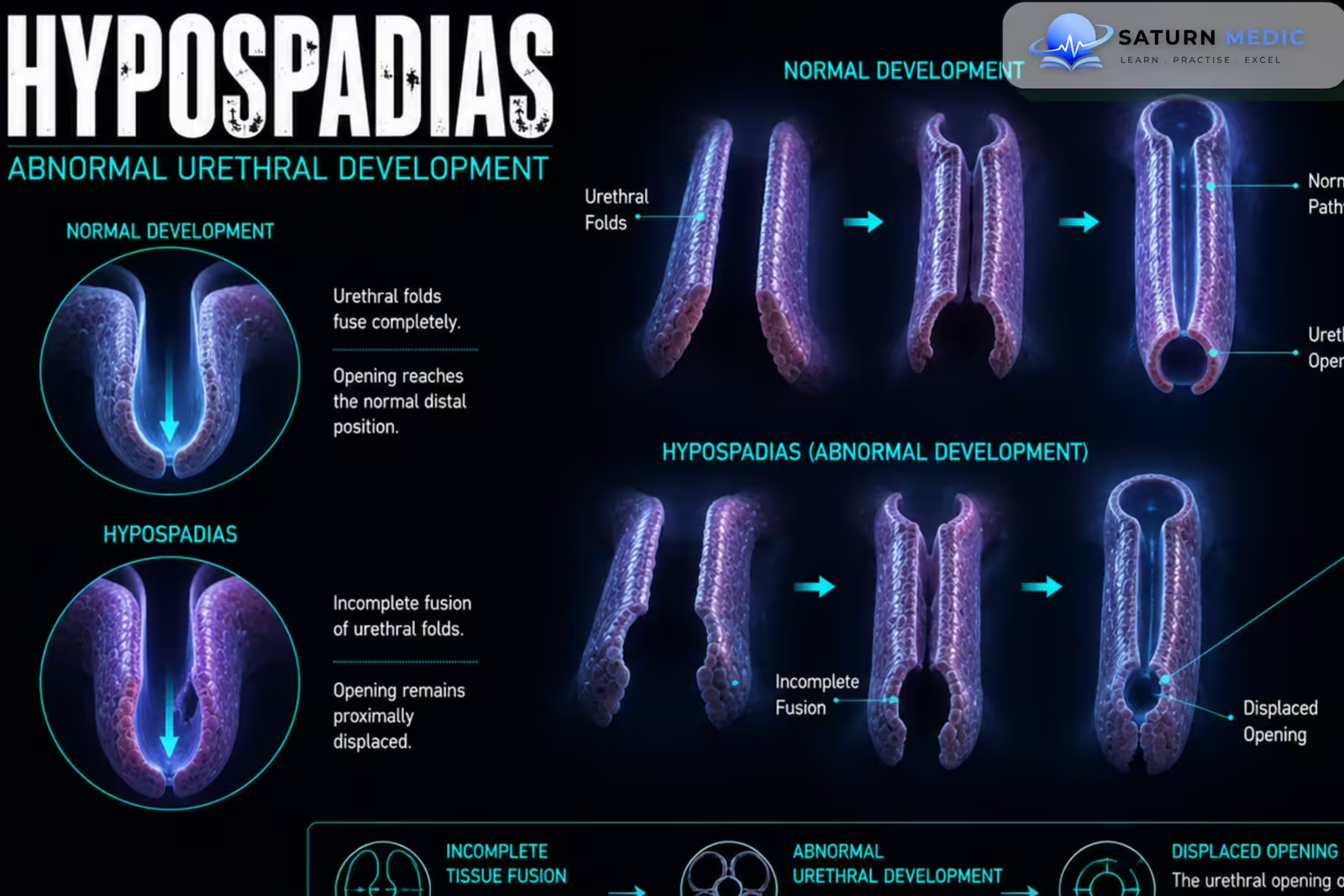
–Hypospadias occurs due to incomplete development and fusion of the urethral folds during fetal development.
The urethral opening may be located at different levels:
- Distal: near the glans or penile head
- Midshaft: along the penile shaft
- Proximal: near the penoscrotal junction or perineum
–Severity generally increases as the urethral opening is located more proximally.
-Associated abnormalities may include:
- Chordee
- Hooded foreskin
- Penoscrotal abnormalities
- Undescended testis in some severe cases
Etiology & Risk Factors
-Etiology
–Hypospadias is caused by abnormal development of the urethra and external genitalia during fetal life. The condition is multifactorial and may involve genetic, hormonal, and environmental factors.
-Risk Factors
- Family history
- Prematurity
- Low birth weight
- Assisted reproductive techniques
- Disorders affecting fetal genital development
Pathophysiology
Abnormal fetal development of the urethral folds → incomplete fusion of the developing urethra → ectopic urethral opening on the ventral penis → abnormal urinary stream ± chordee and abnormal foreskin
Clinical Presentation
–Symptoms
Hypospadias is usually identified at birth.
Possible features include:
- Abnormally positioned urethral opening
- Abnormal direction of urinary stream
- Difficulty voiding while standing in older children
- Spraying of urine
-Signs:
- Urethral opening on the ventral surface of the penis
- Hooded foreskin with deficient ventral foreskin
- Chordee
- Abnormal penile appearance
- Penoscrotal abnormalities in severe cases
History Taking
-Ask about:
- Location of the urethral opening
- Direction and strength of the urinary stream
- Difficulty passing urine
- Urinary spraying
- Presence of penile curvature during erection
- Prematurity or low birth weight
- Family history of genital abnormalities
- Previous genital surgery or circumcision
- Presence of undescended testes
Physical Examination
-General Examination
- Assess for associated congenital abnormalities
- Assess overall genital development when clinically indicated
-System-Specific Examination:
- Identify the position of the urethral opening
- Assess the severity of chordee
- Examine the foreskin
- Assess penile size and anatomy
- Examine both testes and determine whether they are descended
- Assess the scrotum for associated abnormalities
Investigations
-Biochemistry / Specific Tests
Not routinely required for isolated distal Hypospadias.
Hormonal and genetic investigations may be indicated in severe cases associated with:
Bilateral undescended testes
Ambiguous genitalia
Other findings suggesting a disorder of sexual development
-Imaging
Not routinely required for isolated Hypospadias.
Renal and urinary tract imaging may be considered when severe Hypospadias is associated with other congenital abnormalities.
-Special / Confirmatory Tests
No specific confirmatory test is required.
The diagnosis is usually made by clinical examination.
Diagnosis
–Diagnosis is made by clinical examination showing:
An ectopic urethral opening on the ventral surface of the penis ± hooded foreskin ± chordee.
The severity is determined by the location of the urethral opening and the degree of penile curvature.
Management
1. Definitive Treatment
Surgical repair is the definitive treatment when correction is indicated.
The goals are to:
Create a functionally and cosmetically appropriate urethral opening
Correct chordee
Allow a directed urinary stream
Preserve normal penile function
2. Medical Treatment
There is no routine medical treatment.
Hormonal therapy may occasionally be considered by specialists in selected cases, but it is not standard treatment for uncomplicated cases.
3. Surgical / Procedural Treatment
repair may involve:
Urethroplasty
Correction of chordee
Reconstruction of the glans and penile tissues
Use of foreskin or other tissue grafts in selected cases
Repair is commonly performed during early childhood.
4. Supportive Management
Avoid circumcision before specialist assessment
Parental education and reassurance
Postoperative catheter and wound care when required
Complications
- Abnormal urinary stream
- Difficulty voiding while standing
- Persistent penile curvature
- Urethrocutaneous fistula after repair
- Meatal stenosis
- Urethral stricture
- Recurrent chordee
- Cosmetic concerns
- Sexual dysfunction in severe cases
- Psychological distress
Prognosis
The prognosis is generally excellent, especially for distal Hypospadias treated by an experienced pediatric urological surgeon. Most patients achieve a satisfactory urinary stream and good cosmetic outcome. More proximal forms and severe chordee are associated with more complex surgery and a higher risk of postoperative complications
Key Points / Clinical Pearls
- Hypospadias is a congenital condition with the urethral opening on the underside of the penis.
- It results from incomplete development of the urethra during fetal life.
- Severity depends largely on the location of the urethral opening.
- Distal Hypospadias is generally less severe than proximal Hypospadias.
- A hooded foreskin is a common finding.
- Chordee is ventral curvature of the penis and may require surgical correction.
- Hypospadias is usually diagnosed by physical examination at birth.
- Isolated distal Hypospadias usually does not require extensive investigations.
- Proximal Hypospadias with bilateral undescended testes requires evaluation for a possible disorder of sexual development.
- Circumcision should generally be avoided before specialist assessment.
- European Association of Urology (EAU). EAU Guidelines on Paediatric Urology .
- Baskin LS, Ebbers MB. Hypospadias: Anatomy, Etiology, and Technique. J Pediatr Surg. 2006;41(3):463-472. PubMed .
- Snodgrass W, Bush N. Recent Advances in Understanding and Managing Hypospadias. F1000Prime Rep. 2014;6:101. National Library of Medicine .
- Springer A, van den Heijkant M, Baumann S. Worldwide Prevalence of Hypospadias. J Pediatr Urol. 2016;12(3):152.e1-152.e7. PubMed .
- van der Horst HJR, de Wall LL. Hypospadias, All There Is to Know. Eur J Pediatr. 2017;176(4):435-441. European Journal of Pediatrics .
- National Library of Medicine (NIH). Hypospadias . StatPearls.