

Clinical Subject Page
Penile Fracture
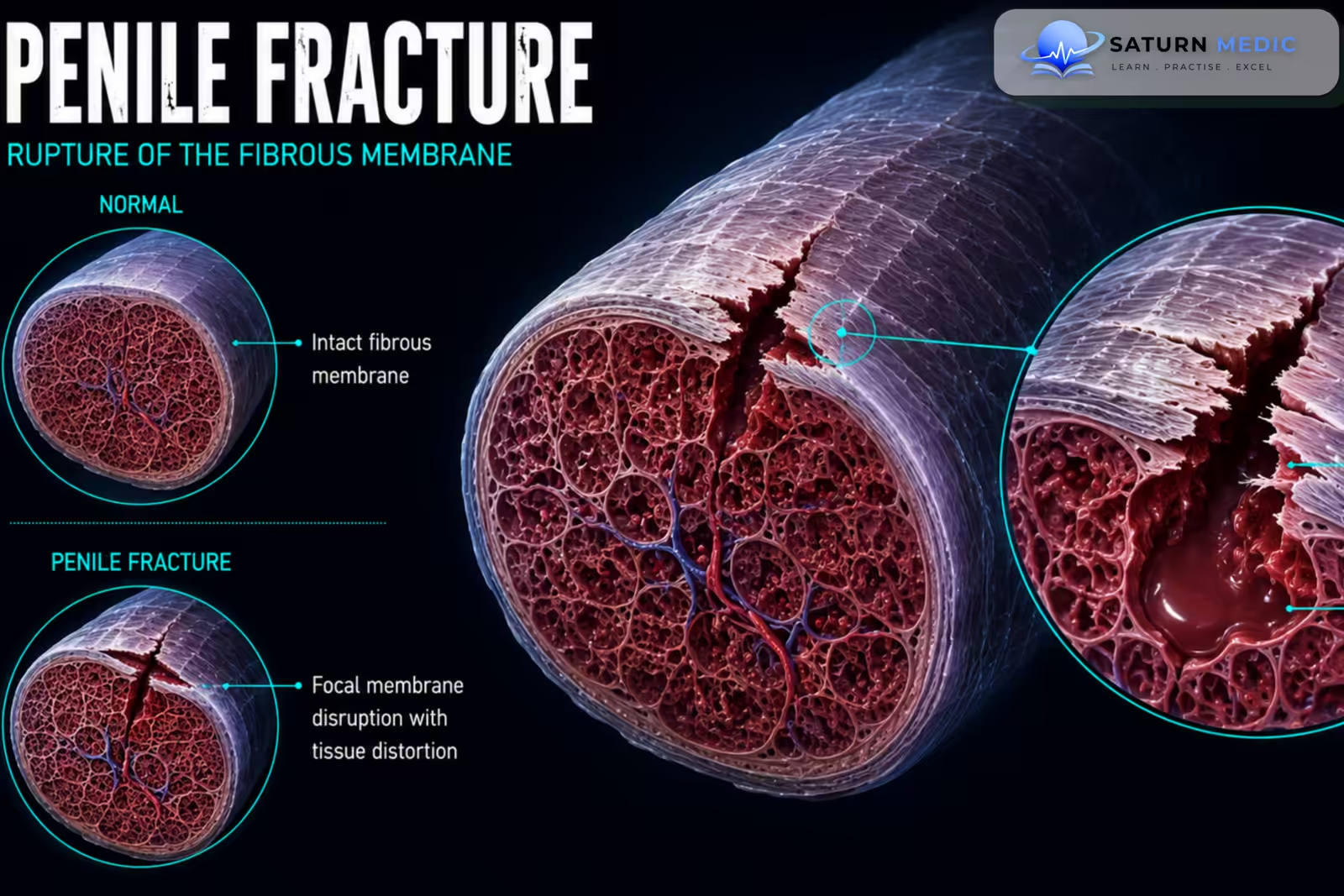
Penile Fracture is a rupture of the tunica albuginea surrounding one or both corpora cavernosa, usually occurring when an erect penis is forcibly bent. It is a urological emergency and usually requires prompt surgical repair
Also called
ICD-10
Specialty
Onset
Reviewed
-
OverviewOverview
-
Etiology & Risk FactorsEtiology & Risk Factors
-
PathophysiologyPathophysiology
-
Clinical PresentationClinical Presentation
-
History TakingHistory Taking
-
Physical ExaminationPhysical Examination
-
InvestigationsInvestigations
-
DiagnosisDiagnosis
-
ManagementManagement
-
ComplicationsComplications
-
PrognosisPrognosis
-
Key Points / Clinical PearlsKey Points / Clinical Pearls
Overview
-Despite its name, Penile Fracture does not involve a broken bone. It occurs when the tough tunica albuginea ruptures during erection.
It usually results from:
- Forceful bending of an erect penis
- Sexual activity
- Direct trauma to the erect penis
- Accidental rolling or falling onto an erect penis
-The injury may involve:
- One corpus cavernosum
- Both corpora cavernosa
- The urethra in more severe cases
Etiology & Risk Factors
-Etiology
–Penile Fracture occurs when sudden force bends an erect penis beyond the tensile strength of the tunica albuginea, causing it to tear.
The most common cause is traumatic bending during sexual activity.
-Risk Factors
- Forceful sexual activity
- Sudden bending of an erect penis
- Direct trauma during erection
- Previous penile trauma
- Positions or activities associated with loss of control over penile movement
Pathophysiology
Penile erection → tunica albuginea becomes stretched and thinned → sudden abnormal bending force → rupture of tunica albuginea → bleeding from corpus cavernosum → hematoma and penile swelling → possible urethral injury in severe trauma
Clinical Presentation
-Symptoms:
- Sudden penile pain
- Audible cracking or popping sound
- Immediate loss of erection
- Rapid penile swelling
- Penile bruising
- Penile deformity
- Hematuria when urethral injury is present
-Signs:
- Swollen penis
- Ecchymosis
- Penile hematoma
- Deviation or deformity of the penis
- Local tenderness
- Blood at the urethral meatus in associated urethral injury
History Taking
-Ask about:
- Exact mechanism of injury
- Whether the penis was erect at the time
- Audible cracking or popping sound
- Immediate detumescence
- Time since injury
- Severity of pain
- Degree of swelling
- Hematuria
- Blood at the urethral meatus
Physical Examination
-General Examination
- Assess pain
- Check vital signs
- Assess for other traumatic injuries
-System-Specific Examination:
- Inspect for swelling and bruising
- Assess penile deformity
- Identify the area of maximal tenderness
- Assess the extent of hematoma
- Inspect the urethral meatus for blood
- Assess the ability to void when appropriate
Investigations
-Biochemistry / Specific Tests
-
Urinalysis when urethral injury is suspected
-
Serum creatinine is not routinely required unless clinically indicated
-Imaging
Penile Ultrasound
Can help identify:
-
Tunica albuginea defects
-
Corporal tears
-
Hematoma
-Magnetic Resonance Imaging (MRI)
May be used when the diagnosis is uncertain and detailed soft-tissue assessment is required.
-Special / Confirmatory Tests
Retrograde Urethrography or Cystoscopy
Indicated when associated urethral injury is suspected.
Diagnosis
Diagnosis is usually based on the classic history and examination:
Sudden bending of an erect penis → cracking sound ± immediate pain → rapid loss of erection → swelling and hematoma.
Imaging is mainly used when the diagnosis is uncertain.
Management
1. First-Line / Emergency Management
Penile Fracture requires urgent urological assessment and prompt surgical management.
Initial care includes:
-
Analgesia
-
Cold compresses to reduce swelling
-
Assessment for urethral injury
-
Preparation for surgical exploration and repair
2. Definitive Treatment
Prompt surgical exploration and repair of the tunica albuginea are the definitive treatment.
The goals are to:
-
Identify the corporal tear
-
Evacuate the hematoma
-
Repair the tunica albuginea
-
Repair associated urethral injury when present
3. Medical Treatment
-
Analgesics
-
Antibiotics according to the surgical situation and local protocol
-
Temporary measures to reduce unwanted erections may be considered by the treating specialist
Medical treatment alone is generally not the preferred definitive management for a true Penile Fracture.
4. Surgical / Procedural Treatment
-
Surgical exploration
-
Evacuation of hematoma
-
Primary repair of the tunica albuginea
-
Repair of urethral injury when present
5. Supportive Management
-
Pain control
-
Wound care
-
Temporary sexual abstinence during healing
Complications
- Erectile dysfunction
- Penile curvature
- Painful erections
- Penile plaque formation
- Urethral stricture
- Urethral fistula
- Infection
Prognosis
The prognosis is generally excellent when Penile Fracture is recognized and repaired promptly. Early surgical treatment is associated with a lower risk of erectile dysfunction, penile curvature, and chronic pain. Delayed diagnosis or untreated injury increases the risk of permanent deformity and impaired sexual function.
Key Points / Clinical Pearls
- Penile Fracture is a rupture of the tunica albuginea during erection.
- It does not involve a broken bone.
- Forceful bending of an erect penis is the usual mechanism.
- Sexual activity is a common cause.
- A cracking or popping sound is a classic feature.
- Immediate loss of erection strongly supports the diagnosis.
- Rapid swelling and bruising may cause an eggplant deformity.
- The diagnosis is often clinical.
- Imaging should not delay treatment when the presentation is typical.
- Associated urethral injury should be suspected with hematuria or blood at the urethral meatus.
- True Penile Fracture is a urological emergency.
- European Association of Urology (EAU). EAU Guidelines on Urological Trauma .
- American Urological Association (AUA). Urotrauma Guideline .
- Morey AF, Brandes S, Dugi DD III, et al. Urotrauma: AUA Guideline. J Urol. 2014;192(2):327-335. Journal of Urology .
- Eke N. Fracture of the Penis. Br J Surg. 2002;89(5):555-565. British Journal of Surgery .
- Al-Shaiji TF, Amann J, Brock GB. Fractured Penis: Diagnosis and Management. J Sex Med. 2009;6(12):3231-3240. Journal of Sexual Medicine .
- National Library of Medicine (NIH). Penile Fracture . StatPearls.