
Clinical Subject Page

Overactive Bladder (OAB)
Overactive Bladder (OAB) is a clinical syndrome characterized by urinary urgency, usually accompanied by increased daytime urinary frequency and nocturia, with or without urge urinary incontinence. The symptoms occur without a proven Urinary Tract Infection (UTI) or another obvious pathological cause
Also called
ICD-10
Specialty
Onset
Reviewed
-
OverviewOverview
-
Etiology & Risk FactorsEtiology & Risk Factors
-
PathophysiologyPathophysiology
-
Clinical PresentationClinical Presentation
-
History TakingHistory Taking
-
Physical ExaminationPhysical Examination
-
InvestigationsInvestigations
-
DiagnosisDiagnosis
-
ManagementManagement
-
ComplicationsComplications
-
PrognosisPrognosis
-
Key Points / Clinical PearlsKey Points / Clinical Pearls
Overview
-Overactive Bladder (OAB) is a symptom-based syndrome rather than a single disease. Its defining symptom is urinary urgency, which is a sudden, compelling desire to pass urine that is difficult to postpone.
Overactive Bladder (OAB) may occur:
- With urge urinary incontinence: wet OAB
- Without urge urinary incontinence: dry OAB
Etiology & Risk Factors
-Etiology
–The exact cause of idiopathic Overactive Bladder (OAB) is often unknown. Important mechanisms and associated conditions include:
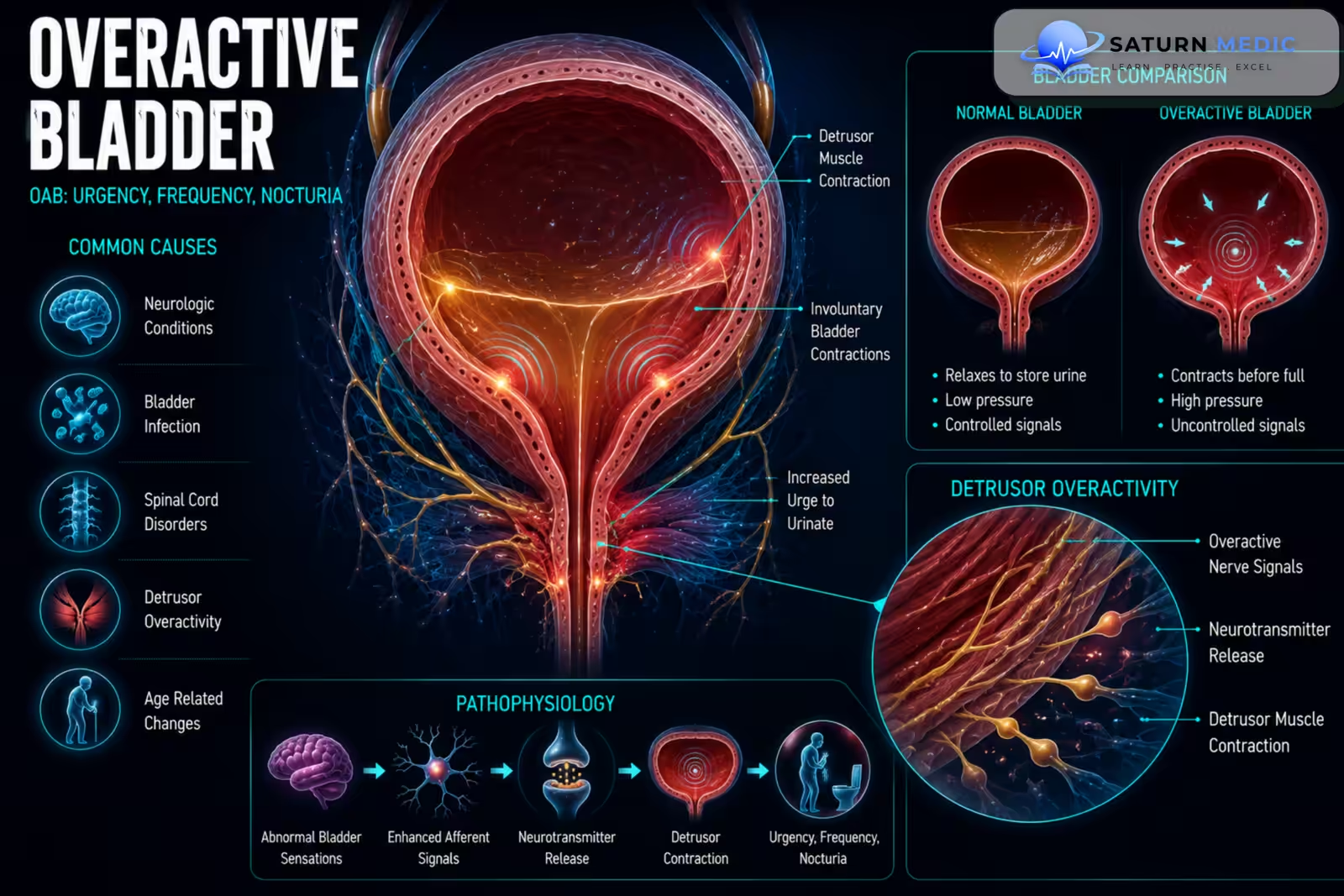
- Detrusor overactivity
- Abnormal bladder sensory signaling
- Neurological disease
- Bladder outlet obstruction
- Age-related changes in bladder function
Not all patients with OAB have demonstrable detrusor overactivity on urodynamic testing.
-Risk Factors
- Increasing age
- Obesity
- Diabetes mellitus
- Neurological disorders
- Bladder outlet obstruction
Pathophysiology
Abnormal bladder sensory signaling or detrusor dysfunction → increased sensation of bladder filling or involuntary detrusor contractions → sudden urinary urgency → increased frequency and nocturia → urge urinary incontinence in some patients
Clinical Presentation
–Symptoms
-
The hallmark symptom of Overactive Bladder (OAB) is:
- Sudden urinary urgency
Other common symptoms include:
- Increased daytime urinary frequency
- Nocturia
- Urge urinary incontinence
- Difficulty postponing urination
- Leakage before reaching the toilet
-Signs:
-
Physical examination is often normal.
Relevant findings may include:
- Pelvic organ prolapse
- A distended bladder suggesting urinary retention
- Signs of neurological disease
- Signs of bladder outlet obstruction
History Taking
-Ask about:
- Sudden urgency
- Number of daytime voids
- Nocturia
- Episodes of urge urinary incontinence
- Ability to postpone urination
- Fluid intake
- Caffeine intake
- Alcohol intake
- Dysuria
- Hematuria
- Recurrent Urinary Tract Infection (UTI)
- Weak urinary stream or hesitancy
Physical Examination
-General Examination
- Body weight when relevant
- Mobility and functional status
- Signs of neurological disease
-System-Specific Examination:
- Abdominal examination for a distended bladder
- Pelvic examination when indicated
- Assessment for pelvic organ prolapse
- Focused neurological examination when appropriate
- Prostate examination when bladder outlet obstruction is suspected
Investigations
-Biochemistry / Specific Tests
-
Urinalysis
-
Urine culture when infection is suspected
-
Bladder diary
-
Post-void residual measurement when incomplete emptying or retention is suspected
-Imaging
Not routinely required in uncomplicated Overactive Bladder (OAB).
Renal and bladder ultrasound may be considered when urinary retention, structural abnormalities, or upper urinary tract disease is suspected.
-Special / Confirmatory Tests
There is no single confirmatory test for Overactive Bladder (OAB).
Urodynamic Studies
Not routinely required but may be useful when:
-
The diagnosis is uncertain
-
Symptoms are refractory to treatment
-
Neurological bladder dysfunction is suspected
Diagnosis
-Overactive Bladder (OAB) is diagnosed clinically based on:
Urinary urgency → usually accompanied by frequency and nocturia → with or without urge urinary incontinence → absence of a proven infection or another clear pathological cause.
-Urinalysis helps exclude infection and hematuria. Further investigation is required when red flags suggest another condition.
Management
1. First-Line / Emergency Management
There is no routine emergency treatment.
Urgent assessment is required when symptoms are associated with:
-
Acute urinary retention
-
New neurological deficits
-
Significant hematuria
-
Severe infection
2. Definitive Treatment
Management of Overactive Bladder (OAB) is individualized and usually begins with conservative treatment.
First-line measures include:
-
Bladder training
-
Scheduled voiding
-
Lifestyle modification
-
Pelvic floor muscle training when appropriate
3. Medical Treatment
Medication may be used when conservative measures are insufficient.
Important options include:
-
Antimuscarinic medications
-
Beta-3 adrenergic agonists
Medication choice should consider:
-
Age
-
Cognitive status
-
Constipation
-
Cardiovascular disease
-
Post-void residual urine
-
Risk of urinary retention
Complications
- Urge urinary incontinence
- Sleep disturbance
- Falls in older adults
- Skin irritation
- Social isolation
- Anxiety
- Depressive symptoms
Prognosis
Overactive Bladder (OAB) is usually a chronic condition with symptoms that may fluctuate over time. Many patients experience significant improvement with bladder training, lifestyle modification, medication, or advanced therapies. Long-term treatment and follow-up may be necessary, particularly when symptoms are severe or associated with neurological disease.
Key Points / Clinical Pearls
- Overactive Bladder (OAB) is defined primarily by urinary urgency.
- Frequency and nocturia commonly accompany urgency.
- Urge urinary incontinence may or may not be present.
- Wet OAB includes urge urinary incontinence, while dry OAB does not.
- Urinary frequency alone does not diagnose OAB.
- Urinalysis helps exclude Urinary Tract Infection (UTI).
- A bladder diary is a useful first-line assessment tool.
- Routine urodynamic testing is not required for uncomplicated OAB.
- Bladder training is a first-line treatment.
- Lifestyle modification can reduce symptoms.
- Antimuscarinic medications are useful in selected patients.
- American Urological Association (AUA) and Society of Urodynamics, Female Pelvic Medicine & Urogenital Reconstruction (SUFU). Guideline on the Diagnosis and Treatment of Idiopathic Overactive Bladder .
- European Association of Urology (EAU). EAU Guidelines on Non-Neurogenic Female Lower Urinary Tract Symptoms .
- Abrams P, Cardozo L, Fall M, et al. The Standardisation of Terminology in Lower Urinary Tract Function: Report From the Standardisation Sub-Committee of the International Continence Society. Neurourol Urodyn. 2002;21(2):167-178. PubMed .
- Gormley EA, Lightner DJ, Burgio KL, et al. Diagnosis and Treatment of Overactive Bladder (Non-Neurogenic) in Adults: AUA/SUFU Guideline. J Urol. 2012;188(6 Suppl):2455-2463. Journal of Urology .
- Stewart WF, Van Rooyen JB, Cundiff GW, et al. Prevalence and Burden of Overactive Bladder in the United States. World J Urol. 2003;20(6):327-336. PubMed .
- National Institute of Diabetes and Digestive and Kidney Diseases (NIDDK). Bladder Control Problems . National Institutes of Health.
- National Library of Medicine (NIH). Overactive Bladder Syndrome . StatPearls.