

Clinical Subject Page
Bladder Stones
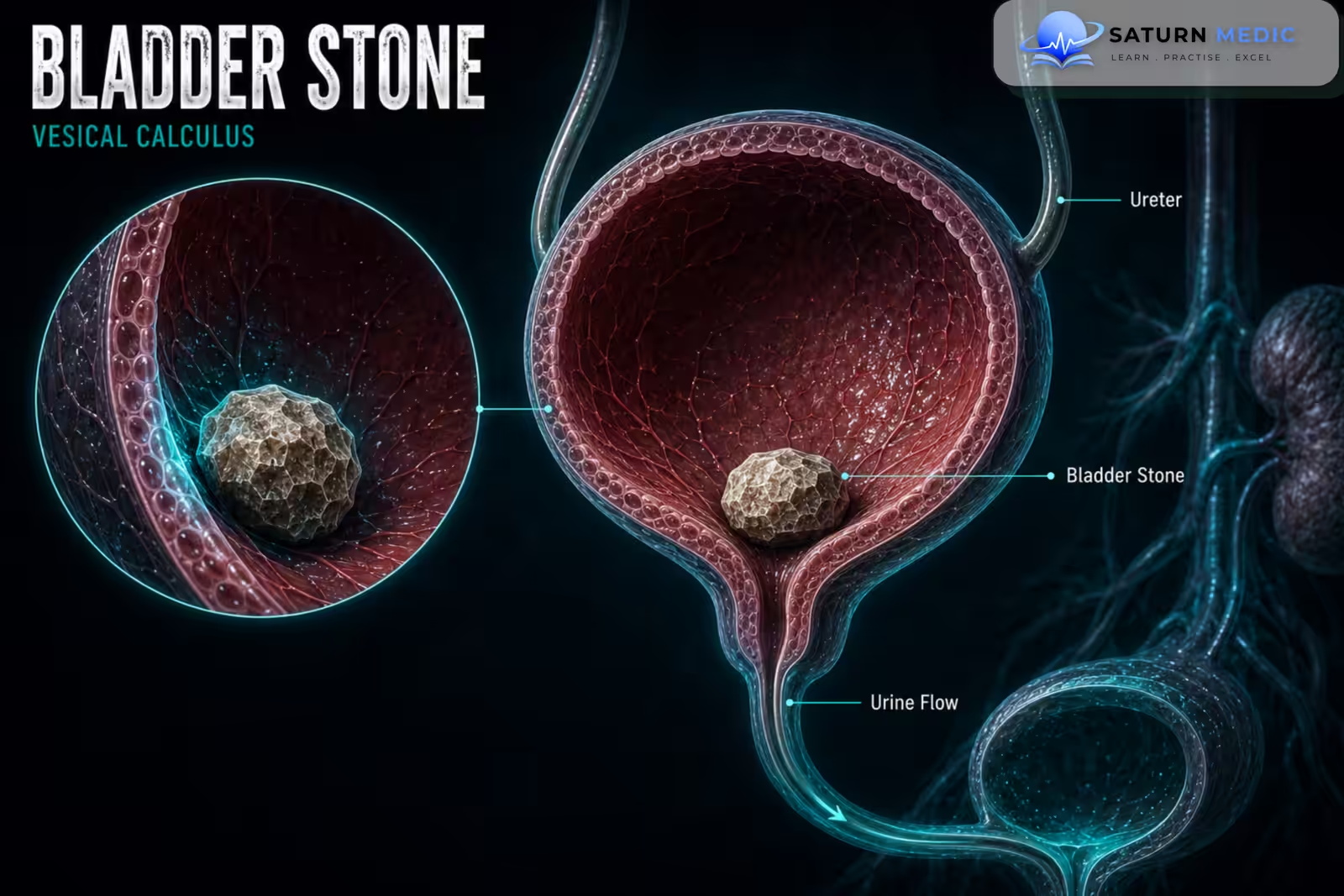
Bladder Stones are hard mineral deposits that form within the urinary bladder. They usually develop when the bladder does not empty completely, allowing urine to stagnate and minerals to crystallize. Bladder Stones may cause lower urinary tract symptoms, hematuria, recurrent infection, and urinary obstruction
Also called
ICD-10
Specialty
Onset
Reviewed
-
OverviewOverview
-
Etiology & Risk FactorsEtiology & Risk Factors
-
PathophysiologyPathophysiology
-
Clinical PresentationClinical Presentation
-
History TakingHistory Taking
-
Physical ExaminationPhysical Examination
-
InvestigationsInvestigations
-
DiagnosisDiagnosis
-
ManagementManagement
-
ComplicationsComplications
-
PrognosisPrognosis
-
Key Points / Clinical PearlsKey Points / Clinical Pearls
Overview
–Bladder Stones may form primarily in the bladder or develop when a stone migrates from the upper urinary tract and becomes retained. The most important mechanism is urinary stasis caused by incomplete bladder emptying.
-Common underlying causes include:
- Bladder outlet obstruction
- Benign Prostatic Hyperplasia (BPH)
- Neurogenic bladder
Etiology & Risk Factors
-Etiology
–Bladder Stones usually develop because stagnant urine becomes concentrated, allowing crystals to precipitate and enlarge around a nidus.
Important causes include:
- Bladder outlet obstruction
- Benign Prostatic Hyperplasia (BPH)
- Neurogenic bladder
- Chronic urinary retention
- Recurrent UTI
- Bladder foreign bodies
-Risk Factors
- Benign Prostatic Hyperplasia (BPH)
- Neurogenic bladder
- Chronic incomplete bladder emptying
- Recurrent Urinary Tract Infection (UTI)
- Indwelling urinary catheters
Pathophysiology
Incomplete bladder emptying → urinary stasis → concentrated urine and mineral precipitation → crystal formation → aggregation and stone growth → bladder irritation or obstruction
Clinical Presentation
-Symptoms:
- Suprapubic pain
- Dysuria
- Urinary frequency
- Urinary urgency
- Intermittent urinary stream
- Sudden interruption of the urinary stream
- Terminal hematuria
-Signs:
- Suprapubic tenderness
- Palpable distended bladder when chronic retention is present
- Signs of an underlying neurological disorder
- Signs of bladder outlet obstruction
History Taking
-Ask about:
- Suprapubic pain
- Dysuria
- Hematuria
- Frequency and urgency
- Interrupted urinary stream
- Weak urinary stream
- Hesitancy
- Feeling of incomplete bladder emptying
- Previous urinary stones
- Recurrent UTI
- History of Benign Prostatic Hyperplasia (BPH)
Physical Examination
-General Examination
- Assess for fever or systemic infection
- Assess hydration status
- Look for signs of neurological disease
-System-Specific Examination:
- Assess suprapubic tenderness
- Check for a distended bladder
- Perform a focused neurological examination when indicated
- Assess the prostate when bladder outlet obstruction is suspected
Investigations
Biochemistry / Specific Tests
Urinalysis
Urine culture when infection is suspected
Renal function when obstruction or kidney impairment is suspected
Post-void residual urine measurement
Stone analysis after removal
-Imaging
Ultrasound
Useful for detecting Bladder Stones and assessing post-void residual urine.
Plain X-ray of the Kidneys, Ureters, and Bladder (KUB)
May detect radiopaque stones.
Non-contrast Computed Tomography (CT)
Useful when the diagnosis is uncertain or additional upper urinary tract stones are suspected.
-Special / Confirmatory Tests
Cystoscopy
Allows direct visualization of the stone and may identify underlying obstruction, foreign bodies, or other bladder pathology.
Diagnosis
-Bladder Stones are diagnosed by:
Lower urinary tract symptoms → urinalysis and assessment for infection → ultrasound or other imaging → cystoscopy when direct visualization or treatment is required.
The underlying cause of urinary stasis should always be assessed.
Management
1. Definitive Treatment
Most symptomatic Bladder Stones require removal.
The treatment method depends on stone size, number, anatomy, and available expertise.
2. Medical Treatment
Medication alone usually does not remove most bladder stones.
Important treatment may include:
Antibiotics for proven Urinary Tract Infection (UTI)
Analgesics for pain
Treatment of the underlying bladder outlet obstruction
3. Surgical / Procedural Treatment
Cystolitholapaxy
Endoscopic fragmentation and removal of bladder stones. This is a common definitive treatment.
Percutaneous Cystolitholapaxy
May be used for selected large stones.
Open Cystolithotomy
May be required for very large stones or when endoscopic treatment is unsuitable.
The underlying cause, such as significant BPH, may also require treatment.
4. Supportive Management
Adequate hydration
Management of urinary retention
Treatment of bladder outlet obstruction
Prevention of recurrent UTI
Complications
- Recurrent Urinary Tract Infection (UTI)
- Acute urinary retention
- Chronic urinary retention
- Bladder outlet obstruction
- Hematuria
- Hydronephrosis
- Kidney dysfunction
- Stone recurrence
Prognosis
The prognosis of Bladder Stones is generally excellent after complete stone removal and correction of the underlying cause. Recurrence is more likely when urinary retention, neurogenic bladder, recurrent infection, or bladder outlet obstruction persists.
Key Points / Clinical Pearls
- Bladder Stones are mineral calculi located within the urinary bladder.
- Incomplete bladder emptying is a major cause.
- Benign Prostatic Hyperplasia (BPH) is an important cause in adult men.
- Neurogenic bladder can predispose to recurrent stones.
- Common symptoms include suprapubic pain, dysuria, and hematuria.
- Sudden interruption of the urinary stream is a classic clinical clue.
- Urinalysis helps identify hematuria and infection.
- Ultrasound can detect stones and assess residual urine.
- Cystoscopy can directly visualize and treat many bladder stones.
- Most symptomatic Bladder Stones require removal.
- Cystolitholapaxy is a common definitive treatment.
- European Association of Urology (EAU). EAU Guidelines on Urolithiasis .
- European Association of Urology (EAU). EAU Guidelines on the Management of Non-Neurogenic Male Lower Urinary Tract Symptoms .
- American Urological Association (AUA). Surgical Management of Stones Guideline .
- Donaldson JF, Ruhayel Y, Skolarikos A, et al. Treatment of Bladder Stones in Adults and Children: A Systematic Review of the Literature on Behalf of the European Association of Urology Urolithiasis Guideline Panel. Eur Urol. 2019;76(3):352-367. PubMed .
- Schwartz BF, Stoller ML. The Vesical Calculus. Urol Clin North Am. 2000;27(2):333-346.
- National Library of Medicine (NIH). Bladder Stones . StatPearls.