

Clinical Subject Page
Measles
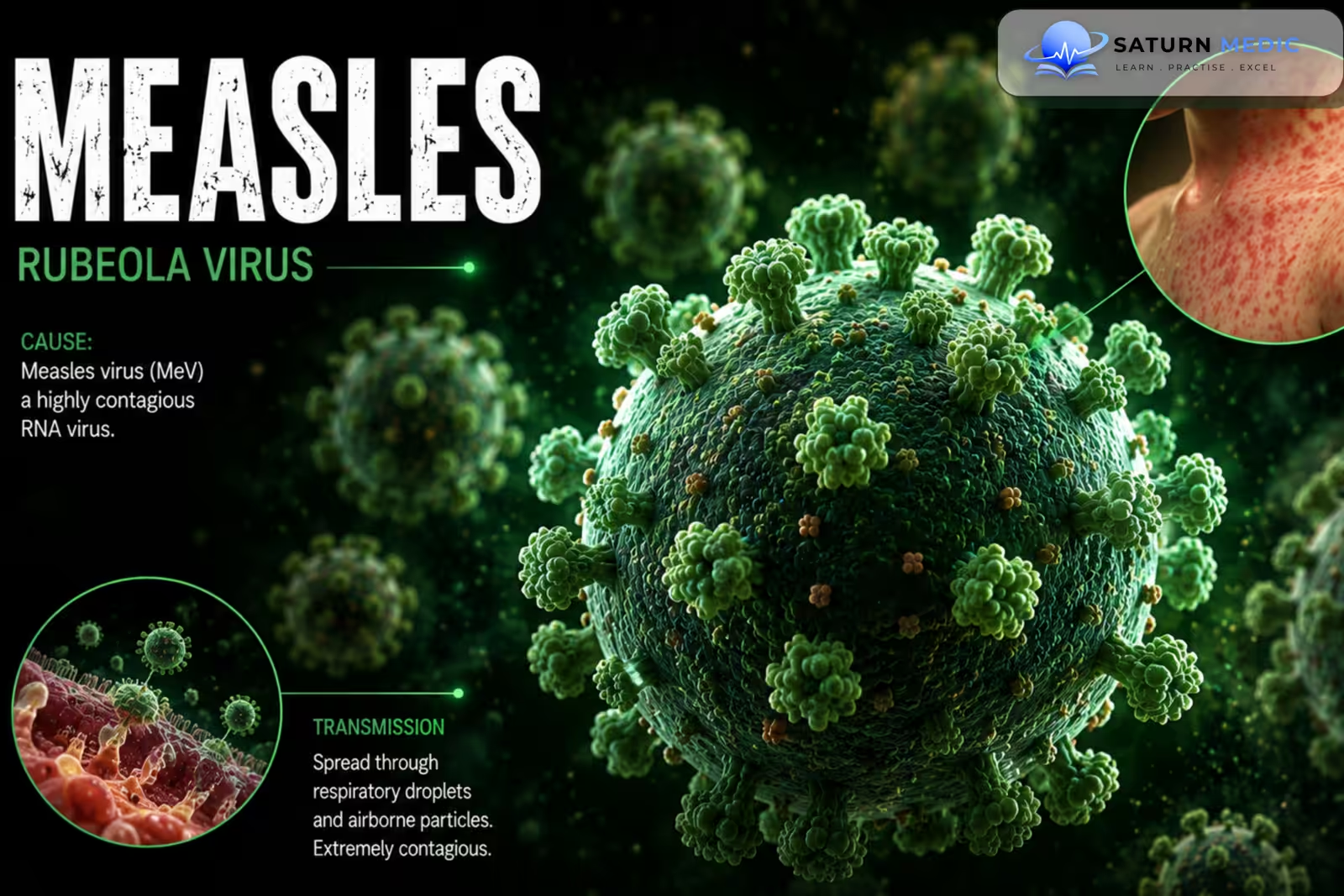
Measles is a highly contagious acute viral infection caused by the measles virus, a member of the Paramyxoviridae family. It primarily affects the respiratory tract and produces a characteristic generalized maculopapular rash
Also called
ICD-10
Specialty
Onset
Reviewed
-
OverviewOverview
-
Etiology & Risk FactorsEtiology & Risk Factors
-
PathophysiologyPathophysiology
-
Clinical PresentationClinical Presentation
-
History TakingHistory Taking
-
Physical ExaminationPhysical Examination
-
InvestigationsInvestigations
-
DiagnosisDiagnosis
-
ManagementManagement
-
ComplicationsComplications
-
PrognosisPrognosis
-
Key Points / Clinical PearlsKey Points / Clinical Pearls
Overview
–Measles typically begins with a prodromal illness followed by a characteristic rash.
The classic clinical sequence is:
Fever → cough, coryza, and conjunctivitis → Koplik spots → maculopapular rash
-The rash usually begins on the face and hairline before spreading downward to the trunk and limbs.
Etiology & Risk Factors
-Etiology
–Measles is caused by the measles virus, an enveloped, single-stranded RNA virus of the Paramyxoviridae family.
Transmission occurs mainly through:
- Respiratory droplets
- Airborne particles
- Direct contact with respiratory secretions
The virus initially infects the respiratory tract and then spreads systemically.
-Risk Factors
- Lack of measles vaccination
- Close contact with an infected person
- Living in or traveling to areas with active outbreaks
- Immunosuppression
- Young age, particularly infants too young to be fully vaccinated
Pathophysiology
Respiratory exposure → viral replication in respiratory epithelium → infection of local immune cells → viremia → systemic viral dissemination → immune-mediated tissue inflammation → fever and characteristic rash
Clinical Presentation
-Symptoms:
Early Measles usually causes:
- High fever
- Cough
- Coryza
- Conjunctivitis
- Malaise
- Reduced appetite
Other symptoms may include:
- Photophobia
- Myalgia
- Diarrhea, particularly in children
-Signs:
-
Important findings include:
- Koplik spots: small bluish-white spots on an erythematous background on the buccal mucosa
- Maculopapular erythematous rash
- Fever
- Conjunctival injection
History Taking
-Ask about:
- Fever and duration
- Cough
- Coryza
- Conjunctivitis
- Rash onset and progression
- Recent exposure to Measles
- Vaccination history
- Recent travel
- Contact with individuals from outbreak areas
- Immunosuppression
- Respiratory symptoms
Physical Examination
-General Examination
- Measure temperature
- Assess hydration
- Assess respiratory status
- Look for signs of severe systemic illness
-System-Specific Examination:
- Inspect the oral mucosa for Koplik spots
- Examine the eyes for conjunctivitis
- Assess the skin for the characteristic rash
- Examine the respiratory system for pneumonia
- Perform neurological examination if encephalitis is suspected
Investigations
Measles-Specific Testing
-
Serum measles-specific Immunoglobulin M (IgM)
-
Measles Immunoglobulin G (IgG) when appropriate
-
Reverse Transcription Polymerase Chain Reaction (RT-PCR) for measles viral RNA
-Imaging
Not routinely required.
Chest X-ray may be performed when pneumonia is suspected.
-Special / Confirmatory Tests
Laboratory confirmation is particularly important during suspected outbreaks.
RT-PCR and measles-specific IgM are important diagnostic tests depending on the timing of illness and local public-health protocols.
-Important Investigation Note
Suspected Measles should be reported according to local public-health requirements, and appropriate infection-control precautions should begin immediately.
Diagnosis
Measles · Step-by-Step Diagnosis
- Unvaccinated / unknown status
- Contact with confirmed case
- Travel to endemic area
- Classic prodrome: fever + cough + coryza + conjunctivitis (3 Cs)
- Incubation 10–14 days
- Koplik's spots — white/bluish spots on buccal mucosa (opposite lower molars); appear day 2–3; disappear with rash
- High fever (>38.5°C)
- Photophobia, lacrimation
- Morbilliform rash — day 3–5; starts behind ears → face → downward
- Measles IgM — positive from day 3 of rash; gold standard serology
- RT-PCR — throat swab / urine; most sensitive; identifies genotype
- IgG seroconversion (×4 rise) — paired samples 2–4 wks apart
- Virus isolation — specialised labs only
- Notifiable disease — report immediately
- Classify: confirmed (lab) / probable (clinical + epi link) / suspected
- Isolate patient — airborne precautions × 4 days after rash onset
- Contact tracing + post-exposure vaccination within 72h
- Cough — harsh, barking
- Coryza — profuse nasal discharge
- Conjunctivitis — red eyes, photophobia, lacrimation
- Koplik's spots — day 2–3; pathognomonic
- High fever (39–40°C)
- Most infectious period — 2 days before rash
- Starts behind ears + hairline
- Spreads: face → neck → trunk → limbs (head to toe)
- Maculopapular, confluent — brick-red
- Fever peaks with rash onset
- Koplik's spots disappear as rash appears
- Infectious until day 4 after rash onset
- Rash fades in same order it appeared
- Desquamation + brownish staining
- Fever resolves by day 3–4 of rash
- Watch for: secondary bacterial pneumonia, otitis media, encephalitis
- Immunosuppression lasts weeks — "immune amnesia"
| Test | Sample | When to take | Sensitivity | Notes |
|---|---|---|---|---|
| Measles IgM | Serum | Day 3 of rash → up to 4 weeks | ~90% | Gold standard. Negative if taken too early (<3 days of rash) — repeat. |
| RT-PCR | Throat swab / nasopharyngeal / urine | Within 7 days of rash onset (best days 1–3) | Highest | Identifies genotype for outbreak tracking. Preferred in vaccinated individuals (IgM may be weaker). |
| IgG seroconversion | Paired sera (acute + convalescent) | Acute: day 1–4 rash; Convalescent: 2–4 wks later | Retrospective | 4× rise confirms infection. Useful if IgM negative (vaccinated) or late presentation. |
| FBC | Blood | Any time | Supportive | Leukopenia + lymphopenia — typical. Thrombocytopenia in severe. Not diagnostic alone. |
Related Topics
Management
1. First-Line / Emergency Management
There is no routine emergency antiviral treatment for uncomplicated Measles.
Important immediate measures include:
-
Respiratory and airborne infection-control precautions
-
Isolation
-
Assessment for complications
-
Adequate hydration
Severe respiratory or neurological complications require hospital management.
2. Definitive Treatment
There is no routine curative antiviral therapy for uncomplicated Measles.
Management is mainly supportive.
3. Medical Treatment
-
Vitamin A supplementation in children according to clinical guidelines
-
Paracetamol for fever and discomfort
-
Adequate fluids
-
Antibiotics only when a secondary bacterial infection is present
4. Supportive Management
-
Adequate hydration
-
Nutritional support
-
Fever control
-
Monitoring for pneumonia and encephalitis
Complications
-Most patients recover with appropriate combination antibiotic therapy.
Prognosis is worse with:
- Endocarditis
- Neurobrucellosis
- Delayed diagnosis
- Inadequate treatment
- Relapse
Prognosis
The prognosis of Measles is generally good in otherwise healthy individuals with appropriate supportive care. Severe complications are more likely in infants, malnourished children, pregnant patients, and immunocompromised individuals. SSPE is a rare but devastating late neurological complication.
Key Points / Clinical Pearls
- Measles is a highly contagious viral infection.
- It is caused by the measles virus.
- Transmission occurs through respiratory and airborne spread.
- Lack of vaccination is the major preventable risk factor.
- The classic symptoms are cough, coryza, and conjunctivitis.
- Koplik spots are highly characteristic.
- The rash begins on the face and spreads downward.
- Diagnosis is primarily clinical but should be laboratory-confirmed when possible.
- Measles-specific IgM and RT-PCR are important diagnostic tests.
- Patients should be isolated immediately when Measles is suspected.
- There is no routine curative antiviral treatment.
- Treatment is mainly supportive.
- Vitamin A is important in children with Measles.