

Clinical Subject Page
Septic Shock
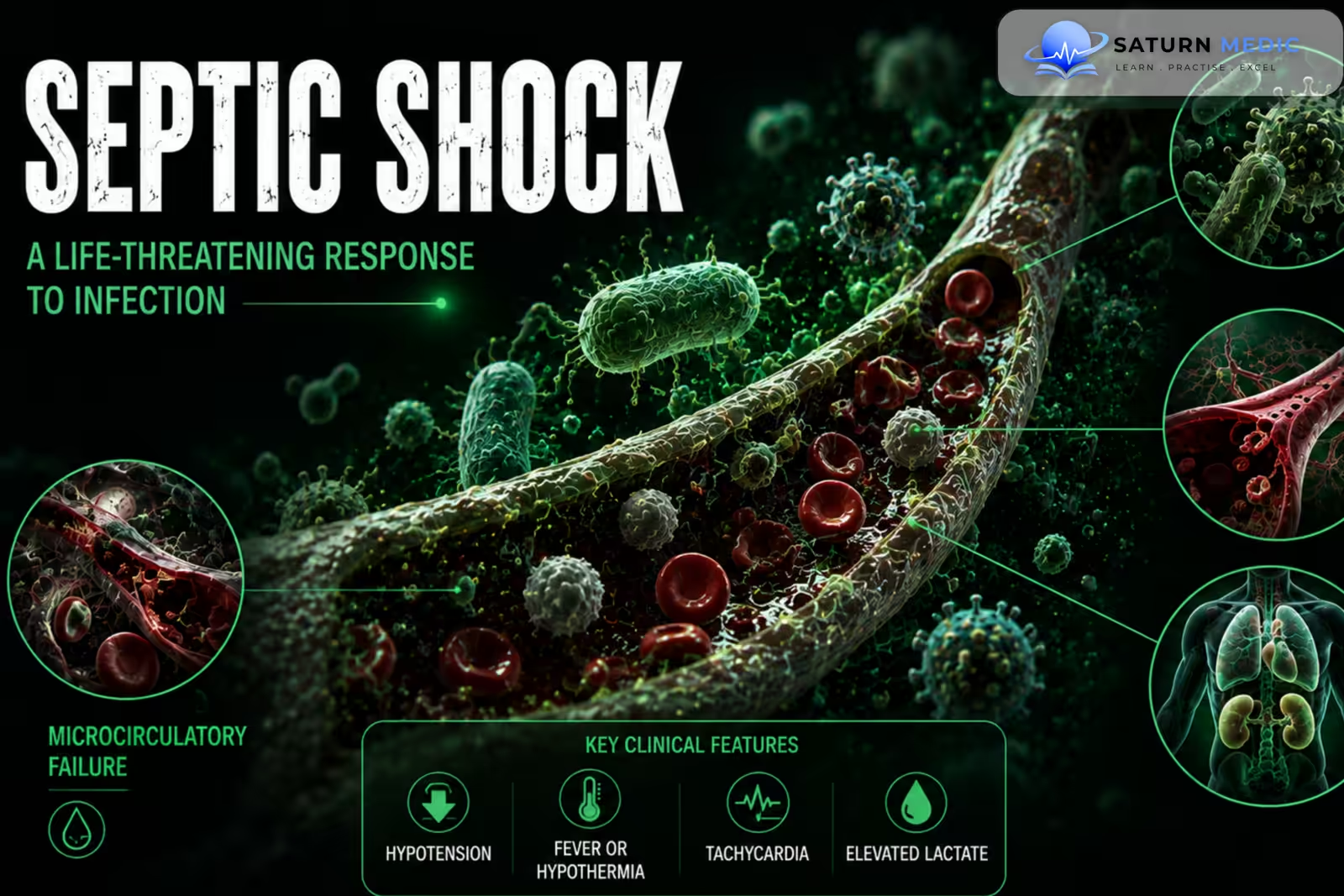
Septic Shock is a life-threatening form of circulatory and cellular dysfunction caused by infection-associated dysregulation of the host response. It represents the most severe form of sepsis and is associated with a high risk of organ failure and death
Also called
ICD-10
Specialty
Onset
Reviewed
-
OverviewOverview
-
Etiology & Risk FactorsEtiology & Risk Factors
-
PathophysiologyPathophysiology
-
Clinical PresentationClinical Presentation
-
History TakingHistory Taking
-
Physical ExaminationPhysical Examination
-
InvestigationsInvestigations
-
DiagnosisDiagnosis
-
ManagementManagement
-
ComplicationsComplications
-
PrognosisPrognosis
-
Key Points / Clinical PearlsKey Points / Clinical Pearls
Overview
–Septic Shock develops when an infection triggers an abnormal systemic inflammatory and immune response. This produces widespread vasodilation, increased vascular permeability, impaired microcirculation, and cellular dysfunction.
According to the Sepsis-3 definition, septic shock is a subset of sepsis in which, despite adequate volume resuscitation:
- Vasopressors are required to maintain Mean Arterial Pressure (MAP) ≥65 mmHg
- Serum lactate is >2 mmol/L
These criteria indicate severe circulatory and metabolic dysfunction.
Etiology & Risk Factors
-Etiology
–Septic Shock can result from bacterial, viral, fungal, or other infections.
Common sources include:
- Pneumonia
- Intra-abdominal infection
- Urinary Tract Infection
- Skin and soft-tissue infection
- Bloodstream infection
-Risk Factors
- Advanced age
- Immunosuppression
- Diabetes Mellitus
- Recent hospitalization or invasive procedures
- Indwelling vascular or urinary devices
Pathophysiology
Infection → dysregulated immune response → inflammatory mediator release → vasodilation + increased vascular permeability → reduced effective circulating volume → hypotension → impaired tissue perfusion → cellular dysfunction → organ failure
Microcirculatory abnormalities and mitochondrial dysfunction can contribute to tissue hypoxia even when global blood flow appears adequate.
Clinical Presentation
-Symptoms:
Patients with Septic Shock may develop:
- Fever or hypothermia
- Chills
- Weakness
- Altered mental status
- Shortness of breath
- Reduced urine output
- Dizziness
- Generalized malaise
Symptoms of the underlying infection may also be present.
-Signs:
-
Important findings include:
- Hypotension
- Tachycardia
- Tachypnea
- Altered mental status
- Cold or mottled extremities in some patients
- Reduced urine output
- Delayed capillary refill
- Elevated serum lactate
Early septic shock may sometimes present with warm extremities because of peripheral vasodilation.
–Advanced Septic Shock may cause:
- Acute Kidney Injury (AKI)
- Acute respiratory failure
- Disseminated Intravascular Coagulation (DIC)
- Severe metabolic acidosis
- Myocardial dysfunction
History Taking
-Ask about:
- Fever or chills
- Recent infection
- Recent hospitalization
- Recent surgery or invasive procedures
- Antibiotic use
- Immunosuppression
- Urinary symptoms
- Respiratory symptoms
- Abdominal pain
- Skin or wound infection
- Recent travel or exposure when relevant
Physical Examination
-General Examination
- Airway and breathing
- Blood pressure
- Heart rate
- Respiratory rate
- Oxygen saturation
- Temperature
- Mental status
- Capillary refill
- Peripheral perfusion
-System-Specific Examination:
- Airway and breathing
- Blood pressure
- Heart rate
- Respiratory rate
- Oxygen saturation
- Temperature
- Mental status
- Capillary refill
- Peripheral perfusion
Investigations
-Complete Blood Count
Useful for assessing:
-
Leukocytosis or leukopenia
-
Platelet abnormalities
-
Anemia
-Biochemistry / Specific Tests
-
Serum lactate
-
Blood glucose
-
Serum electrolytes
-
Urea and creatinine
-
Liver Function Tests
-
Coagulation profile
-
Arterial or venous blood gas
-
Blood cultures before antibiotics when this does not significantly delay treatment
-
Cultures from suspected infection sources
-Imaging
Imaging is directed toward identifying the source:
-
Chest X-ray for suspected pneumonia
-
Ultrasound for selected abdominal or urinary sources
-
CT when clinically appropriate to identify deep or intra-abdominal infection
-Special / Confirmatory Tests
There is no single test that confirms septic shock.
Diagnosis depends on:
-
Suspected or confirmed infection
-
Organ dysfunction
-
Persistent circulatory failure
-
Lactate elevation despite adequate fluid resuscitation
Diagnosis
Critical Care · SIRS vs Sepsis vs Severe Sepsis vs Septic Shock
| Parameter | SIRS | Sepsis (Sepsis-2) | Severe Sepsis | Septic Shock |
|---|---|---|---|---|
| Definition | ≥2 of 4 SIRS criteria — ANY cause (infection, trauma, burns, pancreatitis) | SIRS + proven / suspected infection | Sepsis + organ dysfunction / hypoperfusion | Sepsis + vasopressor-dependent hypotension + lactate >2 despite adequate fluids |
| Temperature | >38°C or <36°C | Same | Same | Same |
| Heart rate | >90 bpm | Same | Same | Same |
| Respiratory rate | >20 breaths/min or PaCO₂ <32 mmHg | Same | Same | Same |
| WBC | >12,000 or <4,000 or >10% bands | Same | Same | Same |
| Infection source | Not required | Required ✓ | Required ✓ | Required ✓ |
| Organ dysfunction | Not required | Not required | Present ✓ — lactate >1, Cr >177, Bili >34, INR >1.5, PLT <100, GCS drop | Present ✓ |
| BP / vasopressors | — | — | SBP <90 or MAP <70 (responsive to fluids) | Vasopressors required despite adequate fluids (30 mL/kg) |
| Lactate | — | — | >1 mmol/L (hypoperfusion) | >2 mmol/L despite resuscitation |
<300 = score 2
<200 + ventilated = score 3
<100 + ventilated = score 4
<100 = score 2
<50 = score 3
<20 = score 4
33–101 = score 2
102–204 = score 3
>204 = score 4
Dopamine ≤5 = score 2
Dopamine >5 or NE ≤0.1 = score 3
NE >0.1 = score 4
10–12 = score 2
6–9 = score 3
<6 = score 4
171–299 = score 2
300–440 = score 3
>440 = score 4
- Measure lactate — remeasure if >2
- Blood cultures × 2 — before antibiotics
- Broad-spectrum antibiotics — within 1h of recognition
- 30 mL/kg IV crystalloid — if hypotensive or lactate ≥4
- Vasopressors — if MAP <65 despite fluids
- Noradrenaline — 1st line vasopressor; target MAP ≥65
- Vasopressin — add if NE >0.25 mcg/kg/min
- Adrenaline — adjunct for refractory shock
- Avoid dopamine — ↑ arrhythmia risk
- Reassess fluid status — avoid fluid overload
- Hydrocortisone 200 mg/day IV — if refractory to vasopressors
- Source control — drain abscess, remove infected line
- Glucose control — target 6–10 mmol/L
- DVT prophylaxis, stress ulcer prophylaxis
- De-escalate antibiotics at 48–72h when cultures available
Related Topics
Management
1. First-Line / Emergency Management
Septic Shock requires immediate emergency management.
Initial treatment includes:
-
Airway and breathing assessment
-
Supplemental oxygen when indicated
-
Rapid intravenous crystalloid administration
-
Prompt broad-spectrum antibiotics
-
Blood cultures when they do not delay antibiotics
-
Early source-control assessment
Norepinephrine is the preferred first-line vasopressor when hypotension persists after or during initial fluid resuscitation.
2. Definitive Treatment
The definitive treatment is rapid control of the underlying infection.
Source control may include:
-
Drainage of an abscess
-
Removal of an infected device
-
Surgical treatment of intra-abdominal infection
-
Relief of an infected urinary obstruction
-
Debridement of infected tissue
3. Medical Treatment
-
Broad-spectrum antibiotics initially
-
De-escalation according to culture and susceptibility results
-
Norepinephrine as first-line vasopressor
-
Vasopressin as an additional vasopressor in selected patients
-
Hydrocortisone in selected patients with ongoing vasopressor-dependent shock
4. Surgical / Procedural Treatment
Procedural treatment depends on the infection source and may include:
-
Abscess drainage
-
Surgical source control
-
Removal of infected devices
-
Debridement
-
Urinary tract decompression
5. Supportive Management
-
Continuous hemodynamic monitoring
-
Serial lactate assessment when indicated
-
Monitor urine output
-
Maintain adequate organ perfusion
-
Mechanical ventilation when required
Complications
- Acute Kidney Injury (AKI)
- Acute respiratory failure
- Acute Respiratory Distress Syndrome (ARDS)
- Disseminated Intravascular Coagulation (DIC)
- Metabolic acidosis
- Myocardial dysfunction
- Hepatic dysfunction
- Encephalopathy
- Multiorgan failure
- Death
Prognosis
Septic Shock carries a high risk of mortality and long-term complications. Prognosis depends on the severity of organ dysfunction, infection source, causative organism, patient comorbidities, and especially the speed of antibiotic administration, effective resuscitation, and source control.
Key Points / Clinical Pearls
- Septic Shock is the most severe form of sepsis.
- It results from infection-associated circulatory and cellular dysfunction.
- Common sources include lung, abdomen, urinary tract, and skin.
- Hypotension and tissue hypoperfusion are important clinical features.
- Serum lactate is an important marker of hypoperfusion.
- Septic shock is defined by vasopressor requirement and lactate elevation despite adequate fluids.
- Immediate treatment should not wait for all test results.
- Broad-spectrum antibiotics should be given promptly.
- Intravenous crystalloids are first-line initial fluids.
- Norepinephrine is the preferred first-line vasopressor.
- Source control is essential.
- Persistent shock may require additional vasopressors.
- Hydrocortisone may be considered in selected vasopressor-dependent patients.
- Society of Critical Care Medicine (SCCM). Surviving Sepsis Campaign: International Guidelines for Management of Sepsis and Septic Shock .
- Evans L, Rhodes A, Alhazzani W, et al. Surviving Sepsis Campaign: International Guidelines for Management of Sepsis and Septic Shock 2021. Intensive Care Med. 2021;47:1181-1247. PubMed .
- Singer M, Deutschman CS, Seymour CW, et al. The Third International Consensus Definitions for Sepsis and Septic Shock (Sepsis-3). JAMA. 2016;315(8):801-810. JAMA .
- Seymour CW, Liu VX, Iwashyna TJ, et al. Assessment of Clinical Criteria for Sepsis: For the Third International Consensus Definitions for Sepsis and Septic Shock (Sepsis-3). JAMA. 2016;315(8):762-774. JAMA .
- Rhodes A, Evans LE, Alhazzani W, et al. Surviving Sepsis Campaign: International Guidelines for Management of Sepsis and Septic Shock: 2016. Intensive Care Med. 2017;43:304-377. PubMed .
- National Library of Medicine (NIH). Septic Shock . StatPearls.