

Clinical Subject Page
Brucellosis
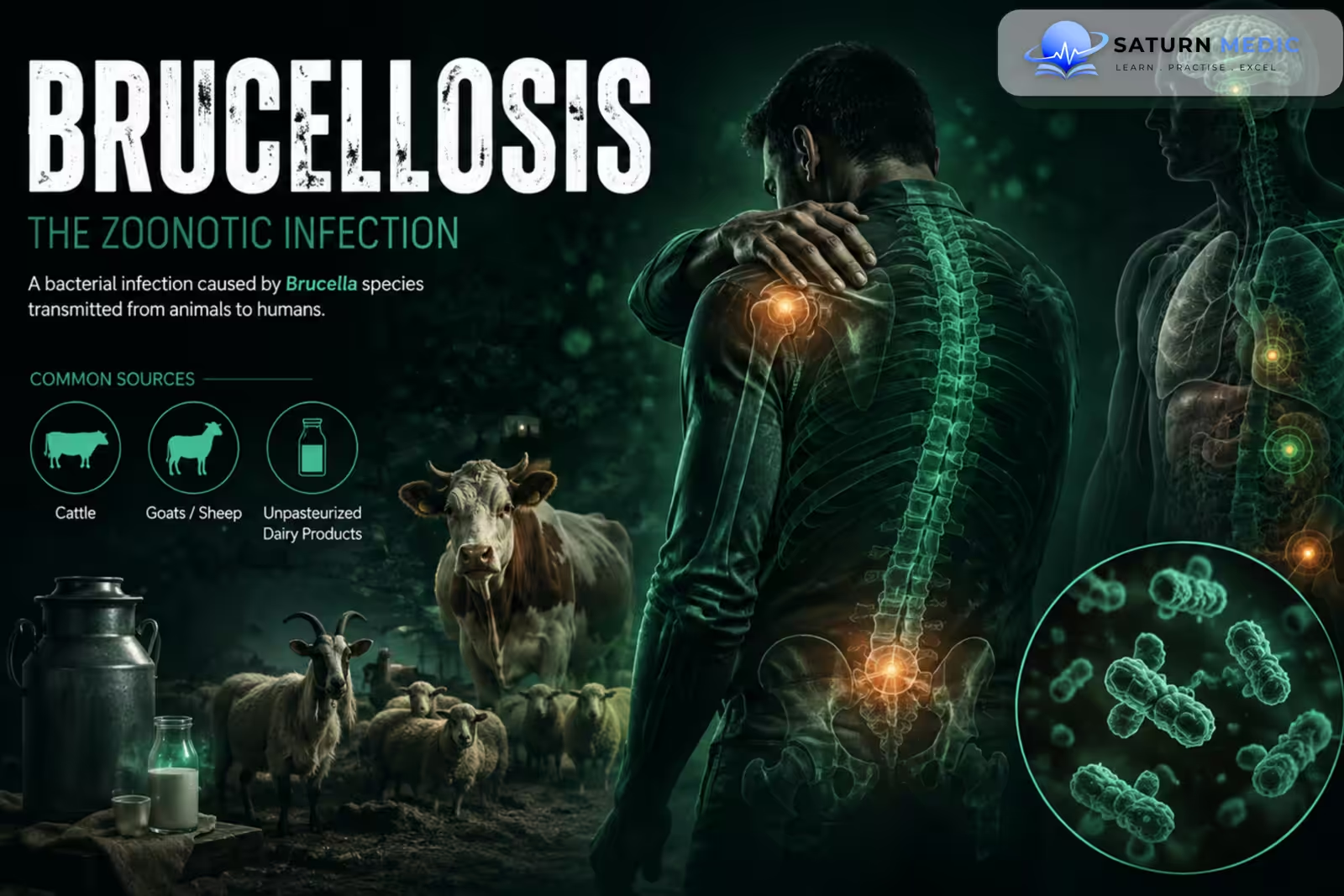
Brucellosis is a zoonotic bacterial infection caused by Brucella species. It is usually transmitted through contact with infected animals or consumption of contaminated, unpasteurized animal products. The infection can affect multiple organs and may become chronic if untreated
Also called
ICD-10
Specialty
Onset
Reviewed
-
OverviewOverview
-
Etiology & Risk FactorsEtiology & Risk Factors
-
PathophysiologyPathophysiology
-
Clinical PresentationClinical Presentation
-
History TakingHistory Taking
-
Physical ExaminationPhysical Examination
-
InvestigationsInvestigations
-
DiagnosisDiagnosis
-
ManagementManagement
-
ComplicationsComplications
-
PrognosisPrognosis
-
Key Points / Clinical PearlsKey Points / Clinical Pearls
Overview
-Brucellosis is a systemic infection that can involve the reticuloendothelial, musculoskeletal, genitourinary, nervous, and cardiovascular systems.
-Common manifestations include:
- Prolonged or undulating fever
- Night sweats
- Fatigue
- Arthralgia
- Myalgia
- Back pain
- Hepatosplenomegaly
-Important focal complications include osteoarticular infection, epididymo-orchitis, neurobrucellosis, and endocarditis.
Etiology & Risk Factors
-Etiology
–Brucellosis is caused by Brucella, a small intracellular Gram-negative coccobacillus.
-Important human pathogens include:
- Brucella melitensis — sheep and goats
- Brucella abortus — cattle
- Brucella suis — pigs
- Brucella canis — dogs
-Transmission occurs through:
- Consumption of unpasteurized milk or dairy products
- Direct contact with infected animals or animal tissues
- Inhalation of contaminated aerosols
- Occupational exposure
-Risk Factors
- Consumption of unpasteurized dairy products
- Contact with livestock
- Veterinary or slaughterhouse work
- Laboratory exposure
- Living in or traveling to endemic areas
Pathophysiology
Brucella exposure → entry through the gastrointestinal tract, skin, or respiratory tract → uptake by macrophages → intracellular survival → lymphatic and hematogenous dissemination → reticuloendothelial involvement → systemic infection → focal organ involvement
Clinical Presentation
-Symptoms:
- Prolonged or undulating fever
- Night sweats
- Fatigue
- Malaise
- Headache
- Arthralgia
- Myalgia
- Back pain
- Loss of appetite
- Weight loss
-Signs:
- Fever
- Hepatomegaly
- Splenomegaly
- Lymphadenopathy
- Joint tenderness or swelling
- Sacroiliac tenderness in osteoarticular disease
-Severe Disease
Severe or focal disease may cause:
- Osteomyelitis
- Sacroiliitis
- Epididymo-orchitis
- Neurobrucellosis
- Endocarditis
History Taking
-Ask about:
- Duration and pattern of fever
- Night sweats
- Joint or back pain
- Consumption of unpasteurized milk or cheese
- Contact with sheep, goats, cattle, pigs, or dogs
- Occupation
- Travel or residence in endemic areas
- Previous Brucella infection
- Neurological symptoms
- Genitourinary symptoms
- Cardiac symptoms
Physical Examination
-General Examination
- Temperature
- Hydration
- General appearance
- Weight
Look for:
- Fever
- Hepatosplenomegaly
- Lymphadenopathy
-System-Specific Examination:
- Joint and spine examination
- Neurological examination when indicated
- Cardiac examination
- Testicular examination when epididymo-orchitis is suspected
Investigations
-Complete Blood Count
May show:
-
Leukopenia
-
Anemia
-
Thrombocytopenia
-Biochemistry / Specific Tests
Important investigations include:
-
Blood cultures
-
Brucella serology
-
Liver Function Tests
-
Renal function
-Serology
Brucella antibodies can be detected using tests such as:
-
Standard agglutination test
-
Brucella IgM/IgG assays
Results should be interpreted together with the clinical presentation and exposure history.
-Imaging
Imaging is guided by the suspected site of infection:
-
MRI for osteoarticular or spinal involvement
-
Ultrasound for hepatosplenic or genitourinary disease
-
Echocardiography when endocarditis is suspected
-
Brain MRI when neurobrucellosis is suspected
-Special / Confirmatory Tests
Blood Culture
Isolation of Brucella from a clinical specimen provides microbiological confirmation.
Culture sensitivity may be reduced in chronic disease or after previous antibiotic treatment.
-PCR
PCR may assist diagnosis in selected settings when available.
Diagnosis
-Diagnosis is based on:
Compatible clinical presentation + epidemiological exposure → Brucella serology and/or blood culture → evaluation for focal complications
A positive culture provides definitive microbiological confirmation.
Brucellosis · Diagnosis
| Test | Details | Sensitivity | Notes |
|---|---|---|---|
| Blood culture | Gold standard — Brucella spp. grown in BACTEC. Incubate up to 6 weeks. Notify lab — biosafety hazard | 50–80% | Best in acute phase / febrile episode |
| Serology — SAT (Standard Agglutination Test) | Titre ≥1:160 diagnostic. Most widely used. Detects IgM (acute) + IgG (chronic) | ~90% | False negative in chronic brucellosis (prozone phenomenon) |
| Rose Bengal Test (RBT) | Rapid card agglutination — screening test. Positive = needs confirmatory SAT | Screening | High sensitivity; low specificity |
| ELISA (IgG / IgM) | More sensitive than SAT in chronic disease. IgG persistence = chronic/relapse | High | Useful in chronic & focal brucellosis |
| PCR | Rapid, sensitive. Detects Brucella DNA in blood, tissue, CSF, joint fluid | High | Best for CNS / focal disease; not widely available |
| Bone marrow culture | Highest yield — especially when blood cultures negative and diagnosis uncertain | ~90% | Reserved for difficult cases |
Related Topics
Management
1. First-Line / Emergency Management
There is no routine emergency treatment.
Hospitalization and urgent treatment may be required for:
-
Endocarditis
-
Neurobrucellosis
-
Severe focal infection
2. Definitive Treatment
Treatment requires combinationantibiotic therapy to reduce treatment failure and relapse.
3. Medical Treatment
Uncomplicated Disease
A common regimen is:
Doxycycline + rifampicin for approximately 6 weeks
An alternative regimen is:
Doxycycline + gentamicin or streptomycin, with the aminoglycoside generally given for a shorter duration.
Treatment should be adjusted according to:
-
Age
-
Pregnancy
-
Organ involvement
-
Contraindications
-
Local guidelines
Complicated Disease
Longer and more intensive combination therapy may be required for:
-
Endocarditis
-
Neurobrucellosis
-
Osteoarticular infection
4. Surgical / Procedural Treatment
May be required for:
-
Endocarditis with severe valve destruction
-
Abscesses requiring drainage
-
Complicated focal infection
5. Supportive Management
-
Analgesia
-
Hydration
-
Treatment of focal complications
Complications
Brucellosis · Complications
- Sacroiliitis — most specific; unilateral or bilateral; MRI for diagnosis
- Spondylodiscitis — lumbar spine most common; Pott's disease DDx
- Peripheral arthritis — knee, hip, shoulder
- Osteomyelitis — long bones; children
- Meningitis — lymphocytic; CSF: ↑ protein, ↓ glucose, Brucella PCR+
- Meningoencephalitis — altered consciousness, focal deficits
- Myelitis, radiculopathy, cranial nerve palsies
- Rare but life-threatening — requires prolonged treatment
- Endocarditis — most common cause of death; aortic valve predominant
- Culture-negative endocarditis — think Brucella in endemic areas
- Myocarditis, pericarditis — rare
- Often requires valve surgery + prolonged antibiotics
- Epididymo-orchitis — most common GU complication; unilateral scrotal pain + swelling
- DDx: testicular torsion, mumps orchitis
- Rarely: prostatitis, renal involvement
- Responds well to antibiotics — surgery rarely needed
- Granulomatous hepatitis — ↑ LFTs; hepatomegaly
- Splenic abscess — fever unresponsive to antibiotics; CT diagnosis
- Liver abscess — rare
- Splenic abscess may require drainage or splenectomy
- Uveitis — anterior or posterior; can cause blindness if untreated
- Optic neuritis (neurobrucellosis)
- Chronic brucellosis — symptoms >1 year; fatigue, depression, musculoskeletal pain
- Relapse — occurs in 5–10%; usually due to non-compliance
Prognosis
-Most patients recover with appropriate combination antibiotic therapy.
Prognosis is worse with:
- Endocarditis
- Neurobrucellosis
- Delayed diagnosis
- Inadequate treatment
- Relapse
Key Points / Clinical Pearls
- Brucellosis is a zoonotic bacterial infection caused by Brucella species.
- Major human pathogens include B. melitensis, B. abortus, B. suis, and B. canis.
- Unpasteurized dairy products are an important source of infection.
- Direct contact with infected animals is an important occupational risk.
- Classic symptoms include prolonged fever, night sweats, fatigue, and arthralgia.
- Hepatosplenomegaly may occur.
- The infection can involve the bones, joints, nervous system, genitourinary system, and heart.
- Osteoarticular involvement is the most common focal complication.
- Endocarditis is the most serious complication.
- Blood cultures and serology are the main diagnostic investigations.
- Always inform the laboratory when Brucella infection is suspected.
- Treatment requires combination antibiotics.
- Doxycycline plus rifampicin is a common regimen for uncomplicated disease.
- World Health Organization (WHO). Brucellosis .
- Centers for Disease Control and Prevention (CDC). Brucellosis .
- Corbel MJ. Brucellosis in Humans and Animals . WHO/FAO/OIE.
- Pappas G, Papadimitriou P, Akritidis N, Christou L, Tsianos EV. The New Global Map of Human Brucellosis. Lancet Infect Dis. 2006;6(2):91-99. PubMed .
- Franco MP, Mulder M, Gilman RH, Smits HL. Human Brucellosis. Lancet Infect Dis. 2007;7(12):775-786. PubMed .
- National Library of Medicine (NIH). Brucellosis . StatPearls.