

Clinical Subject Page
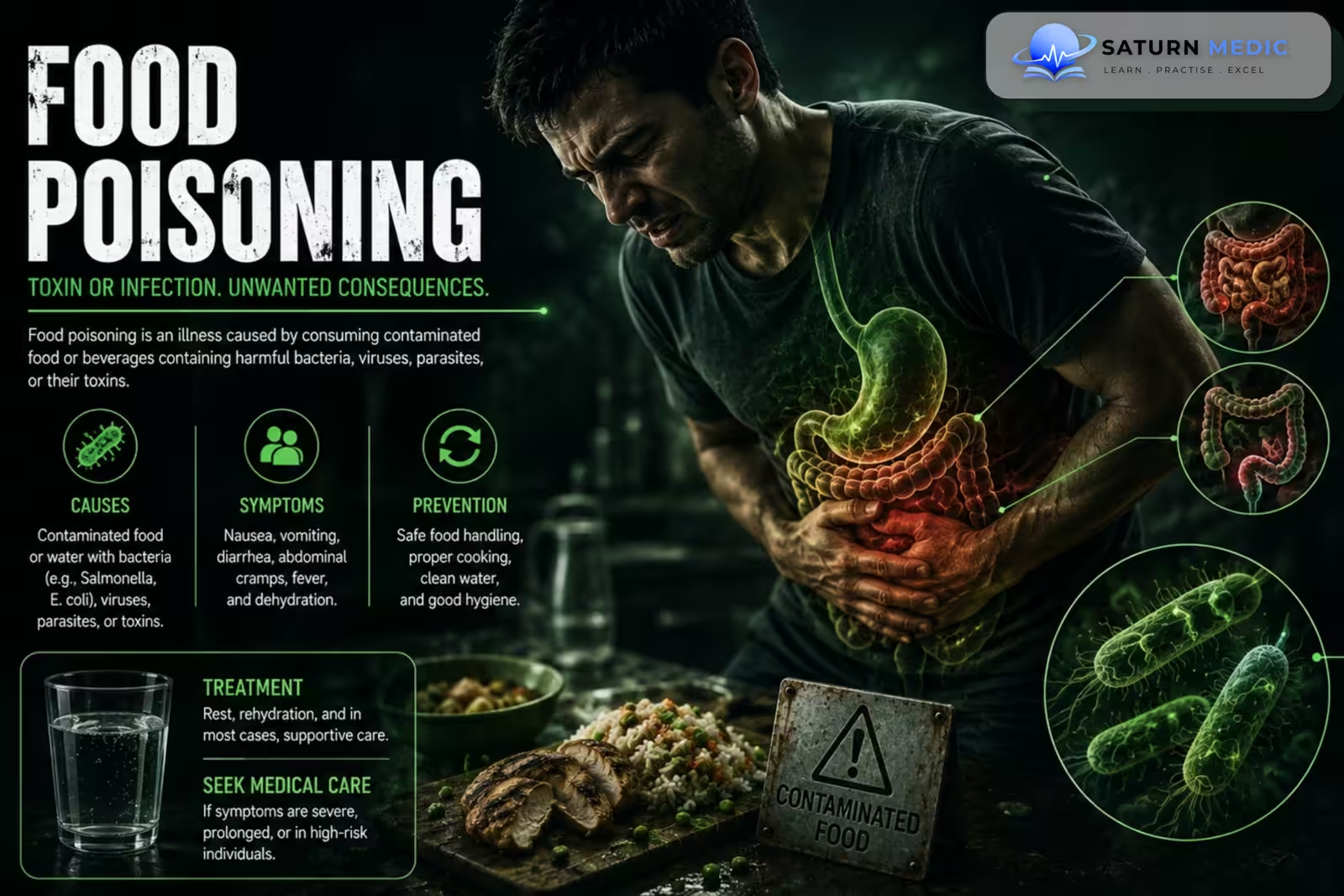
Food Poisoning is an acute illness caused by consuming food or beverages contaminated with infectious organisms, toxins, or harmful chemicals. Most cases are caused by bacteria, viruses, parasites, or their toxins and present with diarrhea, abdominal cramps, nausea, vomiting, and sometimes fever
Also called
ICD-10
Specialty
Onset
Reviewed
-
OverviewOverview
-
Etiology and The SourceEtiology and The Source
-
PathophysiologyPathophysiology
-
Clinical PresentationClinical Presentation
-
History TakingHistory Taking
-
Physical ExaminationPhysical Examination
-
InvestigationsInvestigations
-
DiagnosisDiagnosis
-
ManagementManagement
-
ComplicationsComplications
-
PrognosisPrognosis
-
Key Points / Clinical PearlsKey Points / Clinical Pearls
Overview
–Food Poisoning may result from:
- Infection: ingestion of organisms that multiply in the gastrointestinal tract.
- Intoxication: ingestion of preformed toxins in contaminated food.
- Toxin-mediated infection: organisms are ingested and produce toxins within the intestine.
Common causes include Salmonella, Campylobacter, diarrheagenic Escherichia coli, norovirus, Staphylococcus aureus, and Bacillus cereus.
Etiology and The Source
Food Poisoning · Pathogen Identification by Incubation & Presentation
| Incubation | Organism | Source | Key features | Mechanism |
|---|---|---|---|---|
| 1–6 hours | S. aureus | Cream, custard, potato salad, ham — left at room temp | Explosive vomiting dominant — diarrhoea mild. No fever. Short, violent, self-limiting. | Preformed toxin |
| 1–6 hours | B. cereus (emetic) | Fried rice, pasta — reheated | Vomiting dominant — "Chinese restaurant syndrome". Cereulide toxin heat-stable. | Preformed toxin |
| 8–16 hours | B. cereus (diarrhoeal) | Meat, vegetables, sauces | Watery diarrhoea dominant — vomiting mild. Resembles C. perfringens. | Enterotoxin in gut |
| 8–16 hours | C. perfringens | Cooked meat, poultry — reheated or held warm | Watery diarrhoea + cramping. No vomiting. No fever. Self-limiting 24h. | Enterotoxin in gut |
| 12–48 hours | Norovirus | Shellfish (especially oysters), person-to-person, contaminated water | Explosive vomiting + watery diarrhoea. Low-grade fever. Highly contagious. Winter outbreaks. | Viral invasion |
| 12–72 hours | Salmonella (NTS) | Poultry, eggs, meat, raw milk | Watery/bloody diarrhoea + fever + cramping. Bacteraemia in 5% (SCD, immunocompromised). | Gut invasion |
| 24–72 hours | Campylobacter jejuni | Undercooked poultry — most common bacterial cause worldwide | Bloody diarrhoea + severe cramping + fever. Prodrome of myalgia. GBS risk post-infection. | Gut invasion |
| 24–96 hours | E. coli O157:H7 (STEC) | Undercooked beef (burgers), raw milk, sprouts, contaminated water | Bloody diarrhoea → Haemolytic Uraemic Syndrome (HUS) in 10% — especially children. No fever. | Shiga toxin |
| 3–5 days | Shigella | Contaminated water/food, person-to-person (faecal-oral) | Dysentery — bloody mucoid diarrhoea + tenesmus + high fever. Very low infectious dose (10–100 organisms). | Gut invasion + toxin |
| 12–36 hours | C. botulinum | Home-canned foods, preserved fish, honey (infants) | Descending flaccid paralysis — diplopia, dysphagia, dysarthria, dry mouth. No fever. GI symptoms mild/absent. | Preformed toxin (neurotoxin) |
Pathophysiology
Ingestion of contaminated food → survival of pathogen or toxin → intestinal invasion or toxin activity → mucosal inflammation and altered intestinal secretion → diarrhea, vomiting, and abdominal cramps ± systemic illness due to Food Poisoning
Clinical Presentation
Food Poisoning · Clinical Presentation
| Cause | Incubation | Typical presentation | Key exam clue |
|---|---|---|---|
| S. aureus | 30 min–8 h | Sudden nausea, prominent vomiting, abdominal cramps, diarrhea. | Preformed toxin → rapid vomiting; fever uncommon |
| B. cereus — emetic | 1–6 h | Prominent nausea and vomiting; diarrhea may occur. | Reheated rice / starchy foods |
| B. cereus — diarrheal | 6–24 h | Watery diarrhea + abdominal cramps; vomiting may occur. | Diarrheal toxin; fever uncommon |
| C. perfringens | 6–24 h | Watery diarrhea + abdominal cramps. | Vomiting and fever uncommon |
| C. botulinum | 12–48 h | Nausea/GI symptoms followed by diplopia, ptosis, dysphagia, dysarthria and descending weakness. | Descending flaccid paralysis |
| Salmonella | 6 h–6 d | Diarrhea, fever, abdominal cramps ± vomiting. | Fever + diarrhea |
| Campylobacter | 2–5 d | Fever + abdominal cramps + diarrhea, often bloody. | Bloody diarrhea |
| Shigella | 1–2 d | Fever, abdominal pain, frequent diarrhea that may become bloody. | Tenesmus |
| STEC / EHEC | 3–4 d | Severe abdominal cramps + bloody diarrhea; vomiting may occur. | Little / no fever → risk of HUS |
| V. cholerae | Usually 1–3 d | Profuse painless watery diarrhea with severe dehydration. | Rice-water stool |
| V. parahaemolyticus | Within 24 h | Watery diarrhea, abdominal cramps, nausea ± vomiting. | Raw / undercooked shellfish |
| Listeria monocytogenes | Variable; invasive illness may be delayed | Fever, myalgia and flu-like illness; invasive disease can cause meningitis. Pregnancy → fetal/newborn complications. | Pregnancy + meningitis |
| Norovirus | 12–48 h | Acute vomiting + watery diarrhea, nausea and abdominal cramps. | Explosive outbreaks in closed settings |
History Taking
-Ask about:
- Onset and duration of symptoms
- Frequency and volume of diarrhea
- Blood or mucus in stool
- Vomiting
- Fever
- Abdominal pain
- Fluid intake and urine output
- Recent meals and suspected foods
- Undercooked meat, poultry, eggs, or seafood
- Unpasteurized dairy products
- Recent travel
- Sick contacts or known outbreaks
Physical Examination
-General Examination for Food Poisoning
- Temperature
- Heart rate and blood pressure
- Hydration status
- Mental status
- Signs of sepsis
-System-Specific Examination for Food Poisoning:
- Abdominal tenderness
- Abdominal distension
- Guarding or peritonism when severe abdominal pathology is suspected
Investigations
Biochemistry / Specific Tests
Serum electrolytes and renal function in significant dehydration
Stool culture or molecular testing in selected cases
Stool testing during suspected outbreaks or severe disease
Blood cultures when bacteremia or sepsis is suspected
-Imaging
Not routinely required.
Imaging may be considered when there is severe abdominal pain, suspected complications, or concern for an alternative diagnosis.
-Special / Confirmatory Tests
Stool testing should be considered for:
Bloody diarrhea
High fever
Severe illness
Persistent symptoms
Suspected outbreak
Immunocompromised patients
Testing should be guided by the clinical presentation and suspected pathogen.
Diagnosis
-Food Poisoning is usually diagnosed clinically from acute gastrointestinal symptoms combined with a compatible exposure history.
Acute diarrhea ± vomiting → assess dehydration and red flags → stool testing when indicated → investigate systemic complications when suspected.
Related Topics
Management
Food Poisoning · Management
| Organism | Antibiotic / Specific Tx | When to treat | Avoid |
|---|---|---|---|
| S. aureus | Supportive only — antibiotics NOT indicated. Preformed toxin — bacteria already gone. | Never — antibiotics ineffective against preformed toxin | — |
| B. cereus | Supportive only — self-limiting within 24h | Never | — |
| C. perfringens | Supportive only — self-limiting 24h. Antibiotics not needed. | Never (unless invasive/necrotising — rare) | — |
| Norovirus | Supportive only — ORS. No antiviral available. | Never | — |
| Salmonella (NTS) | No antibiotics — uncomplicated High-risk / bacteraemia: Ciprofloxacin 500 mg BD PO or Ceftriaxone 2g IV OD |
Only if: high-risk (SCD, immunocompromised, age <1 or >65), bacteraemia, osteomyelitis. Antibiotics prolong carriage if given unnecessarily. | Loperamide |
| Campylobacter | Usually supportive Severe/prolonged: Azithromycin 500 mg OD × 3 days — preferred (increasing fluoroquinolone resistance) Ciprofloxacin — if sensitivity confirmed |
Severe illness, bloody diarrhoea >7 days, immunocompromised, bacteraemia. Early treatment shortens illness if given within 3 days. | Loperamide (bloody diarrhoea) |
| E. coli O157 (STEC) | Antibiotics CONTRAINDICATED — increase Shiga toxin release → higher HUS risk. Supportive only: IV fluids, avoid NSAIDs. | Never give antibiotics — worsens outcomes | Antibiotics Loperamide NSAIDs |
| Shigella | Azithromycin 500 mg OD × 3 days — 1st line (resistance pattern) Ciprofloxacin 500 mg BD × 3 days — if sensitive Ceftriaxone IV — severe/MDR |
Always treat — shortens illness, reduces transmission, prevents complications | Loperamide — toxic megacolon risk |
| C. botulinum | Heptavalent botulinum antitoxin (HBAT) — give immediately; neutralises circulating toxin only Supportive: mechanical ventilation (respiratory failure), NG feeding, ICU |
Clinical diagnosis — do NOT wait for lab confirmation. Call poison control / public health immediately. | Aminoglycosides (worsen NMJ block) |
| Vibrio cholerae | ORS — cornerstone (massive fluid losses "rice-water stool") Doxycycline 300 mg single dose — adult 1st line Azithromycin 1g single dose — children + pregnancy |
Moderate-severe cholera — antibiotics reduce duration + transmission. ORS can replace 1L/h losses. | — |
Complications
- Severe dehydration
- Electrolyte disturbances
- Acute Kidney Injury (AKI)
- Sepsis
- Hemolytic Uremic Syndrome (HUS)
- Reactive arthritis
- Post-infectious complications
- Death in severe untreated disease
Prognosis
The prognosis of Food Poisoning is generally excellent, and most uncomplicated cases resolve within several days with adequate hydration and supportive care. Prognosis is less favorable in infants, olderadults, pregnant patients, and immunocompromised.
Key Points / Clinical Pearls
- Food Poisoning is illness caused by contaminated food or beverages.
- Causes of Food Poisoning include bacteria, viruses, parasites, toxins, and chemicals.
- Diarrhea, vomiting, abdominal cramps, and nausea are common.
- Fever may occur, particularly with invasive infection.
- Bloody diarrhea is a red flag in Food Poisoning.
- Assessment of hydration is the first priority.
- Oral rehydration is the main treatment for mild-to-moderate dehydration.
- IV fluids are required for severe dehydration.
- Most uncomplicated cases do not require antibiotics.
- Stool testing is reserved for selected severe, bloody, persistent, or outbreak-associated cases.
- Antibiotics should generally be avoided when Shiga toxin-producing E. coli is suspected.
- Antimotility drugs should be avoided with bloody diarrhea or high fever.
- Acute Kidney Injury (AKI) can occur with severe dehydration.
- World Health Organization (WHO). Food Safety .
- Centers for Disease Control and Prevention (CDC). Food Safety .
- Centers for Disease Control and Prevention (CDC). Symptoms of Food Poisoning .
- Shane AL, Mody RK, Crump JA, et al. 2017 Infectious Diseases Society of America Clinical Practice Guidelines for the Diagnosis and Management of Infectious Diarrhea. Clin Infect Dis. 2017;65(12):e45-e80. PubMed .
- Mead PS, Slutsker L, Dietz V, et al. Food-Related Illness and Death in the United States. Emerg Infect Dis. 1999;5(5):607-625. PubMed .
- Scallan E, Hoekstra RM, Angulo FJ, et al. Foodborne Illness Acquired in the United States—Major Pathogens. Emerg Infect Dis. 2011;17(1):7-15. PubMed .
- National Library of Medicine (NIH). Food Poisoning . StatPearls.