

Clinical Subject Page
Giardiasis
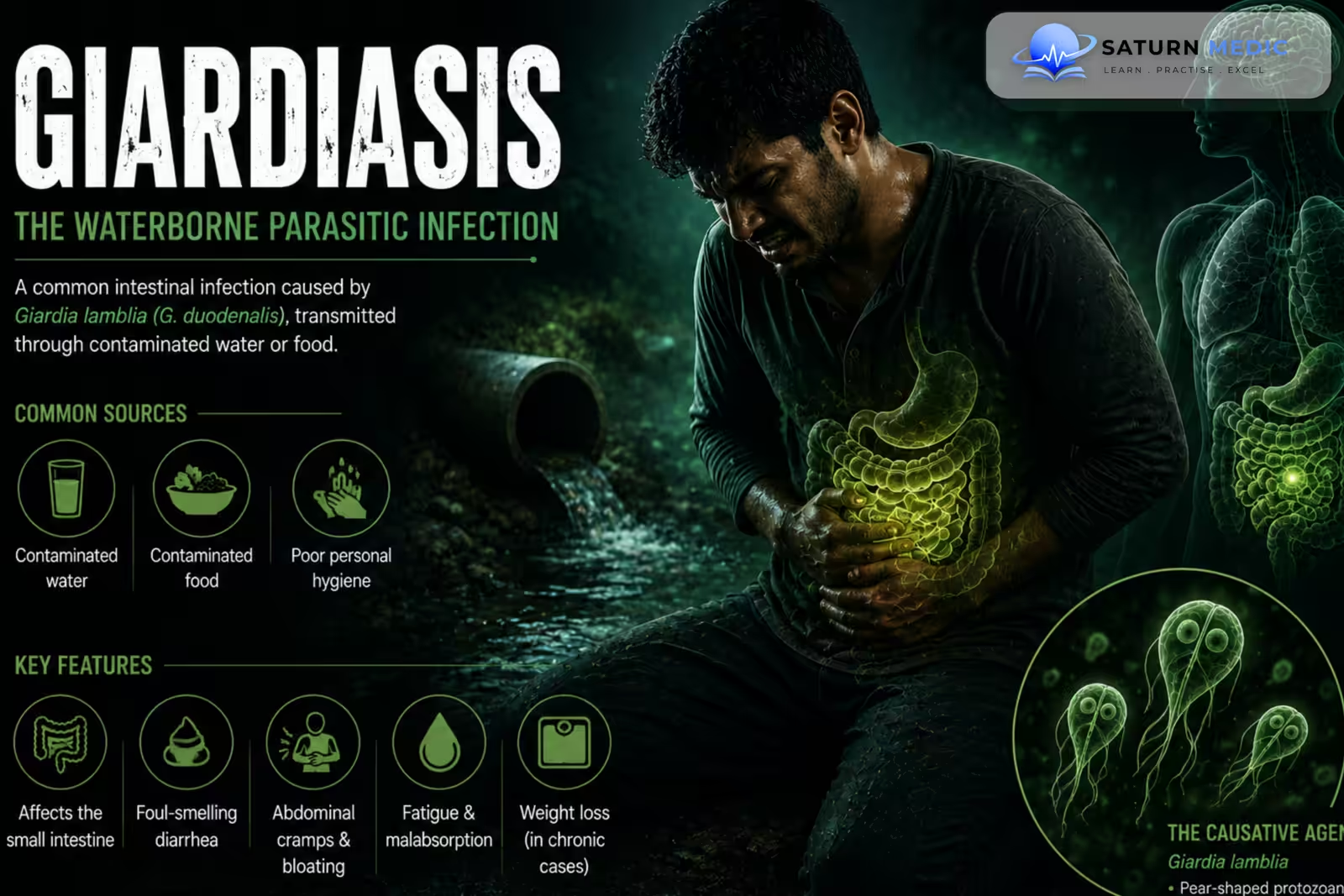
Giardiasis is an intestinal infection caused by the protozoan Giardia duodenalis (also called G. lamblia or G. intestinalis). It is acquired mainly through ingestion of infectious cysts in contaminated water, food, or through person-to-person transmission. Infection commonly causes foul-smelling watery diarrhea, abdominal cramps, bloating, and malabsorption
Also called
ICD-10
Specialty
Onset
Reviewed
-
OverviewOverview
-
Etiology & Risk FactorsEtiology & Risk Factors
-
PathophysiologyPathophysiology
-
Clinical PresentationClinical Presentation
-
History TakingHistory Taking
-
Physical ExaminationPhysical Examination
-
InvestigationsInvestigations
-
DiagnosisDiagnosis
-
ManagementManagement
-
ComplicationsComplications
-
PrognosisPrognosis
-
Key Points / Clinical PearlsKey Points / Clinical Pearls
Overview
–Giardiasis is a common intestinal parasitic infection. Many infected individuals are asymptomatic, while symptomatic disease typically causes prolonged diarrhea and gastrointestinal discomfort.
-The parasite primarily colonizes the proximal small intestine and can interfere with normal intestinal absorption, leading to malabsorption and, in prolonged cases, weight loss or nutritional deficiencies
Etiology & Risk Factors
-Etiology
–Giardia duodenalis exists mainly as:
- Cyst: environmentally resistant and infective form
- Trophozoite: motile form that colonizes the small intestine
Infection occurs after ingestion of cysts. The parasite survives passage through the stomach, excysts in the small intestine, and trophozoites attach to the intestinal mucosa.
-Risk Factors
- Drinking untreated or contaminated water
- Poor sanitation
- Close household or childcare contact
- Travel to areas with inadequate sanitation
- Oral-anal sexual exposure
Pathophysiology
Ingestion of Giardia cysts → excystation in the small intestine → trophozoite multiplication and attachment to intestinal mucosa → impaired absorption and intestinal barrier function → malabsorption of fats and nutrients → diarrhea , bloating, and weight loss
Clinical Presentation
-Symptoms:
-
- Watery or greasy diarrhea
- Foul-smelling stools
- Abdominal cramps
- Bloating
- Excessive gas
- Nausea
- Fatigue
- Weight loss
Fever and blood in the stool are uncommon.
-Signs:
-
Abdominal distension
-
Mild abdominal tenderness
-
Signs of dehydration in severe diarrhea
-
Weight loss in prolonged disease
-
Nutritional deficiencies
-
Temporary lactose intolerance
History Taking
-Ask about:
- Duration and character of diarrhea
- Greasy, floating, or foul-smelling stools
- Bloating and abdominal cramps
- Weight loss
- Untreated water exposure
- Camping or hiking
- Recent travel
- Household or childcare outbreaks
- Recent swimming in recreational water
Physical Examination
-General Examination
- Hydration status
- Weight and nutritional status
- Signs of dehydration
-System-Specific Examination:
- Abdominal distension
- Abdominal tenderness
- Bowel sounds
- Evidence of malnutrition in prolonged disease
Investigations
-Complete Blood Count
Not routinely required.
-Biochemistry / Specific Tests
-
Stool antigen testing
-
Stool nucleic acid amplification testing (NAAT) or Polymerase Chain Reaction (PCR)
-
Stool microscopy for cysts or trophozoites when appropriate
Because parasite shedding can be intermittent, multiple stool specimens may sometimes be required.
-Imaging
Not routinely required.
-Special / Confirmatory Tests
Stool antigen detection or molecular testing is generally preferred for confirming the infection.
Duodenal aspirate or biopsy is rarely required and is reserved for selected diagnostically difficult cases.
Diagnosis
-Diagnosis is based on:
Persistent diarrhea and bloating + compatible exposure history → stool antigen or molecular testing → confirmation of Giardia infection.
The diagnosis should be reconsidered when symptoms persist despite negative testing or appropriate treatment.
Related Topics
Management
Giardiasis · Management
| Clinical situation | Treatment |
|---|---|
| Symptomatic giardiasis | Tinidazole — preferred single-dose treatment; metronidazole is an alternative |
| Alternative treatment | Nitazoxanide |
| Persistent / refractory infection | Confirm diagnosis and adherence; retreat with an effective antigiardial regimen |
| Supportive care | Oral rehydration; correct fluid/electrolyte losses and nutritional deficiencies |
Complications
- Dehydration
- Malabsorption
- Weight loss
- Nutritional deficiencies
- Temporary lactose intolerance
- Chronic or recurrent diarrhea
- Post-infectious gastrointestinal symptoms
Prognosis
The prognosis of Giardiasis is generally excellent, with most patients recovering after appropriate treatment. Symptoms may persist for some time after eradication because of temporary lactose intolerance or post-infectious intestinal dysfunction.
Key Points / Clinical Pearls
- Giardiasis is caused by Giardia duodenalis.
- Transmission occurs mainly through ingestion of infectious cysts.
- Contaminated water is an important source.
- The cyst is the infective and environmentally resistant form.
- Trophozoites colonize the small intestine.
- Many infections are asymptomatic.
- Foul-smelling, greasy diarrhea is characteristic.
- Bloating and excessive gas are common.
- Fever and bloody diarrhea are uncommon.
- Stool antigen testing or PCR can confirm the infection.
- Multiple stool samples may be required in some patients.
- Rehydration is important when diarrhea causes fluid loss.
- Tinidazole, metronidazole, and nitazoxanide are common treatments.
- Temporary lactose intolerance may follow infection.
- Centers for Disease Control and Prevention (CDC). Giardia .
- Adam RD. Biology of Giardia lamblia. Clin Microbiol Rev. 2001;14(3):447-475. PubMed .
- Minetti C, Chalmers RM, Beeching NJ, Probert C, Lamden K. Giardiasis. BMJ. 2016;355:i5369. PubMed .
- National Library of Medicine (NIH). Giardiasis . StatPearls.