

Clinical Subject Page
Infectious Mononucleosis
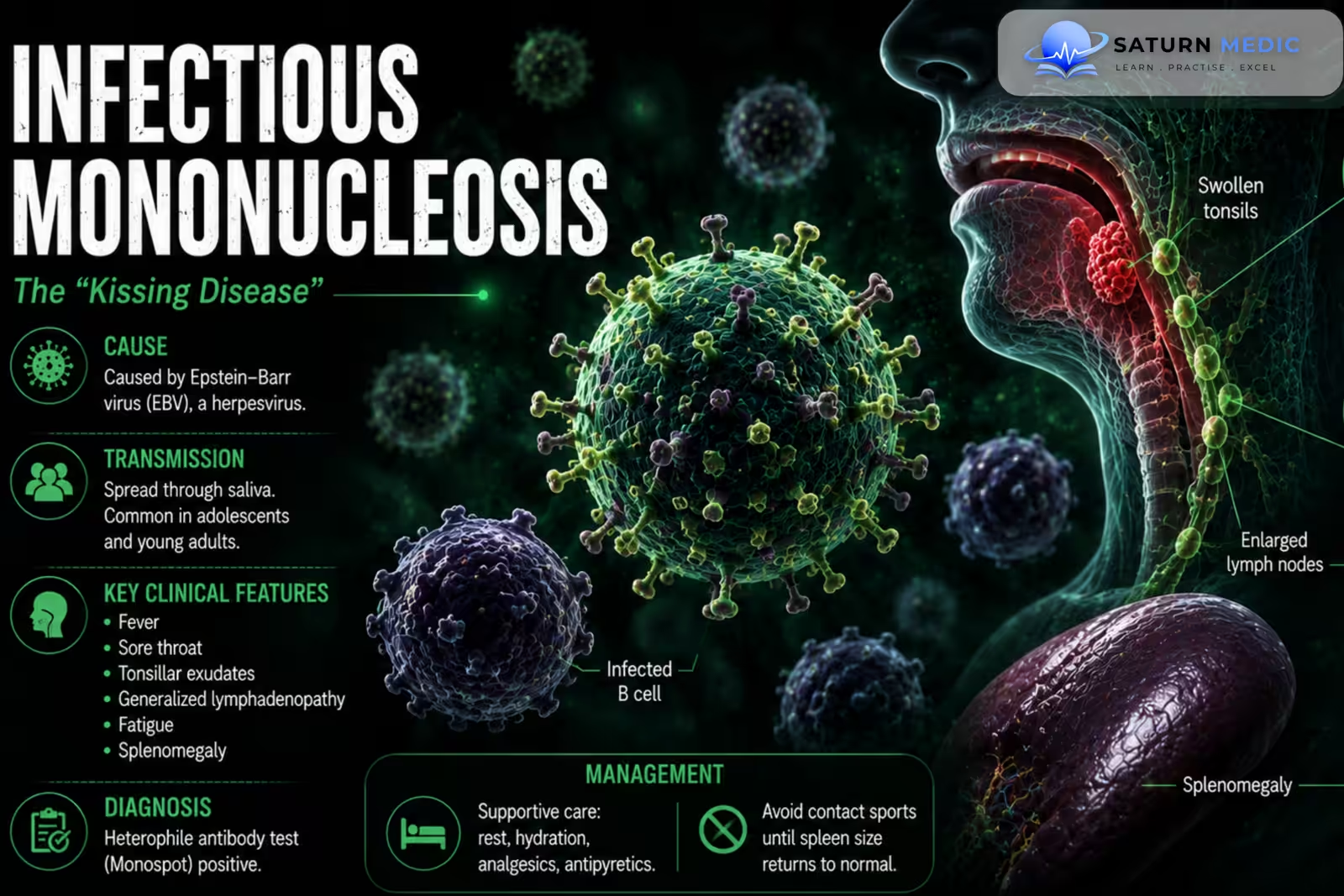
Infectious Mononucleosis is an acute viral illness most commonly caused by Epstein-Barr Virus (EBV), a member of the herpesvirus family. It occurs particularly often in adolescents and young adults and classically presents with fever, pharyngitis, cervical lymphadenopathy, and marked fatigue
Also called
ICD-10
Specialty
Onset
Reviewed
-
OverviewOverview
-
Etiology & Risk FactorsEtiology & Risk Factors
-
PathophysiologyPathophysiology
-
Clinical PresentationClinical Presentation
-
History TakingHistory Taking
-
Physical ExaminationPhysical Examination
-
InvestigationsInvestigations
-
DiagnosisDiagnosis
-
ManagementManagement
-
ComplicationsComplications
-
PrognosisPrognosis
-
Key Points / Clinical PearlsKey Points / Clinical Pearls
Overview
–Infectious Mononucleosis is usually caused by primary EBV infection. The virus infects epithelial cells and B lymphocytes and then establishes lifelong latency.
The classic clinical picture is:
Fever + pharyngitis + posterior cervical lymphadenopathy + fatigue
Other common findings include splenomegaly, atypical lymphocytosis, and mild hepatitis.
Etiology & Risk Factors
-Etiology
–Infectious Mononucleosis is most commonly caused by Epstein-Barr Virus (EBV).
Transmission occurs mainly through:
- Saliva
- Kissing
- Sharing drinks or utensils
- Close oral contact
Less commonly, transmission can occur through blood or organ transplantation.
-Risk Factors for Infectious Mononucleosis
- Adolescence or young adulthood
- Close contact with infected individuals
- Sharing drinks or utensils
- Lack of previous EBV exposure
Pathophysiology
EBV exposure → infection of oropharyngeal epithelial cells → infection of B lymphocytes → immune activation → expansion of reactive CD8+ T lymphocytes → systemic symptoms → lymphadenopathy, pharyngitis, and atypical lymphocytosis
Clinical Presentation
-Symptoms:
Infectious Mononucleosis commonly causes:
- Fever
- Severe fatigue
- Sore throat
- Difficulty swallowing
- Headache
- Malaise
- Loss of appetite
Other symptoms may include:
- Abdominal discomfort
- Nausea
- Myalgia
Most acute symptoms improve within 1–2 weeks, although fatigue and malaise may last considerably longer
-Signs:
- Posterior cervical lymphadenopathy
- Tonsillar enlargement
- Tonsillar exudates
- Palatal petechiae
- Splenomegaly
- Mild hepatomegaly
- Mild jaundice in some patients
History Taking
-Ask about:
- Fever and duration
- Sore throat
- Fatigue
- Difficulty swallowing
- Neck swelling
- Recent exposure to an infected person
- Sharing drinks or utensils
- Abdominal pain, particularly left upper quadrant pain
- Previous EBV infection
Physical Examination
-General Examination
- Temperature
- General appearance
- Hydration status
- Severity of fatigue
-System-Specific Examination:
- Inspect the throat and tonsils
- Palpate cervical lymph nodes
- Assess for splenomegaly
- Assess for hepatomegaly
- Examine for jaundice
- Look for palatal petechiae
- Assess the airway if there is severe tonsillar enlargement
Investigations
Infectious Mononucleosis · Investigations
| Investigation | Typical finding | Exam significance |
|---|---|---|
| CBC with differential | Lymphocytosis with atypical lymphocytes; neutropenia or thrombocytopenia may occur | >10% atypical lymphocytes strongly supports the diagnosis |
| Peripheral blood smear | Large atypical/reactive lymphocytes | Classic morphology of infectious mononucleosis |
| Heterophile antibody test | Usually positive during acute illness | Rapid screening test; may be false-negative early and in young children |
| EBV-specific serology | VCA IgM +, VCA IgG +, EBNA − → primary/recent infection | Best confirmatory pattern when heterophile test is negative or diagnosis is uncertain |
| Liver function tests | Elevated aminotransferases are common | Supports the diagnosis; helps assess hepatic involvement |
Diagnosis
Infectious Mononucleosis is suspected clinically from:
Fever + pharyngitis + posterior cervical lymphadenopathy + fatigue → CBC showing lymphocytosis/atypical lymphocytes → heterophile antibody or EBV-specific serology when confirmation is needed
Related Topics
Management
1. Definitive Treatment
Treatment for Infectious Mononucleosis is primarily supportive because uncomplicated EBV infection is usually self-limited.
2. Medical Treatment
-
Paracetamol or NSAIDs for pain and fever when appropriate
-
Adequate oral fluids
-
Corticosteroids only for specific severe complications
Corticosteroids may be considered for:
-
Impending upper airway obstruction
-
Severe tonsillar edema
-
Severe hemolytic anemia
-
Severe thrombocytopenia
Routine corticosteroid therapy is not recommended for uncomplicated Infectious Mononucleosis.
3. Supportive Management
-
Adequate hydration
-
Rest
-
Nutritional support
-
Avoid alcohol when liver inflammation is present
-
Avoid contact sports during the period of increased splenic rupture risk
Complications
- Splenic rupture
- Upper airway obstruction
- Hepatitis
- Hemolytic anemia
- Thrombocytopenia
- Meningoencephalitis
- Guillain-Barré syndrome
- Myocarditis
- Prolonged fatigue
Prognosis
The prognosis of Infectious Mononucleosis is generally excellent, with most patients recovering completely without specific antiviral therapy. Fever and pharyngitis usually improve within a few weeks, while fatigue may persist longer. Serious complications are uncommon.
Key Points / Clinical Pearls
- Infectious Mononucleosis is most commonly caused by EBV.
- It primarily affects adolescents and young adults.
- Transmission occurs mainly through saliva.
- The classic presentation is fever, pharyngitis, and posterior cervical lymphadenopathy.
- Marked fatigue is common.
- Splenomegaly is an important finding.
- CBC may show lymphocytosis and atypical lymphocytes.
- Heterophile antibodies can support the diagnosis.
- EBV-specific serology can confirm acute infection.
- Heterophile tests may be negative early in disease.
- Treatment is mainly supportive.
- Routine antibiotics are not indicated because the infection is viral.
- Amoxicillin or ampicillin can cause a characteristic rash in patients with EBV infection.
- Centers for Disease Control and Prevention (CDC). Epstein-Barr Virus and Infectious Mononucleosis .
- Luzuriaga K, Sullivan JL. Infectious Mononucleosis. N Engl J Med. 2010;362(21):1993-2000. New England Journal of Medicine .
- Dunmire SK, Hogquist KA, Balfour HH Jr. Infectious Mononucleosis. Curr Top Microbiol Immunol. 2015;390(Pt 1):211-240. PubMed .
- Balfour HH Jr, Dunmire SK, Hogquist KA. Infectious Mononucleosis. Clin Transl Immunology. 2015;4:e33. PubMed .