

Clinical Subject Page
Fever of Unknown Origin (FUO)
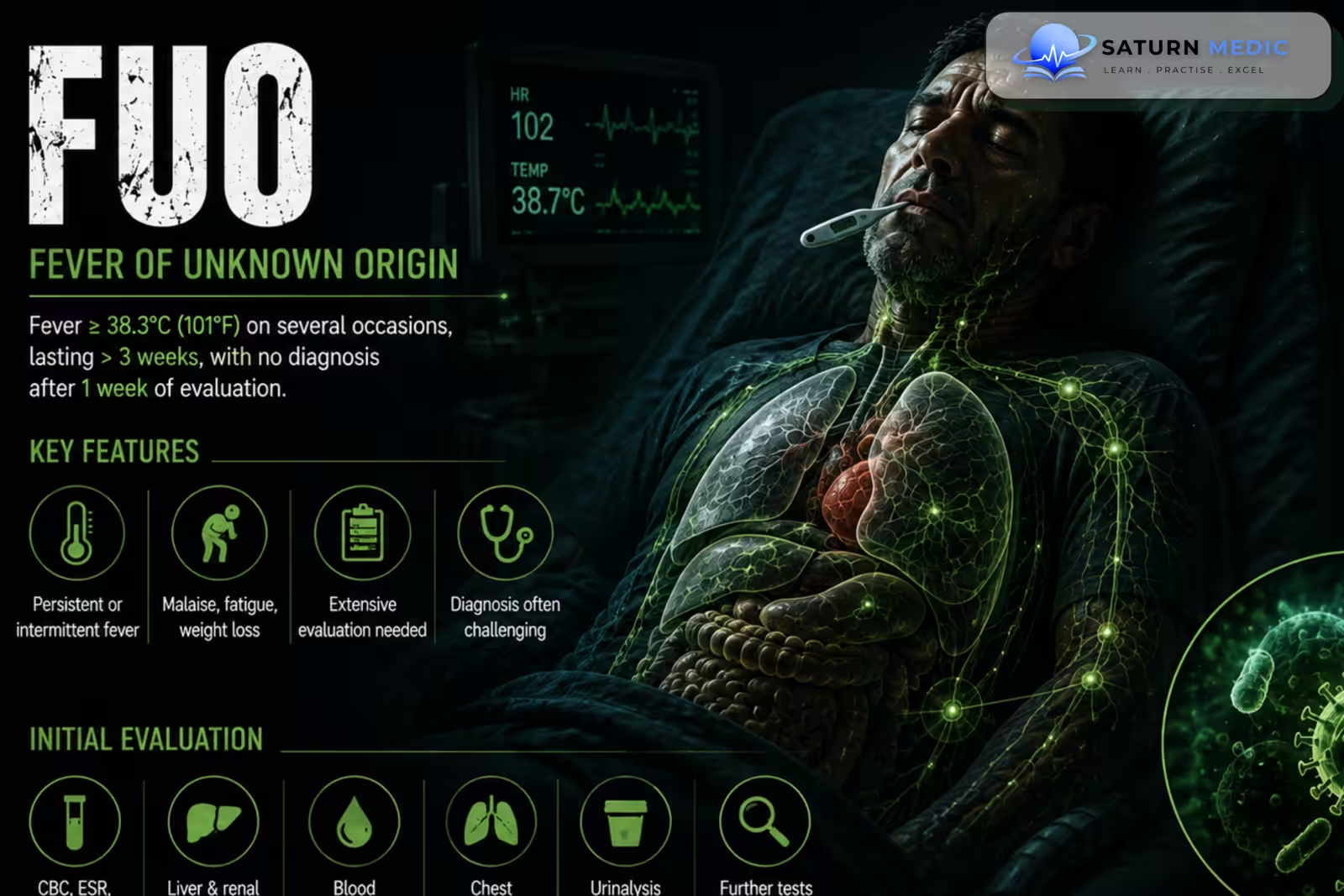
Fever of Unknown Origin (FUO) is a clinical condition characterized by persistent documented fever for which no cause is identified after an appropriate initial diagnostic evaluation. It is not a single disease but a diagnostic problem with a broad differential including infection, malignancy, inflammatory disease, and miscellaneous causes
Also called
ICD-10
Specialty
Onset
Reviewed
-
OverviewOverview
-
Etiology & Risk FactorsEtiology & Risk Factors
-
PathophysiologyPathophysiology
-
Clinical PresentationClinical Presentation
-
History TakingHistory Taking
-
Physical ExaminationPhysical Examination
-
InvestigationsInvestigations
-
DiagnosisDiagnosis
-
ManagementManagement
-
ComplicationsComplications
-
PrognosisPrognosis
-
Key Points / Clinical PearlsKey Points / Clinical Pearls
Overview
–Fever of Unknown Origin (FUO) is traditionally defined as a documented temperature of at least 38.3°C on several occasions, illness lasting more than 3 weeks, and failure to establish a diagnosis after appropriate evaluation.
-The major diagnostic categories for Fever of Unknown Origin (FUO) are:
- Infection
- Malignancy
- Non-infectious inflammatory disease
- Miscellaneous causes, including drug fever and endocrine disorders
Etiology & Risk Factors
Fever of Unknown Origin · Etiology & Risk Factors
| Category | High-yield causes | Key exam clue |
|---|---|---|
| Infections | Tuberculosis, infective endocarditis, deep abscesses, osteomyelitis | Most important category; think TB / endocarditis |
| Malignancy | Lymphoma, leukemia, renal cell carcinoma | Weight loss + night sweats + lymphadenopathy |
| Inflammatory / autoimmune | GCA/PMR, SLE, adult-onset Still disease, vasculitis | Systemic inflammatory features; elderly → GCA/PMR |
| Miscellaneous | Drug fever, thyroiditis, thromboembolic disease, factitious fever | Consider after major categories are excluded |
Pathophysiology
Underlying infection, malignancy, inflammatory disease, or another systemic disorder → cytokine release → hypothalamic temperature-set-point elevation → persistent fever → absence of an immediately identifiable cause
Clinical Presentation
-Symptoms:
-
Patients with Fever of Unknown Origin (FUO) may develop:
- Recurrent or persistent fever
- Chills or rigors
- Night sweats
- Fatigue
- Malaise
- Loss of appetite
- Unintentional weight loss
- Headache
- Myalgia or arthralgia
Additional symptoms depend on the underlying disease.
-Signs:
- Documented fever
- Lymphadenopathy
- Hepatomegaly or splenomegaly
- Cardiac murmur
- Skin rash
- Focal tenderness
- Temporal artery abnormalities in selected older patients
-Sever Disease:
Severe Fever of Unknown Origin (FUO) may be associated with:
- Severe systemic inflammation
- Hemodynamic instability
- Organ dysfunction
- Sepsis
- Progressive malignancy
History Taking
-Ask about:
- Fever pattern, duration, and maximum temperature
- Chills, rigors, night sweats, and weight loss
- Recent travel
- Animal exposure
- Sick contacts
- Tuberculosis exposure
- Dental procedures
- Recent surgery or hospitalization
- Current and recently started medications
- Sexual history when clinically relevant
- Autoimmune or inflammatory symptoms
- Headache or visual symptoms
- Joint or muscle pain
Physical Examination
-General Examination
- Temperature
- Blood pressure and heart rate
- Weight
- Hydration status
- Skin examination
- Lymph node examination
-System-Specific Examination:
- Cardiovascular examination for murmurs
- Respiratory examination
- Abdominal examination for hepatosplenomegaly
- Musculoskeletal examination
- Neurological examination when indicated
- Temporal artery examination in appropriate patients
Investigations
-Complete Blood Count
CBC is an important initial investigation in Fever of Unknown Origin (FUO) and may show:
-
Anemia
-
Leukocytosis or leukopenia
-
Neutropenia
-
Thrombocytopenia
-Peripheral Blood Film
Useful when hematological malignancy, hemolysis, or another blood disorder is suspected.
-Biochemistry / Specific Tests
Initial evaluation may include:
-
C-reactive protein (CRP) and/or erythrocyte sedimentation rate (ESR)
-
Renal and liver function tests
-
Urinalysis and urine culture
-
Multiple blood cultures when bacteremia or endocarditis is suspected
-
HIV testing when clinically appropriate
-
Tuberculosis testing when epidemiological risk or exposure is present
-
Autoimmune testing guided by clinical findings
Further testing for Fever of Unknown Origin (FUO) should be directed by the history and examination.
-Imaging
-
Chest X-ray
-
Abdominal or pelvic ultrasound when indicated
-
Computed Tomography (CT) of the chest, abdomen, or pelvis when clinically appropriate
-
Echocardiography when infective endocarditis is suspected
-Special / Confirmatory Tests
There is no single confirmatory test for Fever of Unknown Origin (FUO).
Depending on the suspected cause, further investigations may include:
-
Tissue biopsy
-
Bone marrow examination
-
Positron Emission Tomography/Computed Tomography (PET/CT)
-
Temporal artery biopsy
-
Specialized microbiological testing
Diagnosis
-The diagnosis of Fever of Unknown Origin (FUO) is made when persistent documented fever meets the accepted clinical definition and no cause is identified after an appropriate initial evaluation.
-The approach to Fever of Unknown Origin (FUO) is:
Confirm true fever → repeat detailed history and examination → basic laboratory and microbiological evaluation → targeted imaging → directed special testing or biopsy
Related Topics
Management
1. First-Line / Emergency Management
Fever of Unknown Origin (FUO) itself has no specific emergency treatment.
Urgent management is required when the patient develops:
-
Hemodynamic instability
-
Severe sepsis
-
Neutropenic fever
-
Severe immunosuppression
-
Organ dysfunction
2. Definitive Treatment
Treatment should target the underlying cause once identified.
Examples include:
-
Antimicrobial therapy for confirmed infection
-
Anti-inflammatory or immunosuppressive therapy for selected inflammatory diseases
-
Cancer-directed treatment for malignancy
3. Medical Treatment
Empirical therapy should generally be avoided in clinically stable patients because it may:
-
Mask diagnostic features
-
Reduce microbiological culture yield
-
Cause unnecessary adverse effects
Empirical treatment may be appropriate in selected unstable, neutropenic, or severely immunocompromised patients.
4. Surgical / Procedural Treatment
No routine surgical treatment.
Procedures may be required to diagnose or treat the underlying cause, such as:
-
Drainage of an occult abscess
-
Biopsy of a suspicious lesion
-
Temporal artery biopsy
-
Surgical treatment of an identified infectious source
5. Supportive Management
-
Adequate hydration
-
Nutritional support
-
Antipyretics when appropriate
-
Regular monitoring of vital signs
Complications
- Dehydration
- Electrolyte abnormalities
- Weight loss
- Malnutrition
- Sepsis
- Organ dysfunction
- Complications of underlying infection
- Complications of underlying malignancy or inflammatory disease
Prognosis
The prognosis of Fever of Unknown Origin (FUO) depends mainly on the underlying cause. Many patients eventually receive a specific diagnosis and respond to appropriate treatment, while some remain undiagnosed and improve spontaneously
Key Points / Clinical Pearls
- Fever of Unknown Origin (FUO) is a diagnostic syndrome rather than a specific disease.
- Persistent documented fever is the defining feature.
- Major causes of Fever of Unknown Origin (FUO) include infection, malignancy, and inflammatory disease.
- Tuberculosis, endocarditis, and occult abscesses are important infectious causes.
- Lymphoma and leukemia are important malignant causes.
- Drug fever and inflammatory diseases should also be considered.
- A detailed travel, exposure, and medication history is essential.
- Repeated physical examination may reveal new diagnostic clues.
- CBC, inflammatory markers, cultures, and urinalysis are important initial tests.
- Imaging should be guided by clinical findings.
- There is no single confirmatory test for Fever of Unknown Origin (FUO).
- Tissue biopsy may be required when a specific lesion is suspected.
- Stable patients generally should not receive prolonged empirical treatment
- Wright WF, Auwaerter PG. Fever and Fever of Unknown Origin: Review, Recent Advances, and Lingering Dogma. Open Forum Infect Dis. 2020;7(5):ofaa132. PubMed .
- Cunha BA. Fever of Unknown Origin: Focused Diagnostic Approach Based on Clinical Clues from History, Physical Examination, and Laboratory Tests. Infect Dis Clin North Am. 2007;21(4):867-915. PubMed .
- Bleeker-Rovers CP, Vos FJ, de Kleijn EMHA, et al. A Prospective Multicenter Study on Fever of Unknown Origin: The Yield of a Structured Diagnostic Protocol. Medicine (Baltimore). 2007;86(1):26-38. PubMed .
- National Library of Medicine (NIH). Fever of Unknown Origin . StatPearls.