

Clinical Subject Page
Cardiopulmonary Resuscitation (CPR)
ICD-10
Specialty
Onset
Reviewed
-
OverviewOverview
-
IndicationsIndications
-
Initial AssessmentInitial Assessment
-
CPR Algorithm (Step-by-Step)CPR Algorithm (Step-by-Step)
-
High-Quality CPR PrinciplesHigh-Quality CPR Principles
-
Defibrillation & Cardiac RhythmsDefibrillation & Cardiac Rhythms
-
ComplicationsComplications
-
PrognosisPrognosis
-
Key Points / Clinical PearlsKey Points / Clinical Pearls
Overview
Cardiopulmonary resuscitation (CPR) is an emergency life-saving procedure that combines high-quality chest compressions with ventilation to maintain blood circulation and oxygen delivery to vital organs during cardiac arrest until return of spontaneous circulation (ROSC) or advanced care is available.
Indications For Cardiopulmonary Resuscitation (CPR)
- Unresponsive patient
- No normal breathing (or only gasping)
- No definite pulse within 10 seconds
- Witnessed or suspected cardiac arrest
Common Causes of Cardiac Arrest
- Ventricular fibrillation (VF)
- Pulseless ventricular tachycardia (pVT)
- Pulseless electrical activity (PEA)
- Asystole
- Acute myocardial infarction
- Severe hypoxia
- Massive pulmonary embolism
Initial Assessment
Step 1: Ensure Scene Safety
Ensure the environment is safe before approaching the patient.
Step 2: Check Responsiveness
Tap the patient’s shoulders and shout loudly:
“Are you okay?”
Step 3: Call for Help
Activate the Emergency Medical Services (EMS) by calling your local emergency number (e.g., 911, 999, 112).
Ask someone to bring an Automated External Defibrillator (AED) if one is available.
Step 4: Check Breathing & Pulse
Assess breathing and check for a pulse simultaneously for no more than 10 seconds.
If the patient has no pulse and is not breathing normally (or is only gasping), begin CPR immediately.
Step 5: Begin CPR
Start high-quality chest compressions immediately while waiting for the Emergency Medical Services (EMS) and the Automated External Defibrillator (AED) to arrive.
Cardiopulmonary Resuscitation (CPR) Algorithm (Step-by-Step)
Adult Cardiopulmonary Resuscitation (CPR)
- Ensure scene safety.
- Check responsiveness.
- Activate EMS & obtain AED.
- Check breathing and pulse (≤10 sec).
- Start chest compressions.
- Open the airway.
- Give rescue breaths.
- Attach AED/defibrillator.
- Analyze rhythm.
- Deliver shock if indicated.
- Resume CPR immediately for 2 minutes.
- Repeat rhythm checks until ROSC or resuscitation is terminated.
Compression : Ventilation Ratio
- 30 : 2 → One rescuer (adult)
- 30 : 2 → Two rescuers (adult)
- 15 : 2 → Two rescuers (infants & children)
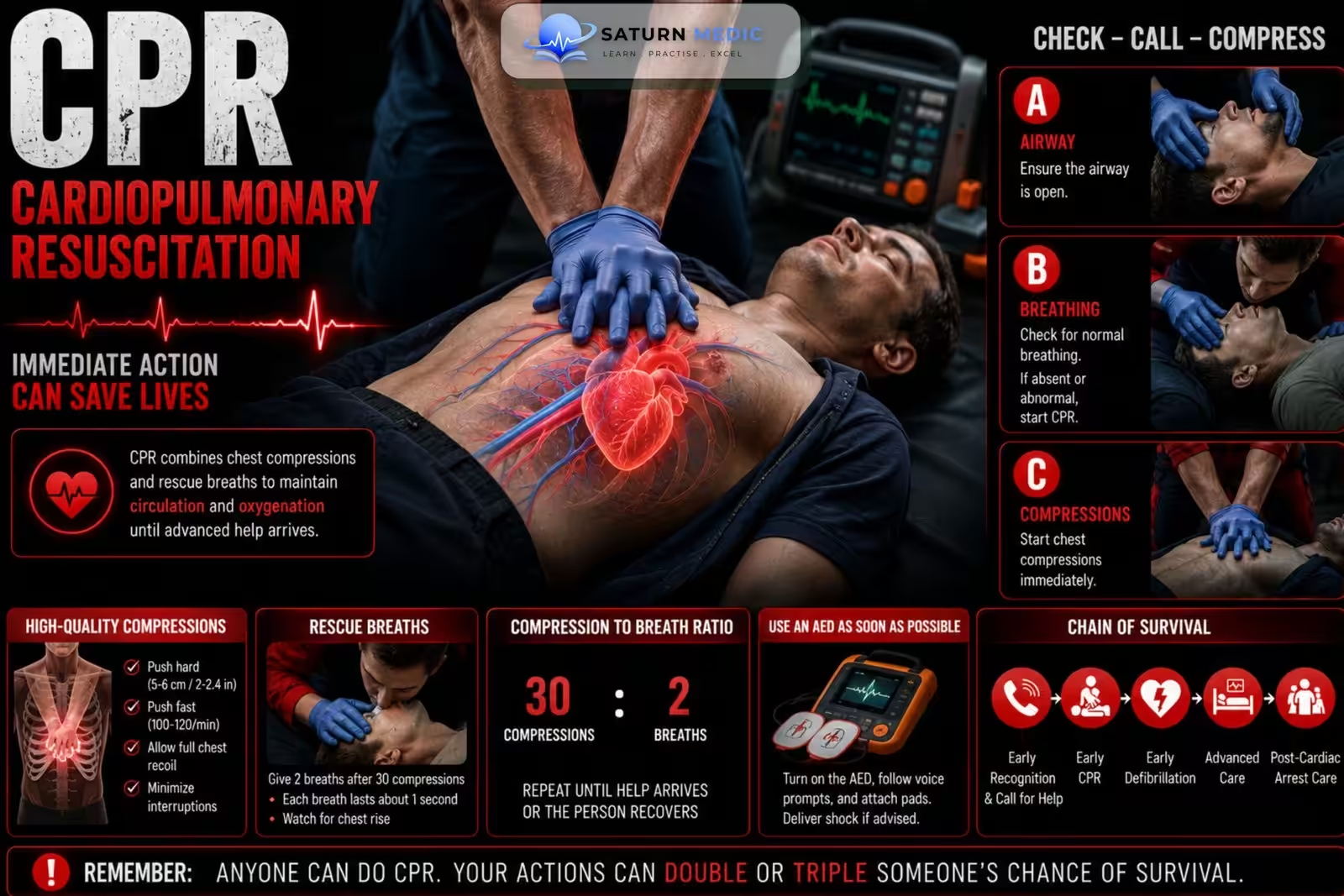
High-Quality CPR Principles
Chest Compressions
Rate: 100–120/min
Depth: 5–6 cm (2–2.4 inches)
Allow complete chest recoil
Minimize interruptions (<10 sec)
Change compressor every 2 minutes
Ventilation
2 breaths after every 30 compressions
Each breath over 1 second
Visible chest rise
Avoid excessive ventilation
Defibrillation & Cardiac Rhythms
Stents
Drug-eluting stent (DES) (preferred)
Bare-metal stent (BMS) (rarely used)
Other Devices
Balloon catheter
Guidewire
Guiding catheter
Intravascular ultrasound (IVUS)
Optical coherence tomography (OCT)
Rotational atherectomy
Intravascular lithotripsy (selected calcified lesions)
Complications
- Rib fractures
- Sternal fracture
- Pneumothorax
- Internal organ injury (rare)
- Gastric inflation and aspiration
- Hypoxic brain injury
- Death if ROSC is not achieved
Prognosis
- Best when Cardiopulmonary Resuscitation (CPR) is started immediately.
- Early defibrillation greatly improves survival.
- Prognosis depends on the cause of cardiac arrest and time to ROSC.
- Delayed CPR is associated with poor neurological outcomes and increased mortality.
Key Points / Clinical Pearls
- CPR = Cardiopulmonary Resuscitation, used when a person is unresponsive and not breathing normally.
- Ensure scene safety before approaching.
- Check responsiveness and shout for help.
- Activate the emergency response system and get an AED/defibrillator immediately.
- Check for normal breathing and a pulse simultaneously in a healthcare setting; pulse assessment should take no more than 10 seconds.
- If there is no normal breathing/no pulse → start CPR immediately.
- Adult CPR: 30 chest compressions : 2 breaths.
- Compression rate: 100–120/minute.
- Compression depth: 5–6 cm (2–2.4 inches) in adults; avoid excessive depth >6 cm.
- Allow full chest recoil after every compression and minimize interruptions.
- Place hands in the center of the chest, on the lower half of the sternum.
- Use the AED as soon as it arrives and follow its prompts.
- If the AED advises a shock: deliver 1 shock → immediately resume CPR for 2 minutes until the AED prompts another rhythm check.
- If the rhythm is non-shockable: immediately resume CPR for 2 minutes and continue reassessment.
- Goyal A, Singh B, Patel PH. National Center for Biotechnology Information (NIH). Cardiopulmonary Resuscitation, StatPearls.
- Panchal AR, Bartos JA, Cabañas JG, et al. Part 3: Adult Basic and Advanced Life Support: 2020 American Heart Association Guidelines for CPR and Emergency Cardiovascular Care. Circulation. 2020;142:S366-S468. doi: 10.1161/CIR.0000000000000916.
- National Center for Biotechnology Information (NIH). Advanced Cardiac Life Support (ACLS), StatPearls.
- Cummins RO. Emergency Medical Services and Sudden Cardiac Arrest: The "Chain of Survival" Concept. Annu Rev Public Health. 1993;14:313-333. PMID: 8323592.
- MedlinePlus, National Library of Medicine (NIH). CPR: Health Topic.