

Clinical Subject Page
Coronary Artery Bypass Grafting (CABG)
Also called
ICD-10
Specialty
Onset
Reviewed
-
OverviewOverview
-
IndicationsIndications
-
ContraindicationsContraindications
-
Pre-Procedure AssessmentPre-Procedure Assessment
-
CABG Procedure (Step-by-Step)CABG Procedure (Step-by-Step)
-
Types of Stents & DevicesTypes of Stents & Devices
-
Postoperative CarePostoperative Care
-
ComplicationsComplications
-
PrognosisPrognosis
-
Key Points / Clinical PearlsKey Points / Clinical Pearls
Overview
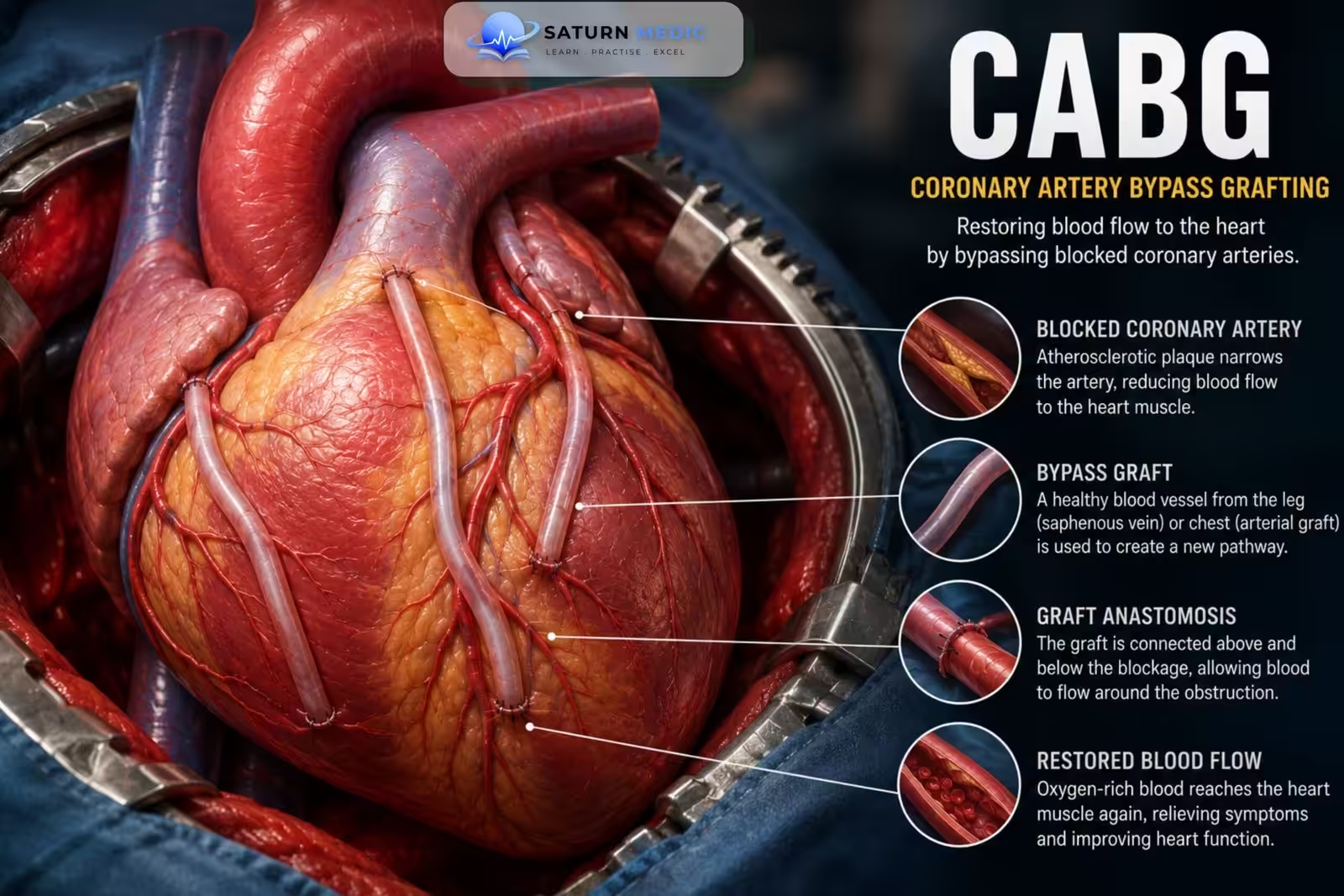
(CABG) is an open-heart surgical procedure that restores blood flow to ischemic myocardium by bypassing obstructed coronary arteries using arterial or venous grafts.
Indications
- Left main coronary artery disease
- Complex multivessel coronary artery disease
- Triple-vessel disease
- Diabetes mellitus with multivessel CAD
- Failed or unsuitable PCI
- Persistent angina despite optimal medical therapy
- Mechanical complications of MI requiring surgery
Contraindications
-Absolute
- No absolute contraindication when CABG is lifesaving
-Relative
- Severe frailty
- End-stage non-cardiac illness
- Diffuse coronary disease not amenable to grafting
- Severe irreversible neurological injury
- Very poor surgical candidate
Pre-Procedure Assessment
-
- General anesthesia
- Median sternotomy
- Harvest grafts (LIMA, radial artery, or saphenous vein)
- Cardiopulmonary bypass (or off-pump CABG)
- Distal coronary artery anastomosis
- Proximal graft anastomosis to the aorta (if required)
- Restore coronary blood flow
- Hemostasis and chest closure
CABG Procedure (Step-by-Step)
1. Preoperative Preparation
Confirm coronary artery disease with coronary angiography.
Review blood tests, ECG, echocardiography, and other investigations.
Obtain informed consent.
Stop or adjust selected medications as directed.
Establish intravenous access and monitoring.
2. General Anesthesia
The patient receives general anesthesia.
An endotracheal tube is inserted.
Mechanical ventilation and continuous cardiovascular monitoring begin.
3. Surgical Access
The surgeon usually makes a midline chest incision.
The sternum is divided through a median sternotomy to expose the heart.
Some selected procedures may use smaller minimally invasive incisions.
4. Graft Vessel Harvesting
A healthy blood vessel is taken or prepared to bypass the blocked coronary artery.
Common grafts include:
Internal mammary artery, usually the left internal mammary artery
Great saphenous vein from the leg
Radial artery from the arm
The internal mammary artery often remains attached to its original blood supply at one end.
5. Anticoagulation
Heparin is administered to prevent blood clotting during surgery.
6. Cardiopulmonary Bypass
In conventional on-pump CABG:
Cannulas are inserted into the heart or major vessels.
The patient is connected to a heart–lung bypass machine.
The machine oxygenates and circulates the blood while the surgeon operates.
CABG may also be performed off-pump, while the heart continues beating.
7. Temporary Cardiac Arrest
In on-pump CABG:
The aorta is cross-clamped.
Cardioplegia solution is administered.
The heart temporarily stops and is protected during graft placement.
8. Graft Anastomosis
The graft is connected so blood can flow around the coronary blockage.
The distal end is attached to the coronary artery beyond the obstruction.
For a free graft, the proximal end is commonly attached to the aorta.
An internal mammary artery graft usually remains attached proximally and is connected distally to the coronary artery.
This creates a new route for oxygenated blood to reach the myocardium.
9. Restore Heart Function
The aortic clamp is removed.
Blood flow returns to the heart.
The heart may restart spontaneously or require electrical stimulation.
The surgeon checks graft flow and cardiac function.
10. Weaning From Bypass
The heart gradually resumes pumping the circulation.
The patient is separated from the heart–lung machine.
Heparin is reversed, usually with protamine.
Types of Stents & Devices
Arterial Grafts
Left Internal Mammary Artery (LIMA) (gold standard)
Right Internal Mammary Artery (RIMA)
Radial artery
Venous Grafts
Great saphenous vein
Surgical Techniques
On-pump CABG
Off-pump CABG (OPCAB)
Postoperative Care
-
- ICU monitoring
- Continuous ECG monitoring
- Pain control
- Early extubation
- Early mobilization
- Aspirin therapy
- High-intensity statin
- Cardiac rehabilitation
- Wound care and infection prevention
Complications
-
- Bleeding
- Surgical site infection
- Atrial fibrillation (most common)
- Stroke
- Myocardial infarction
- Graft occlusion
- Acute kidney injury
- Mediastinitis
- Death
Prognosis
- Excellent long-term symptom relief.
- Improves survival in selected high-risk patients.
- LIMA-to-LAD graft has excellent long-term patency.
- Long-term success depends on secondary prevention and graft patency.
Key Points / Clinical Pearls
-
- CABG is preferred for left main disease and complex multivessel CAD.
- LIMA to the LAD is the gold-standard graft because of its excellent long-term patency.
- CABG provides more durable revascularization than PCI in many complex coronary lesions.
- Secondary prevention (aspirin, statins, BP control, smoking cessation, and cardiac rehabilitation) is essential after surgery.
- Postoperative atrial fibrillation is the most common complication.
- National Center for Biotechnology Information (NIH). Coronary Artery Bypass Graft, StatPearls.
- Lawton JS, Tamis-Holland JE, Bangalore S, et al. 2021 ACC/AHA/SCAI Guideline for Coronary Artery Revascularization. Circulation. 2022;145:e18-e114. doi: 10.1161/CIR.0000000000001038.
- National Center for Biotechnology Information (NIH). Saphenous Vein Grafts, StatPearls.
- National Center for Biotechnology Information (NIH). Radial Artery Coronary Bypass, StatPearls.
- MedlinePlus, National Library of Medicine (NIH). Heart Bypass Surgery: Medical Encyclopedia.