

Clinical Subject Page
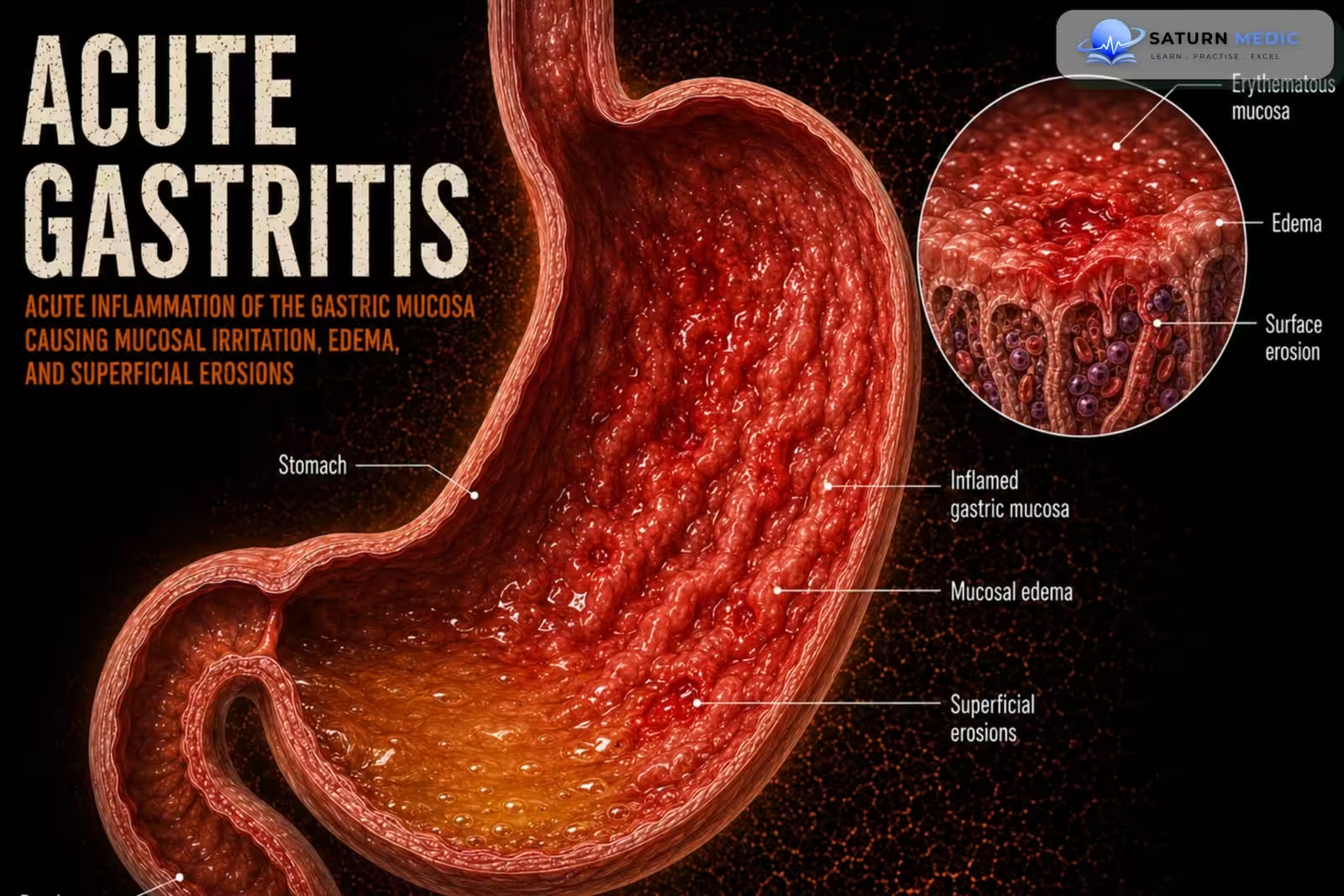
Acute gastritis is an acute inflammation of the gastric mucosa, characterized histologically by a
predominantly neutrophilic infiltrate. It is often used clinically to describe self-limiting symptoms of
suspected gastritis
Also called
ICD-10
Specialty
Onset
Reviewed
-
OverviewOverview
-
Etiology & Risk FactorsEtiology & Risk Factors
-
PathophysiologyPathophysiology
-
Clinical PresentationClinical Presentation
-
History TakingHistory Taking
-
Physical ExaminationPhysical Examination
-
InvestigationsInvestigations
-
DiagnosisDiagnosis
-
ManagementManagement
-
ComplicationsComplications
-
PrognosisPrognosis
-
Key Points / Clinical PearlsKey Points / Clinical Pearls
Overview
Acute gastritis is an inflammatory condition of the stomach lining that may be erosive or nonerosive.
Erosive gastritis consists of multiple superficial erosions that do not extend beyond the muscularis
mucosae and may cause upper gastrointestinal bleeding. Common causes include alcohol,
NSAIDs, aspirin, bile reflux, and severe physiologic stress.
Etiology & Risk Factors
Etiology
Acute gastritis is an acute inflammation or erosion of the gastric mucosa caused by disruption of the stomach’s protective mucosal barrier. This allows gastric acid and digestive enzymes to injure the gastric lining. The most common causes include nonsteroidal anti-inflammatory drugs (NSAIDs), excessive alcohol consumption, Helicobacter pylori infection, severe physiological stress (e.g., burns, sepsis, major trauma), and certain medications. Less common causes include bile reflux, radiation, corrosive ingestion, and viral, bacterial, or fungal infections in immunocompromised patients.
Risk Factors
-
NSAID or aspirin use
-
Excessive alcohol consumption
-
Helicobacter pylori infection
-
Smoking
-
Severe illness (e.g., sepsis, burns, trauma, major surgery)
-
Critical illness requiring ICU admission
-
Corticosteroid use (especially with NSAIDs)
-
Advanced age
-
Chronic kidney disease
-
Liver disease
-
Anticoagulant therapy
-
Physiological stress
Pathophysiology
1. Injury to the gastric mucosa by irritants or severe physiologic stress.
2. Acute inflammatory response with predominantly neutrophilic infiltration.
3. Mucosal inflammation develops.
4. In erosive gastritis, multiple superficial erosions form without extending beyond the muscularis
mucosae.
5. Persistent injury may progress to peptic ulcer disease.
Clinical Presentation
Symptoms may include:
• Epigastric pain
• Dyspepsia
• Symptoms are often self-limiting
In erosive gastritis:
• Upper gastrointestinal bleeding may occur.
History Taking
-
Ask about:
• Epigastric pain
• Dyspepsia
• Recent NSAID or aspirin use
• Alcohol consumption
• History of bile reflux
• Recent critical illness (sepsis, shock)
• Symptoms of upper GI bleeding (hematemesis or melena)
Physical Examination
Assess for:
• Epigastric tenderness
• Signs of upper gastrointestinal bleeding
• Hemodynamic instability if significant bleeding is suspected
Investigations
Initial Laboratory Tests
-
Complete blood count (CBC)
-
Electrolytes and renal function tests
-
Liver function tests (LFTs)
-
Serum amylase/lipase (if pancreatitis is suspected)
-
Stool occult blood test (if gastrointestinal bleeding is suspected)
Helicobacter pylori Testing
-
Urea breath test
-
Stool H. pylori antigen test
-
Rapid urease test (during endoscopy)
-
Gastric biopsy for histology (when endoscopy is performed)
Upper Gastrointestinal Endoscopy (EGD)
Indicated for patients with:
-
Alarm symptoms
-
Gastrointestinal bleeding
-
Persistent or severe symptoms
-
Failure of empirical therapy
May demonstrate:
-
Mucosal erythema
-
Edema
-
Erosions
-
Hemorrhagic gastritis
-
Superficial ulcers
Biopsy may be taken to detect H. pylori, malignancy, or other causes of gastritis.
Additional Investigations
-
CT abdomen if another intra-abdominal pathology is suspected
-
Coagulation profile in patients with active gastrointestinal bleeding
Diagnosis
-Diagnosis is established by:
• Typical clinical presentation
• Confirmation with abdominal ultrasound
Related Topics
Management
1. Remove the Underlying Cause
-
Discontinue NSAIDs if possible
-
Avoid alcohol
-
Stop smoking
-
Treat underlying illness or physiological stress
-
Discontinue other offending medications when appropriate
2. Acid Suppression Therapy
Proton Pump Inhibitors (First-Line)
-
Omeprazole
-
Pantoprazole
-
Esomeprazole
-
Lansoprazole
H2-Receptor Antagonists
-
Famotidine
-
Consider if PPIs are contraindicated or unavailable
3. Treat Helicobacter pylori (If Present)
-
Administer an appropriate H. pylori eradication regimen according to local antibiotic resistance patterns (e.g., bismuth quadruple therapy or concomitant therapy).
4. Supportive Care
-
Adequate hydration
-
Antiemetics for nausea and vomiting
-
Blood transfusion if significant gastrointestinal bleeding occurs
-
Stress ulcer prophylaxis for high-risk critically ill patients
5. Follow-Up
-
-
Reassess symptom resolution
-
Confirm H. pylori eradication when treated
-
Repeat endoscopy if symptoms persist, recur, or if gastric ulcer or malignancy is suspected
-
Educate patients on avoiding recurrent risk factors
-
Complications
• Upper gastrointestinal bleeding
• Progression to peptic ulcer disease
Prognosis
- Acute gastritis is often self-limiting, especially after removal of the offending factor.
- Prognosis is generally good, although erosive gastritis can lead to significant bleeding in some patients.
Key Points / Clinical Pearls
• Acute gastritis is an acute inflammation of the gastric mucosa with a neutrophilic infiltrate.
• Erosive gastritis causes superficial mucosal erosions that do not extend beyond the muscularis mucosae.
• Common causes include alcohol, NSAIDs, aspirin, bile reflux, and severe physiologic stress.
• Stress-induced gastritis occurs in critically ill patients.
• Epigastric pain and dyspepsia are common symptoms.
• Erosive gastritis may present with upper GI bleeding.
• Persistent mucosal injury may progress to peptic ulcer disease.
• Most cases improve after removal of the underlying cause.
- Azer SA, Awosika AO, Akhondi H. National Center for Biotechnology Information (NIH). Gastritis, StatPearls.
- Chey WD, Howden CW, Moss SF, et al. ACG Clinical Guideline: Treatment of Helicobacter pylori Infection. Am J Gastroenterol. 2024;119:1730-1753. DOI: 10.14309/ajg.0000000000002968.
- Parikh NS, Ahlawat R. National Center for Biotechnology Information (NIH). Helicobacter Pylori, StatPearls.
- MedlinePlus, National Library of Medicine (NIH). Gastritis: Medical Encyclopedia.
- Raza M, Bhatt H. National Center for Biotechnology Information (NIH). Atrophic Gastritis, StatPearls.