

Clinical Subject Page
Acute Pancreatitis
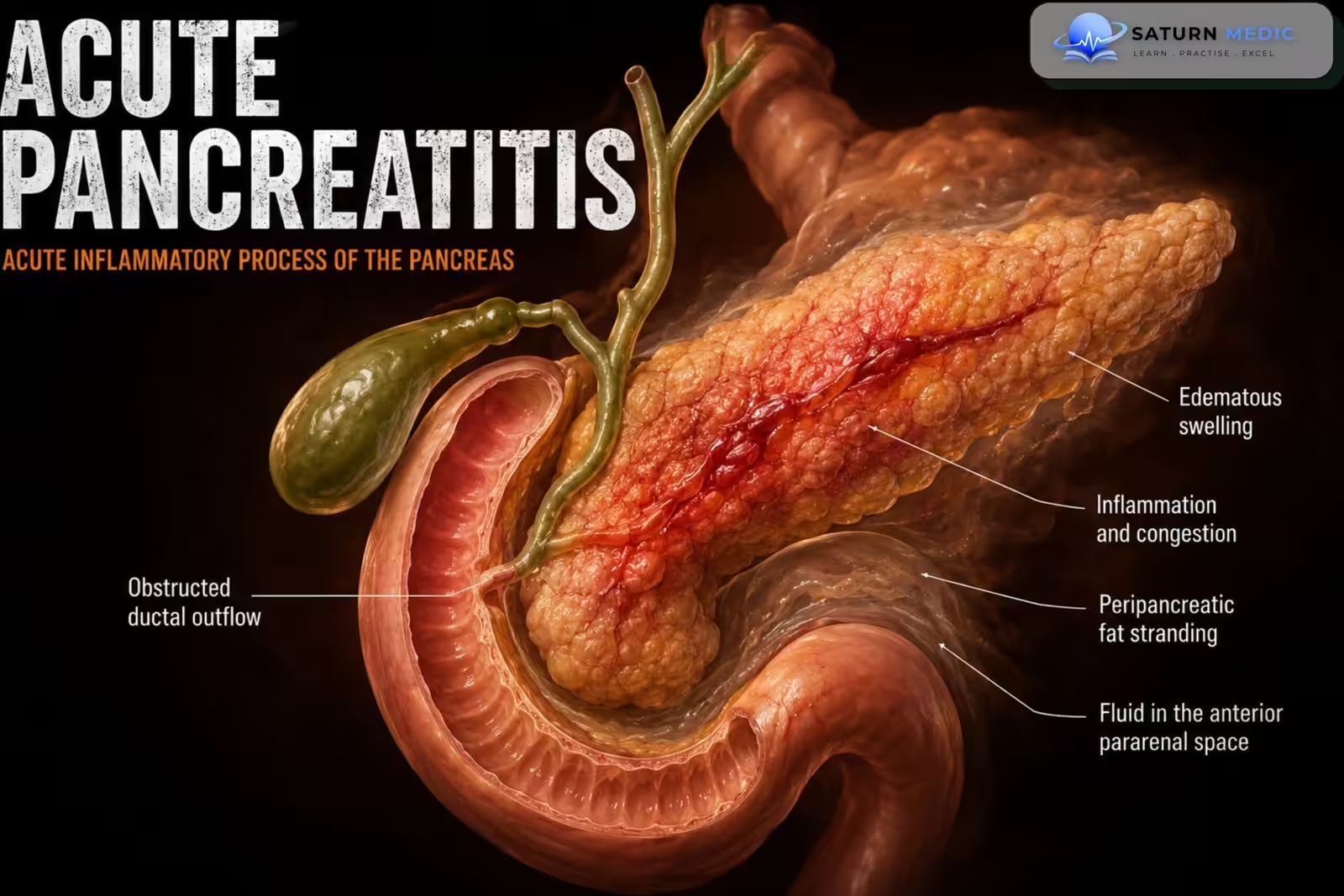
Acute pancreatitis is a sudden inflammation of the pancreas. It most commonly occurs because of gallstones or alcohol use in adults. It can range from a mild, self-limiting illness to a severe, life-threatening condition.
ICD-10
Specialty
Onset
Reviewed
-
OverviewOverview
-
Etiology & Risk FactorsEtiology & Risk Factors
-
PathophysiologyPathophysiology
-
Clinical PresentationClinical Presentation
-
History TakingHistory Taking
-
Physical ExaminationPhysical Examination
-
InvestigationsInvestigations
-
DiagnosisDiagnosis
-
ManagementManagement
-
ComplicationsComplications
-
PrognosisPrognosis
-
Key Points / Clinical PearlsKey Points / Clinical Pearls
Overview
Main symptoms:
- Sudden, severe pain in the upper abdomen (epigastric pain) that may radiate to the back
- Nausea and vomiting
- Tenderness in the upper abdomen
Diagnosis:
- Typical abdominal pain
- Elevated lipase or amylase (≥ 3 times the upper limit of normal)
- Characteristic findings on imaging (e.g., ultrasound or CT scan)
- Diagnosis is made when at least 2 of these 3 criteria are pres
Etiology & Risk Factors
– I GET SMASHED mnemonic
- I – Idiopathic
- G – Gallstones
- E – Ethanol (alcohol)
- T – Trauma
- S – Steroids
- M – Mumps
- A – Autoimmune
- S – Scorpion venom
- H – Hypercalcemia / Hypertriglyceridemia
- E – ERCP
- D – Drugs
Pathophysiology
Gallstones / Alcohol / Drugs / Trauma → Pancreatic duct obstruction or acinar cell injury → Premature activation of trypsin → Activation of other pancreatic enzymes → Autodigestion of the pancreas → Inflammation and edema → Pancreatic necrosis (if severe) → Systemic inflammatory response (SIRS) → Capillary leak & fluid loss → Shock / Multiorgan failure (severe cases)
Clinical Presentation
Symptoms
- Severe, constant epigastric pain
- Radiates to the back
- Worse after meals and when lying flat
- Relieved by leaning forward
- Nausea and vomiting
- Fever
- Chest pain or shortness of breath (if pulmonary complications occur)
Signs
- Epigastric tenderness
- Abdominal distension and guarding
- Reduced bowel sounds (ileus)
- Tachycardia and hypotension (may indicate shock)
- Jaundice (especially with biliary pancreatitis)
- Cullen sign (bluish discoloration around the umbilicus) – rare
- Grey Turner sign (flank bruising) – rare
- Signs of pleural effusion or ARDS in severe cases
History Taking
Ask about:
- Where is your abdominal pain?
- When did the pain start?
- Did the pain begin suddenly?
- Does the pain spread to your back?
- How severe is the pain (0–10)?
- Is the pain worse after eating?
- Do you have nausea or vomiting?
- Have you had a fever or chills?
- Have you noticed yellowing of your eyes or skin (jaundice)?
- Have you had similar episodes before?
- Do you have gallstones or gallbladder disease?
- Do you drink alcohol? How much and how often?
- Have you started any new medications recently?
- Do you have high triglycerides or high calcium levels?
- Have you recently had an ERCP procedure or abdominal injury?
Physical Examination
- Epigastric tenderness
- Abdominal distension and guarding
- Reduced bowel sounds (ileus)
- Tachycardia and hypotension (may indicate shock)
- Jaundice (especially with biliary pancreatitis)
- Cullen sign (bluish discoloration around the umbilicus) – rare
- Grey Turner sign (flank bruising) – rare
- Signs of pleural effusion or ARDS in severe cases
Investigations
Laboratory Tests
- Serum lipase (preferred) or amylase ↑ (≥ 3× ULN)
- Complete blood count (CBC)
- Electrolytes, urea, creatinine (BMP)
- Liver function tests (ALT, AST, ALP, bilirubin)
- Blood glucose
- Serum calcium
- Serum triglycerides
- C-reactive protein (CRP)
- Arterial blood gas (ABG) if severe
Imaging
- Abdominal ultrasound (first-line; look for gallstones)
- Contrast-enhanced CT abdomen (if diagnosis is uncertain, severe disease, or no improvement after 48–72 hours)
- MRI/MRCP (if biliary obstruction is suspected and CT is unsuitable)
Lipase is more sensitive and specific than amylase, and abdominal ultrasound should be performed in all patients to identify gallstones.
Diagnosis
-Diagnosis is confirmed if at least 2 of the following 3 criteria are present:
- Typical abdominal pain
Sudden, severe epigastric pain radiating to the back
- Elevated pancreatic enzymes
Serum lipase (preferred) or amylase ≥ 3× the upper limit of normal (ULN)
- Characteristic imaging findings
Abdominal ultrasound
Contrast-enhanced CT abdomen (or other cross-sectional imaging)
Related Topics
Management
-ABCDE approach and admit to hospital
- IV fluids (Lactated Ringer’s preferred)
- Pain control (NSAIDs or opioids)
- Antiemetics for nausea/vomiting
- Correct electrolyte abnormalities
- Early oral feeding with a low-fat diet as tolerated; use enteral feeding if unable to eat
- Treat the underlying cause
- Gallstones → ERCP if cholangitis or persistent bile duct obstruction; cholecystectomy for biliary pancreatitis
- Alcohol → alcohol cessation and vitamin supplementation
- Hypertriglyceridemia → lower triglycerides
- Avoid prophylactic antibiotics (use only if infected necrosis is present)
- ICU care for severe pancreatitis or organ failure
- Early IV fluid resuscitation, adequate pain control, and early enteral nutrition are the cornerstones of acute pancreatitis management.
Complications
Local Complications
- Pancreatic necrosis
- Infected pancreatic necrosis
- Pancreatic pseudocyst
- Walled-off necrosis
- Pancreatic hemorrhage
Systemic Complications
- Shock
- Sepsis
- ARDS (acute respiratory distress syndrome)
- Acute kidney injury (AKI)
- DIC (disseminated intravascular coagulation)
- Pleural effusion
- Hypocalcemia
- Paralytic ileus
- Multiorgan failure
- The most serious complications are infected pancreatic necrosis, ARDS, shock, sepsis, and multiorgan failure
Prognosis
- Most patients recover completely with early supportive treatment.
- Mild acute pancreatitis: Excellent prognosis; mortality < 1%.
- Severe acute pancreatitis (persistent organ failure): Higher risk of complications; mortality ≈ 30%.
- Early deaths are usually due to multiorgan failure.
- Late deaths are usually due to sepsis (e.g., infected pancreatic necrosis or abscess).
- Persistent organ failure (> 48 hours) is the strongest indicator of poor prognosis.
Key Points / Clinical Pearls
- Acute pancreatitis = sudden inflammation of the pancreas.
- Most common causes: Gallstones and alcohol.
- Classic symptom: Severe epigastric pain radiating to the back with nausea and vomiting.
- Diagnosis: 2 of 3 criteria
- Typical abdominal pain
- Lipase (preferred) or amylase ≥ 3× ULN
- Characteristic imaging findings
- First-line imaging: Abdominal ultrasound (to look for gallstones).
- Main treatment: IV fluids, pain relief, antiemetics, and early enteral/oral feeding as tolerated.
- Treat the cause: ERCP/cholecystectomy for biliary pancreatitis when indicated; alcohol cessation if alcohol-related.
- Do not use prophylactic antibiotics unless infected pancreatic necrosis is present.
- Major complications: Pancreatic necrosis, pseudocyst, ARDS, shock, sepsis, and multiorgan failure.
- Most patients recover completely, but persistent organ failure (>48 hours) indicates severe disease and a poorer prognosis.
- National Center for Biotechnology Information (NIH). Acute Pancreatitis, StatPearls.
- Banks PA, Bollen TL, Dervenis C, et al; Acute Pancreatitis Classification Working Group. Classification of Acute Pancreatitis - 2012: Revision of the Atlanta Classification and Definitions by International Consensus. Gut. 2013;62:102-111.
- Tenner S, Baillie J, DeWitt J, Vege SS; American College of Gastroenterology. American College of Gastroenterology Guideline: Management of Acute Pancreatitis. Am J Gastroenterol. 2013;108:1400-1415. ACG Guideline Summary.
- Diagnostic Accuracy of Neutrophil-Creatinine Index for Predicting Severe Acute Pancreatitis Using the Revised Atlanta Classification As Gold Standard. PMC12682258.
- MedlinePlus, National Library of Medicine (NIH). Acute Pancreatitis: Medical Encyclopedia.