

Clinical Subject Page
Ascending Cholangitis
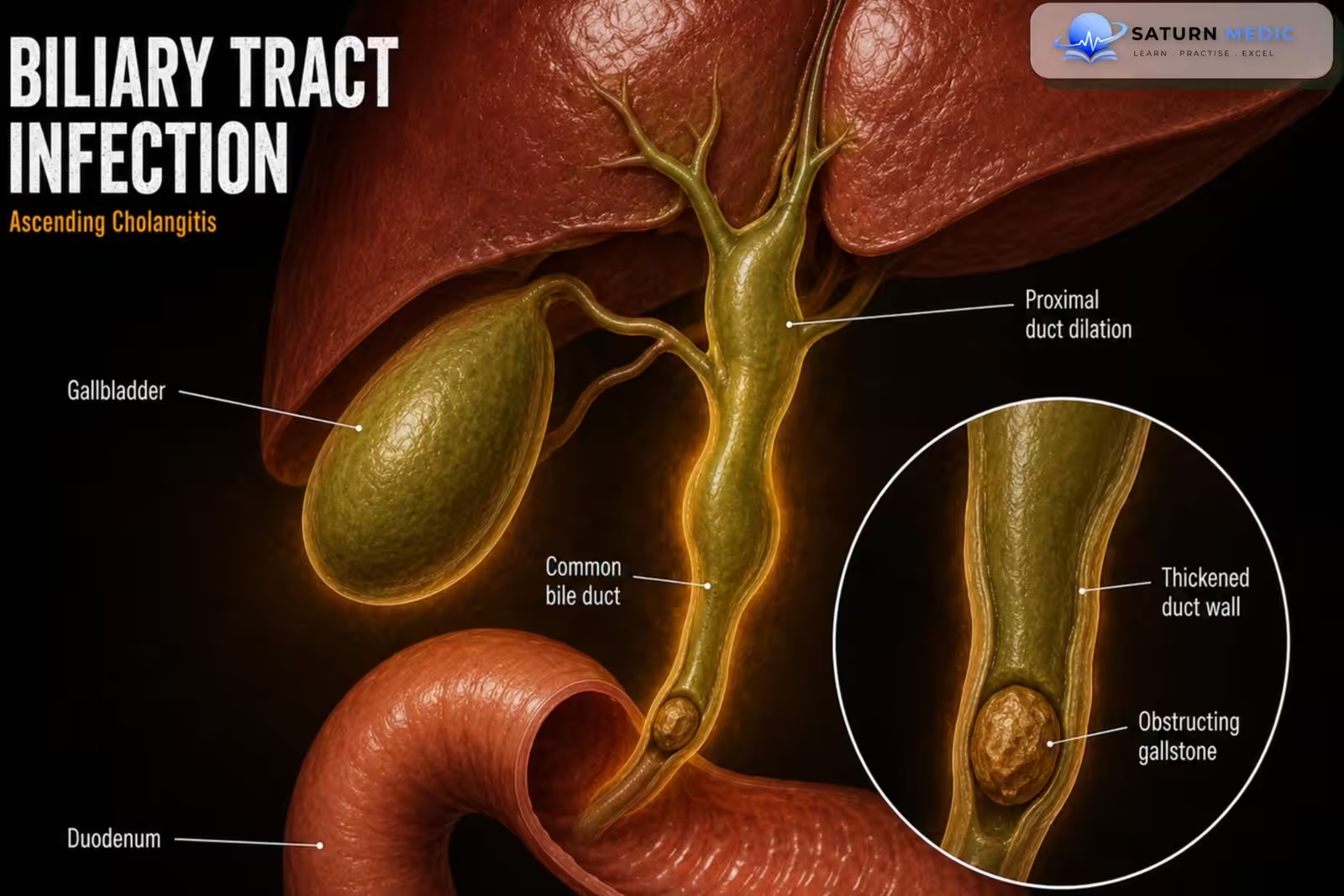
Ascending cholangitis (acute cholangitis) is a bacterial infection of the biliary tract, usually
caused by biliary obstruction (most commonly choledocholithiasis), leading to biliary stasis and
infection. It is a medical emergency requiring prompt antibiotics and biliary drainage.
Also called
ICD-10
Specialty
Onset
Reviewed
-
OverviewOverview
-
Etiology & Risk FactorsEtiology & Risk Factors
-
PathophysiologyPathophysiology
-
Clinical PresentationClinical Presentation
-
History TakingHistory Taking
-
Physical ExaminationPhysical Examination
-
InvestigationsInvestigations
-
DiagnosisDiagnosis
-
ManagementManagement
-
ComplicationsComplications
-
PrognosisPrognosis
-
Key Points / Clinical PearlsKey Points / Clinical Pearls
Overview
• Usually occurs secondary to common bile duct obstruction.
• Most commonly caused by choledocholithiasis.
• Classical presentation is Charcot triad (RUQ pain, fever, jaundice), although many patients do
not present with all three features.
• Diagnosis is based on systemic inflammation + cholestasis + imaging findings.
• Treatment includes supportive care, empiric antibiotics, and urgent biliary drainage (usually
ERCP).
Etiology & Risk Factors
-Causes of Ascending Cholangitis
• Choledocholithiasis (most common)
• Biliary stricture
• Other causes of biliary obstruction and stasis
-Risk Factors for Ascending Cholangitis
• Gallstones
• Previous biliary obstruction
• Biliary stents or strictures
Pathophysiology
• Obstruction of the biliary tree causes bile stasis.
• Bacteria ascend into the biliary tract.
• Infection develops within the bile ducts.
• If Ascending Cholangitis remains untreated, infection may progress to sepsis, septic shock, and multiorgan failure.
Clinical Presentation
-Classic presentation (Charcot triad)
• Fever
• Right upper quadrant pain
• Jaundice
-Severe disease (Reynolds pentad)
• Charcot triad
• Hypotension
• Altered mental status
History Taking
-Ask about:
• Fever and chills
• Right upper quadrant pain
• Jaundice
• Previous gallstones
• Previous ERCP or biliary procedures
• Symptoms of pancreatitis
• Previous episodes of cholangitis
Physical Examination
• ABCDE assessment
• Vital signs
• Fever
• Right upper quadrant tenderness
• Jaundice
• Assess mental status
• Look for hypotension or signs of septic shock
Investigations
Initial laboratory studies
• Complete blood count (CBC) with differential
• Blood cultures (2 sets before antibiotics)
• Liver chemistries: Bilirubin, ALP, GGT, ALT
• C-reactive protein (CRP)
• Basic metabolic panel (BMP)
• PT/INR
• Consider serum lipase if biliary pancreatitis is suspected
• Blood gas analysis in severely ill patients
Imaging
Preferred initial imaging
• Right upper quadrant (RUQ) ultrasound
-Typical findings: Dilated common bile duct (CBD), Dilated intrahepatic bile ducts, Thickened bile
duct walls, Evidence of biliary obstruction (e.g., CBD stone, biliary stricture)
RUQ ultrasound is not sufficiently sensitive to rule out biliary obstruction.
-If ultrasound is inconclusive:
• CT abdomen with IV contrast
• MRI abdomen with MRCP
These help identify the cause of biliary obstruction, bile duct dilation, and complications (e.g., liver
abscess)
Diagnosis
-Diagnosis of Ascending Cholangitis is based on:
1. Systemic signs of inflammation
• Fever and/or chills
• Leukocytosis
• Elevated CRP
2. Signs of cholestasis
• Jaundice
• Elevated bilirubin
• Elevated ALP, GGT, or ALT
3. Imaging findings
• Biliary dilatation
• Evidence of biliary obstruction (e.g., choledocholithiasis or biliary stricture)
After diagnosis, assess disease severity to guide management.
Related Topics
Management
-Initial management of Ascending Cholangitis
• Admit to hospital
• Nil by mouth (NPO)
• Continuous monitoring
• Immediate hemodynamic and respiratory support as needed
• IV fluids
• Analgesia
• Assess severity
-Antibiotics
• Start empiric antibiotic therapy immediately after obtaining blood cultures.
-Definitive management
• Urgent biliary drainage and decompression
• ERCP is the preferred method.
• Consult: Gastroenterology, Interventional radiology,
-Surgery
If appropriate, ERCP can also treat the underlying cause (e.g., stone extraction or CBD stenting)
Complications
• Sepsis
• Septic shock
• Acute kidney injury
• Hepatic dysfunction
• Liver abscess
• Portal vein thrombosis
• Death
Prognosis
• Prognosis of Ascending Cholangitis is excellent with early diagnosis, antibiotics, and biliary drainage.
• Delayed treatment significantly increases morbidity and mortality.
• Outcome depends on disease severity and rapid relief of biliary obstruction.
Key Points / Clinical Pearls
• Ascending cholangitis is a bacterial infection of the biliary tree due to biliary obstruction.
• Most commonly caused by choledocholithiasis.
• Classic presentation: Charcot triad (fever, RUQ pain, jaundice).
• Severe disease: Reynolds pentad (Charcot triad + hypotension + altered mental status).
• Initial investigations: CBC, blood cultures, CRP, LFTs, BMP, PT/INR, and RUQ ultrasound.
• Diagnosis requires systemic inflammation + cholestasis + imaging evidence of biliary
obstruction.
• Start empiric antibiotics immediately after blood cultures.
• Urgent ERCP with biliary drainage (preferably within 48 hours) is the definitive treatment.
• Always assess for sepsis and organ dysfunction.
- National Center for Biotechnology Information (NIH). Cholangitis, StatPearls.
- Kiriyama S, Kozaka K, Takada T, et al. Tokyo Guidelines 2018: Diagnostic Criteria and Severity Grading of Acute Cholangitis (with videos). J Hepatobiliary Pancreat Sci. 2018;25:17-30. Tokyo Guidelines.
- Boey JH, Way LW. Acute Cholangitis: Charcot's Triad and Reynolds' Pentad. Ann Surg. 1980;191:264-270.
- Sung YK, Lee JH, Kim SB, et al. Evaluation of Charcot Triad, Reynolds Pentad, and Tokyo Guidelines for Diagnosis of Cholangitis Secondary to Choledocholithiasis Across Patient Age Groups. Mayo Clin Proc Innov Qual Outcomes. 2021;5:377-387. PMC Full Text.
- MedlinePlus, National Library of Medicine (NIH). Cholangitis: Medical Encyclopedia.