

Clinical Subject Page
Chronic Pancreatitis
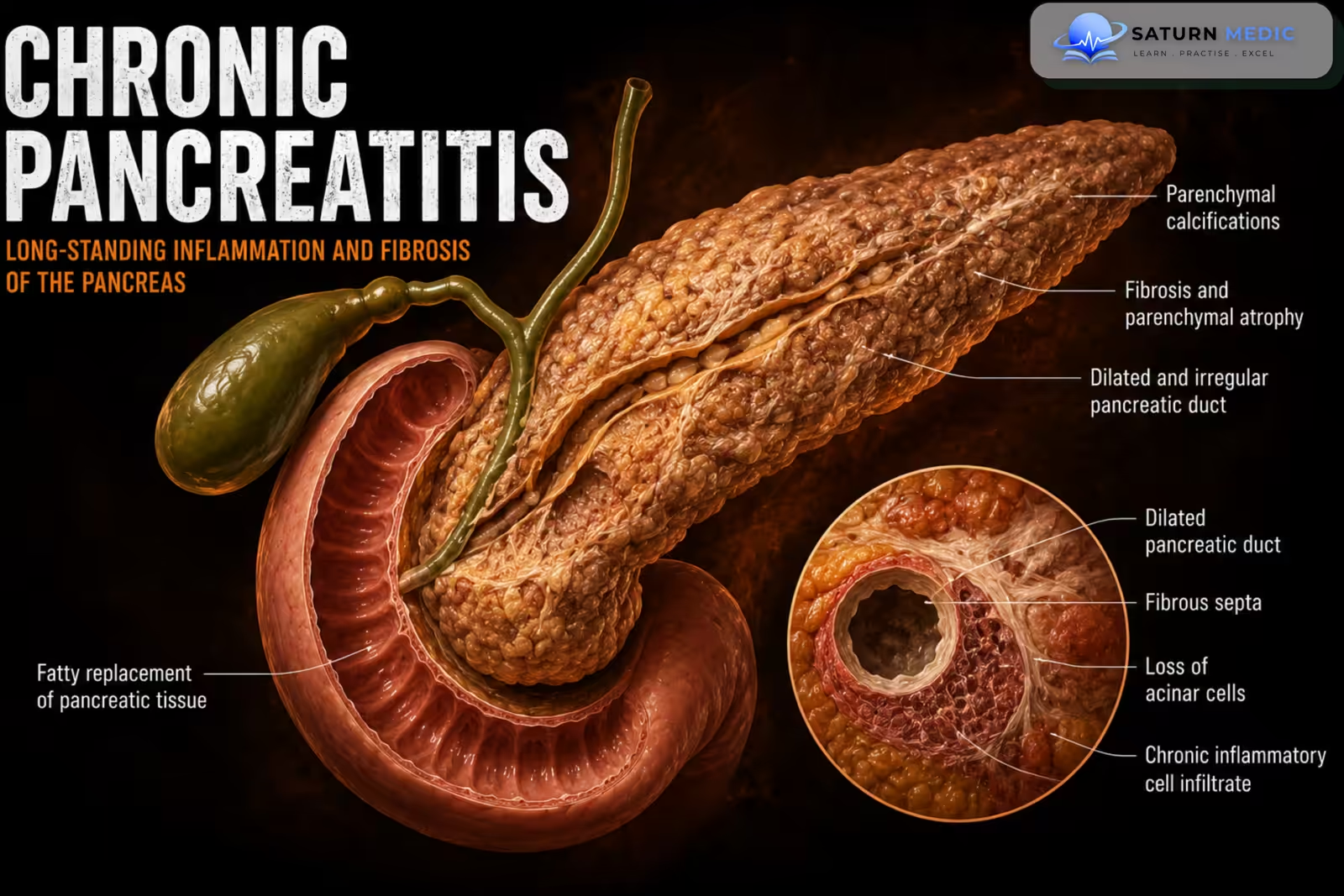
Chronic pancreatitis is a long-term inflammation of the pancreas that causes permanent damage to its structure and function. Over time, the pancreas loses its ability to produce digestive enzymes and hormones such as insulin.
ICD-10
Specialty
Onset
Reviewed
-
OverviewOverview
-
Etiology & Risk FactorsEtiology & Risk Factors
-
PathophysiologyPathophysiology
-
Clinical PresentationClinical Presentation
-
History TakingHistory Taking
-
Physical ExaminationPhysical Examination
-
InvestigationsInvestigations
-
DiagnosisDiagnosis
-
ManagementManagement
-
ComplicationsComplications
-
PrognosisPrognosis
-
Key Points / Clinical PearlsKey Points / Clinical Pearls
Overview
- It is a progressive and irreversible disease.
- The most common cause is chronic heavy alcohol use, followed by pancreatic duct obstruction. About 30% of cases are idiopathic (no clear cause).
- Patients may have:
- Persistent or recurrent upper abdominal pain
- Exocrine pancreatic insufficiency: steatorrhea (fatty stools), weight loss
- Endocrine pancreatic insufficiency: prediabetes or diabetes
Etiology & Risk Factors
- Chronic heavy alcohol use – the most common cause.
- Smoking (tobacco use) – increases the risk in a dose-dependent manner.
- Pancreatic duct obstruction – due to stones, strictures, or trauma.
- Idiopathic – no identifiable cause (about 30% of cases).
- Genetic (hereditary) factors – e.g., PRSS1, SPINK1, or CFTR gene mutations.
- Autoimmune pancreatitis.
- Metabolic disorders:
- Severe hypertriglyceridemia
- Hypercalcemia (usually from primary hyperparathyroidism)
- Cystic fibrosis.
- Recurrent acute or severe pancreatitis can progress to chronic pancreatitis.
Pathophysiology
Alcohol / smoking / duct obstruction / genetic mutations → Acinar cell injury or premature trypsin activation → Activation of pancreatic digestive enzymes inside the pancreas → Autodigestion of pancreatic tissue → Chronic inflammation → Activation of pancreatic stellate cells → Progressive fibrosis (scarring) → Permanent pancreatic damage → Loss of exocrine function (↓ digestive enzymes → maldigestion, steatorrhea) + Loss of endocrine function (↓ insulin → diabetes)
Clinical Presentation
- Chronic or recurrent epigastric pain (most common symptom)
- Pain radiates to the back
- Pain worsens after eating and improves when leaning forward
- Nausea and vomiting
- Steatorrhea (fatty, greasy stools)
- Weight loss due to malabsorption
- Bloating, diarrhea, and abdominal cramps
- Deficiency of fat-soluble vitamins (A, D, E, K)
- Diabetes mellitus (from loss of insulin production)
- In late-stage disease, some patients may have little or no pain despite significant pancreatic damage.
History Taking
- Where is your abdominal pain? Does it spread to your back?
- Is the pain worse after eating? Does leaning forward relieve it?
- Is the pain recurrent or constant?
- Have you noticed greasy, oily, or floating stools (steatorrhea)?
- Have you lost weight without trying?
- Do you have diabetes or symptoms of high blood sugar (increased thirst or urination)?
- Do you drink alcohol? If yes, how much and for how long?
- Do you smoke?
- Have you ever had acute pancreatitis before?
- Is there a family history of pancreatitis or cystic fibrosis?
Physical Examination
Assess for:
- Epigastric tenderness
- Abdominal tenderness on palpation
- Abdominal distension (may be present)
- Reduced bowel sounds if ileus develops
- Weight loss
- Signs of malnutrition
- Muscle wasting (in advanced disease)
- Signs of fat-soluble vitamin deficiency (A, D, E, K)
- Signs of diabetes (e.g., dehydration, polyuria, polydipsia)
- Jaundice if there is biliary obstruction
- Features of chronic alcohol use may be present in some patients
- Normal abdominal examination is possible in late-stage disease despite severe pancreatic damage
-Key Examination Focus
- Assess nutritional status
- Check for epigastric tenderness
- Look for jaundice
- Assess for signs of diabetes and vitamin deficiencies
Investigations
Laboratory Tests
- Serum lipase and amylase – often normal
- CBC – assess for infection or anemia
- Liver function tests (LFTs) – if biliary obstruction is suspected
- Fasting blood glucose / HbA1c – assess for diabetes
- Serum calcium – evaluate for hypercalcemia
- Serum triglycerides – evaluate for hypertriglyceridemia
- Fat-soluble vitamin levels (A, D, E, K) – assess nutritional deficiency
Pancreatic Function Tests
- Fecal elastase-1 – best stool test for exocrine pancreatic insufficiency
- 72-hour fecal fat test – confirms steatorrhea (if needed)
Imaging
- Contrast-enhanced CT abdomen – first-line; shows pancreatic calcifications, duct dilation/strictures, and pancreatic atrophy
- MRI/MRCP – more sensitive, especially in early disease
- Abdominal ultrasound – may detect calcifications or duct stones (less sensitive)
- Endoscopic ultrasound (EUS) – if CT/MRI are inconclusive
- ERCP – not routinely used for diagnosis; mainly used when therapeutic intervention is needed
CT or MRI/MRCP is the most important investigation to confirm chronic pancreatitis.
Diagnosis
-Diagnosis is based on a combination of:
- Clinical features: Chronic/recurrent epigastric pain radiating to the back, steatorrhea, weight loss, diabetes
- Risk factors: Heavy alcohol use, smoking, recurrent acute pancreatitis, genetic causes
- Imaging (most important):
- CT abdomen (first-line)
- MRI/MRCP (more sensitive in early disease)
- Findings: Pancreatic calcifications, duct dilation/strictures, pancreatic atrophy
- Pancreatic function tests:
- Fecal elastase-1 ↓ → supports exocrine pancreatic insufficiency
- Laboratory tests:
- Lipase and amylase are often normal and do not confirm or exclude chronic pancreatitis.
Related Topics
Management
Lifestyle modification
- Stop alcohol and smoking
- Patient education and regular follow-up
Pain management
- Paracetamol or NSAIDs first-line
- Adjuvant drugs if needed
- Opioids only if pain is severe and refractory
Pancreatic enzyme replacement (PERT)
- Give with meals
- Improves digestion and reduces steatorrhea
Nutritional support
- Small, frequent meals
- Low-fat diet
- Replace fat-soluble vitamins (A, D, E, K) if deficient
Treat complications
- Manage diabetes
- Correct nutritional deficiencies
Treat the underlying cause (e.g., alcohol use disorder, hypertriglyceridemia)
Endoscopic or surgical treatment
- For duct stones/strictures, persistent pain, or other complications not controlled medically
Complications
- Recurrent acute pancreatitis
- Exocrine pancreatic insufficiency → steatorrhea, malabsorption, weight loss
- Endocrine pancreatic insufficiency (Type 3c diabetes mellitus)
- Pancreatic pseudocyst
- Pancreatic ascites
- Pancreatic abscess
- Portal vein thrombosis
- Splenic vein thrombosis
- Biliary obstruction and jaundice
- Pancreatic cancer (especially in hereditary pancreatitis)
The most common long-term complications are exocrine insufficiency (malabsorption), diabetes, and pancreatic pseudocysts.
Prognosis
- Chronic pancreatitis is a progressive, irreversible disease.
- Prognosis depends largely on alcohol cessation and smoking cessation.
- Many patients develop chronic pain, malabsorption, and diabetes over time.
- Severe disease may require endoscopic or surgical intervention.
- Prognosis is worse in patients with ongoing alcohol use, smoking, or end-stage liver disease.
Key Points / Clinical Pearls
- Chronic pancreatitis is a progressive, irreversible inflammation of the pancreas.
- Heavy alcohol use is the most common cause; smoking is a major risk factor.
- Presents with chronic epigastric pain radiating to the back, steatorrhea, weight loss, and diabetes.
- CT abdomen is the first-line imaging test; pancreatic calcifications are a classic finding.
- Serum amylase and lipase are often normal in chronic pancreatitis.
- Fecal elastase-1 is the preferred test for exocrine pancreatic insufficiency.
- Management includes alcohol and smoking cessation, pain control, pancreatic enzyme replacement (PERT), nutritional support, and treatment of diabetes.
- Endoscopic or surgical treatment may be needed for persistent pain or complications.
- Common complications include malabsorption, diabetes, pancreatic pseudocysts, and pancreatic cancer (especially in hereditary disease).
- Goosenberg E, Lappin SL. National Center for Biotechnology Information (NIH). Chronic Pancreatitis, StatPearls.
- Kichler A, Jang S. ACG Clinical Guideline: Chronic Pancreatitis. Am J Gastroenterol. 2020;115:322-339. ACG Guideline.
- Schneider A, Löhr JM, Singer MV. The M-ANNHEIM Classification of Chronic Pancreatitis: Introduction of a Unifying Classification System Based on a Review of Previous Classifications of the Disease. J Gastroenterol. 2007;42:101-119. PMID: 17351799.
- MedlinePlus, National Library of Medicine (NIH). Chronic Pancreatitis: Medical Encyclopedia.
- National Center for Biotechnology Information (NIH). Autoimmune Pancreatitis, StatPearls.