

Clinical Subject Page
Gallstones
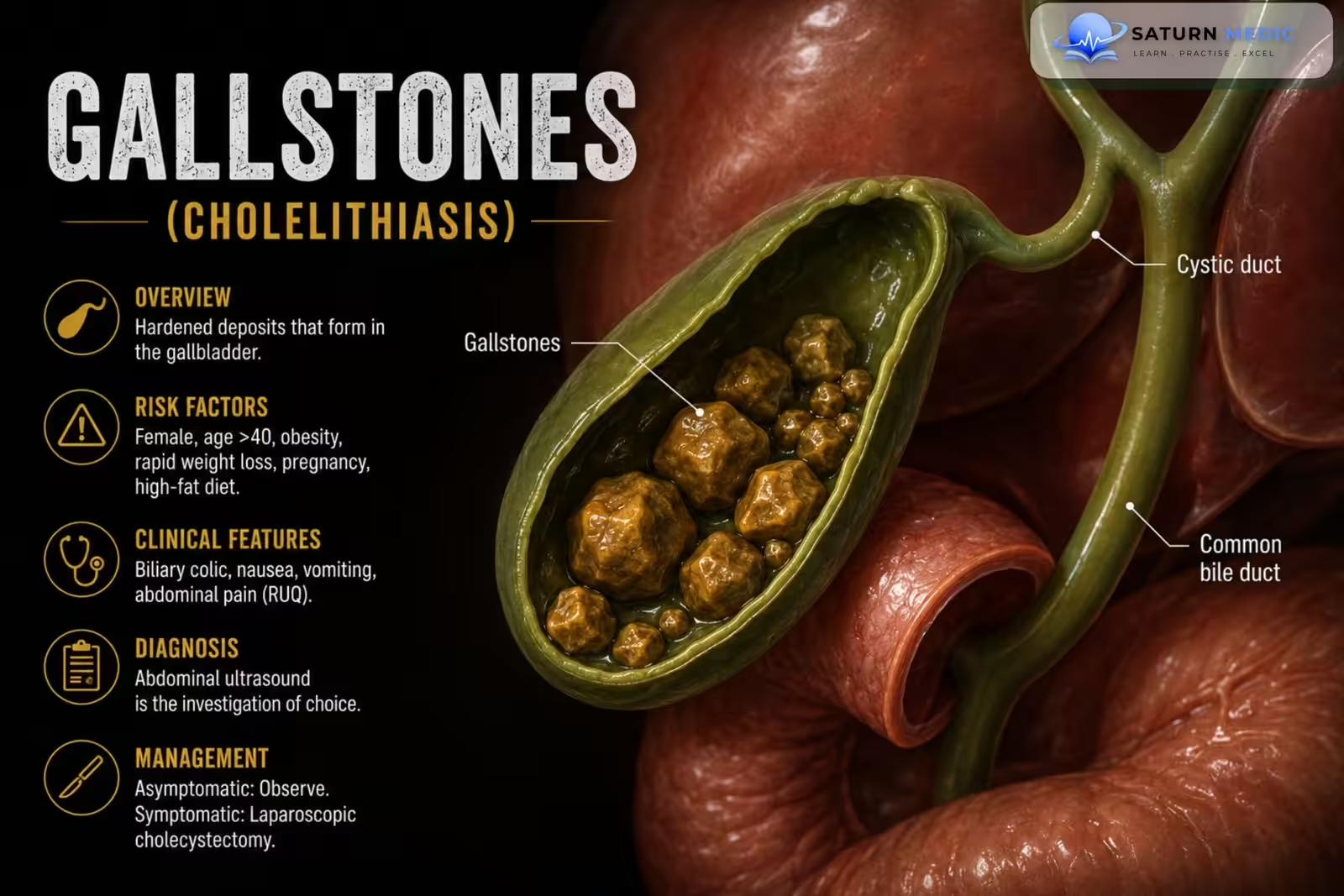
Gallstones (Cholelithiasis) is the presence of gallstones (abnormal concretions) within the gallbladder. Most
gallstones are composed of cholesterol, although pigment and mixed stones also occur. Many
patients remain asymptomatic, while others develop biliary colic or complications
Also called
ICD-10
Specialty
Onset
Reviewed
-
OverviewOverview
-
Etiology & Risk FactorsEtiology & Risk Factors
-
PathophysiologyPathophysiology
-
Clinical PresentationClinical Presentation
-
History TakingHistory Taking
-
Physical ExaminationPhysical Examination
-
InvestigationsInvestigations
-
DiagnosisDiagnosis
-
ManagementManagement
-
ComplicationsComplications
-
PrognosisPrognosis
-
Key Points / Clinical PearlsKey Points / Clinical Pearls
Overview
• Gallstones are common and are often found incidentally.
• Most patients are asymptomatic.
• Symptomatic disease presents as biliary colic (typically postprandial right upper quadrant pain).
• Ultrasound is the investigation of choice.
• Definitive treatment for symptomatic gallstones is laparoscopic cholecystectomy.
Etiology & Risk Factors
-Types of stones
• Cholesterol stones (most common)
• Pigment stones
• Mixed stones
-Risk factors
• Conditions associated with cholesterol stone formation
• Hemolysis (pigment stones)
• Infection (pigment stones)
Pathophysiology
• the stones form within the gallbladder due to abnormal bile composition.
• Stones may remain asymptomatic or intermittently obstruct the cystic duct.
• Temporary obstruction causes biliary colic.
• Persistent obstruction may lead to complications such as:
• Acute cholecystitis
• Choledocholithiasis
• Acute cholangitis
• Gallstone pancreatitis
Clinical Presentation
-Asymptomatic:
• Usually discovered incidentally on imaging.
-Symptomatic (Biliary colic):
• Postprandial right upper quadrant pain
• Episodic pain
• Nausea
• Vomiting
History Taking
-Ask about:
• Character of right upper quadrant pain
• Relationship to meals
• Duration of pain
• Nausea and vomiting
• Fever
• Jaundice
• Previous similar episodes
• History of gallstones
• Previous biliary surgery
Physical Examination
-General examination:
• Right upper quadrant tenderness
• Assess for fever
• Evaluate for jaundice
• Assess for signs of complications (e.g., peritonitis or sepsis)
Investigations
-Initial laboratory studies
• Complete blood count (CBC)
• Liver chemistries
• Amylase
• Lipase
Imaging (Investigation of Choice)
Right upper quadrant (RUQ) ultrasound
or Biliary point-of-care ultrasound (POCUS)
-Ultrasound confirms gallstones and helps identify complications.
Ultrasound findings suggesting complications
• Gallbladder wall thickening
• Pericholecystic fluid
• Dilated common bile duct (CBD)
-Additional assessment
Rule out:
• Acute cholecystitis
• Choledocholithiasis
• Acute cholangitis
• Gallstone pancreatitis
Diagnosis
-Asymptomatic Disease:
• Usually diagnosed incidentally.
• No further diagnostic workup is required.
-Symptomatic Disease:
Diagnosis is based on:
• Clinical presentation
• RUQ ultrasound (or biliary POCUS)
• Laboratory investigations to exclude complications
Related Topics
Management
-Asymptomatic cholelithiasis
• Expectant (conservative) management
• No routine treatment required
-Symptomatic cholelithiasis:
Initial supportive treatment
• Nil by mouth (NPO)
• Analgesia
• Intravenous fluids
• Antiemetics
Definitive treatment
• Elective laparoscopic cholecystectomy
• Consult general surgery
-Complicated cholelithiasis
• Admit the patient.
• Manage the specific complication (e.g., acute cholecystitis, cholangitis, choledocholithiasis, or
pancreatitis).
Complications
• Acute cholecystitis
• Choledocholithiasis
• Acute cholangitis
• Gallstone pancreatitis
Prognosis
• Most asymptomatic patients remain symptom-free.
• Symptomatic disease is effectively treated with laparoscopic cholecystectomy.
• Prognosis is excellent when complications are recognized and managed promptly.
Key Points / Clinical Pearls
• Cholelithiasis = gallstones within the gallbladder.
• Most patients are asymptomatic.
• Typical symptom: postprandial right upper quadrant pain (biliary colic).
• RUQ ultrasound is the diagnostic test of choice.
• Initial laboratory tests: CBC, liver chemistries, amylase, and lipase.
• Always exclude acute cholecystitis, choledocholithiasis, cholangitis, and pancreatitis.
• Asymptomatic stones → no treatment (expectant management).
• Symptomatic stones → NPO, analgesia, IV fluids, antiemetics, followed by elective
laparoscopic cholecystectomy.
- National Center for Biotechnology Information (NIH). Gallstones (Cholelithiasis), StatPearls.
- National Center for Biotechnology Information (NIH). Physiology, Gallbladder, StatPearls.
- Sabaratnam A, Sabaratnam R. 4F's - Still Up to Date Risk Factors of Cholelithiasis. Pol Przegl Chir. 2019. PMID: 18540184.
- Su PY, Hsu YC, Cheng YF, et al. Risk Factors Associated With Symptomatic Cholelithiasis in Taiwan: A Population-Based Study. BMC Gastroenterol. 2011;11:64. PMC3215644.
- MedlinePlus, National Library of Medicine (NIH). Gallstones: Health Topic.