

Clinical Subject Page
Gastric Volvulus
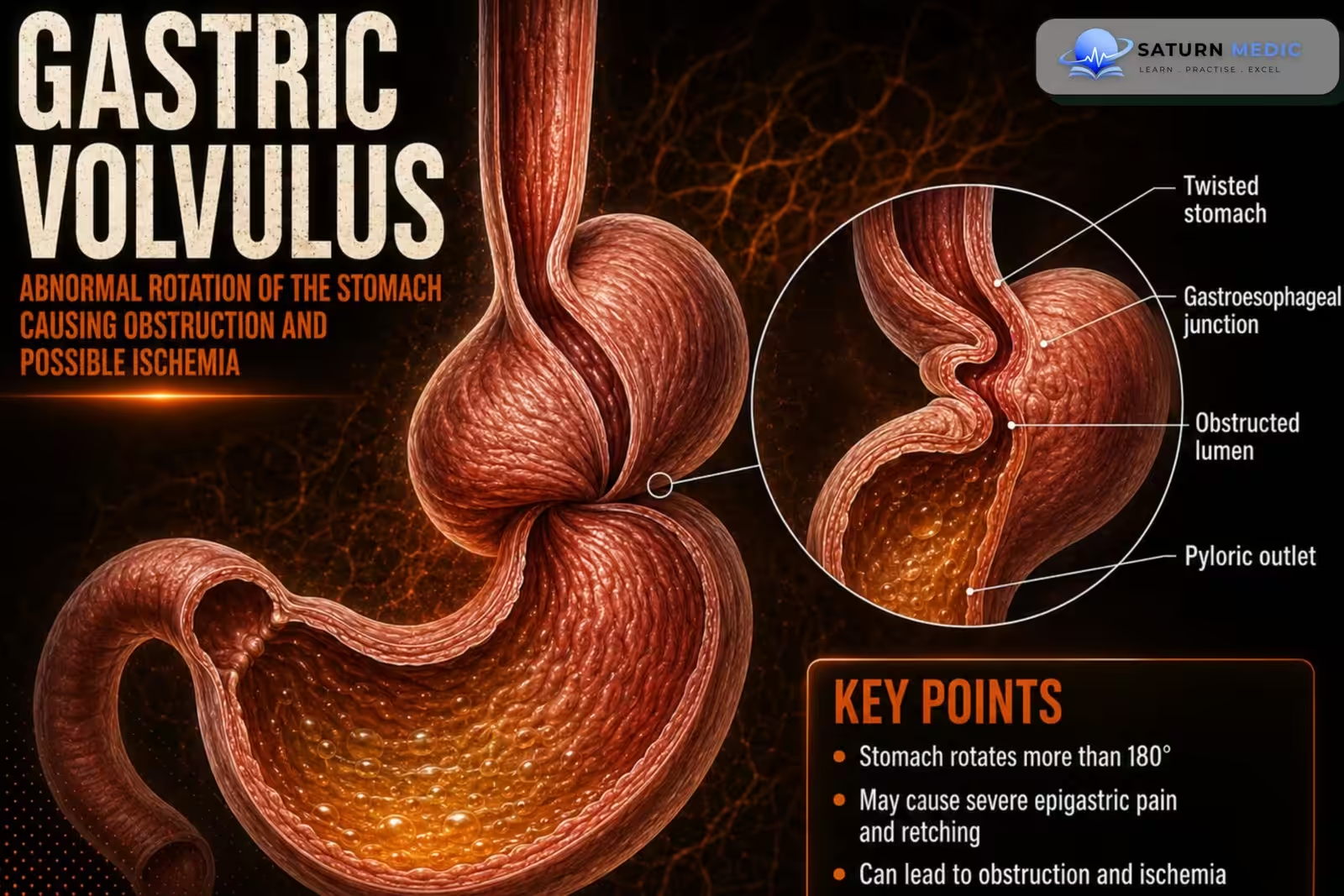
Gastric volvulus is a rare condition in which the stomach rotates more than 180° along either the
organoaxial or mesenteroaxial axis, resulting in gastric outlet obstruction and potential vascular
compromise
Also called
ICD-10
Specialty
Onset
Reviewed
-
OverviewOverview
-
Etiology & Risk FactorsEtiology & Risk Factors
-
PathophysiologyPathophysiology
-
Clinical PresentationClinical Presentation
-
History TakingHistory Taking
-
Physical ExaminationPhysical Examination
-
InvestigationsInvestigations
-
DiagnosisDiagnosis
-
ManagementManagement
-
ComplicationsComplications
-
PrognosisPrognosis
-
Key Points / Clinical PearlsKey Points / Clinical Pearls
Overview
Gastric volvulus is a surgical emergency characterized by abnormal rotation of the stomach. The
rotation can obstruct gastric emptying and compromise blood supply, leading to ischemia, necrosis,
or perforation. Acute gastric volvulus classically presents with Borchardt triad and requires urgent
surgical treatment
Etiology & Risk Factors
Primary Causes
-
Laxity or absence of gastric supporting ligaments (idiopathic)
-
Congenital defects of the gastric ligaments
Secondary Causes (More Common)
-
Paraesophageal hiatal hernia (most common in adults)
-
Diaphragmatic hernia
-
Eventration of the diaphragm
-
Diaphragmatic paralysis
-
Previous upper abdominal or thoracic surgery
-
Adhesions
-
Gastric tumors (rare)
-
Splenic abnormalities (e.g., wandering spleen)
Risk Factors
-
Older age
-
Large paraesophageal hiatal hernia
-
Congenital diaphragmatic defects
-
Previous abdominal surgery
-
Connective tissue laxity
-
Gastric ligament abnormalities
-
Trauma involving the diaphragm (rare)
Pathophysiology
1. The stomach rotates >180° along the organoaxial or mesenteroaxial axis.
2. Gastric outlet obstruction develops.
3. Blood supply may become compromised.
4. Progressive ischemia may lead to necrosis or perforation if untreated.
Clinical Presentation
-
Acute gastric volvulus (Borchardt triad):
• Severe epigastric pain and distention
• Retching without vomiting
• Inability to pass a nasogastric tube
Chronic gastric volvulus:
• Intermittent symptoms of gastric outlet obstruction
History Taking
-
Ask about:
• Sudden severe epigastric pain
• Retching without vomiting
• Abdominal distention
• Previous hiatal or paraesophageal hernia
• Intermittent episodes of gastric outlet obstruction (if chronic)
Physical Examination
Assess for:
• Epigastric distention
• Severe epigastric tenderness
• Signs of gastric outlet obstruction
• Signs of peritonitis or sepsis if perforation or ischemia is suspected
Investigations
Initial Tests
-
Complete blood count (CBC)
-
Electrolytes and renal function tests
-
Serum lactate (assess for ischemia)
-
Arterial blood gas (if critically ill)
Diagnostic Investigations
Chest and Abdominal X-ray
May show:
-
Large gas-filled stomach
-
Abnormal gastric position
-
Air-fluid level
CT Abdomen with IV Contrast – Preferred Imaging
-
Investigation of choice
-
Confirms gastric rotation
-
Identifies the type of volvulus
-
Detects ischemia, perforation, or associated diaphragmatic defects
Upper Gastrointestinal Contrast Study (Barium Swallow)
-
Demonstrates abnormal gastric rotation
-
Shows gastric outlet obstruction
-
Useful in stable patients
Upper Gastrointestinal Endoscopy (EGD)
-
Assesses gastric mucosal ischemia
-
May assist in endoscopic decompression
-
Excludes other upper GI pathology
Diagnosis
-
Diagnosis is usually based on:
• Characteristic clinical presentation
• Abdominal X-ray findings
• CT chest and abdomen confirming gastric rotation
Related Topics
Management
-
1. Initial Stabilization
-
Assess Airway, Breathing, and Circulation (ABC)
-
Keep the patient nil by mouth (NPO)
-
Intravenous fluid resuscitation
-
Correct electrolyte abnormalities
-
Nasogastric tube decompression (if possible)
-
Analgesia and antiemetics
2. Definitive Treatment
Surgical Management (Preferred)
Indicated for most patients, especially acute volvulus.
Options include:
-
Reduction (detorsion) of the stomach
-
Gastropexy (fixation of the stomach)
-
Repair of diaphragmatic or hiatal defects
-
Resection of necrotic stomach if ischemia is present
Laparoscopic surgery is preferred when feasible.
Endoscopic Management
Consider in:
-
High-risk surgical patients
-
Temporary decompression before surgery
-
Selected chronic gastric volvulus
Endoscopy may reduce the volvulus but does not reliably prevent recurrence.
3. Conservative Management
Reserved for:
-
Asymptomatic or minimally symptomatic chronic gastric volvulus
-
Patients who are not candidates for surgery
Includes:
-
Observation
-
Dietary modification
-
Management of underlying conditions
-
Close follow-up
4. Follow-Up
-
Monitor for recurrence
-
Assess nutritional status
-
Treat underlying hiatal or diaphragmatic abnormalities
-
Repeat imaging if symptoms recur
-
Complications
• Gastric strangulation
• Gastric ischemia
• Gastric necrosis
• Gastric perforation
• Sepsis
Prognosis
- Prognosis depends on prompt recognition and surgical intervention.
- Early treatment generally
results in good outcomes, whereas delayed diagnosis increases the risk of ischemia, perforation,
sepsis, and mortality.
Key Points / Clinical Pearls
• Gastric volvulus is rotation of the stomach >180°.
• It may occur along the organoaxial or mesenteroaxial axis.
• Common causes include lax gastric ligaments, paraesophageal hernia, gastric ulcer, and gastric
carcinoma.
• Acute gastric volvulus presents with Borchardt triad.
• Abdominal X-ray and CT are the main diagnostic imaging studies.
• Initial management includes gastric decompression.
• Definitive treatment is urgent surgical detorsion with gastropexy.
• Major complications include ischemia, necrosis, perforation, and sepsis.
- National Center for Biotechnology Information (NIH). Gastric Volvulus, StatPearls.
- A Rare Case of Acute on Chronic Gastric Volvulus With Borchardt's Triad. J Surg Case Rep. 2014;2014:rju114. PMC4239300.
- MedlinePlus, National Library of Medicine (NIH). Gastric Volvulus: Medical Encyclopedia.
- A Case Report of Gastric Volvulus, a Rare Cause of Acute Abdomen. Int J Surg Case Rep. 2021. ScienceDirect.
- National Center for Biotechnology Information (NIH). Hiatal Hernia, StatPearls.