

Clinical Subject Page
Insulinoma
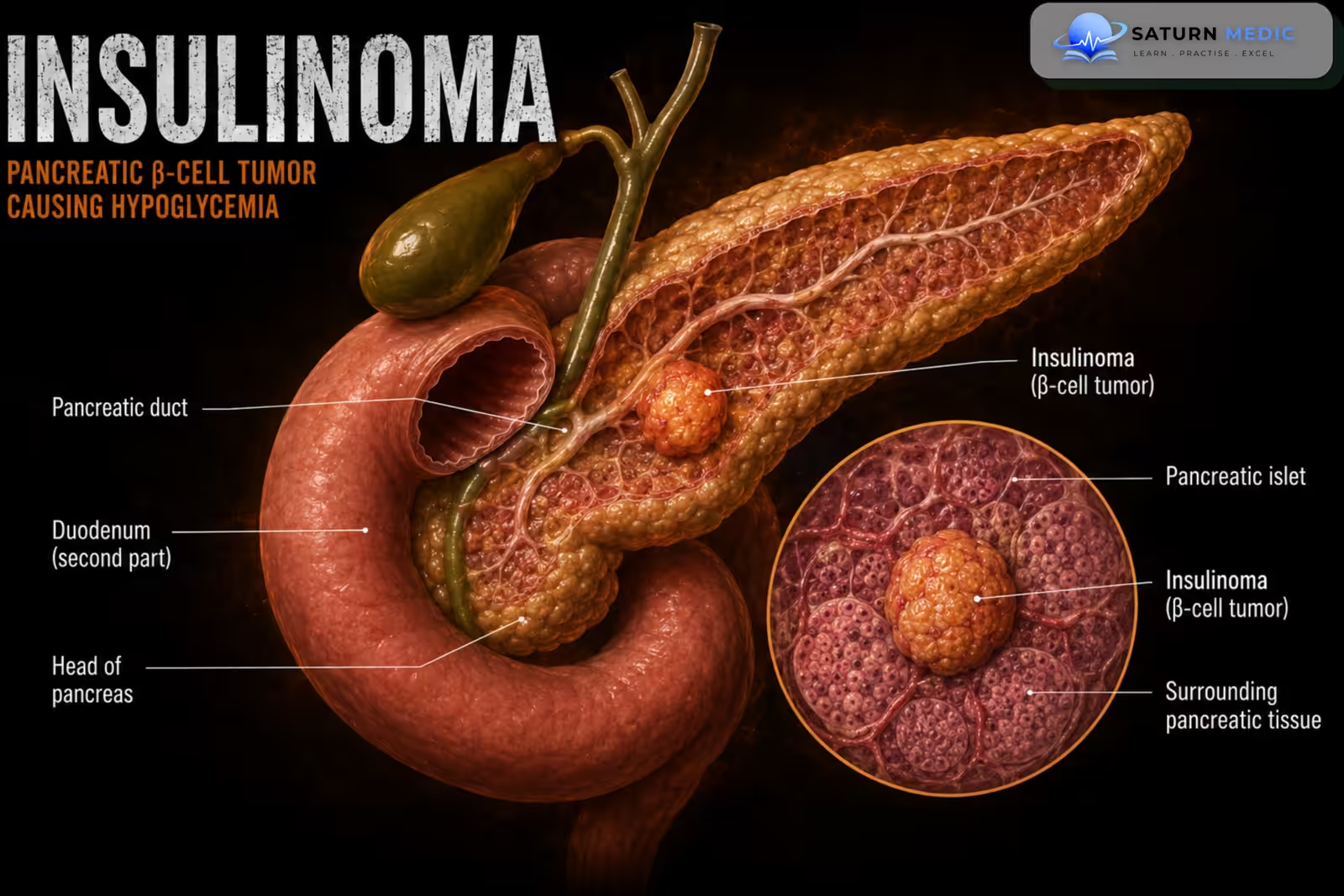
An insulinoma is a rare insulin-secreting tumor of the pancreatic beta cells. It is the most common cause of endogenous hyperinsulinism and is benign in about 90% of cases.
ICD-10
D13.7
Specialty
Gastroenterology
Onset
Chronic
Reviewed
July 2026
-
OverviewOverview
-
Etiology & Risk FactorsEtiology & Risk Factors
-
PathophysiologyPathophysiology
-
Clinical PresentationClinical Presentation
-
History TakingHistory Taking
-
Physical ExaminationPhysical Examination
-
InvestigationsInvestigations
-
DiagnosisDiagnosis
-
ManagementManagement
-
ComplicationsComplications
-
PrognosisPrognosis
-
Key Points / Clinical PearlsKey Points / Clinical Pearls
Overview
- Arises from the beta cells of the pancreas.
- Causes excess insulin production, leading to recurrent hypoglycemia (low blood glucose), especially during fasting.
- Most cases occur sporadically, but some are associated with Multiple Endocrine Neoplasia type 1 (MEN1).
Etiology & Risk Factors
-Etiology
- Insulinoma is a neuroendocrine tumor that arises from the beta cells of the pancreas.
- Most cases occur sporadically.
- About 90% are benign.
- Around 5% are associated with Multiple Endocrine Neoplasia type 1 (MEN1).
Risk Factors
- Multiple Endocrine Neoplasia type 1 (MEN1) (major inherited risk factor).
- Age: Most commonly 30–60 years.
- Sex: More common in females than males.
Pathophysiology
Pancreatic β-cell tumor (insulinoma) → Autonomous (unregulated) insulin secretion → ↑ Insulin levels despite low blood glucose → ↑ Glucose uptake by muscle and fat + ↓ Hepatic glucose production → Hypoglycemia → Neuroglycopenic symptoms (confusion, blurred vision, seizures, loss of consciousness) + Autonomic symptoms (sweating, tremor, palpitations, hunger) → Symptoms improve after glucose intake (Whipple triad)
Clinical Presentation
Presentation
- Recurrent hypoglycemia, especially several hours after meals, during fasting, or after exercise/alcohol.
Neuroglycopenic symptoms:
- Confusion
- Lethargy
- Double/blurred vision
- Weakness
- Syncope
- Seizures
Autonomic (sympathetic) symptoms:
- Sweating
- Tremor
- Palpitations
- Anxiety
- Headache
- Hunger
- Symptoms are relieved by glucose administration (Whipple triad).
- Weight gain may occur due to the anabolic effects of excess insulin.
- In patients with MEN1, symptoms of other endocrine tumors may also be present.
History Taking
-Ask about :
- When do the symptoms occur? (Fasting, several hours after meals, after exercise, or after alcohol?)
- What symptoms do you experience during the episodes? (Sweating, tremor, palpitations, hunger, confusion, blurred vision, weakness, seizures, fainting)
- Do the symptoms improve after eating or taking glucose?
- How often do the episodes occur, and how long do they last?
- Have you ever measured a low blood sugar during an episode?
- Do you have diabetes or use insulin or glucose-lowering medications (e.g., sulfonylureas)?
- Do you have any severe illness that could explain hypoglycemia?
- Is there a family history of Multiple Endocrine Neoplasia type 1 (MEN1) or endocrine tumors?
- Have you had symptoms of other endocrine tumors? (Suggestive of MEN1)
Physical Examination
- Physical examination is often normal between hypoglycemic episodes.
- During a hypoglycemic episode, look for:
- Sweating (diaphoresis)
- Tremor
- Tachycardia/palpitations
- Confusion or altered mental status
- Visual disturbances (e.g., diplopia)
- Weakness
- Seizures (severe hypoglycemia)
- Loss of consciousness/syncope
- Weight gain may be present.
-Examine for features of MEN1, including:
- Signs of other endocrine tumors
- Skin examination for neurocutaneous syndromes
Investigations
1. Laboratory Tests
- Blood glucose ↓ (< 55 mg/dL during symptoms)
- Serum insulin ↑
- C-peptide ↑
- Proinsulin ↑
- β-hydroxybutyrate ↓
- Sulfonylurea screen (negative)
- Insulin antibodies (negative)
2. Confirmatory Test
- 72-hour supervised fasting test (gold standard if spontaneous hypoglycemia is not documented)
3. Tumor Localization
- CT scan (pancreas)
- MRI (pancreas)
- Endoscopic ultrasound (EUS) (especially if CT/MRI are negative)
4. Assess for Associated Syndrome
- Evaluate for MEN1 (history, examination, and appropriate endocrine assessment)
Diagnosis
Diagnosis is based on :
- Whipple triad
- Symptoms of hypoglycemia
- Low blood glucose during symptoms
- Symptoms improve after glucose administration
- Laboratory confirmation of endogenous hyperinsulinism
- ↓ Blood glucose (< 55 mg/dL)
- ↑ Insulin
- ↑ C-peptide
- ↑ Proinsulin
- Negative sulfonylurea screen
- 72-hour supervised fasting test (gold standard if spontaneous hypoglycemia is not documented)
- Imaging to localize the tumor
- CT or MRI pancreas
- Endoscopic ultrasound (EUS) if needed
Related Topics
Management
1. Acute Management (Treat Hypoglycemia)
- Oral glucose if the patient is conscious.
- IV dextrose if severe hypoglycemia or unable to take orally.
- IM glucagon if IV access is not available.
2. Definitive Treatment (First-line)
- Surgical resection after localizing the tumor.
- Enucleation (preferred for most localized tumors).
- Partial pancreatectomy if the tumor is close to the pancreatic duct.
3. Medical Treatment
Used when surgery is delayed, not possible, or for recurrent/inoperable disease:
- Diazoxide – inhibits insulin secretion.
- Somatostatin analogs (e.g., octreotide) – reduce insulin secretion.
4. Follow-up
- Monitor for resolution of hypoglycemia.
- Monitor for tumor recurrence after surgery (risk is low after complete resection).
- Evaluate and manage MEN1 if present.
Surgery is the treatment of choice and is usually curative for localized insulinoma.
Complications
- Recurrent severe hypoglycemia
- Seizures
- Loss of consciousness (coma)
- Permanent neurological deficits (if hypoglycemia is prolonged or recurrent)
- Cardiac arrhythmias
- Death (rare, due to severe untreated hypoglycemia)
- Tumor recurrence (uncommon after complete surgical resection)
- Malignant disease/metastasis (rare; most insulinomas are benign)
Prognosis
- Excellent prognosis in most patients.
- About 90% of insulinomas are benign.
- Surgical resection (especially enucleation) is usually curative for localized tumors.
- Low risk of recurrence after complete tumor removal.
- Prognosis is less favorable in patients with malignant or inoperable insulinomas, who may require long-term medical therapy.
Key Points / Clinical Pearls
- Rare pancreatic β-cell tumor that secretes excess insulin.
- Causes recurrent fasting hypoglycemia.
- Whipple triad is the classic presentation.
- Diagnosis: ↑ Insulin + ↑ C-peptide during hypoglycemia (± 72-hour fasting test).
- CT/MRI or EUS to localize the tumor.
- Surgery is the treatment of choice and is usually curative.
- Most insulinomas are benign and have an excellent prognosis.
- National Center for Biotechnology Information (NIH). Insulinoma, StatPearls.
- de Herder WW, Zandee WT, Hofland J. Approach to the Patient: Insulinoma. J Clin Endocrinol Metab. 2024.
- Placzkowski KA, Vella A, Thompson GB, et al. Secular Trends in the Presentation and Management of Insulinoma. J Clin Endocrinol Metab. 2009;94:1069-1073. PMC3574879.
- A Five-Year Journey to Diagnosis: Resolving Persistent Hypoglycemia Through Successful Insulinoma Resection - A Case Report. PMC11928290.
- MedlinePlus, National Library of Medicine (NIH). Insulinoma: Medical Encyclopedia.