

Clinical Subject Page
Large Bowel Obstruction
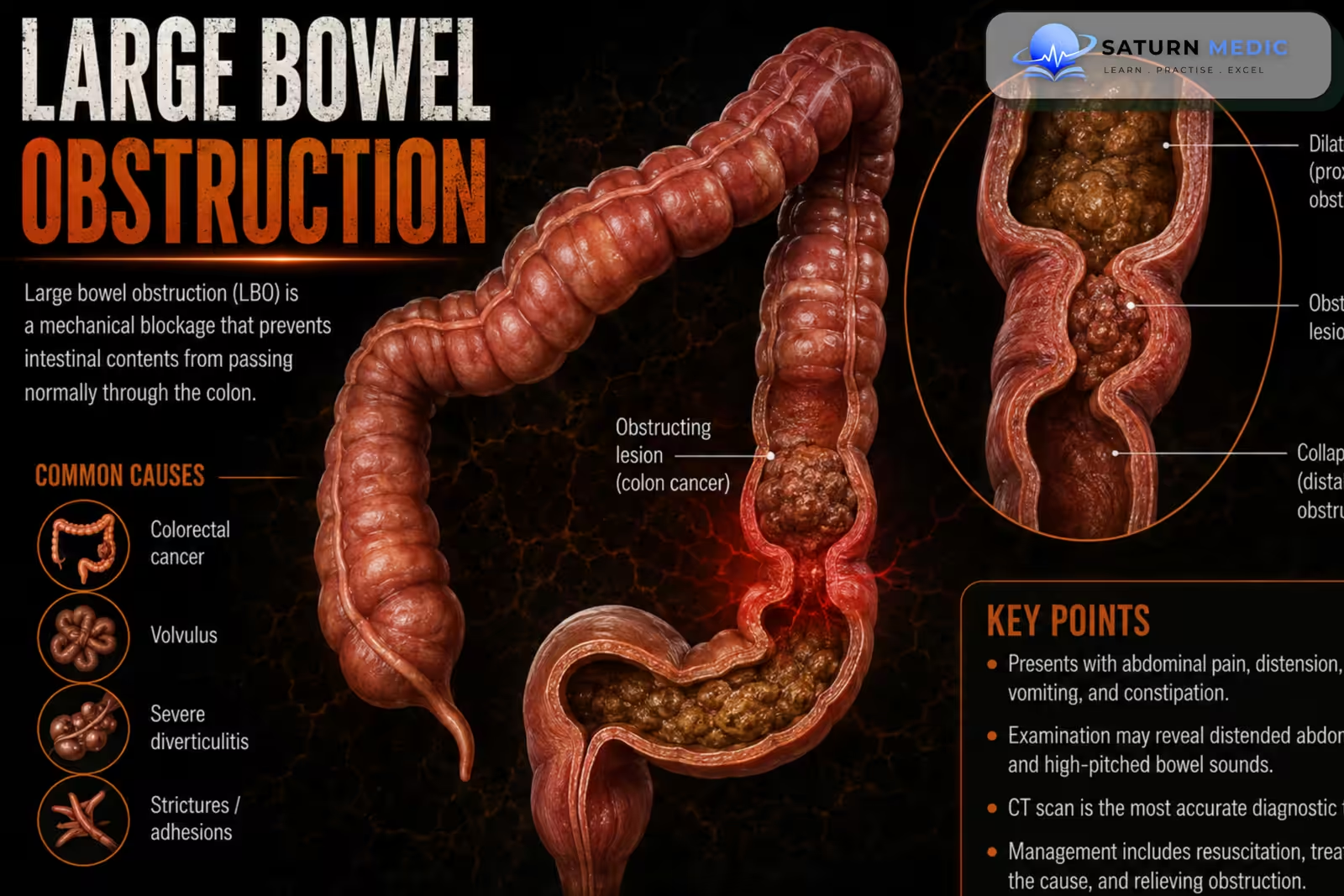
Large Bowel Obstruction is a mechanical or functional blockage of the colon that prevents the normal passage of intestinal contents, gas, and stool. It can become life-threatening when obstruction causes bowel ischemia, necrosis, or perforation
Also called
ICD-10
Specialty
Onset
Reviewed
-
OverviewOverview
-
Etiology & Risk FactorsEtiology & Risk Factors
-
PathophysiologyPathophysiology
-
Clinical PresentationClinical Presentation
-
History TakingHistory Taking
-
Physical ExaminationPhysical Examination
-
InvestigationsInvestigations
-
DiagnosisDiagnosis
-
ManagementManagement
-
ComplicationsComplications
-
PrognosisPrognosis
-
Key Points / Clinical PearlsKey Points / Clinical Pearls
Overview
Large Bowel Obstruction is most commonly caused by:
- Colorectal cancer
- Volvulus
- Benign strictures, such as those related to diverticular disease
- Fecal impaction
The obstruction causes proximal accumulation of gas and intestinal contents, leading to bowel dilatation. If untreated, it may progress to ischemia, perforation, peritonitis, and sepsis.
Etiology & Risk Factors
Common causes of Large Bowel Obstruction include:
- Colorectal cancer
- Sigmoid volvulus
- Cecal volvulus
- Diverticular stricture
- Fecal impaction
- Benign colorectal strictures
- Inflammatory bowel disease
- Adhesions, less commonly than in small bowel obstruction
Risk Factors for Large Bowel Obstruction
- Older age
- Previous colorectal cancer
- Diverticular disease
- Chronic constipation
- Previous abdominal or colorectal surgery
- Neurological or psychiatric disorders predisposing to volvulus
Pathophysiology
Mechanical colonic blockage → accumulation of gas and fecal contents proximally → progressive colonic dilatation → increased intraluminal pressure → impaired venous and lymphatic drainage → mucosal ischemia → bowel necrosis → perforation → peritonitis and sepsis
Clinical Presentation
Symptoms
-
Abdominal distension
-
Colicky abdominal pain
-
Constipation
-
Obstipation
-
Failure to pass flatus
-
Nausea
-
Vomiting, usually later than in small bowel obstruction
-
Reduced appetite
Signs
-
-
Marked abdominal distension
-
Tympanic abdomen
-
Colicky abdominal tenderness
-
High-pitched or reduced bowel sounds
-
Dehydration
-
Visible peristalsis occasionally
-
History Taking
- Onset and progression of abdominal pain
- Abdominal distension
- Constipation
- Passage of flatus
- Vomiting
- Change in bowel habits
- Rectal bleeding
- Weight loss
- Previous colorectal cancer
- Diverticular disease
- Previous abdominal surgery
Physical Examination
General Examination
-
Vital signs
-
Hydration status
-
General appearance
Look for:
-
Tachycardia
-
Fever
-
Hypotension
-
Dehydration
System-Specific Examination
-
-
Abdominal distension
-
Tenderness
-
Tympany
-
Bowel sounds
-
Guarding or rebound tenderness
-
Rectal examination for masses or fecal impaction
-
Investigations
Complete Blood Count
Useful when assessing:
-
Infection
-
Inflammation
-
Anemia
-
Possible bowel ischemia
Biochemistry / Specific Tests
-
Electrolytes
-
Urea and creatinine
-
Serum lactate when ischemia is suspected
-
C-reactive protein when clinically useful
-
Blood gas in severe illness
These help assess dehydration, renal impairment, and bowel ischemia.
Imaging
Abdominal X-ray
May show:
-
Dilated colon
-
Haustral markings
-
Obstructive pattern
CT Abdomen and Pelvis
The preferred imaging test in most adults with suspected Large Bowel Obstruction.
It helps identify:
-
Site of obstruction
-
Cause
-
Tumor
-
Volvulus
-
Ischemia
-
Perforation
-
Proximal bowel dilatation
Special / Confirmatory Tests
Colonoscopy
May be used in selected stable patients for:
-
Evaluation of suspected colorectal cancer
-
Diagnosis of the cause
-
Decompression of selected sigmoid volvulus
It is generally avoided when there is concern for perforation or severe peritonitis.
Diagnosis
-Diagnosis of large bowel obstruction is based on:
Abdominal distension + constipation/obstipation + colicky pain → imaging confirmation of colonic dilatation and a transition point → identify the underlying cause
CT abdomen and pelvis is generally the key diagnostic investigation.
Related Topics
Management
1. First-Line / Emergency Management
Immediate management includes:
-
Urgent surgical assessment
-
Nil by mouth
-
IV fluid resuscitation
-
Correct electrolyte abnormalities
-
Analgesia and antiemetics
-
Urinary catheter when necessary
-
Nasogastric decompression if significant vomiting or proximal distension is present
-
IV antibiotics when ischemia, perforation, or infection is suspected
2. Definitive Treatment
Treatment depends on the cause.
Colorectal Cancer
-
Surgical resection when appropriate
-
Endoscopic stenting in selected patients, particularly some left-sided malignant obstructions
Sigmoid Volvulus
-
Endoscopic decompression if there is no ischemia or perforation
-
Definitive sigmoid colectomy because recurrence is common
Cecal Volvulus
-
Usually requires urgent surgery
Benign Stricture
-
Endoscopic or surgical treatment depending on the cause and severity
3. Medical Treatment
Medical treatment is mainly supportive:
-
IV fluids
-
Electrolyte replacement
-
Analgesia
-
Antiemetics
-
Antibiotics when infection, ischemia, or perforation is suspected
4. Surgical / Procedural Treatment
-
Resection of obstructed or ischemic bowel
-
Surgical treatment of volvulus
-
Colostomy or other diversion when required
Complications
- Bowel ischemia
- Bowel necrosis
- Perforation
- Peritonitis
- Sepsis
- Septic shock
- Dehydration
- Electrolyte abnormalities
- Acute kidney injury
- Aspiration
- Death
Prognosis
-Prognosis depends mainly on:
- Cause of obstruction
- Duration of obstruction
- Presence of ischemia
- Perforation
- Patient age and comorbidities
- Speed of treatment
Early diagnosis and treatment generally lead to good outcomes, while ischemia and perforation significantly increase morbidity and mortality.
Key Points / Clinical Pearls
- Large Bowel Obstruction is a mechanical blockage of the colon.
- Common causes include colorectal cancer, volvulus, diverticular strictures, and fecal impaction.
- Typical symptoms are abdominal distension, colicky pain, constipation, and obstipation.
- Vomiting often occurs later than in small bowel obstruction.
- Colorectal cancer is an important cause, particularly in older adults.
- Sigmoid volvulus is an important cause of acute colonic obstruction.
- Cecal volvulus usually requires urgent surgery.
- Abdominal X-ray may show colonic dilatation.
- CT abdomen and pelvis is the key imaging investigation in most adults.
- Continuous severe pain, fever, peritonism, or raised lactate suggests ischemia or perforation.
- Initial treatment includes bowel rest, IV fluids, electrolyte correction, and urgent surgical assessment.
- Endoscopic decompression can be used for uncomplicated sigmoid volvulus.
- Catena F, De Simone B, Coccolini F, et al. Bowel Obstruction: A Narrative Review for All Physicians. World J Emerg Surg. 2019;14:20. PubMed .
- Vogel JD, Felder SI, Bhama AR, et al. The American Society of Colon and Rectal Surgeons Clinical Practice Guidelines for the Management of Colon Volvulus and Acute Colonic Pseudo-Obstruction. Dis Colon Rectum. 2021;64(9):1046-1057. PubMed .
- Frago R, Ramirez E, Millan M, Kreisler E, del Valle E, Biondo S. Current Management of Acute Colonic Pseudo-Obstruction (Ogilvie's Syndrome). Cir Esp. 2014;92(10):711-717. PubMed .
- National Library of Medicine (NIH). Large Bowel Obstruction . StatPearls.