

Clinical Subject Page
Perianal Abscess
A perianal abscess is a localized collection of pus near the anus caused by infection of
the anal glands. It is an anorectal emergency that usually requires prompt surgical
drainage
Also called
ICD-10
Specialty
Onset
Reviewed
-
OverviewOverview
-
Etiology & Risk FactorsEtiology & Risk Factors
-
PathophysiologyPathophysiology
-
Clinical PresentationClinical Presentation
-
History TakingHistory Taking
-
Physical ExaminationPhysical Examination
-
InvestigationsInvestigations
-
DiagnosisDiagnosis
-
ManagementManagement
-
ComplicationsComplications
-
PrognosisPrognosis
-
Key Points / Clinical PearlsKey Points / Clinical Pearls
Overview
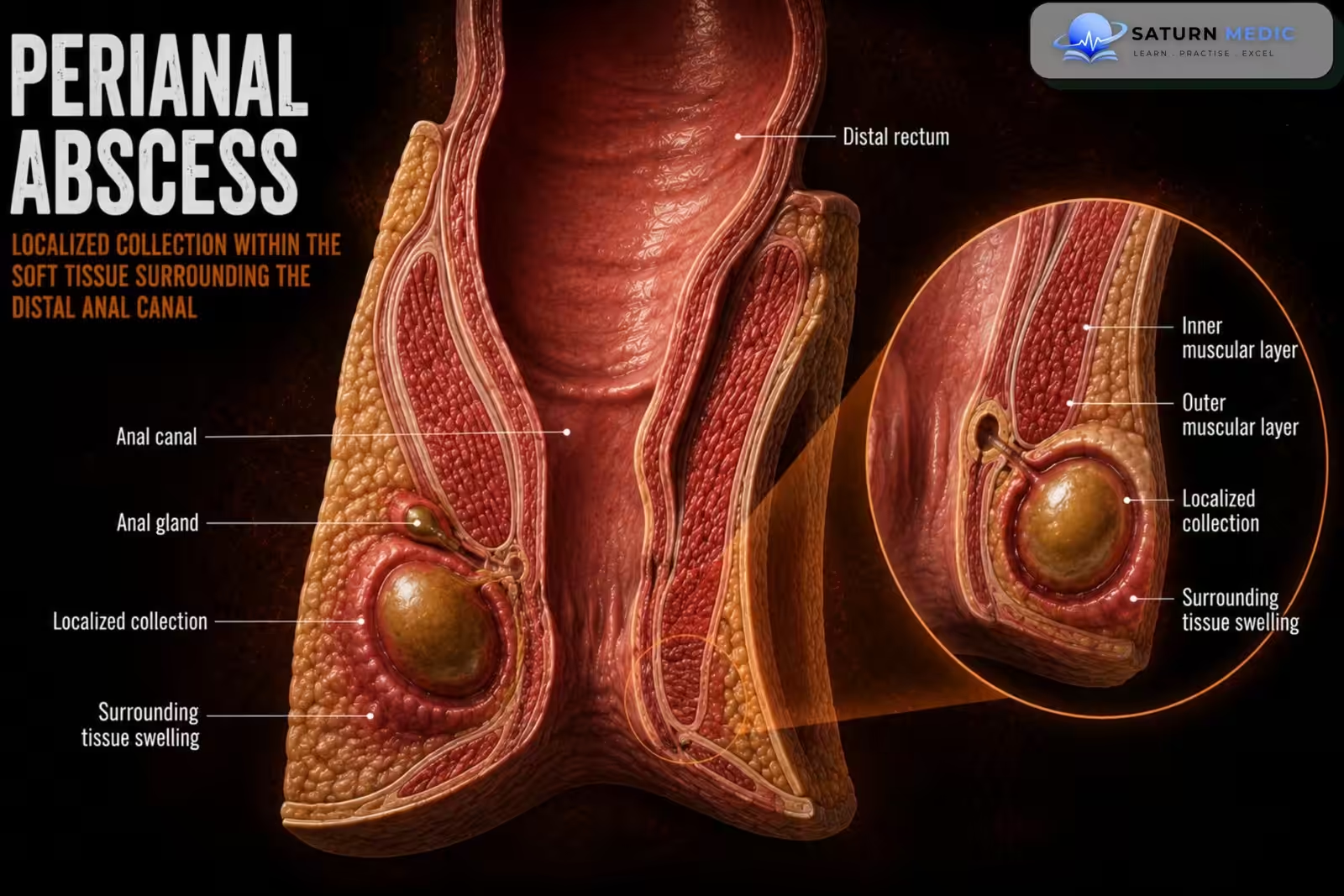
Perianal abscess is the most common type of anorectal abscess and usually results from obstruction and infection of the anal glands (cryptoglandular infection). Patients present with severe anal pain, swelling, and fever. Delayed treatment may lead to fistula formation or sepsis
Etiology & Risk Factors
Etiology
Most perianal abscesses arise from infection of the anal glands located within the
intersphincteric space.
Risk Factors
– Cryptoglandular infection (most common)
– Crohn disease
– Diabetes mellitus
– Immunosuppression (e.g., HIV, chemotherapy)
– Obesity
– Smoking
– Previous anorectal abscess
– Previous anal fistula
– Local trauma
– Hidradenitis suppurativa
Pathophysiology
Obstruction of an anal gland within the intersphincteric space → bacterial overgrowth and infection (commonly mixed aerobic and anaerobic organisms) → pus formation → spread of infection through the perianal or perirectal spaces → abscess formation → increasing pressure causes pain and tissue inflammation → spontaneous drainage or surgical incision may occur → persistent infected tract may heal incompletely and develop into an anal fistula (fistula-in-ano) if the internal opening remains patent
Clinical Presentation
Common Symptoms
– Severe constant anal pain
– Pain worsens with sitting or defecation
– Perianal swelling
– Tender lump near the anus
– Fever
– Malaise
– Purulent discharge (if ruptured)
Deep Abscesses
– Severe rectal pain
– Fever and chills
– Pelvic discomfort
– Minimal external swelling
History Taking
Ask about: Onset and duration of pain, Fever or chills, Swelling around the anus,
Purulent discharge, Pain during defecation, Previous abscess or fistula, History of Crohn
disease, Diabetes, Immunosuppression, Recent anorectal trauma or surgery
Physical Examination
General Examination
– Temperature
– Signs of sepsis
– General appearance
Perianal Examination
Look for: Erythema, Swelling, Fluctuant tender mass, Warmth, Purulent drainage,
Cellulitis
Digital Rectal Examination
– May reveal deep tenderness
– Perform gently and only if tolerated
Investigations
Laboratory Tests
– CBC (leukocytosis)
– CRP and ESR
– Blood glucose (screen for diabetes)
– Blood cultures only if septic or immunocompromised
Imaging
Usually NOT Required
Typical superficial perianal abscesses do not require imaging before treatment.
Pelvic MRI (Best imaging test)
Indications: Suspected deep abscess, Complex or recurrent abscess, Suspected fistula,
Crohn disease, Uncertain diagnosis
CT Pelvis
Used when: MRI unavailable, Suspected pelvic extension, Severe sepsis, Emergency
evaluation
Endoanal Ultrasound
May identify fistula tracts in selected patients.
Important Note
Most superficial perianal abscesses are diagnosed clinically and treated immediately.
MRI is preferred when a deep or complex abscess is suspected
Diagnosis
Diagnosis is based on: Severe anal pain, Tender fluctuant perianal swelling, Physical
examination findings, MRI when deep or complex disease is suspected.
Related Topics
Management
1. Incision & Drainage (Definitive Treatment)
– Perform as soon as possible
– Immediate drainage of pus
– Send pus for culture only in selected patients
2. Antibiotics
Not routinely required after drainage.
Give antibiotics if: Cellulitis, Systemic infection, Diabetes, Immunocompromised
patient, Prosthetic heart valve or high-risk cardiac condition
3. Pain Control
– NSAIDs or paracetamol
– Warm sitz baths
– Stool softeners
– High-fiber diet
4. Follow-Up
– Wound care
– Assess healing
– Evaluate for fistula-in-ano if persistent drainage develops
Important Note
Prompt surgical drainage is the treatment of choice. Antibiotics are an adjunct for selected patients and should never replace incision and drainage
Complications
– Fistula-in-ano (most common)
– Recurrent abscess
– Cellulitis
– Sepsis
– Delayed wound healing
– Necrotizing soft tissue infection (rare)
Prognosis
– Excellent after timely drainage
– Most patients recover completely
– Approximately one-third of patients develop a fistula
– Recurrence is more common in Crohn disease and immunocompromised patients
Key Points / Clinical Pearls
– Perianal abscess is usually caused by cryptoglandular infection.
– Severe constant anal pain is the hallmark symptom.
– Diagnosis is usually clinical.
– MRI is preferred for deep or recurrent abscesses.
– Incision and drainage is the definitive treatment.
– Antibiotics are only indicated for selected patients.
– Fistula-in-ano is the most common complication.
– Early treatment reduces the risk of recurrence and sepsis.
- Conner JN, Eren S, Dsouza R. National Center for Biotechnology Information (NIH). Perianal Abscess, StatPearls.
- Turner SV, Singh J. National Center for Biotechnology Information (NIH). Perirectal Abscess, StatPearls.
- Vogel JD, Johnson EK, Morris AM, et al. Clinical Practice Guideline for the Management of Anorectal Abscess, Fistula-in-Ano, and Rectovaginal Fistula. Dis Colon Rectum. 2016;59:1117-1133.
- MedlinePlus, National Library of Medicine (NIH). Anorectal Abscess: Medical Encyclopedia.
- National Center for Biotechnology Information (NIH). Anorectal Fistula, StatPearls.