

Clinical Subject Page
Small Bowel Lymphoma
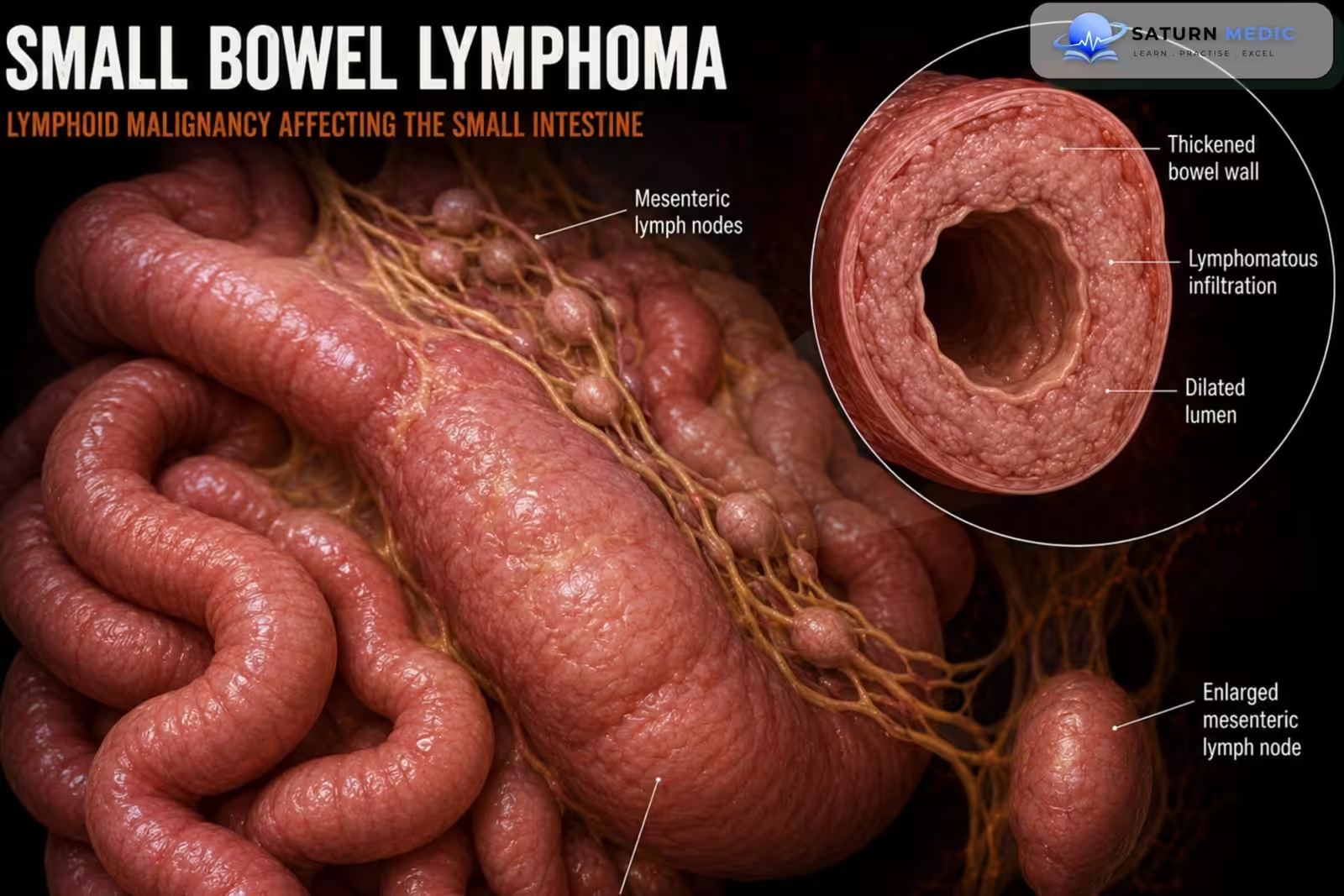
Small bowel lymphoma is a type of primary gastrointestinal (GI) lymphoma, an extranodal non-Hodgkin lymphoma that arises in the small intestine. It is less common than gastric lymphoma but is an important cause of small bowel tumors.
ICD-10
Specialty
Onset
Chronic
Reviewed
-
OverviewOverview
-
Etiology & Risk FactorsEtiology & Risk Factors
-
PathophysiologyPathophysiology
-
Clinical PresentationClinical Presentation
-
History TakingHistory Taking
-
Physical ExaminationPhysical Examination
-
InvestigationsInvestigations
-
DiagnosisDiagnosis
-
ManagementManagement
-
ComplicationsComplications
-
PrognosisPrognosis
-
Key Points / Clinical PearlsKey Points / Clinical Pearls
Overview
- Most primary GI lymphomas involve the stomach, small intestine, or colon.
- Common symptoms are abdominal pain, weight loss, GI bleeding, and other nonspecific gastrointestinal complaints, making diagnosis challenging.
The major histologic subtypes affecting the small bowel include:
- Diffuse large B-cell lymphoma (DLBCL) – the most common primary GI lymphoma.
- Enteropathy-associated T-cell lymphoma (EATL) – associated with celiac disease.
- Monomorphic epitheliotropic intestinal T-cell lymphoma (MEITL) – not associated with celiac disease.
- Less commonly, Burkitt lymphoma and mantle cell lymphoma.
Etiology & Risk Factors
-Etiology
- The cause of small bowel lymphoma depends on the subtype:
- Diffuse large B-cell lymphoma (DLBCL):
- May arise de novo or develop from transformation of a low-grade B-cell lymphoma (most commonly MALT lymphoma).
- Enteropathy-associated T-cell lymphoma (EATL):
- Occurs in patients with celiac disease, especially refractory celiac disease.
- Monomorphic epitheliotropic intestinal T-cell lymphoma (MEITL):
Cause is unknown and is not associated with celiac disease.
-Risk Factors
- Celiac disease (especially refractory celiac disease) → increased risk of EATL.
- Immunocompromised state, such as:
- HIV infection
- Post-transplant immunosuppression
- Transformation of preexisting low-grade B-cell lymphoma (e.g., MALT lymphoma) into DLBCL.
Pathophysiology
Malignant transformation of intestinal lymphocytes (B cells or T cells) → Uncontrolled lymphocyte proliferation → Infiltration of the small bowel wall → Bowel wall thickening + mucosal ulceration + tumor mass formation → Impaired intestinal structure and function → Bleeding, obstruction, and/or perforation
Clinical Presentation
- Abdominal pain (most common)
- Weight loss
- Diarrhea
- Nausea and vomiting
- GI bleeding (occult or overt)
- Palpable abdominal mass (occasionally)
- Features of bowel obstruction (e.g., vomiting, abdominal distension)
- Intestinal perforation (may present as an acute abdomen)
- Constitutional (B) symptoms: fever, night sweats, weight loss
History Taking
Ask about:
- When did your abdominal pain start?
- Where is the pain located?
- Have you lost weight without trying?
- Do you have nausea or vomiting?
- Do you have diarrhea?
- Have you noticed blood in your stool or black stools?
- Do you feel unusually tired or weak?
- Have you had fever or night sweats?
- Have you had bowel obstruction symptoms (severe abdominal swelling, inability to pass stool or gas)?
- Do you have a history of celiac disease?
- Do you have HIV or any condition that weakens your immune system?
- Have you had an organ transplant or do you take immunosuppressive medications?
Physical Examination
- Assess general appearance (ill-looking, weight loss)
- Check vital signs (fever, tachycardia)
- Look for pallor (suggesting anemia)
- Examine for abdominal tenderness
- Check for abdominal distension (suggesting bowel obstruction)
- Palpate for an abdominal mass (if present)
- Assess for signs of peritonitis (guarding, rigidity, rebound tenderness) if perforation is suspected
- Examine for lymphadenopathy (may be present in some lymphoma subtypes)
Investigations
Laboratory tests
- Complete blood count (CBC) – look for anemia
- Basic blood tests as indicated
Endoscopy
- Endoscopy with biopsy (essential for diagnosis)
Histopathology
- Confirms the diagnosis
- Determines the lymphoma subtype
Immunohistochemistry
- Identifies lymphoma markers (e.g., CD20 for B-cell lymphoma)
Imaging (Staging)
- CT scan
- MRI (if indicated)
- PET-CT for staging
The definitive diagnosis of small bowel lymphoma requires biopsy with histopathology and immunohistochemistry. CT or PET-CT is used for staging.
Diagnosis
Diagnosis is confirmed by:
- Endoscopy with biopsy (gold standard)
- Histopathology to confirm lymphoma
- Immunohistochemistry to identify the lymphoma subtype
- CT or PET-CT for staging and assessment of disease spread
The definitive diagnosis of small bowel lymphoma requires biopsy with histopathology and immunohistochemistry. Imaging is used for staging, not confirmation.
Related Topics
Management
1.Medical treatment
- Chemotherapy is the main treatment.
- Chemoimmunotherapy for B-cell lymphomas (e.g., R-CHOP or dose-adjusted EPOCH-R).
- Immunotherapy (e.g., rituximab) for eligible B-cell lymphomas.
2. Surgical treatment
- Surgery is not routine.
- Indicated for complications such as:
- Intestinal obstruction
- Perforation
- GI bleeding
- In some T-cell lymphomas (e.g., EATL), tumor-reduction surgery may be performed before chemotherapy to reduce treatment-related complications.
3. Advanced/Refractory disease
- Autologous stem cell transplant may be considered in selected patients after chemotherapy.
- Anti-CD19 CAR T-cell therapy may be used as second-line treatment for selected diffuse large B-cell lymphoma cases.
4. Supportive care
- Nutritional support
- Pain control
- Blood transfusion if significant anemia or bleeding
- Treat complications (infection, obstruction, perforation)
Complications
- Intestinal obstruction
- Intestinal perforation
- Gastrointestinal bleeding
- Anemia (secondary to chronic GI bleeding)
- Malnutrition and weight loss
- Disease progression or spread
- Treatment-related complications (e.g., chemotherapy adverse effects)
- The most important complications of small bowel lymphoma are intestinal obstruction, perforation, and GI bleeding, which may require urgent surgical management.
Prognosis
- Varies by lymphoma subtype and stage at diagnosis.
- Early diagnosis and treatment are associated with better outcomes.
- Diffuse large B-cell lymphoma (DLBCL) generally has a better prognosis with appropriate chemoimmunotherapy.
- Enteropathy-associated T-cell lymphoma (EATL) is often refractory to treatment and has a poorer prognosis.
- Monomorphic epitheliotropic intestinal T-cell lymphoma (MEITL) has a very poor response to treatment; autologous stem cell transplant may improve prognosis in selected patients
Key Points / Clinical Pearls
- Small bowel lymphoma is a primary gastrointestinal (GI) non-Hodgkin lymphoma.
- It most commonly affects middle-aged and older adults.
- Diffuse large B-cell lymphoma (DLBCL) is the most common subtype.
- Enteropathy-associated T-cell lymphoma (EATL) is strongly associated with celiac disease.
- Common symptoms are abdominal pain, weight loss, diarrhea, nausea/vomiting, and GI bleeding.
- Complications include intestinal obstruction, perforation, and bleeding.
- Endoscopy with biopsy is the gold standard for diagnosis.
- Histopathology and immunohistochemistry determine the lymphoma subtype.
- CT or PET-CT is used for staging.
- Chemotherapy or chemoimmunotherapy is the main treatment; surgery is reserved mainly for complications.
- National Center for Biotechnology Information (NIH). Small Bowel Neoplasms, StatPearls.
- National Center for Biotechnology Information (NIH). MALToma, StatPearls.
- National Center for Biotechnology Information (NIH). Lymphoma, StatPearls.
- Clinicopathological Characteristics and Prognostic Factors of Small Bowel Lymphomas: A Retrospective Single-Center Study. PMC10289779.
- MedlinePlus, National Library of Medicine (NIH). Non-Hodgkin Lymphoma: Health Topic.