

Clinical Subject Page
Mumps
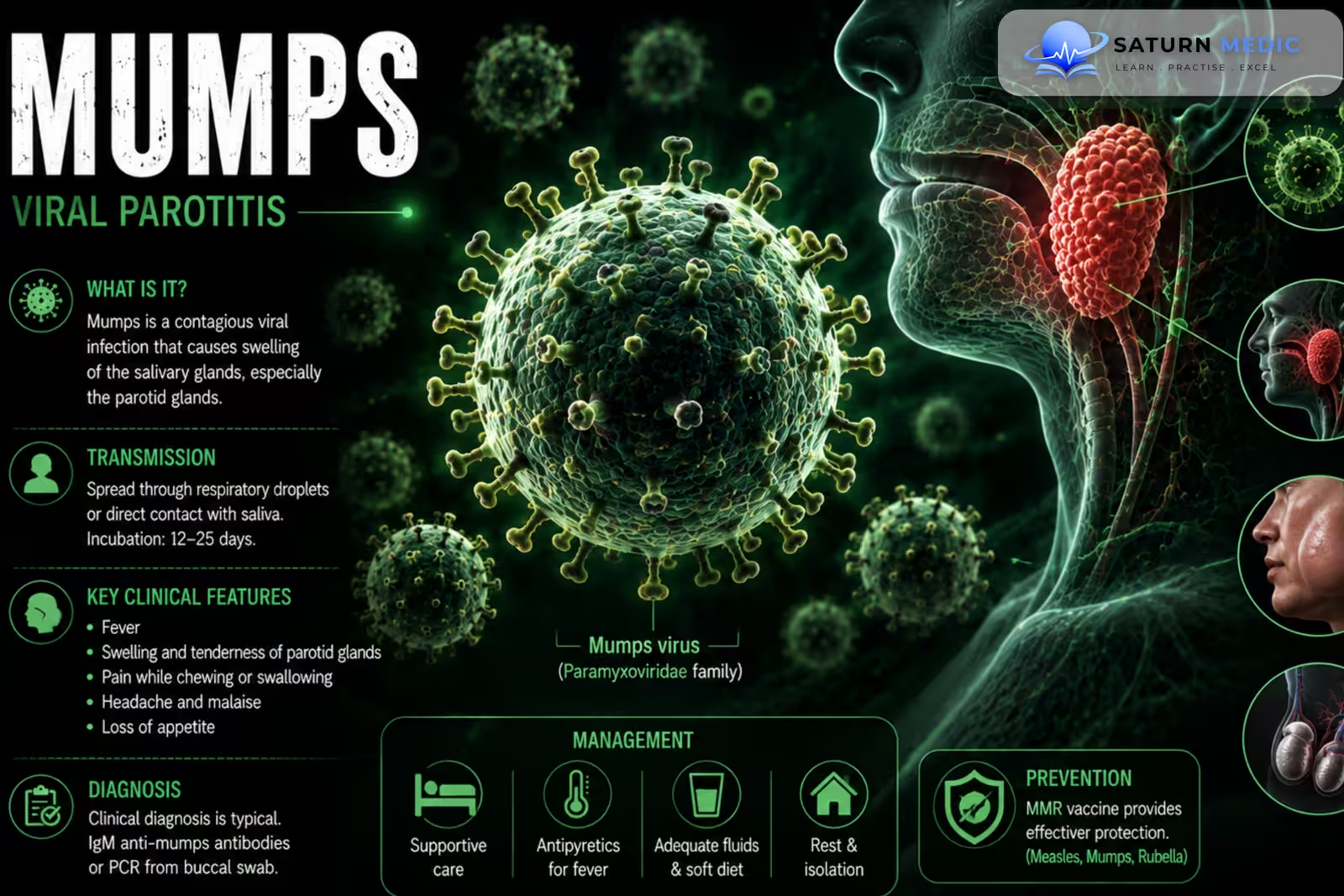
Mumps is an acute, contagious viral infection caused by the mumps virus, a member of the Paramyxoviridae family. It primarily affects the salivary glands, especially the parotid glands, producing painful swelling and fever
Also called
ICD-10
Specialty
Onset
Reviewed
-
OverviewOverview
-
Etiology & Risk FactorsEtiology & Risk Factors
-
PathophysiologyPathophysiology
-
Clinical PresentationClinical Presentation
-
History TakingHistory Taking
-
Physical ExaminationPhysical Examination
-
InvestigationsInvestigations
-
DiagnosisDiagnosis
-
ManagementManagement
-
ComplicationsComplications
-
PrognosisPrognosis
-
Key Points / Clinical PearlsKey Points / Clinical Pearls
Overview
–Mumps is transmitted mainly through respiratory droplets and direct contact with infected respiratory secretions. After replication in the respiratory tract, the virus spreads systemically and commonly reaches the salivary glands.
The classic presentation is:
Fever + malaise + painful parotid swelling
Other organs, particularly the testes, central nervous system, and pancreas, may also be affected
Etiology & Risk Factors
-Etiology
–Mumps is caused by the mumps virus, an enveloped, single-stranded RNA virus belonging to the Paramyxoviridae family.
Transmission occurs through:
- Respiratory droplets
- Saliva
- Close contact with infected individuals
-Risk Factors
- Lack of vaccination
- Close contact with an infected person
- Crowded living conditions
- Recent exposure during an outbreak
- Immunocompromised state
Pathophysiology
Respiratory exposure → viral replication in the upper respiratory tract → viremia → dissemination to salivary glands and other tissues → inflammation and edema → parotitis ± involvement of testes, pancreas, or central nervous system
Clinical Presentation
-Symptoms:
Mumps commonly causes:
- Fever
- Headache
- Malaise
- Myalgia
- Loss of appetite
- Painful parotid swelling
- Ear or jaw pain
- Pain while chewing or swallowing
Complicated disease may cause:
- Testicular pain and swelling
- Severe headache
- Neck stiffness
- Abdominal pain
- Nausea and vomiting
-Signs:
- Tender parotid enlargement
- Swelling below and in front of the ears
- Fever
- Erythema around the parotid duct opening in some patients
- Orchitis in postpubertal males
Parotid swelling may initially occur on one side and later become bilateral.
-Severe Disease
Severe Mumps may cause:
- Orchitis
- Meningitis
- Encephalitis
- Pancreatitis
- Sensorineural hearing loss
- Oophoritis in females
History Taking
-Ask about:
- Fever and duration
- Onset of facial or parotid swelling
- Pain while chewing or swallowing
- Headache or neck stiffness
- Testicular pain or swelling
- Abdominal pain
- Vaccination history
- Recent contact with a suspected case
- Recent travel or outbreak exposure
Physical Examination
-General Examination
- Temperature
- Hydration status
- General appearance
- Signs of systemic illness
-System-Specific Examination:
- Inspect and palpate the parotid glands
- Examine the oral cavity and Stensen duct openings
- Assess for cervical swelling
- Examine the testes in symptomatic postpubertal males
- Perform neurological examination if meningitis or encephalitis is suspected
- Assess the abdomen if pancreatitis is suspected
Investigations
Mumps · Investigations & Diagnostic Approach
- Unvaccinated / incomplete MMR
- Contact with confirmed case
- Prodrome: fever + malaise + headache (1–2 days)
- Parotid swelling — unilateral → bilateral (75%)
- Earache aggravated by chewing
- Incubation: 16–18 days (range 12–25)
- Parotid enlargement — pushes earlobe upward and outward
- Tender, doughy swelling over angle of jaw
- Stensen's duct orifice — red, oedematous (pathognomonic)
- Trismus — jaw stiffness from parotitis
- Check testes (orchitis — males post-puberty)
- Mumps IgM serology — 1st line
- RT-PCR — buccal swab / urine — most sensitive
- Serum amylase — elevated (parotitis)
- Lipase — if pancreatitis suspected
- FBC — leukopenia + lymphocytosis
- Orchitis: USS testes — exclude torsion
- Meningitis: LP if neck stiffness / altered GCS
- Pancreatitis: lipase + CT abdomen
- Hearing loss: pure tone audiometry
- Notify public health — notifiable disease
| Test | Sample & Timing | Sensitivity | Notes |
|---|---|---|---|
| Mumps IgM | Serum — from day 3–5 of parotid swelling; best at day 5–7 | ~80% — 1st line | May be falsely negative in vaccinated individuals — IgM response weaker in previously immunised. If negative with high suspicion → send RT-PCR. |
| Mumps IgG (paired) | Acute (day 0–5) + convalescent (day 14–21) — 4× rise confirms infection | Retrospective | Useful when IgM negative. Single IgG positive = past infection or vaccination — not diagnostic alone. |
| RT-PCR | Buccal swab (Stensen's duct) + urine — within 5 days of parotid swelling onset; best days 1–3 | Highest sensitivity | Gold standard — especially in vaccinated individuals where IgM is unreliable. Identifies genotype for outbreak tracking. Send even if IgM positive. |
| Serum amylase | Serum — any time during parotitis | Supportive | Elevated from salivary gland origin — not pancreatic. Cannot distinguish parotid vs pancreatic amylase without isoenzyme analysis. Supports clinical diagnosis. |
| Serum lipase | Serum — if abdominal pain present | Pancreatitis | Lipase more specific for pancreatic involvement than amylase. Elevated lipase + amylase = mumps pancreatitis. CT abdomen if severe. |
| FBC | Blood | Supportive | Leukopenia + relative lymphocytosis — typical viral pattern. Thrombocytopenia rare. Not diagnostic alone. |
| LFTs / renal function | Serum | Baseline | Mild LFT elevation in some. Renal function if nephritis suspected (rare). |
| LP (lumbar puncture) | CSF — if meningism or altered consciousness | Complication screen | Mumps meningitis: lymphocytic pleocytosis, normal glucose (unlike bacterial), elevated protein. Mumps PCR on CSF confirms. Aseptic meningitis in 10% — often subclinical. |
| USS testes | Scrotum — if orchitis suspected | Complication screen | Orchitis in 20–30% post-pubertal males. USS distinguishes mumps orchitis (hyperaemia, enlargement) from testicular torsion (surgical emergency — absent flow on Doppler). |
| Pure tone audiometry | Audiology — if hearing loss reported | Complication screen | Sensorineural hearing loss — rare but permanent. Unilateral high-frequency loss. Most common cause of acquired unilateral sensorineural deafness in children. |
| Condition | Distinguishing features | Key differentiator |
|---|---|---|
| Bacterial parotitis | Unilateral, very tender, hot, erythematous. Pus expressible from Stensen's duct. High fever. Dehydrated/elderly patients. S. aureus most common. | Pus from duct Unilateral only |
| Parotid calculus (sialolithiasis) | Recurrent swelling — worse with eating. May see stone on plain X-ray or USS. No fever. Colicky pain. | Intermittent, meal-related |
| HIV parotitis | Bilateral parotid enlargement. Diffuse, non-tender. CD4 count low. Known HIV. | HIV positive |
| Sjögren's syndrome | Bilateral parotid enlargement. Dry eyes (xerophthalmia) + dry mouth (xerostomia). Autoimmune. Anti-Ro/La antibodies. | Dry eyes + dry mouth |
| Parotid tumour | Unilateral, painless, firm, slow-growing. Pleomorphic adenoma most common (benign). Facial nerve palsy = malignant. | Painless, no fever |
| Cervical lymphadenopathy | Nodes below and behind angle of jaw — not over it. Earlobe not displaced. Stensen's duct normal. | Earlobe not displaced |
| Other viral parotitis | CMV, parainfluenza, influenza A, coxsackievirus — all can cause parotitis. Serology / PCR differentiates. | Serology / PCR |
Diagnosis
-Mumps is suspected clinically in a patient with:
Acute parotid swelling + fever ± compatible exposure or vaccination history.
-Laboratory confirmation is obtained with RT-PCR from a buccal specimen and/or serological testing when indicated.
The diagnosis should also consider other causes of parotitis.
Related Topics
Management
1. First-Line / Emergency Management
There is no routine emergency antiviral treatment.
Initial management includes:
-
Isolation
-
Adequate hydration
-
Analgesia
-
Fever control
-
Assessment for neurological or testicular complications
Patients with suspected Mumps should avoid close contact with others during the infectious period.
2. Definitive Treatment
There is no specific curative antiviral therapy for uncomplicated Mumps.
Treatment is mainly supportive.
3. Medical Treatment
-
Paracetamol or NSAIDs for pain and fever when appropriate
-
Adequate oral fluids
-
Antiemetics when necessary
-
Treatment of complications according to the affected organ
Antibiotics are not indicated unless a secondary bacterial infection is present.
4. Supportive Management
-
Rest
-
Adequate hydration
-
Soft foods if chewing is painful
-
Cold or warm compresses for parotid discomfort
-
Scrotal support and analgesia for orchitis
Complications
- Orchitis
- Epididymo-orchitis
- Oophoritis
- Meningitis
- Encephalitis
- Pancreatitis
- Sensorineural hearing loss
- Mastitis
- Infertility or impaired fertility in severe orchitis
- Rare death
Prognosis
The prognosis of Mumps is generally excellent, with most patients recovering completely with supportive care. Complications are more common in adolescents and adults than in young children. Orchitis can cause testicular atrophy and may impair fertility, particularly when bilateral. Neurological complications and permanent hearing loss are uncommon but potentially serious.
Key Points / Clinical Pearls
- Mumps is an acute viral infection caused by the mumps virus.
- It spreads mainly through respiratory droplets and saliva.
- Lack of vaccination is an important risk factor.
- Painful parotid swelling is the classic presentation.
- Parotitis may be unilateral or bilateral.
- Fever, headache, and malaise commonly precede or accompany parotid swelling.
- RT-PCR from a buccal specimen is an important diagnostic test.
- Mumps IgM can support the diagnosis but may be negative early.
- Treatment is mainly supportive.
- Antibiotics have no role unless secondary bacterial infection occurs.
- Orchitis is an important complication in postpubertal males.
- Mumps can cause meningitis and encephalitis.
- Pancreatitis and sensorineural hearing loss can occur.
- Centers for Disease Control and Prevention (CDC). Mumps .
- Centers for Disease Control and Prevention (CDC). Mumps — Pink Book .
- World Health Organization (WHO). Mumps .
- Hviid A, Rubin S, Mühlemann K. Mumps. Lancet. 2008;371(9616):932-944. PubMed .
- Galazka AM, Robertson SE, Kraigher A. Mumps and Mumps Vaccine: A Global Review. Bull World Health Organ. 1999;77(1):3-14. PubMed .
- National Library of Medicine (NIH). Mumps . StatPearls.