

Clinical Subject Page
Salmonellosis
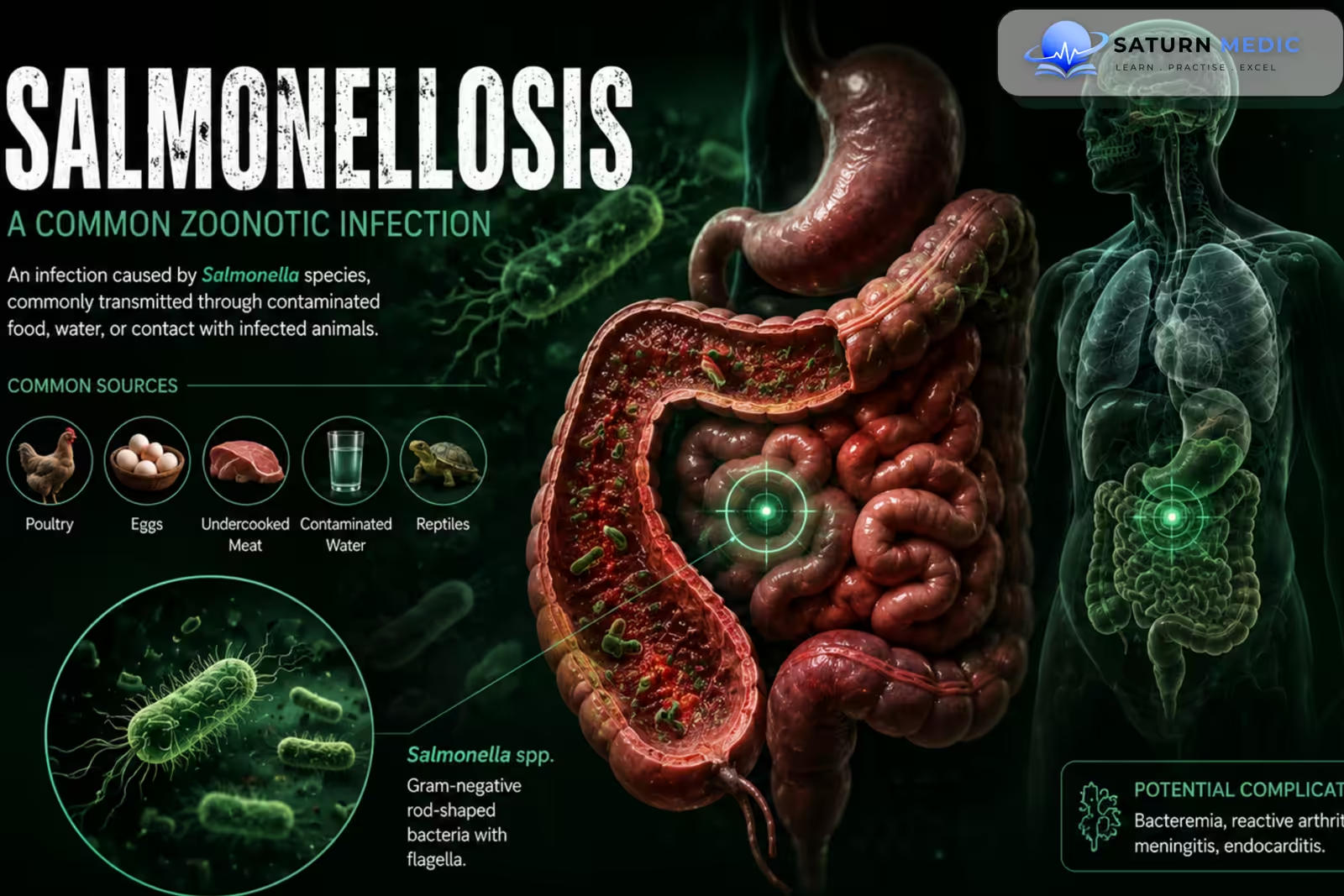
Salmonellosis is an infection caused by bacteria of the genus Salmonella. It is commonly acquired through contaminated food or water and usually causes acute gastroenteritis with diarrhea,abdominal cramps, fever, nausea, and vomiting
Also called
ICD-10
Specialty
Onset
Reviewed
-
OverviewOverview
-
Etiology & Risk FactorsEtiology & Risk Factors
-
PathophysiologyPathophysiology
-
Clinical PresentationClinical Presentation
-
History TakingHistory Taking
-
Physical ExaminationPhysical Examination
-
InvestigationsInvestigations
-
DiagnosisDiagnosis
-
ManagementManagement
-
ComplicationsComplications
-
PrognosisPrognosis
-
Key Points / Clinical PearlsKey Points / Clinical Pearls
Overview
–Salmonellosis ranges from mild self-limited gastroenteritis to severe invasive disease.
-It can be broadly divided into:
- Nontyphoidal Salmonella infection: primarily causes gastroenteritis but can become invasive.
- Typhoidal Salmonella infection: caused by Salmonella Typhi or Salmonella Paratyphi and causes enteric fever.
Etiology & Risk Factors
-Etiology
–Salmonellosis is caused by Salmonella species, which are Gram-negative, facultatively anaerobic bacilli.
Transmission usually occurs through ingestion of contaminated:
- Eggs
- Poultry
- Meat
- Unpasteurized milk
- Contaminated food or water
-Animal contact can also transmit infection.
-Risk Factors for Salmonellosis
- Consumption of contaminated food
- Exposure to reptiles or other infected animals
- Extremes of age
- Immunosuppression
- Reduced gastric acidity
Pathophysiology
Ingestion of Salmonella → survival through the gastrointestinal tract → invasion of intestinal mucosa → inflammatory response → intestinal secretion and mucosal dysfunction → diarrhea and abdominal cramps → possible bloodstream invasion → bacteremia and systemic infection
Clinical Presentation
-Symptoms:
Salmonellosis commonly causes:
- Diarrhea
- Fever
- Abdominal cramps
- Nausea
- Vomiting
- Headache
- Malaise
Diarrhea may occasionally contain blood or mucus.
-Signs:
- Fever
- Abdominal tenderness
- Increased bowel sounds
- Signs of dehydration
- Tachycardia in significant fluid loss
-Invasive Salmonellosis is more likely in infants, older adults, and immunocompromised patients.
History Taking
-Ask about:
- Onset and duration of diarrhea
- Frequency and character of stools
- Blood or mucus in stool
- Fever
- Abdominal pain
- Vomiting
- Fluid intake and urine output
- Recent food consumption
- Undercooked eggs, poultry, or meat
- Unpasteurized food or milk
- Recent travel
- Animal or reptile exposure
Physical Examination
-General Examination
- Temperature
- Heart rate and blood pressure
- Hydration status
- Mental status
- Signs of systemic toxicity
-System-Specific Examination:
- Abdominal tenderness
- Abdominal distension
- Bowel sounds
- Signs of peritonitis in severe disease
Investigations
-Biochemistry / Specific Tests
Electrolytes and renal function when significant dehydration is present
Stool culture when microbiological confirmation is required
Blood cultures when bacteremia or sepsis is suspected
Antimicrobial susceptibility testing when clinically indicated
-Imaging
Not routinely required for uncomplicated Salmonellosis.
Imaging may be indicated when complications or an alternative diagnosis is suspected.
-Special / Confirmatory Tests
Stool Culture
Stool culture can confirm nontyphoidal Salmonella gastroenteritis and allows antimicrobial susceptibility testing.
For suspected enteric fever, blood cultures are particularly important.
Important Investigation Note
Stool culture is most useful in severe, persistent, bloody, outbreak-associated, or high-risk cases rather than every patient with uncomplicated acute diarrhea.
Diagnosis
Salmonellosis is usually suspected from acute diarrhea, fever, abdominal cramps, and an appropriate exposure history.
Typical gastroenteritis → assess severity and dehydration → stool culture when indicated → blood cultures if invasive disease is suspected.
The organism is confirmed by microbiological culture or appropriate molecular testing.
Related Topics
Management
Non-Typhoidal Salmonella · Management
| Scenario | General Management | Antibiotic | Duration |
|---|---|---|---|
| Uncomplicated gastroenteritis Immunocompetent adult |
Oral rehydration — mainstay. Rest, bland diet. No antidiarrhoeals (prolong carriage). Stool culture to confirm. | Antibiotics NOT indicated — prolong faecal carriage, increase relapse, select resistance | Self-limiting 4–7 days |
| High-risk patient Immunocompromised, SCD, asplenia, extremes of age |
Oral/IV rehydration. Blood cultures before antibiotics. Admit if systemic features. | Ciprofloxacin 500 mg BD PO or 400 mg IV BD Ceftriaxone 2g IV OD — fluoroquinolone resistant |
5–7 days |
| Bacteraemia | Blood cultures × 2. IV access. Echo if endovascular source suspected. CT aorta in elderly — exclude mycotic aneurysm. | Ciprofloxacin 400 mg IV BD → PO step-down Ceftriaxone 2g IV OD — if resistant |
14 days |
| Osteomyelitis (SCD) | MRI/bone scan to confirm. Orthopaedic review. Surgical drainage if abscess present. | Ciprofloxacin IV → PO step-down Ceftriaxone 2g IV OD |
4–6 weeks |
| Mycotic aneurysm | Urgent vascular surgery. CT angiography. IV antibiotics pre/post-op. | Ceftriaxone 2g IV OD — preferred Ciprofloxacin PO — long-term suppression post-surgery |
6 weeks IV; lifelong PO if repair not possible |
| Reactive arthritis | NSAIDs for joint pain and inflammation. Physical therapy. Antibiotics do not alter course. | Treat active GI infection only if still ongoing. Antibiotics do not prevent or shorten reactive arthritis. | NSAIDs: weeks–months |
Typhoid Fever (Enteric Fever) · Management
| Scenario | 1st Line | Alternative | Duration |
|---|---|---|---|
| Uncomplicated typhoid Sensitive strain — outpatient |
Azithromycin 1g OD PO — now preferred 1st line (less resistance, oral, safe in pregnancy) Ciprofloxacin 500 mg BD PO — if fluoroquinolone sensitive |
Cefixime 400 mg OD PO | 5 days (azithromycin) 7–14 days (others) |
| Severe / hospitalised | Ceftriaxone 2g IV OD — drug of choice. Step-down to oral when improving. | Azithromycin IV → PO Ciprofloxacin IV — if sensitive |
10–14 days |
| MDR typhoid Resistant to ampicillin + chloramphenicol + TMP-SMX |
Ceftriaxone 2g IV OD Azithromycin 1g OD PO |
Ciprofloxacin — if fluoroquinolone sensitive | 10–14 days |
| XDR typhoid Resistant to all 1st-line + fluoroquinolones + 3rd-gen ceph |
Azithromycin 1g OD PO — often still sensitive Meropenem IV — severe XDR |
Tigecycline — salvage | 14 days |
| Chronic carrier Stool positive >12 months |
Ciprofloxacin 750 mg BD PO × 4 weeks Cholecystectomy if gallstones + persistent carriage |
Amoxicillin high dose × 3 months | 4 weeks |
| Intestinal perforation | Emergency laparotomy + Ceftriaxone IV + Metronidazole IV | Meropenem IV — severe sepsis / polymicrobial | Until clinically clear post-op |
| Typhoid encephalopathy | Ceftriaxone IV + Dexamethasone 3 mg/kg loading → 1 mg/kg q6h × 48h | Steroids shown to reduce mortality in severe encephalopathy | Steroids 48h; antibiotics 14 days |
Complications
Typhoid Fever (Enteric Fever) · Complications
| Complication | Details | Management |
|---|---|---|
| Intestinal perforation Most feared — 1–3% |
Ileal perforation at Peyer's patches — sudden worsening abdominal pain, board-like rigidity, ↑WBC, free air on CXR/AXR | Emergency laparotomy — primary repair or resection. Broad-spectrum IV antibiotics. |
| GI haemorrhage | Peyer's patch ulceration → melaena or frank rectal bleeding. May be massive. Typically week 3. | IV fluids, blood transfusion. Endoscopy ± intervention. Continue antibiotics. |
| Typhoid encephalopathy | Delirium, coma, seizures. High mortality. Mechanism: endotoxin-mediated CNS toxicity. | Dexamethasone IV + antibiotics — shown to reduce mortality |
| Myocarditis | ECG changes, arrhythmias, cardiac failure. Rare. Week 2–3. | Cardiac monitoring, supportive. Treat arrhythmia. |
| Cholecystitis / chronic carrier | Gallbladder colonisation — chronic carrier if stool positive >12 months. Gallstones predispose. Public health risk. | Ciprofloxacin 4 weeks. Cholecystectomy if gallstones + persistent carriage. |
| Relapse | 10% — milder episode 2 weeks after apparent recovery. Same strain. More common after chloramphenicol treatment. | Repeat antibiotic course — same or switch agent |
| Haemolytic anaemia / DIC | Rare. G6PD deficiency increases haemolysis risk. DIC in severe sepsis. | Transfusion, haematology review. Treat underlying infection aggressively. |
Non-Typhoidal Salmonella · Complications
| Complication | Details | Who is at risk |
|---|---|---|
| Bacteraemia / Septicaemia | Salmonella enters bloodstream — persistent fever, rigors, no localising symptoms. Most common invasive complication. Occurs in ~5% overall. | Immunocompromised, extremes of age, sickle cell, asplenia |
| Salmonella osteomyelitis | Classic SCD association — Salmonella is the most common cause of osteomyelitis in sickle cell disease (not S. aureus). Long bones affected. Bone pain + fever. | Sickle cell disease |
| Mycotic (infected) aneurysm | NTS tropism for abnormal vasculature — atherosclerotic aorta especially. Back/abdominal pain + bacteraemia. Surgical emergency — CT aorta urgently. | Elderly, atherosclerosis |
| Reactive arthritis | Post-infectious oligoarthritis 2–4 weeks after GI infection. HLA-B27 association. Knees, ankles, sacroiliac joints. May include urethritis + conjunctivitis — Reiter's triad. | HLA-B27 positive |
| Meningitis | Rare — predominantly neonates and infants. High mortality and neurological sequelae. | Neonates, infants |
| Haemolytic uraemic syndrome (HUS) | Microangiopathic haemolytic anaemia + thrombocytopenia + AKI. More commonly E. coli O157 but NTS can trigger. | Children |
Prognosis
The prognosis of uncomplicated Salmonellosis is generally excellent, with most patients recovering within several days without antibiotics. Severe invasive disease has a higher risk of complications and death, particularly in infants, older adults, and immunocompromised patients.
Key Points / Clinical Pearls
- Salmonellosis is caused by Salmonella species.
- It is commonly transmitted through contaminated food or water.
- Poultry, eggs, and meat are important sources.
- Nontyphoidal Salmonella commonly causes acute gastroenteritis.
- Typical symptoms include diarrhea, fever, and abdominal cramps.
- Vomiting and nausea may also occur.
- Dehydration is an important complication.
- Most uncomplicated cases are self-limited.
- Oral rehydration is the main treatment.
- Stool culture is useful in severe, persistent, bloody, or outbreak-associated disease.
- Blood cultures are important when bacteremia or enteric fever is suspected.
- Antibiotics are not routinely required for uncomplicated nontyphoidal Salmonellosis.
- Invasive Salmonellosis may cause bacteremia and sepsis.
- World Health Organization (WHO). Salmonella (Non-Typhoidal) .
- Centers for Disease Control and Prevention (CDC). Salmonella .
- Centers for Disease Control and Prevention (CDC). Typhoid Fever .
- Crump JA, Sjölund-Karlsson M, Gordon MA, Parry CM. Epidemiology, Clinical Presentation, Laboratory Diagnosis, Antimicrobial Resistance, and Antimicrobial Management of Invasive Salmonella Infections. Clin Microbiol Rev. 2015;28(4):901-937. PubMed .
- Hohmann EL. Nontyphoidal Salmonellosis. Clin Infect Dis. 2001;32(2):263-269. PubMed .
- Shane AL, Mody RK, Crump JA, et al. 2017 Infectious Diseases Society of America Clinical Practice Guidelines for the Diagnosis and Management of Infectious Diarrhea. Clin Infect Dis. 2017;65(12):e45-e80. PubMed .
- National Library of Medicine (NIH). Salmonellosis . StatPearls.