

Clinical Subject Page
Streptococcal Infection
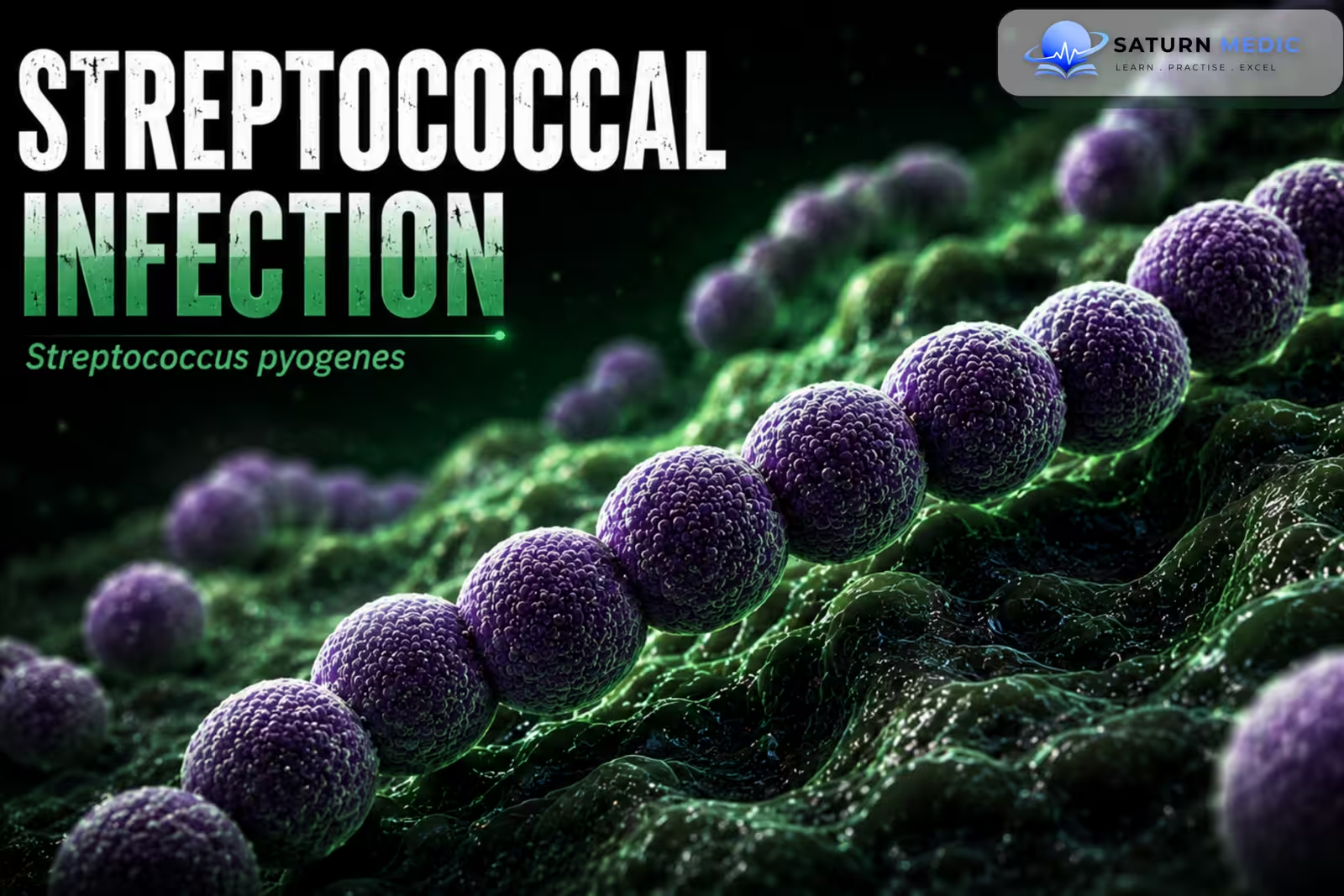
Streptococcal Infection refers to infections caused by bacteria belonging to the genus Streptococcus. These Gram-positive bacteria can cause localized infections such as pharyngitis and skin infections, as well as serious invasive diseases including pneumonia, bacteremia, meningitis, necrotizing fasciitis, and sepsis
Also called
ICD-10
Specialty
Onset
Reviewed
-
OverviewOverview
-
Etiology & Risk FactorsEtiology & Risk Factors
-
PathophysiologyPathophysiology
-
Clinical PresentationClinical Presentation
-
Bacterial ClassificationBacterial Classification
-
History TakingHistory Taking
-
Physical ExaminationPhysical Examination
-
InvestigationsInvestigations
-
DiagnosisDiagnosis
-
ManagementManagement
-
ComplicationsComplications
-
PrognosisPrognosis
-
Key Points / Clinical PearlsKey Points / Clinical Pearls
Overview
-Streptococcal Infection can affect almost any body system. Clinical manifestations depend on the species and site of infection.
Important examples include:
- Pharyngitis
- Tonsillitis
- Scarlet fever
- Impetigo
- Cellulitis
- Erysipelas
- Pneumonia
- Meningitis
- Bacteremia
- Endocarditis
- Necrotizing fasciitis
- Sepsis
-Some infections can also cause immune-mediated complications after the initial infection, particularly acute rheumatic fever and post-streptococcal glomerulonephritis.
Etiology & Risk Factors
-Etiology
–Streptococcal Infection is caused by Gram-positive cocci that typically occur in chains or pairs.
Important species include:
- Streptococcus pyogenes — Group A Streptococcus (GAS)
- Streptococcus agalactiae — Group B Streptococcus (GBS)
- Streptococcus pneumoniae — pneumococcus
- Viridans group streptococci
- Streptococcus gallolyticus
Transmission varies according to the organism and infection, including respiratory droplets, direct contact, and endogenous colonization.
-Risk Factors
- Close contact with infected individuals
- Crowded living conditions
- Skin breaks or wounds
- Diabetes mellitus
- Immunosuppression
Pathophysiology
Streptococcal exposure or colonization → bacterial adherence and multiplication → local tissue invasion and inflammation → clinical infection → possible bloodstream invasion → sepsis or metastatic infection
Certain strains can also produce toxins or trigger immune-mediated disease.
Clinical Presentation
-Symptoms:
Presentation depends on the site of infection.
Pharyngitis
- Sudden sore throat
- Fever
- Painful swallowing
- Headache
- Tender cervical lymph nodes
Skin Infection
- Redness
- Pain
- Swelling
- Warmth
- Fever
Invasive Infection
- High fever
- Severe pain
- Chills
- Weakness
- Hypotension
- Altered mental status
-Signs:
- Tonsillar erythema or exudates
- Tender anterior cervical lymphadenopathy
- Erythematous skin
- Cellulitis or erysipelas
- Fever
- Tachycardia
- Hypotension in severe infection
Bacterial Classification
Streptococci · Classification
| Organism | Hemolysis / group | Key test / clue | Classic association |
|---|---|---|---|
| S. pyogenes | β Group A | PYR +; bacitracin sensitive | Pharyngitis, scarlet fever, rheumatic fever, PSGN |
| S. agalactiae | β Group B | CAMP + | Neonatal sepsis, meningitis |
| S. pneumoniae | α No Lancefield group | Optochin sensitive + bile soluble | CAP, otitis media, sinusitis, meningitis |
| Viridans streptococci | α No Lancefield group | Optochin resistant; bile insoluble | Dental caries + subacute endocarditis |
| Enterococcus spp. | Usually γ Group D | Bile-esculin +; 6.5% NaCl growth | UTI, endocarditis |
| S. gallolyticus | Usually α/γ · Group D | Bile-esculin + | Colorectal neoplasia |
| S. anginosus group | α / β / γ | Abscess-forming | Deep abscesses |
History Taking
-Ask about:
- Fever and duration
- Sore throat or painful swallowing
- Skin wounds or infections
- Rapid progression of pain or swelling
- Recent respiratory infection
- Recent close contact with infected individuals
- Recent surgery or trauma
- Diabetes or immunosuppression
- Previous streptococcal infection
- Joint or muscle pain
- Dark urine or edema after recent pharyngitis or skin infection
Physical Examination
-General Examination
- Temperature
- Heart rate and blood pressure
- General appearance
- Signs of sepsis or shock
-System-Specific Examination:
- Examine the throat and tonsils
- Palpate cervical lymph nodes
- Inspect the skin for cellulitis, erysipelas, or wounds
- Assess rapidly progressive soft-tissue lesions
- Examine joints when septic arthritis is suspected
- Perform neurological examination when meningitis is suspected
Investigations
-Complete Blood Count
Useful when systemic or invasive infection is suspected.
-Biochemistry / Specific Tests
Depending on the presentation:
Throat swab or rapid antigen detection test for suspected GAS pharyngitis
Blood cultures for suspected bacteremia or sepsis
Wound or tissue culture from purulent or deep infections
Antistreptolysin O (ASO) antibodies in selected patients when investigating a recent streptococcal infection and its immune-mediated complications
-Imaging
Imaging depends on the suspected infection:
Chest X-ray for suspected pneumonia
Ultrasound for selected soft-tissue collections
CT or MRI when deep infection or necrotizing fasciitis is suspected
-Special / Confirmatory Tests
Microbiological Culture
Culture identifies the organism and provides antimicrobial susceptibility information when appropriate.
For suspected necrotizing fasciitis, surgical exploration and tissue sampling are more important than delaying treatment for imaging.
Diagnosis
Streptococcal Infection is diagnosed according to the clinical syndrome and confirmed with appropriate microbiological testing.
Clinical presentation → site-specific specimen → rapid testing or culture → identification of Streptococcus species → susceptibility testing when appropriate.
For GAS pharyngitis, clinical assessment combined with rapid antigen testing or throat culture is used when indicated.
Related Topics
Management
Streptococcal Infections · Treatment by Condition
| Condition | 1st Line | Alternative (Penicillin allergy) | Duration |
|---|---|---|---|
| Pharyngitis / Tonsillitis | Phenoxymethylpenicillin (Pen V) 500 mg QDS PO or Amoxicillin 500 mg TDS PO |
Azithromycin 500 mg OD PO Cefalexin 500 mg QDS PO |
10 days (5 days azithromycin) |
| Scarlet fever | Amoxicillin 500 mg TDS PO or Pen V 500 mg QDS PO |
Azithromycin PO | 10 days |
| Impetigo Non-bullous (GAS or Staph) |
Topical mupirocin — localised Flucloxacillin PO — extensive (covers both GAS + Staph) |
Cefalexin PO | 5–7 days |
| Erysipelas Superficial dermis, raised border |
Benzylpenicillin IV (severe) Pen V / Amoxicillin PO (mild) |
Clindamycin IV/PO Cefalexin PO |
5–10 days |
| Cellulitis Deeper dermis — GAS ± Staph |
Flucloxacillin PO/IV — covers both Mild: Cefalexin PO |
Clindamycin PO/IV Co-amoxiclav PO |
5–7 days (mild) 10–14 days (severe) |
| Necrotising fasciitis Surgical emergency |
Benzylpenicillin 2.4g IV q4h + Clindamycin 900 mg IV q8h — anti-toxin + Meropenem — if mixed/polymicrobial suspected |
IVIG — adjunct for toxin neutralisation Surgical debridement — essential, not optional |
Until clinically clear post-debridement |
| Streptococcal TSS | Benzylpenicillin IV + Clindamycin IV (anti-toxin — inhibits SPE production) | IVIG 1–2g/kg — adjunct; neutralises superantigen ICU + vasopressors if shock |
10–14 days |
| Rheumatic fever — prophylaxis To prevent ARF recurrence |
Benzathine penicillin G 1.2 MU IM every 4 weeks — gold standard secondary prophylaxis | Pen V 250 mg BD PO Azithromycin — if penicillin allergy |
5–10 years (no carditis) 10 years or to age 40 (carditis) |
| Bacteraemia / Endocarditis | Benzylpenicillin 2.4g IV q4h ± Gentamicin — synergy for endocarditis |
Ceftriaxone 2g IV OD Vancomycin — if penicillin allergy |
4 weeks (native valve) 6 weeks (prosthetic) |
| Condition | 1st Line | Alternative | Duration |
|---|---|---|---|
| Neonatal sepsis / meningitis | Benzylpenicillin IV + Gentamicin — synergistic; start empirically De-escalate to penicillin alone once confirmed GBS |
Ampicillin + Gentamicin — equivalent | Sepsis: 10 days Meningitis: 14–21 days |
| Intrapartum prophylaxis GBS+ on vaginal swab at 35–37 wks |
Benzylpenicillin 3g IV loading → 1.5g IV q4h during labour | Ampicillin 2g IV → 1g IV q4h Allergy (low risk): Cefalexin Allergy (high risk): Clindamycin or Vancomycin |
Until delivery |
| Maternal bacteraemia / chorioamnionitis | Benzylpenicillin IV + Gentamicin | Ampicillin + Gentamicin | 7–14 days |
| Adult invasive disease Bacteraemia, pneumonia, endocarditis (elderly / DM) |
Benzylpenicillin IV or Ampicillin IV | Ceftriaxone 2g IV OD Vancomycin — penicillin allergy |
10–14 days (bacteraemia) 4 weeks (endocarditis) |
| Condition | 1st Line | Alternative / Resistant | Duration |
|---|---|---|---|
| CAP (mild — outpatient) | Amoxicillin 500 mg–1g TDS PO | Doxycycline 200 mg OD PO Clarithromycin 500 mg BD PO |
5–7 days |
| CAP (moderate — hospitalised) | Amoxicillin 1g TDS IV/PO ± Clarithromycin (atypical cover) |
Ceftriaxone 2g IV OD + Clarithromycin |
7 days |
| CAP (severe — ICU) | Ceftriaxone 2g IV OD + Clarithromycin IV or + Levofloxacin 500 mg IV OD |
Moxifloxacin IV — if beta-lactam allergy | 7–10 days |
| Meningitis | Ceftriaxone 2g IV q12h — empirical first line + Dexamethasone 0.15 mg/kg q6h × 4 days — reduces hearing loss + mortality |
PRSP (penicillin-resistant): Ceftriaxone + Vancomycin Pen-sensitive: Benzylpenicillin IV |
10–14 days |
| Otitis media Children — watchful waiting first if mild |
Amoxicillin 80–90 mg/kg/day (high dose) — overcomes intermediate resistance | Co-amoxiclav — amoxicillin failure or β-lactamase producers Cefuroxime |
5–10 days |
| Sinusitis (bacterial) | Amoxicillin 500 mg TDS PO or Co-amoxiclav — if no improvement in 48h |
Doxycycline or Levofloxacin — penicillin allergy | 5–7 days |
| Endocarditis | Benzylpenicillin 1.2g IV q4h — penicillin-sensitive Ceftriaxone 2g IV OD — alternative |
PRSP: Ceftriaxone + Vancomycin | 4 weeks |
| Condition | 1st Line | Alternative / VRE | Duration |
|---|---|---|---|
| UTI (uncomplicated) | Amoxicillin 500 mg TDS PO or Nitrofurantoin 100 mg BD PO |
Fosfomycin 3g single dose Co-amoxiclav PO |
5–7 days |
| UTI (complicated / catheter-associated) | Amoxicillin IV/PO Remove catheter if possible |
Vancomycin IV — if VRE suspected or amoxicillin resistant | 7–14 days |
| Endocarditis Most serious enterococcal infection |
Ampicillin 2g IV q4h + Ceftriaxone 2g IV q12h — preferred combination (no nephrotoxicity) or Ampicillin + Gentamicin — classic synergistic combination |
VRE endocarditis: Linezolid or Daptomycin high dose | 6 weeks |
| Bacteraemia | Ampicillin IV — E. faecalis Vancomycin IV — E. faecium (often ampicillin resistant) |
VRE: Linezolid or Daptomycin | 14 days |
| VRE (Vancomycin-Resistant Enterococcus) | Linezolid 600 mg BD IV/PO Daptomycin 8–12 mg/kg IV OD |
Tedizolid — linezolid alternative Tigecycline — salvage (high failure rate in bacteraemia) |
Per site (14–42 days) |
| Condition | 1st Line | Alternative | Duration |
|---|---|---|---|
| Native valve endocarditis Penicillin-sensitive (MIC ≤0.125) |
Benzylpenicillin 1.2g IV q4h or Ceftriaxone 2g IV OD — once-daily; outpatient option |
Vancomycin IV — penicillin allergy | 4 weeks |
| Native valve endocarditis Penicillin-tolerant (MIC 0.125–2) |
Benzylpenicillin IV + Gentamicin × 2 weeks synergy | Ceftriaxone + Gentamicin | 4 weeks |
| Prosthetic valve endocarditis | Benzylpenicillin IV + Gentamicin — 6 weeks total | Vancomycin IV ± Gentamicin | 6 weeks |
| Dental prophylaxis High-risk cardiac conditions |
Amoxicillin 3g PO single dose 1h before procedure | Clindamycin 600 mg PO — penicillin allergy Azithromycin 500 mg PO |
Single dose |
Complications
- Abscess formation
- Bacteremia
- Sepsis
- Septic shock
- Necrotizing fasciitis
- Toxic shock syndrome
- Pneumonia
- Meningitis
- Endocarditis
- Osteomyelitis
- Septic arthritis
- Acute rheumatic fever
- Post-streptococcal glomerulonephritis
Prognosis
The prognosis varies according to the organism, infection site, and severity. Localized infections such as uncomplicated pharyngitis generally have an excellent outcome with appropriate treatment. Invasive infections such as bacteremia, necrotizing fasciitis, meningitis, and septic shock can cause substantial morbidity and mortality, particularly when treatment is delayed.
Key Points / Clinical Pearls
- Streptococcal Infection is caused by Gram-positive Streptococcus species.
- Streptococcus pyogenes is Group A Streptococcus.
- Streptococcus agalactiae is Group B Streptococcus.
- Streptococcus pneumoniae commonly causes respiratory and invasive infections.
- Pharyngitis and skin infections are common presentations.
- Invasive disease can cause bacteremia and sepsis.
- Severe pain out of proportion to skin findings suggests necrotizing fasciitis.
- Appropriate microbiological testing helps identify the causative organism.
- Blood cultures are important in suspected bacteremia or sepsis.
- Penicillin or amoxicillin is commonly used for susceptible GAS pharyngitis.
- Severe invasive disease requires intravenous antibiotics.
- Necrotizing fasciitis requires urgent surgical debridement.
- Centers for Disease Control and Prevention (CDC). Group A Streptococcal (GAS) Disease .
- Centers for Disease Control and Prevention (CDC). Clinical Guidance for Group A Streptococcal Pharyngitis .
- Carapetis JR, Steer AC, Mulholland EK, Weber M. The Global Burden of Group A Streptococcal Diseases. Lancet Infect Dis. 2005;5(11):685-694. PubMed .
- Stevens DL, Bryant AE. Severe Group A Streptococcal Infections. In: Streptococcus pyogenes: Basic Biology to Clinical Manifestations. NCBI Bookshelf .
- Stevens DL, Bisno AL, Chambers HF, et al. Practice Guidelines for the Diagnosis and Management of Skin and Soft Tissue Infections. Clin Infect Dis. 2014;59(2):e10-e52. Clinical Infectious Diseases .
- Shulman ST, Bisno AL, Clegg HW, et al. Clinical Practice Guideline for the Diagnosis and Management of Group A Streptococcal Pharyngitis. Clin Infect Dis. 2012;55(10):e86-e102. PubMed .
- National Library of Medicine (NIH). Streptococcal Infections . StatPearls.