

Clinical Subject Page
Tetanus
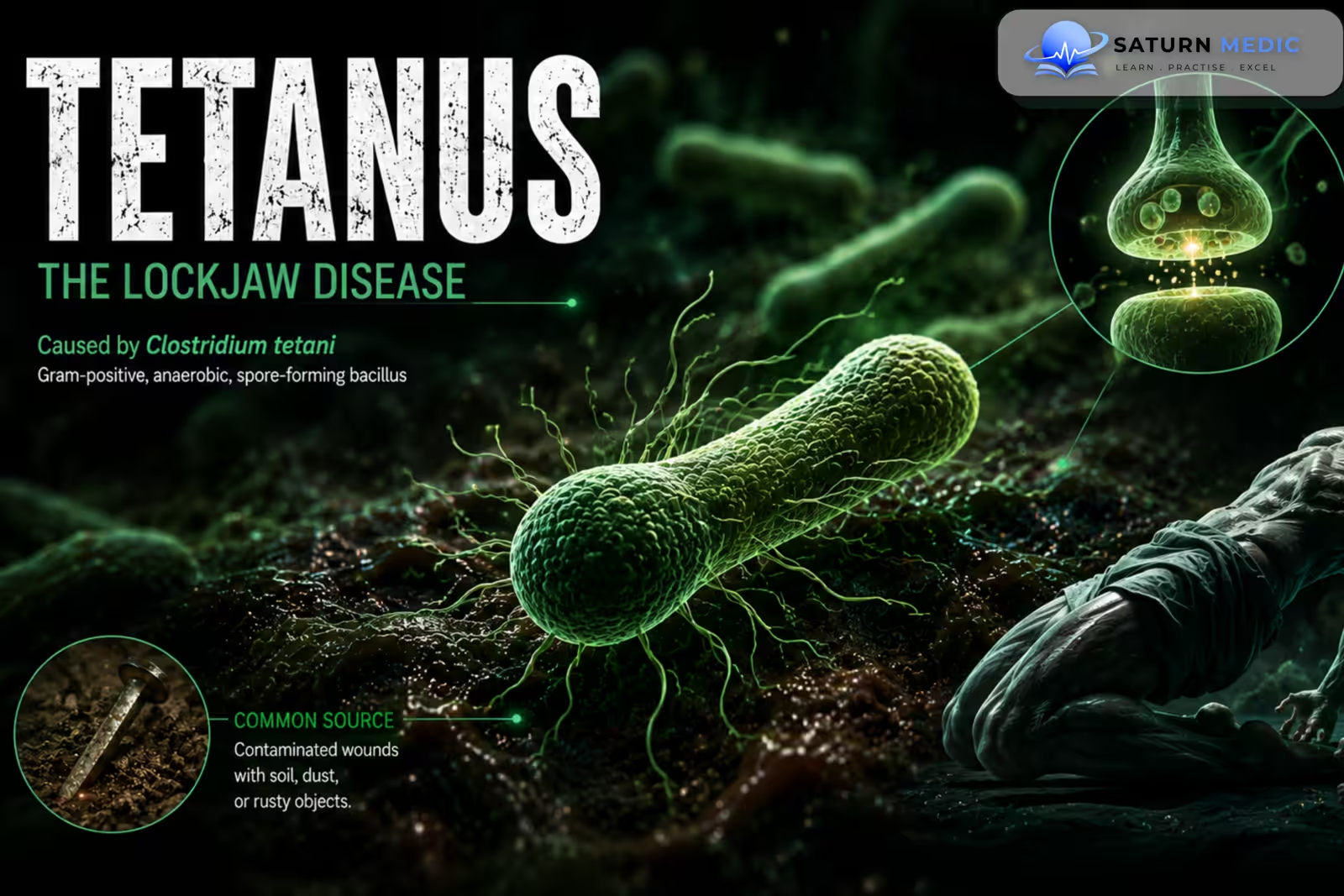
Tetanus is a serious neurological disease caused by the neurotoxin produced by Clostridium tetani. The bacterium forms resistant spores that commonly enter the body through contaminated wounds
Also called
ICD-10
Specialty
Onset
Reviewed
-
OverviewOverview
-
Etiology & Risk FactorsEtiology & Risk Factors
-
PathophysiologyPathophysiology
-
Clinical PresentationClinical Presentation
-
History TakingHistory Taking
-
Physical ExaminationPhysical Examination
-
InvestigationsInvestigations
-
DiagnosisDiagnosis
-
ManagementManagement
-
ComplicationsComplications
-
PrognosisPrognosis
-
Key Points / Clinical PearlsKey Points / Clinical Pearls
Overview
–Tetanus spores are widely present in soil and can contaminate wounds, particularly deep puncture wounds or wounds containing devitalized tissue.
The disease does not spread from person to person.
-The classic presentation is:
Trismus → neck stiffness → generalized muscle rigidity → painful spasms
Severe disease can cause respiratory failure and autonomic instability.
Etiology & Risk Factors
–Tetanus is caused by Clostridium tetani, an anaerobic, Gram-positive, spore-forming bacillus.
-The organism enters damaged tissue as spores and produces tetanospasmin under anaerobic conditions.
Common wound types include:
- Deep puncture wounds
- Contaminated wounds
- Crush injuries
- Burns
- Wounds containing foreign bodies
-Risk Factors
- Incomplete or absent vaccination
- Dirty or contaminated wounds
- Deep puncture wounds
- Devitalized tissue
- Retained foreign bodies
- Intravenous drug use
Pathophysiology
C. tetani spores enter wound → germination in anaerobic tissue → tetanospasmin production → retrograde transport to the nervous system → toxin binds presynaptic nerve terminals → inhibition of GABA and glycine release → uncontrolled motor neuron activity → muscle rigidity and spasms
The toxin also affects autonomic nervous system regulation, which can produce severe cardiovascular instability.
Clinical Presentation
-Symptoms:
Tetanus typically develops after an incubation period of several days to weeks.
Common symptoms include:
- Trismus (lockjaw)
- Neck stiffness
- Difficulty swallowing
- Muscle rigidity
- Painful muscle spasms
- Abdominal muscle rigidity
-Signs:
Characteristic findings include:
- Trismus
- Risus sardonicus
- Generalized muscle rigidity
- Reflex muscle spasms
- Opisthotonus in severe disease
Spasms may be triggered by:
- Loud noises
- Touch
- Light
- Minor sensory stimulation
History Taking
-Ask about:
- Recent wounds
- Type and depth of wound
- Soil or fecal contamination
- Foreign bodies
- Previous tetanus vaccination
- Number of previous vaccine doses
- Time since the last booster
- Onset of trismus
- Difficulty swallowing
- Muscle spasms
Physical Examination
-General Examination
- Assess airway
- Respiratory rate and oxygen saturation
- Heart rate and blood pressure
- Temperature
- Level of consciousness
-System-Specific Examination:
- Assess trismus
- Examine neck stiffness
- Assess generalized rigidity
- Observe muscle spasms
- Examine the wound carefully
- Assess for respiratory muscle involvement
- Monitor for autonomic instability
Investigations
Biochemistry / Specific Tests
-
Electrolytes
-
Renal function
-
Creatine kinase (CK) when significant muscle spasms or muscle injury are present
-
Arterial Blood Gas in severe respiratory disease
-Imaging
Not routinely required to diagnose Tetanus.
Imaging may be performed to evaluate suspected complications or alternative diagnoses.
-Special / Confirmatory Tests
There is no reliable laboratory test that confirms or excludes clinical Tetanus.
Diagnosis of Tetanus is primarily clinical.
Wound cultures may identify C. tetani, but a negative culture does not exclude the disease.
-Important Investigation Note
Tetanus is a clinical diagnosis; treatment should not be delayed while waiting for laboratory confirmation.
Diagnosis
-Tetanus is diagnosed clinically based on:
Trismus + generalized muscle rigidity/spasms ± autonomic dysfunction + compatible wound history and inadequate immunization.
Laboratory testing is not required for diagnosis.
Related Topics
Management
Tetanus · Management
| Agent | Dose | Role | Duration |
|---|---|---|---|
| Metronidazole 1st line |
500 mg IV/PO q8h | Kills vegetative C. tetani at wound — stops ongoing toxin production. Preferred: does NOT antagonise GABA unlike penicillin. | 7–10 days |
| Benzylpenicillin Alternative |
1.2g IV q6h | Effective against C. tetani but may worsen spasms — penicillin is a GABA antagonist. Use only if metronidazole unavailable. | 7–10 days |
| Doxycycline Alternative |
100 mg BD PO | Oral alternative — resource-limited settings or PO step-down. | 7–10 days |
| Agent | Dose | Role | Priority |
|---|---|---|---|
| Diazepam | 5–10 mg IV q1–4h PRN or 50–100 mg/day continuous infusion | GABA-A agonist — muscle relaxation + sedation. Large doses often needed. 1st line in most settings. | 1st line |
| Midazolam | 0.05–0.1 mg/kg/h IV infusion | Preferred for ICU continuous infusion — shorter acting, less propylene glycol toxicity than diazepam. | 1st line (ICU) |
| Magnesium sulphate | Loading: 5g IV over 20 min → 2–3g/h infusion. Titrate to loss of patellar reflex. | Reduces spasm frequency + autonomic instability. Blocks NMJ, inhibits catecholamine release. Monitor: patellar reflex, RR, UO. | 2nd line / adjunct |
| Vecuronium / Pancuronium | Vecuronium 0.1 mg/kg IV bolus or infusion | Neuromuscular blockade — refractory spasms uncontrolled by benzodiazepines. Requires mechanical ventilation. | Refractory only |
| Intrathecal baclofen | Specialist use only | GABA-B agonist — reduces spinal spasm directly. Severe refractory tetanus only. | Specialist / refractory |
Tetanus · Prevention & Wound Management
| Wound type | Vaccination status | Action |
|---|---|---|
| Clean wound | Fully vaccinated (≥3 doses) + last dose <10 years | Nothing required |
| Clean wound | Fully vaccinated + last dose >10 years | Toxoid booster only |
| Dirty / tetanus-prone wound Soil, manure, puncture, devitalised tissue, burns, animal bites |
Fully vaccinated + last dose <5 years | Nothing required (adequate protection) |
| Dirty / tetanus-prone wound | Fully vaccinated + last dose >5 years | Toxoid booster only |
| Dirty / tetanus-prone wound | Unvaccinated or unknown or incomplete (<3 doses) | HTIG 250 IU IM (different site) + Full toxoid course (3 doses) |
Complications
Tetanus · Complications
| Complication | Details | Timing / Notes |
|---|---|---|
| Laryngospasm / asphyxia | Spasm of laryngeal muscles → sudden airway obstruction → respiratory arrest. Most acute life-threatening complication. Triggered by noise, touch, light. | Any time — acute emergency |
| Respiratory failure | Sustained spasm of respiratory muscles → hypoxia, hypercapnia, CO₂ retention. Compounded by diaphragm involvement. Requires mechanical ventilation. | Early — leading cause of death |
| Autonomic dysfunction | Catecholamine storm — tachycardia, hypertension, sweating, hypersalivation alternating with bradycardia, hypotension. Appears day 4–8 after spasm onset. | Late — leading ICU cause of death |
| Rhabdomyolysis | Sustained violent muscle spasms → massive muscle breakdown → markedly elevated CK → myoglobinuria → acute kidney injury. | Proportional to spasm severity |
| Fractures | Intense opisthotonus and spasms → compression fractures of vertebrae, long bone fractures — especially in elderly. | Severe / prolonged disease |
| Aspiration pneumonia | Dysphagia + hypersalivation + impaired airway protection → aspiration of secretions → pneumonia. Common in ventilated patients. | ICU — ventilated patients |
| Deep vein thrombosis / PE | Prolonged immobility + ICU admission → DVT risk. Pulmonary embolism is a recognised cause of death in tetanus. | Prolonged ICU stay |
| Pressure ulcers / contractures | Prolonged rigidity and bed rest → pressure sores over bony prominences. Long-term muscle contractures in survivors. | Prolonged disease |
| Neonatal tetanus | Generalised tetanus in neonate — umbilical stump entry. Poor feeding, rigidity, spasms day 3–14 of life. Mortality up to 50% even with treatment. | High mortality — preventable |
Prognosis
The prognosis of Tetanus depends on disease severity, incubation period, vaccination status, age, and the presence of respiratory or autonomic complications. Severe generalized disease can be fatal, but early intensive supportive treatment significantly improves survival.
Recovery may take weeks to months because the nervous system requires time to restore normal neuromuscular function.
Key Points / Clinical Pearls
- Tetanus is caused by Clostridium tetani toxin.
- The disease is not transmitted person-to-person.
- Spores commonly enter through contaminated wounds.
- Deep puncture wounds are an important risk factor.
- Inadequate vaccination greatly increases risk.
- Tetanospasmin blocks inhibitory neurotransmission.
- GABA and glycine release are inhibited.
- Trismus is a classic early feature.
- Generalized rigidity and painful spasms are characteristic.
- Sensory stimulation can trigger spasms.
- Diagnosis is primarily clinical.
- There is no reliable test that excludes Tetanus.
- Human tetanus immune globulin neutralizes unbound toxin.
- Wound cleaning and debridement are essential.
- World Health Organization (WHO). Tetanus .
- Centers for Disease Control and Prevention (CDC). Tetanus .
- Centers for Disease Control and Prevention (CDC). Tetanus — Pink Book .
- Thwaites CL, Yen LM, Glover C, et al. Predicting the Clinical Outcome of Tetanus: The Tetanos Severity Score. Trop Med Int Health. 2006;11(2):279-287. PubMed .
- Yen LM, Thwaites CL. Tetanus. Lancet. 2019;393(10181):1657-1668. PubMed .
- National Library of Medicine (NIH). Tetanus . StatPearls.