

Clinical Subject Page
Toxoplasmosis
Toxoplasmosis is a parasitic infection caused by Toxoplasma gondii, an obligate intracellular protozoan. Most immunocompetent people are asymptomatic or develop only a mild flu-like illness, but infection can cause severe disease in fetuses, newborns, and immunocompromised patients
Also called
ICD-10
Specialty
Onset
Reviewed
-
OverviewOverview
-
Etiology & Risk FactorsEtiology & Risk Factors
-
PathophysiologyPathophysiology
-
Clinical PresentationClinical Presentation
-
History TakingHistory Taking
-
Physical ExaminationPhysical Examination
-
InvestigationsInvestigations
-
DiagnosisDiagnosis
-
ManagementManagement
-
ComplicationsComplications
-
PrognosisPrognosis
-
Key Points / Clinical PearlsKey Points / Clinical Pearls
Overview
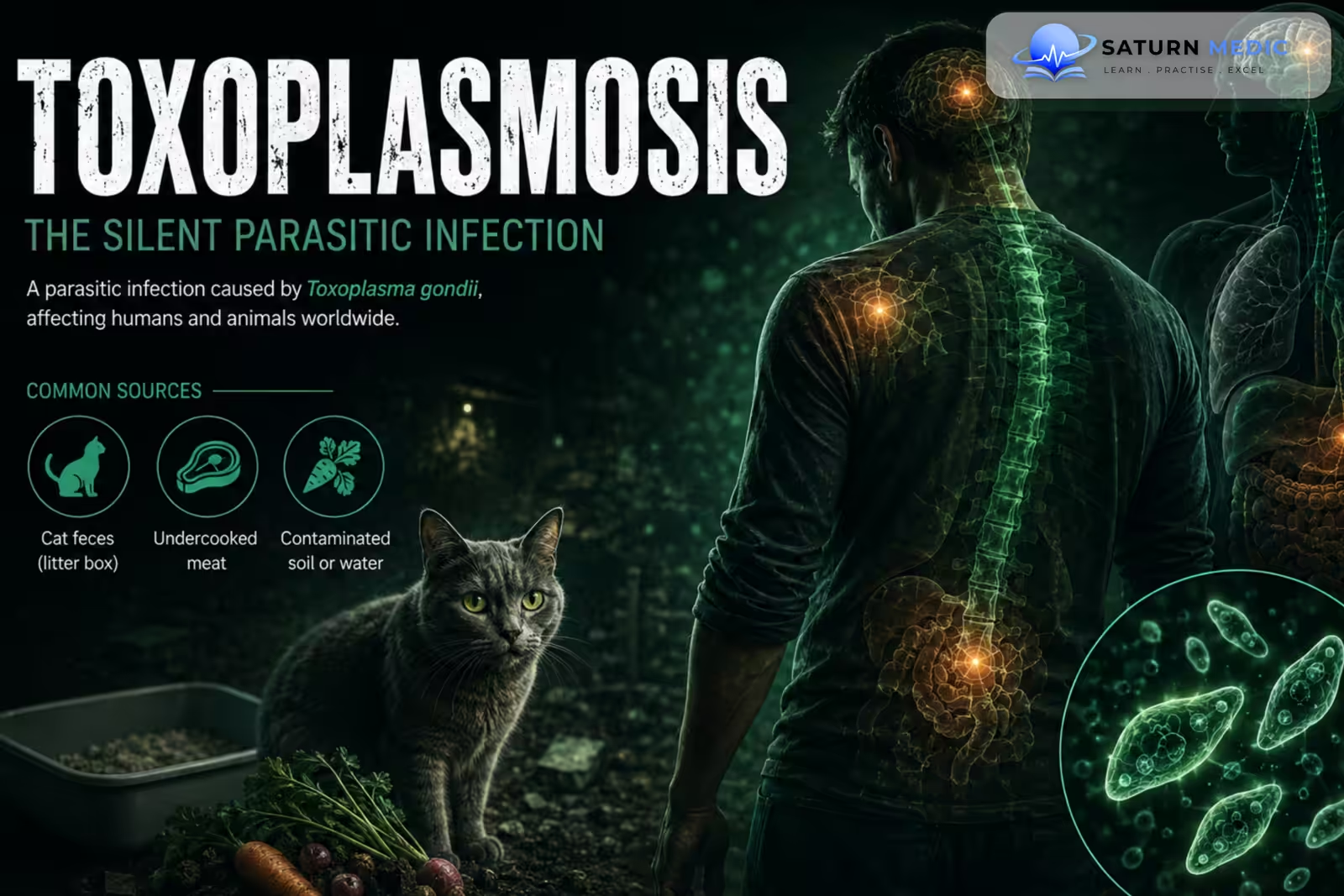
–Toxoplasmosis is acquired mainly by eating undercooked meat containing tissue cysts or ingesting oocysts from contaminated soil, water, food, or cat feces. Congenital transmission, organ transplantation, and blood transfusion are less common routes.
The major clinical forms are:
- Acquired infection: usually asymptomatic or mild.
- Congenital infection: occurs following maternal infection during or just before pregnancy.
- Ocular infection: causes retinochoroiditis and visual symptoms.
- Cerebral infection: mainly occurs in severely immunocompromised patients.
Etiology & Risk Factors
-Etiology
–Toxoplasmosis is caused by Toxoplasma gondii. Cats and other felids are the definitive hosts and shed environmentally resistant oocysts. Humans become infected through contaminated food, soil, water, or contact with infected cat feces.
The parasite has three important forms:
- Tachyzoite: rapidly multiplying acute form
- Bradyzoite: slowly multiplying form within tissue cysts
- Oocyst: environmentally resistant form shed by cats
-Risk Factors
- Eating undercooked meat
- Exposure to contaminated soil or cat feces
- Pregnancy
- Advanced HIV infection or severe immunosuppression
- Organ transplantation
Pathophysiology
Ingestion of tissue cysts or oocysts → transformation into tachyzoites → dissemination through blood and lymphatics → immune response → conversion into bradyzoites → tissue cyst formation → lifelong latent infection → reactivation when cellular immunity is severely impaired
Clinical Presentation
-Symptoms:
Toxoplasmosis is frequently asymptomatic in immunocompetent patients. When symptomatic, it may cause:
- Fever
- Fatigue
- Headache
- Myalgia
- Malaise
- Tender cervical lymphadenopathy
- Sore throat
Symptoms may persist for several weeks and usually resolve without specific treatment in healthy individuals.
-Signs:
- Tender cervical lymphadenopathy
- Fever
- Mild pharyngitis
- Hepatosplenomegaly in some patients
Ocular Disease
- Blurred vision
- Reduced visual acuity
- Eye pain
- Photophobia
- Retinochoroiditis
Cerebral Disease
- Headache
- Confusion
- Seizures
- Focal neurological deficits
- Poor coordination
History Taking
-Ask about:
- Undercooked meat consumption
- Exposure to cats or cat litter
- Gardening or soil exposure
- Residence or travel in endemic areas
- Pregnancy
- HIV infection or other immunosuppression
- Organ transplantation
- Previous Toxoplasma infection
- Visual symptoms
- Headache or neurological symptoms
Physical Examination
-General Examination
- Temperature
- General condition
- Lymphadenopathy
- Nutritional and immune status
-System-Specific Examination:
- Neurological examination when CNS disease is suspected
- Ophthalmological examination when visual symptoms are present
- Assessment for hepatosplenomegaly
Investigations
-Complete Blood Count
May show:
Mild lymphocytosis
Atypical lymphocytes
Not diagnostic.
-Biochemistry / Specific Tests
Toxoplasma IgG
Toxoplasma IgM
Liver function tests when systemic disease is suspected
HIV testing when clinically appropriate
Polymerase Chain Reaction (PCR) in selected cases
IgG generally indicates previous exposure, while IgM may suggest recent infection but can persist for a prolonged period, so positive IgM often requires careful interpretation or confirmatory testing.
-Imaging
Brain Computed Tomography (CT) or Magnetic Resonance Imaging (MRI)
In cerebral disease, imaging commonly demonstrates multiple ring-enhancing lesions, frequently involving the basal ganglia.
-Special / Confirmatory Tests
Ophthalmological examination for ocular disease
Amniotic fluid PCR when congenital infection is suspected
Tissue examination or biopsy in selected diagnostically uncertain cases
Diagnosis
-The diagnosis of Toxoplasmosis depends on the clinical presentation and appropriate laboratory or imaging findings.
Exposure or risk factors → compatible clinical syndrome → serology/PCR when indicated → imaging for CNS disease → assess for ocular or congenital involvement.
-In cerebral disease, a compatible clinical picture, characteristic brain lesions, and serological evidence often support the diagnosis. Brain biopsy is reserved for selected cases when the diagnosis remains uncertain.
Related Topics
Management
Toxoplasmosis · Management
| Clinical situation | Treatment |
|---|---|
| Immunocompetent Mild / asymptomatic | Usually no treatment required. |
| Severe / symptomatic disease | Pyrimethamine + sulfadiazine + folinic acid (leucovorin) |
| Pregnancy | Spiramycin when fetal infection is not established. If fetal infection is confirmed/suspected: pyrimethamine + sulfadiazine + folinic acid after the first trimester. |
| HIV / immunocompromised | Pyrimethamine + sulfadiazine + folinic acid, followed by maintenance therapy until immune recovery. |
| Ocular toxoplasmosis | Pyrimethamine + sulfadiazine + folinic acid ± corticosteroids for significant inflammation. |
Complications
- Encephalitis
- Seizures
- Chorioretinitis
- Visual impairment
- Pneumonitis
- Myocarditis
- Congenital neurological disease
- Hydrocephalus
- Fetal loss
- Death in severe untreated disease
Prognosis
The prognosis of Toxoplasmosis is generally excellent in immunocompetent patients with mild disease, with most recovering without specific treatment. Congenital, ocular, and cerebral disease can cause permanent neurological or visual complications
Key Points / Clinical Pearls
- Toxoplasmosis is caused by Toxoplasma gondii.
- Cats are the definitive hosts.
- Undercooked meat is an important source of infection.
- Most immunocompetent patients are asymptomatic.
- Cervical lymphadenopathy is a common symptomatic finding.
- Reactivation is especially important in advanced HIV infection.
- Cerebral disease is the major severe opportunistic manifestation.
- Brain MRI or CT may show multiple ring-enhancing lesions.
- IgG mainly indicates previous exposure.
- IgM may persist and requires careful interpretation.
- Ocular disease causes retinochoroiditis and visual symptoms.
- Congenital infection can cause neurological and ocular disease.
- Pyrimethamine, sulfadiazine, and leucovorin are a standard treatment combination.
- TMP-SMX is an important alternative.
- Centers for Disease Control and Prevention (CDC). Toxoplasmosis .
- Montoya JG, Liesenfeld O. Toxoplasmosis. Lancet. 2004;363(9425):1965-1976. PubMed .
- Robert-Gangneux F, Dardé ML. Epidemiology of and Diagnostic Strategies for Toxoplasmosis. Clin Microbiol Rev. 2012;25(2):264-296. PubMed .
- Dunay IR, Gajurel K, Dhakal R, Liesenfeld O, Montoya JG. Treatment of Toxoplasmosis: Historical Perspective, Animal Models, and Current Clinical Practice. Clin Microbiol Rev. 2018;31(4):e00057-17. PubMed .