
Saturn Medic

Clinical Subject Page

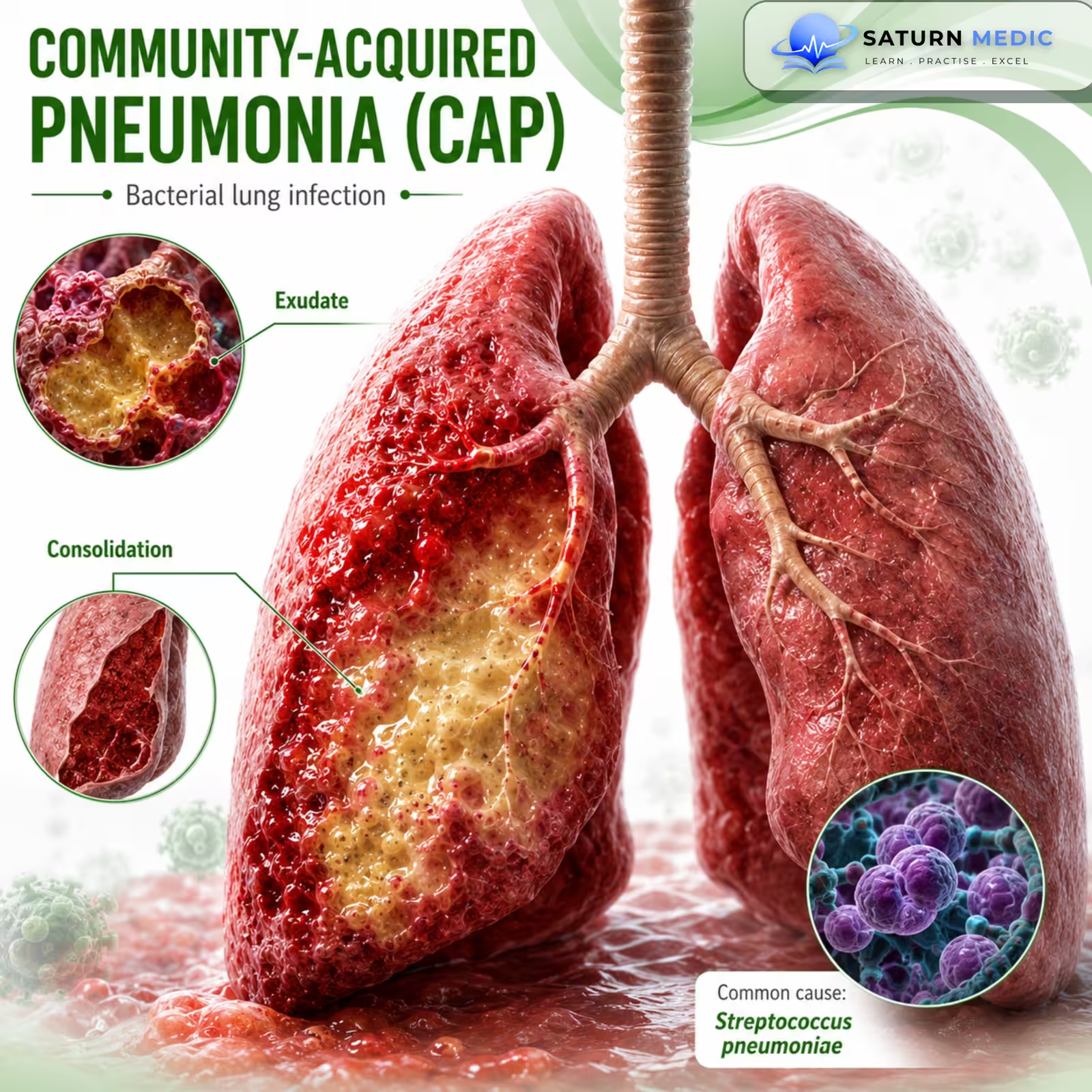
Community-Acquired Pneumonia (CAP)

Community-acquired pneumonia (CAP) is an acute infection of the lung parenchyma acquired outside a hospital or healthcare facility, causing inflammation and filling of the alveoli with inflammatory material.

Also called

Community-acquired lung infection

ICD-10

J18.9

Specialty

Pulmonology

Onset

Acute

Reviewed

July 2026

On This Page

Overview

Community-Acquired Pneumonia (CAP) develops when microorganisms infect the:

  • Alveoli
  • Small airways
  • Surrounding lung tissue

The infection causes:

Inflammation → Alveolar filling → Impaired gas exchange

Patients commonly present with fever, cough, sputum production, dyspnea, and pleuritic chest pain.

Etiology & Risk Factors

Common Causes of Community-Acquired Pneumonia (CAP)

Typical Bacteria

  • Streptococcus pneumoniae
  • Haemophilus influenzae
  • Moraxella catarrhalis
  • Staphylococcus aureus
  • Gram-negative bacteria

Atypical Bacteria

  • Mycoplasma pneumoniae
  • Chlamydia pneumoniae
  • Legionella species

Viruses

  • Influenza
  • Respiratory syncytial virus (RSV)
  • SARS-CoV-2
  • Other respiratory viruses

Risk Factors For Community-Acquired Pneumonia (CAP)

  • Older age
  • Cigarette smoking
  • Chronic lung disease
  • Heart disease
  • Diabetes mellitus
  • Chronic kidney disease
  • Immunosuppression
  • Alcohol misuse
  • Poor functional status

Pathophysiology

Inhalation or aspiration of microorganism

Failure of normal respiratory defenses

Microorganism reaches the alveoli

Activation of immune response

Inflammatory cell recruitment

Alveolar inflammation and exudate formation

Alveolar filling and consolidation

Impaired ventilation and gas exchange

Hypoxemia + Respiratory symptoms

Key Concept For Community-Acquired Pneumonia (CAP)

Pneumonia impairs gas exchange because infected alveoli become filled with inflammatory fluid and cells.

Clinical Presentation

  • Symptoms

    • Fever
    • Cough
    • Sputum production
    • Dyspnea
    • Pleuritic chest pain
    • Chills
    • Fatigue
    • Malaise

    Older Adults

    May present with:

    • Confusion
    • Weakness
    • Reduced appetite
    • Falls

    Fever may be absent.

    Signs

    • Fever
    • Tachypnea
    • Tachycardia
    • Reduced oxygen saturation

    Chest Signs

    • Crackles
    • Bronchial breathing
    • Reduced air entry
    • Dullness to percussion
    • Increased vocal resonance

History Taking

  • Ask about:

    • Fever or chills?
    • Cough?
    • Sputum production?
    • Sputum color?
    • Shortness of breath?
    • Pleuritic chest pain?
    • When did symptoms start?
    • Recent viral illness?
    • Sick contacts?
    • Recent travel?
    • Smoking history?
    • Chronic lung disease?

Physical Examination

Look for:

  • Fever
  • Tachypnea
  • Tachycardia
  • Hypotension
  • Confusion
  • Cyanosis
  • Reduced oxygen saturation

Chest Examination

Look for:

  • Crackles
  • Bronchial breathing
  • Reduced breath sounds
  • Dullness to percussion
  • Increased vocal resonance

Assess Severity

Look for:

  • Respiratory distress
  • Altered mental status
  • Hypotension
  • Severe hypoxemia
  • Signs of sepsis

Investigations of Community-Acquired Pneumonia (CAP)

  • Chest X-ray — Key Imaging Test For Diagnosing Community-Acquired Pneumonia (CAP)

    May show:

    • New pulmonary infiltrate
    • Lobar consolidation
    • Multifocal infiltrates
    • Pleural effusion

    Pulse Oximetry

    Assess oxygen saturation in all patients.

    Blood Tests

    In moderate or severe disease:

    • CBC
    • Renal function
    • Electrolytes
    • Liver function
    • Blood glucose
    • Inflammatory markers

    Microbiological Tests

    Depending on severity:

    • Sputum Gram stain and culture
    • Blood cultures
    • Viral testing
    • Urinary antigen testing in selected patients

    Arterial Blood Gas

    Consider in:

    • Severe hypoxemia
    • Respiratory distress
    • Severe CAP

Types of Pneumonias

CAP vs HAP vs Chemical Pneumonitis · Overview

Community-Acquired
Pneumonia (CAP)
Outside hospital or <48h of admission
Hospital-Acquired
Pneumonia (HAP)
≥48h after hospital admission
Chemical
Pneumonitis
Non-infectious lung injury
Definition
Lung infection acquired outside hospital or within 48h of admission, in a non-healthcare resident
Lung infection developing ≥48 hours after hospital admission, including ventilator-associated pneumonia (VAP)
Non-infectious lung injury from inhalation or aspiration of chemical irritants — no bacteria involved initially
Common causes
S. pneumoniae H. influenzae Atypicals
Mycoplasma, Chlamydophila, Legionella — especially in younger patients. Viruses (influenza, COVID-19) increasingly common.
Gram-negative bacilli P. aeruginosa MRSA
Klebsiella, Acinetobacter, Enterobacter. Often multidrug-resistant (MDR) organisms.
Gastric acid Toxic gases Hydrocarbons
Aspiration of gastric contents (Mendelson's syndrome), smoke inhalation, chemical fumes, petroleum products.
Typical patient
Any age. Risk ↑ with: age >65, smoking, COPD, asplenia, immunosuppression, alcoholism
ICU patients, ventilated patients, post-surgery, prolonged hospitalisation, immunocompromised
Reduced consciousness (anaesthesia, seizures, alcohol intoxication), GERD, dysphagia, occupational chemical exposure
Onset
Acute — hours to days; fever, productive cough, pleuritic chest pain
Variable — often more insidious; may be masked by underlying illness or sedation in ICU
Rapid — symptoms within 1–6 hours of exposure; acute dyspnea, cough, bronchospasm

CAP vs HAP vs Chemical Pneumonitis · Management & Prognosis

Community-Acquired
Pneumonia (CAP)
Outside hospital or <48h of admission
Hospital-Acquired
Pneumonia (HAP)
≥48h after hospital admission
Chemical
Pneumonitis
Non-infectious lung injury
Severity score
CURB-65 — score 0–5; guides home vs hospital vs ICU disposition
CPIS score — Clinical Pulmonary Infection Score; uses temperature, WBC, secretions, oxygenation, CXR
PaO₂/FiO₂ ratio — severity of hypoxia; ARDS criteria if <300 with bilateral infiltrates
Treatment
Mild: Amoxicillin 500mg TDS oral
Moderate: Amoxicillin + Clarithromycin
Severe: Co-amoxiclav IV + Clarithromycin IV
Duration: 5–7 days (severe: 7–10)
Broad-spectrum IV: Pip-tazo or Meropenem
+ MRSA cover (Vancomycin / Linezolid) if risk factors
Duration: 7–8 days. De-escalate based on cultures.
Supportive: O₂, bronchodilators, NIV/intubation if needed
Corticosteroids — consider in severe cases
Antibiotics NOT given initially — add only if secondary bacterial infection develops
Remove source of exposure. Decontamination if skin/oral contact.
Prognosis
Generally good with treatment. 30-day mortality: ~5–14% (hospitalised). Full recovery expected in most; elderly & severe cases higher mortality.
Worse prognosis than CAP. 30-day mortality: ~20–50%. MDR organisms, ICU stay, and underlying disease worsen outcomes.
Variable — depends on agent and severity. Mild cases resolve in 24–72h. Severe cases may progress to ARDS with mortality >30%.

CAP vs HAP vs Chemical Pneumonitis · Key Differentiating Points

Key differentiating points
CAP — think typical vs atypical
Typical (S. pneumoniae): sudden onset, high fever, single lobe, productive cough
Atypical (Mycoplasma, Legionella): gradual onset, dry cough, bilateral, younger patient
Always use CURB-65 to guide admission decision
HAP — think resistant organisms
Always cover MDR Gram-negatives and Pseudomonas — standard CAP antibiotics are NOT adequate
VAP (ventilator-associated) = HAP developing ≥48h after intubation
Prevention: head-of-bed elevation 30–45°, oral chlorhexidine, early mobilisation, VAP bundles
Chemical pneumonitis — no antibiotics initially
No fever in early hours — fever = infection, not aspiration itself
Mendelson's syndrome = aspiration of sterile gastric acid — bilateral infiltrates, rapid onset
Start antibiotics only if no improvement by 48–72h or cultures become positive

Management of Community-Acquired Pneumonia (CAP)

CURB-65 · Scoring Criteria

C
Confusion
New-onset confusion — disorientation to person, place, or time; AMTS ≤8
1 point if present
U
Urea
Blood urea nitrogen >7 mmol/L (>19 mg/dL)
Marker of dehydration & poor tissue perfusion
1 point if >7 mmol/L
R
Respiratory rate
Respiratory rate ≥30 breaths/min
Marker of respiratory compromise
1 point if ≥30/min
B
Blood pressure
Systolic BP <90 mmHg OR diastolic BP ≤60 mmHg
Indicates haemodynamic compromise
1 point if either met
65
Age ≥65
Age ≥65 years
Independent predictor of mortality in CAP
1 point if ≥65 years

CURB-65 · Risk Stratification & Management

Score Interpretation & Management
Score Risk group 30-day mortality Recommended management Disposition
0 Low risk
~0.6%
Oral antibiotics. No hospital admission needed in most cases. Ensure adequate oral intake and follow-up. Outpatient / Home
1 Low risk
~2.7%
Oral antibiotics. Home treatment appropriate. Consider short-stay observation if social concerns or comorbidities. Outpatient / Home
Consider observation
2 Moderate risk
~6.8%
Hospital admission recommended. IV antibiotics if cannot tolerate oral. Review within 24 hours. Consider supervised short-stay unit. Hospital admission
3 Severe risk
~14%
Hospital admission essential. IV antibiotics. Consider HDU. Assess need for organ support. Frequent monitoring. Hospital — ward / HDU
4 High risk
~27%
Urgent hospital admission. IV broad-spectrum antibiotics. HDU or ICU assessment. Aggressive monitoring and supportive care. Hospital — HDU / ICU
5 Very high risk
~27–57%
Immediate ICU-level care. Assess for mechanical ventilation, vasopressors. Involve senior clinician. Consider sepsis protocol. ICU

CURB-65 · CAP Antibiotic Treatment

CAP Antibiotic Treatment — BTS / NICE Guidelines
CURB-65 0–1 — Outpatient
Amoxicillin 500 mg TDS oral × 5 days — first-line
If penicillin allergy: Doxycycline 200 mg loading then 100 mg OD × 5 days
Alternative: Clarithromycin 500 mg BD × 5 days
If atypical suspected (young, bilateral, no response to amoxicillin): add macrolide or use doxycycline alone
Review in 48 hours — if no improvement, reassess, repeat CURB-65, consider admission
CURB-65 2 — Hospital (non-severe)
Amoxicillin 500 mg TDS oral + Clarithromycin 500 mg BD oral (dual therapy covers typical + atypical)
If cannot tolerate oral: Amoxicillin IV 1g TDS + Clarithromycin IV 500 mg BD
Penicillin allergy: Doxycycline or Levofloxacin 500 mg OD × 5–7 days
Step-down to oral once clinically improving (afebrile >24h, tolerating oral, SpO₂ improving)
Total duration: 5–7 days
CURB-65 3–5 — Severe / ICU
Co-amoxiclav IV 1.2g TDS + Clarithromycin IV 500 mg BD — first-line severe CAP
Alternative: Ceftriaxone IV 2g OD + Clarithromycin IV 500 mg BD
Penicillin allergy: Levofloxacin IV 500 mg OD monotherapy (covers both typical and atypical)
If Pseudomonas risk (structural lung disease, recent hospitalisation): Piperacillin-tazobactam IV
Duration: 7–10 days (up to 14 if bacteraemic or slow response)
Blood cultures × 2 before antibiotics; sputum culture; urinary Legionella + pneumococcal antigen

Complications of Community-Acquired Pneumonia (CAP)

  • Parapneumonic effusion
  • Empyema
  • Lung abscess
  • Respiratory failure
  • Sepsis
  • Septic shock
  • Acute respiratory distress syndrome (ARDS)
  • Acute kidney injury

Prognosis of Community-Acquired Pneumonia (CAP)

  • Most patients with mild Community-Acquired Pneumonia (CAP) recover completely with appropriate treatment.
  • Prognosis depends on:
    • Age
    • Disease severity
    • Comorbidities
    • Causative organism
    • Development of complications
  • Severe Community-Acquired Pneumonia (CAP) has a higher risk of respiratory failure, sepsis, and death.
  • Early recognition and appropriate treatment improve outcomes.

Key Points / Clinical Pearls of Community-Acquired Pneumonia (CAP)

  • Community-Acquired Pneumonia (CAP) is pneumonia acquired outside the hospital setting.
  • Streptococcus pneumoniae is an important common bacterial cause.
  • Fever, cough, sputum, dyspnea, and pleuritic chest pain are classic symptoms.
  • Older adults may present mainly with confusion or functional decline.
  • Chest imaging is important for confirming the diagnosis.
  • Always assess oxygen saturation and disease severity.
  • CURB-65 helps assess severity of Community-Acquired Pneumonia (CAP) but does not replace clinical judgment.
  • Antibiotic choice depends on severity, comorbidities, and local resistance patterns