

Clinical Subject Page
Granulomatosis With Polyangiitis (GPA)
Granulomatosis with polyangiitis (GPA), previously called Wegener granulomatosis, is an autoimmune disease in which the body’s immune system attacks small and medium-sized blood vessels.
Also called
ICD-10
Specialty
Onset
Reviewed
-
OverviewOverview
-
Etiology & Risk FactorsEtiology & Risk Factors
-
PathophysiologyPathophysiology
-
Clinical PresentationClinical Presentation
-
History TakingHistory Taking
-
Physical ExaminationPhysical Examination
-
InvestigationsInvestigations
-
DiagnosisDiagnosis
-
ManagementManagement
-
ComplicationsComplications
-
PrognosisPrognosis
-
Key Points / Clinical PearlsKey Points / Clinical Pearls
Overview
What is it? An ANCA-associated vasculitis that damages blood vessels. Commonly affects: Nose and sinuses, lungs, kidneys.
This causes inflammation (vasculitis) and granuloma formation
Etiology & Risk Factors
-Etiology :
- Unknown (idiopathic) in most cases.
- Often occurs after respiratory tract infections, although the exact cause is not known.
- It is an autoimmune disease in which PR3-ANCA antibodies activate neutrophils, leading to inflammation and damage of small and medium-sized blood vessels.
-Risk Factors :
- Age: Most common between 40–60 years.
- Sex: Men and women are affected equally.
- Possible trigger: Respiratory tract infections may precede the disease.
Pathophysiology
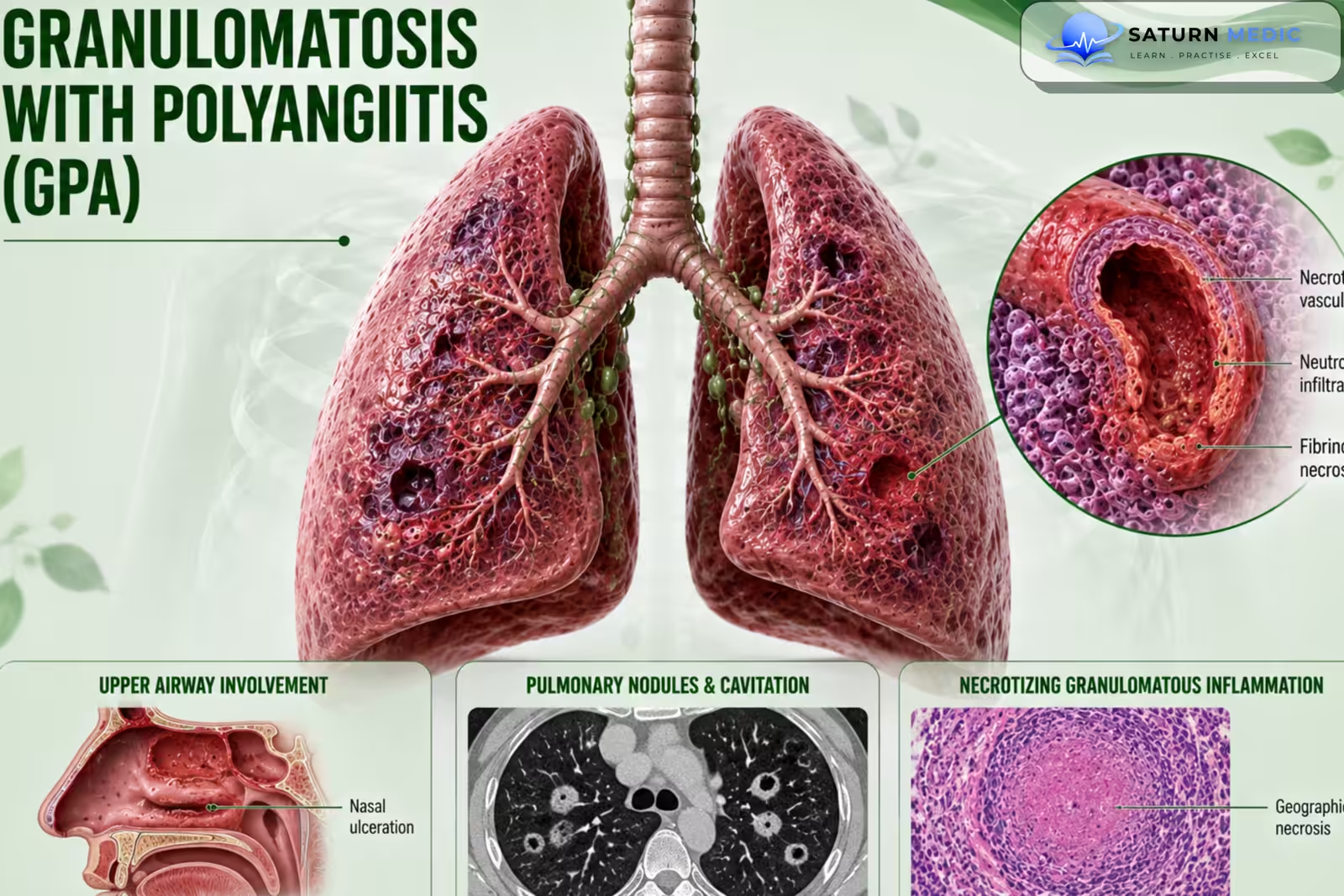
Unknown trigger (idiopathic, sometimes after respiratory infection) → PR3-ANCAautoantibodies form → PR3-ANCA binds to proteinase-3 (PR3) on neutrophils →Neutrophil activation → Release of inflammatory mediators + neutrophil extracellular traps (NETs) + complement activation → Damage to small and medium-sized blood vessel endothelium → Necrotizing granulomatous vasculitis → Inflammation and tissue injury → ENT disease (sinusitis/rhinitis), lung disease, and rapidly progressive glomerulonephritis (kidney involvement)
Clinical Presentation
General: Fever, weight loss, fatigue
- ENT (most common): Chronic sinusitis, blocked/bloody nose, ear infections, saddle nose deformity
- Lungs: Cough, shortness of breath, hemoptysis
- Kidneys: Hematuria, rapidly progressive glomerulonephritis (RPGN)
- Skin: Purpura, ulcers
- Eyes: Conjunctivitis, corneal ulcers
History Taking
- Do you have chronic sinus pain or a blocked nose?
- Have you had nosebleeds or bloody nasal discharge? Do you have a persistent cough?
- Have you coughed up blood (hemoptysis)?
- Do you feel short of breath?
- Have you noticed blood in your urine or dark urine?
- Have you had fever, weight loss, or fatigue?
- Have you had ear infections or hearing problems?
- Do you have eye redness, pain, or vision changes?
- Have you developed a skin rash or ulcers?
Physical Examination
-Look for:
-
General: Fever, weight loss
-
Nose/ENT: Nasal ulcers, saddle nose deformity, bloody/purulent nasal discharge
-
Lungs: Crackles, signs of hemoptysis
-
Skin: Purpura, ulcers
-
Eyes: Conjunctivitis, red eyes, corneal ulcers
-
Mouth: Oral ulcers, strawberry gingivitis
Key Physical Signs
-
Saddle nose deformity
-
Purpura
-
Strawberry gingivitis
-
Conjunctivitis
Investigations of Granulomatosis With Polyangiitis (GPA)
- Blood tests
- PR3-cANCA (most important)
- CBC
- ESR, CRP
- Urea, creatinine (renal function)
- Urine tests
- Urinalysis: hematuria, proteinuria Urine microscopy: RBC casts
- Imaging
- Chest X-ray/CT chest (lung involvement)
- CT paranasal sinuses (sinus disease)
- Confirmatory test
- Biopsy (kidney or lung preferred): necrotizing granulomatous vasculitis
Diagnosis of Granulomatosis With Polyangiitis (GPA)
- Diagnosis is based on clinical features + investigations, and is confirmed by biopsy.
-Most important diagnostic findings:
- ENT + lung + kidney involvement (typical clinical picture)
- PR3-cANCA positive
- Urinalysis: Hematuria, proteinuria, RBC casts
- Chest X-ray/CT: Pulmonary nodules or pulmonary hemorrhage Biopsy (gold standard): Necrotizing granulomatous vasculitis
Related Topics
Management of Granulomatosis With Polyangiitis (GPA)
- Refer to rheumatology (and other specialists as needed). Glucocorticoids (first-line treatment).
-Add an immunosuppressant :
- Methotrexate (non-severe disease)
- Rituximab (preferred for severe disease)
- Cyclophosphamide (alternative for severe disease)
- -Maintenance therapy : Gradually taper steroids and continue rituximab, methotrexate, or azathioprine.
- Supportive care: Monitor for treatment side effects and consider Pneumocystis pneumonia prophylaxis.
- Plasmapheresis: May be considered in selected patients (e.g., with concomitant anti-GBM disease).
Complications
- Rapidly progressive glomerulonephritis (RPGN) → kidney failure
- Pulmonary hemorrhage (diffuse alveolar hemorrhage) → life-threatening hemoptysis
- Pulmonary fibrosis
- Pulmonary hypertension
- Cardiac involvement (pericarditis, myocarditis, myocardial infarction)
- Relapse is common
- The most serious complications are kidney failure and pulmonary hemorrhage, with diffuse alveolar hemorrhage being a common cause of death.
Prognosis of Granulomatosis With Polyangiitis (GPA)
- Without treatment: < 20% 1-year survival.
- With appropriate treatment: Approximately 80% 5-year survival. Diffuse alveolar hemorrhage is a common cause of death.
- Relapses are common, so long-term follow-up is needed.
Key Points / Clinical Pearls of Granulomatosis With Polyangiitis (GPA)
- Autoimmune ANCA-associated vasculitis affecting small and medium-sized blood vessels.
- Mainly affects the nose/sinuses, lungs, and kidneys.
- PR3-cANCA is the most important antibody.
- Classic triad: ENT disease + Lung disease + Glomerulonephritis (RPGN).
- Common symptoms: chronic sinusitis, cough, hemoptysis, hematuria.
- Biopsy is the gold standard and shows necrotizing granulomatous vasculitis.
- Main treatment: Glucocorticoids + immunosuppressant (methotrexate, rituximab, or cyclophosphamide).
- Major complications: Kidney failure and pulmonary hemorrhage.
- Relapses are common, so long-term follow-up is required.
- Early diagnosis and treatment greatly improve survival.
- Rout P, Garlapati P, Qurie A. National Center for Biotechnology Information (NIH). Granulomatosis With Polyangiitis, StatPearls.
- Hashmi MF, Rout P. National Center for Biotechnology Information (NIH). Microscopic Polyangiitis, StatPearls.
- National Center for Biotechnology Information (NIH). ANCA-Associated Vasculitis, StatPearls.
- Hellmich B, Sanchez-Alamo B, Schirmer JH, et al. EULAR Recommendations for the Management of ANCA-Associated Vasculitis: 2022 Update. Ann Rheum Dis. 2024. PMID: 36927642.
- Suppiah R, Robson JC, Grayson PC, et al. 2022 American College of Rheumatology/EULAR Classification Criteria for Granulomatosis with Polyangiitis. Ann Rheum Dis. 2022. Ann Rheum Dis 2022;81:315-320.
- Tan JA, Dehghan N, Chen W, et al. Systematic Literature Review Informing the 2022 EULAR Update: Treatment of Granulomatosis with Polyangiitis and Microscopic Polyangiitis. PMC10364171.